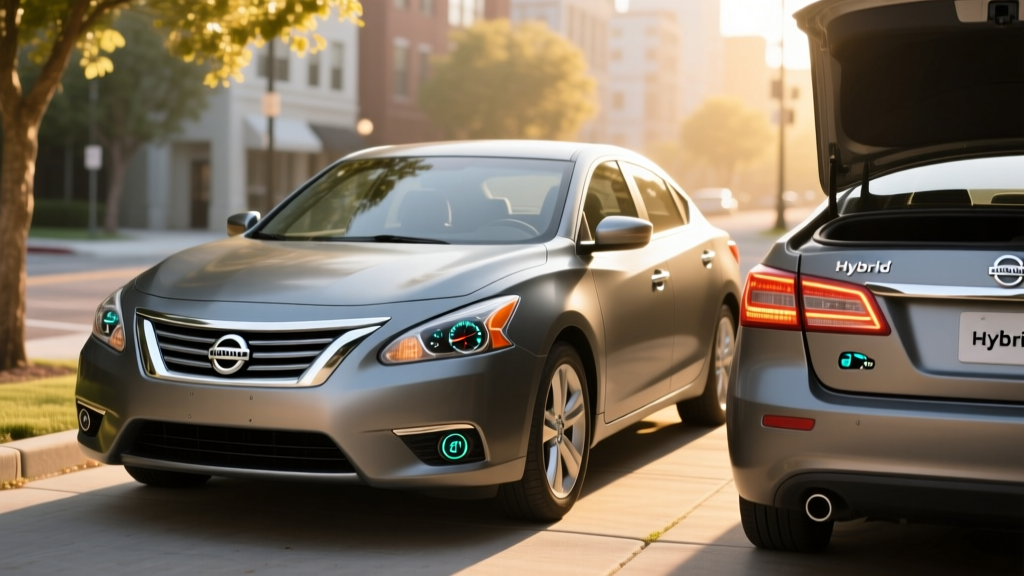
The 2010 Nissan Altima Hybrid occupies an unusual space in the used-car market: it's one of the earliest mainstream midsize sedans to pair a Toyota-licensed hybrid system with Nissan's popular Altima platform. With an EPA rating of 35 MPG combined and a spacious cabin, it still appeals to budget-conscious commuters in 2026. But as these cars approach 16 years old, the hybrid battery becomes the defining ownership question.
This guide covers everything a prospective used buyer needs to know — real-world fuel economy, powertrain specs, hybrid battery longevity, replacement costs, and how the 2010 Altima Hybrid stacks up against modern HEVs, PHEVs, and full EVs.
2010 Nissan Altima Hybrid: Fuel Economy and EPA Ratings
The 2010 Altima Hybrid uses a conventional hybrid (HEV) powertrain — meaning it does not plug in. It recovers energy through regenerative braking and the gasoline engine to charge its battery. If you're looking for electric-only driving or plug-in capability, this is not a PHEV.
| Metric | Value |
|---|---|
| City MPG | 35 MPG |
| Highway MPG | 33 MPG |
| Combined MPG | 35 MPG |
| Fuel Tank Capacity | 20.0 gallons |
| Total Range (est.) | ~700 miles |
Source: EPA / fueleconomy.gov
Real-World MPG vs. EPA Sticker
Conventional hybrids like the Altima Hybrid tend to perform close to or slightly above their EPA city rating in stop-and-go traffic, where regenerative braking recovers the most energy. On the highway, where the gasoline engine does more of the work, expect figures closer to the 33 MPG highway sticker — or slightly below at sustained 75+ mph speeds.
In 2026 owner forums and aggregated fuel-tracking data, real-world combined figures typically fall between 32–36 MPG, depending on driving style, climate, and whether the hybrid battery is still operating at full capacity. A degraded hybrid battery will reduce the electric motor's assist, pushing the gasoline engine to work harder and dropping real-world MPG by 2–4 MPG.
Powertrain Specs: Engine, Motor, and Combined Output
The 2010 Altima Hybrid pairs a 2.5-liter inline-4 gasoline engine with an electric motor through Nissan's version of Toyota's Hybrid Synergy Drive (licensed for this generation). Here's the full breakdown:
| Component | Specification |
|---|---|
| Gasoline Engine | 2.5L DOHC 16-valve inline-4 (QR25DE) |
| Engine Horsepower | 158 HP @ 5,600 RPM |
| Engine Torque | 162 lb-ft @ 4,000 RPM |
| Electric Motor | AC synchronous permanent magnet |
| Electric Motor Output | 40 HP (30 kW) |
| Combined System Output | 198 HP (net) |
| Transmission | eCVT (electronically controlled CVT) |
| Drivetrain | Front-wheel drive |
| 0–60 MPH (est.) | ~8.0 seconds |
The 198 HP combined output gives the Altima Hybrid adequate passing power for a midsize sedan of its era. The eCVT provides smooth, stepless acceleration — though some drivers accustomed to traditional automatics notice the "rubber-band" feel common to CVTs.
Hybrid System: Toyota-Licensed, Nissan-Executed
Nissan licensed Toyota's hybrid technology for this generation Altima Hybrid rather than developing an in-house system. This means the hybrid components share DNA with the contemporaneous Toyota Camry Hybrid. While this is generally a positive for reliability, it also means Nissan-specific diagnostic tools and parts sourcing can be more complicated than for Toyota's own hybrids.
Hybrid Battery: Size, Chemistry, Warranty, and Replacement Cost
The 2010 Altima Hybrid uses a nickel-metal hydride (NiMH) battery pack — the standard chemistry for hybrids of this era before lithium-ion became prevalent. This is a self-charging hybrid battery: it charges via regenerative braking and the gasoline engine. You never plug it in.
| Specification | Detail |
|---|---|
| Battery Chemistry | Nickel-Metal Hydride (NiMH) |
| Battery Capacity | ~1.4 kWh (nominal) |
| Battery Voltage | ~245V |
| Battery Location | Behind rear seat (trunk intrusion) |
| Plug-In Charging | No — HEV only |
| DC Fast Charging | Not applicable |
When new, Nissan covered the Altima Hybrid's battery with an 8-year / 100,000-mile hybrid system warranty (extended to 10 years / 150,000 miles in CARB states including California, New York, Massachusetts, and others adopting California emissions standards).
As of 2026, all original factory warranties have expired. Buyers are fully responsible for battery replacement costs.
Hybrid Battery Replacement Cost in 2026
This is the single biggest financial risk of buying a 16-year-old hybrid. Here's what to expect:
- OEM New Battery (Nissan dealer): $2,500–$3,500 including parts and labor
- Remanufactured Battery: $1,500–$2,200 from third-party suppliers
- Used/Salvage Battery: $600–$1,200 (risky — unknown remaining life)
- Individual Cell Replacement: $400–$800 at specialized hybrid repair shops (replaces only failed cells rather than the entire pack)
NiMH batteries degrade gradually rather than failing catastrophically. Signs of degradation include reduced fuel economy (the engine runs more often), the battery gauge dropping faster than expected, and the engine refusing to shut off at stops. A pre-purchase hybrid battery health check at a qualified shop is strongly recommended before buying any 2010 Altima Hybrid.
HEV vs. PHEV vs. EV: Where Does the Altima Hybrid Fit?
If you're cross-shopping the 2010 Altima Hybrid against modern electrified vehicles, here's a framework for understanding the differences:
| Feature | HEV (e.g., 2010 Altima Hybrid) | PHEV (e.g., 2026 Toyota RAV4 Prime) | BEV (e.g., 2026 Tesla Model 3) |
|---|---|---|---|
| Plugs In? | No | Yes | Yes |
| Electric-Only Range | ~1 mile (low-speed creep) | 42 miles (EPA) | 341 miles (EPA) |
| Gasoline Engine? | Yes (primary power) | Yes (backup) | No |
| Home Charging Needed? | No | Recommended (Level 2) | Essential |
| Typical Combined Efficiency | 35 MPG | 38 MPG + 94 MPGe (electric) | 132 MPGe |
| Federal Tax Credit (new) | None | Up to $7,500 (§30D) | Up to $7,500 (§30D) |
| Used Price Range (2026) | $4,000–$7,500 | $28,000–$42,000 | $22,000–$38,000 |
- Choose the 2010 Altima Hybrid (HEV) if: You need a cheap commuter car under $7,500, don't have access to home charging, want zero behavior change from a gas car, and accept the battery replacement risk.
- Choose a modern PHEV if: You have home charging, want 30–45 miles of daily electric commuting with gas-engine flexibility for road trips, and have a budget above $28,000.
- Choose a full BEV if: You have reliable home Level 2 charging, drive under 250 miles daily, want the lowest per-mile fuel cost, and can budget for higher upfront cost offset by the §30D tax credit and fuel savings.
Does the 2010 Nissan Altima Hybrid Qualify for Any Tax Credit?
No. The 2010 Altima Hybrid does not qualify for any current federal tax credit in 2026. Here's why:
- Federal §30D New Vehicle Credit: Only applies to new plug-in vehicles (BEVs and PHEVs) with sufficient battery capacity. Conventional hybrids (HEVs) have never qualified. The Altima Hybrid is an HEV.
- Federal Used EV Credit (§25E): Provides up to $4,000 (30% of sale price, max $4,000) for used plug-in electric vehicles — BEVs and PHEVs only. Conventional hybrids are excluded. Income caps apply ($75,000 single / $150,000 joint). See IRS.gov §25E rules.
- Original Hybrid Tax Credit (expired): When new, the 2010 Altima Hybrid qualified for a federal "Alternative Motor Vehicle Credit" of approximately $2,350. This credit had phase-out provisions and expired long ago. It was available only to the original purchaser.
- State incentives: A handful of states have offered registration fee discounts or HOV lane access for hybrids, but most have sunset these programs or restricted them to plug-in vehicles. Check your state's DMV or energy office for current rules.
Reliability, Ownership Costs, and What to Watch For
The 2010 Altima Hybrid benefits from its Toyota-licensed hybrid system, which has proven durable in Camry Hybrid applications. However, the surrounding Nissan vehicle has some known issues worth evaluating:
Known Reliability Concerns
- Hybrid battery degradation: At 16 years old, most original NiMH packs have significant capacity loss unless previously replaced. Budget $1,500–$3,000 for a replacement as a contingency.
- eCVT transmission: The hybrid eCVT is mechanically different from Nissan's problematic belt-driven CVTs in non-hybrid Altimas and is generally more reliable. However, inverter or transaxle failures have been reported at high mileage (150,000+ miles).
- Brake actuator: The electro-hydraulic brake system specific to the hybrid model can develop issues. A firm, unresponsive brake pedal or ABS warning light signals a potentially expensive repair ($1,200–$2,000).
- Air conditioning compressor: The hybrid uses an electric A/C compressor. If it fails, replacement costs more than a conventional belt-driven unit ($800–$1,400).
Estimated Annual Ownership Costs (2026)
| Cost Category | 2010 Altima Hybrid | 2010 Altima 2.5 (Gas) |
|---|---|---|
| Fuel (15,000 mi/yr @ $3.40/gal) | ~$1,457 | ~$1,962 |
| Insurance (avg.) | ~$1,100–$1,400 | ~$1,000–$1,300 |
| Maintenance (avg.) | ~$500–$700 | ~$450–$650 |
| Annual fuel savings vs. gas | ~$505/year | |
The hybrid saves roughly $500/year in fuel compared to the gas-only 2.5L Altima (rated at 26 MPG combined). That savings must be weighed against the hybrid battery replacement risk — a single $2,500 battery replacement wipes out about 5 years of fuel savings.
Pros and Cons of the 2010 Nissan Altima Hybrid in 2026
- 35 MPG combined still respectable for a midsize sedan
- Toyota-licensed hybrid system with proven architecture
- Low used-car entry price ($4,000–$7,500)
- Comfortable ride and spacious interior
- No plug-in charging required
- Strong city MPG from regenerative braking
- Hybrid battery likely degraded or near end-of-life
- $1,500–$3,500 battery replacement cost
- No federal or state tax credits available
- Limited model availability (low production volume)
- Trunk space reduced by battery pack placement
- No modern ADAS features (no AEB, no lane-keep)
- Outdated infotainment (no CarPlay/Android Auto)
Pre-Purchase Checklist: What to Inspect Before Buying
If you're seriously considering a 2010 Altima Hybrid, follow this checklist:
- Hybrid battery health test: Have a qualified hybrid technician run a capacity test. Ask for the battery's state of health (SoH) percentage. Below 70% SoH means replacement is imminent.
- Check for battery replacement records: A previously replaced battery (with documentation) is actually a positive — it resets the clock on the most expensive component.
- Verify hybrid system warranty status: At 16 years old, factory coverage has expired, but some aftermarket battery replacements carry their own 3–5 year warranties.
- Test the regenerative braking: The brake pedal should feel firm and linear. Grinding, pulsing, or a soft pedal could indicate the electro-hydraulic brake actuator is failing.
- Observe engine shut-off at stops: A healthy hybrid system will shut off the gasoline engine at a stoplight. If the engine never shuts off, the battery may be too degraded to support electric-only idle.
- Scan for hybrid system codes: A generic OBD-II scanner may not read hybrid-specific codes. Use a shop with Nissan Consult or a hybrid-capable scan tool.
Frequently Asked Questions
How many MPG does the 2010 Nissan Altima Hybrid get?
The EPA rates it at 35 MPG city, 33 MPG highway, and 35 MPG combined. Real-world owners typically report 32–36 MPG combined, with city driving often matching or slightly exceeding the EPA rating thanks to regenerative braking. Highway driving at speeds above 70 MPH tends to return 30–33 MPG.
Is the 2010 Altima Hybrid a plug-in hybrid?
No. It is a conventional hybrid (HEV) that charges its battery exclusively through regenerative braking and the gasoline engine. There is no plug, no charging port, and no electric-only driving range beyond low-speed parking-lot creeping (~1 mile at very low speed).
How far can it go on electric only?
Effectively zero meaningful electric-only range. The 2010 Altima Hybrid is not designed for electric-only driving. The electric motor assists the gasoline engine and powers the car at very low speeds for brief distances, but the gasoline engine is always the primary power source.
Is the 2010 Altima Hybrid reliable?
The Toyota-licensed hybrid powertrain is generally reliable, but at 16 years old, the NiMH battery is the primary concern. The rest of the car carries typical Nissan Altima reliability for the era — watch for brake actuator issues and electric A/C compressor failures. A well-maintained example with a replaced hybrid battery can be a dependable daily driver.
What does a hybrid battery replacement cost?
Expect $1,500–$2,200 for a remanufactured battery or $2,500–$3,500 for a new OEM battery at a Nissan dealer. Individual cell replacement at a hybrid specialist runs $400–$800 if only a few cells have failed.
Does the 2010 Altima Hybrid qualify for any tax credit in 2026?
No. It does not qualify for the federal §30D new vehicle credit (HEVs are excluded) or the §25E used EV credit (also limited to plug-in vehicles). The original hybrid tax credit of ~$2,350 was available only to the original purchaser when new and has long since expired.
Should I buy a 2010 Altima Hybrid or a newer used EV?
It depends on your budget and charging access. If you can spend $20,000+ and have home Level 2 charging, a used BEV (like a 2019–2021 Nissan Leaf or Chevrolet Bolt) offers lower per-mile fuel costs, zero tailpipe emissions, and a more modern driving experience. If your budget is under $7,500 and you lack charging access, the Altima Hybrid offers better fuel economy than a gas-only car with zero charging infrastructure needed.
How does it compare to the Toyota Camry Hybrid of the same year?
The 2010 Camry Hybrid is rated at 33 MPG combined (slightly lower than the Altima's 35 MPG) but benefits from Toyota's vastly larger hybrid parts network, more available used examples, and generally easier service at independent shops. The Camry Hybrid is the safer used buy for most shoppers, though the Altima Hybrid may be priced lower due to lower demand.