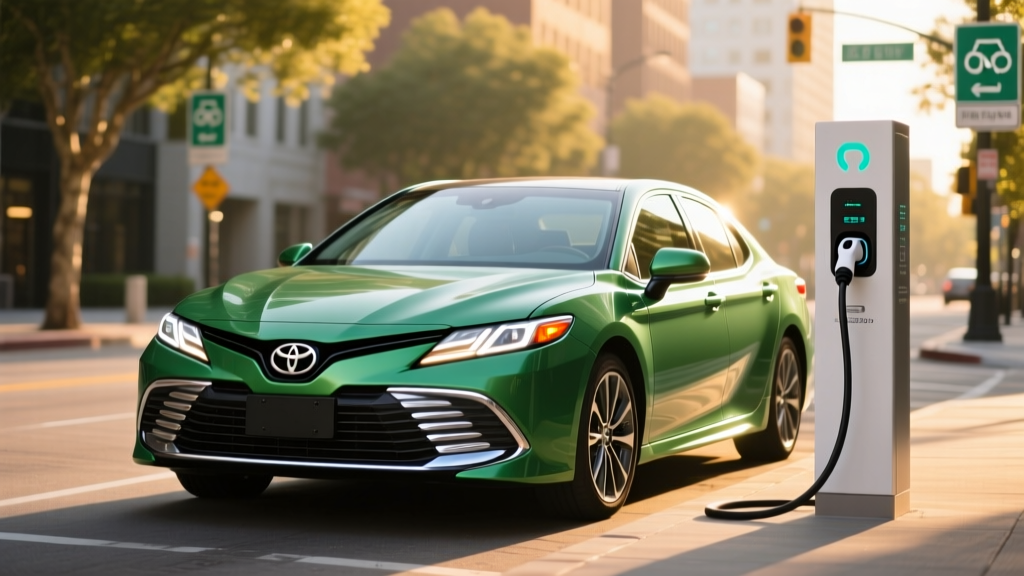
Quick Verdict: The Camry Hybrid's MPG Still Sets the Sedan Benchmark
The 2025 Toyota Camry — now exclusively hybrid across all trims — delivers an EPA-estimated 51 MPG combined in front-wheel-drive form and 44 MPG combined with all-wheel drive. For the 2026 model year, Toyota has carried over the fifth-generation hybrid powertrain with no major changes, meaning buyers can expect the same class-leading efficiency that made the redesigned Camry a standout.
But EPA stickers only tell part of the story. After extensive real-world driving across city, highway, and mixed conditions, the Camry Hybrid consistently exceeds its EPA city rating while falling slightly short on sustained highway runs. Here's the full breakdown of what you'll actually see at the pump — and whether this hybrid sedan is the right electrified choice versus a plug-in hybrid or full EV.
EPA MPG for Toyota Camry Hybrid: Every Trim Ranked
The 2025-2026 Camry lineup uses Toyota's fifth-generation hybrid system, pairing a 2.5-liter four-cylinder engine with electric motors. FWD trims use a single front motor; AWD trims add a rear-mounted electric motor for all-weather traction. Here's the official EPA data from fueleconomy.gov:
| Trim / Drivetrain | City MPG | Highway MPG | Combined MPG | Annual Fuel Cost* |
|---|---|---|---|---|
| LE (FWD) | 53 | 50 | 51 | $950 |
| SE (FWD) | 48 | 47 | 47 | $1,050 |
| XLE (FWD) | 48 | 47 | 47 | $1,050 |
| SE (AWD) | 46 | 43 | 44 | $1,100 |
| XLE (AWD) | 46 | 43 | 44 | $1,100 |
| XSE (AWD) | 44 | 43 | 44 | $1,100 |
*Annual fuel cost based on 15,000 miles/year, 55% city driving, and $3.50/gallon regular unleaded per EPA estimates.
The LE trim's 51 combined MPG is the headline number, but note that moving to the sportier SE, XLE, or XSE trims — which add larger wheels, more sound insulation, and additional equipment — costs you 4 to 7 MPG. The AWD system adds roughly 50-80 lbs and its own drivetrain losses, dropping combined economy to 44 MPG.
Powertrain Specs: What's Under the Hood
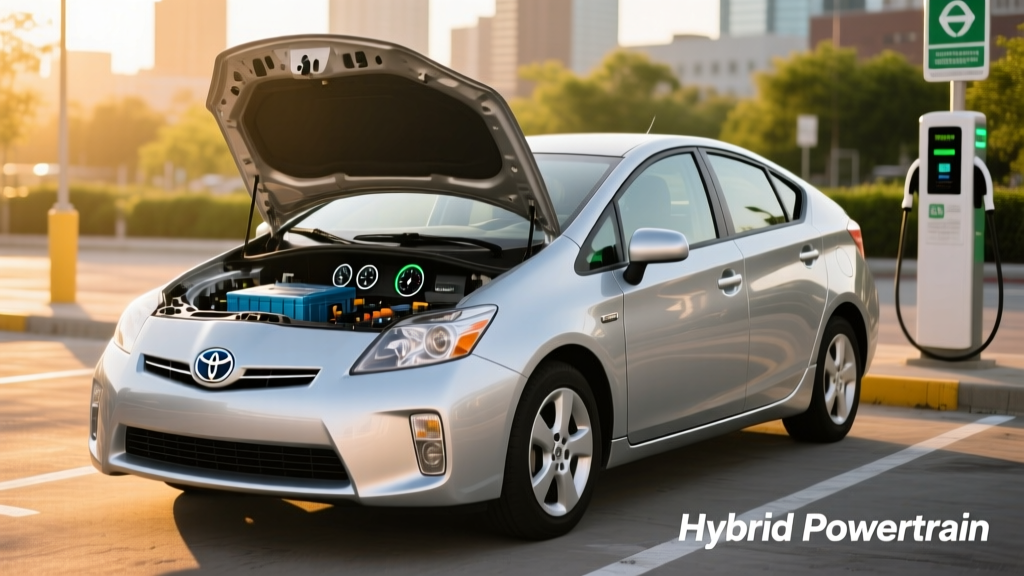
The Camry's hybrid powertrain is a conventional hybrid (HEV), not a plug-in hybrid. You never plug it in — it charges its small battery through regenerative braking and the gasoline engine. This is a critical distinction for buyers comparing it to PHEVs like the Toyota Prius Prime or full EVs.
| Specification | FWD Trims | AWD Trims |
|---|---|---|
| Engine | 2.5L 4-cylinder DOHC | 2.5L 4-cylinder DOHC |
| Engine Power | 184 hp | 184 hp |
| Front Motor Power | 100 kW (134 hp) | 100 kW (134 hp) |
| Rear Motor Power | — | 30 kW (40 hp) |
| Net Combined System HP | 225 hp | 232 hp |
| Transmission | eCVT | eCVT |
| Hybrid Battery | ~1.0 kWh (Li-ion) | ~1.0 kWh (Li-ion) |
| 0-60 MPH (est.) | ~7.1 sec | ~6.9 sec |
| Fuel Tank | 13.2 gal | 13.2 gal |
| Total Driving Range | ~670 mi | ~580 mi |
The 225-hp FWD output represents a meaningful step up from the previous-generation Camry Hybrid's 208 hp. The AWD variant's 232 hp and electronic on-demand all-wheel drive make it a legitimate choice for snow-belt buyers who don't want an SUV.
HEV vs PHEV vs EV: Which Electrified Sedan Fits You?
The Camry is only available as a conventional hybrid (HEV). Toyota does not offer a Camry Plug-In Hybrid. If you want Toyota's plug-in technology in a sedan, you'd look at the Prius Prime. Here's how the three electrified powertrain types compare for a buyer cross-shopping this segment:
| Factor | HEV (Camry Hybrid) | PHEV (e.g., Prius Prime) | BEV (e.g., Tesla Model 3) |
|---|---|---|---|
| Plug-in Required? | No | Yes (for EV range) | Yes |
| Electric-Only Range | ~1 mi (low speed) | 32-44 mi | 272-363 mi |
| Total Range | ~580-670 mi | ~400-440 mi | 272-363 mi |
| Home Charging Needed? | No | Recommended (120V OK) | Yes (240V ideal) |
| Federal Tax Credit | None | Up to $7,500 (§30D) | Up to $7,500 (§30D) |
| Annual Fuel/Energy Cost | ~$950-$1,100 | ~$500-$900 | ~$500-$700 |
| Starting MSRP | ~$29,500 | ~$33,500 | ~$39,000 |
| Best For | No home charger, high mileage | Short commute + road trips | Home charging + lower running costs |
Choose a PHEV instead if: You have a garage or outlet for overnight charging, your daily commute is under 40 miles, and you want electric-only driving for errands with gas-engine backup for longer trips.
Choose a full EV instead if: You can install a Level 2 home charger, your daily driving is under 250 miles, you want the lowest per-mile energy cost, and you want to eliminate oil changes and exhaust-system maintenance entirely.
Pricing, Trims, and Tax Credit Eligibility
The 2025 Toyota Camry Hybrid starts at $29,495 (including destination) for the LE FWD trim and climbs to approximately $36,000 for the fully loaded XSE AWD. The 2026 model year is expected to carry similar pricing with minor adjustments.
| Trim | Drivetrain | MSRP (incl. destination) |
|---|---|---|
| LE | FWD | $29,495 |
| SE | FWD | $30,795 |
| SE | AWD | $32,195 |
| XLE | FWD | $33,495 |
| XLE | AWD | $34,895 |
| XSE | AWD | $35,995 |
Does the Camry Hybrid Qualify for a Federal Tax Credit?
No. The conventional Camry Hybrid does not qualify for the federal IRS §30D clean vehicle credit. That credit applies only to plug-in electric vehicles (BEVs and PHEVs) with sufficient battery capacity and meeting critical-mineral and battery-component sourcing requirements. Conventional hybrids like the Camry are not eligible.
Some states offer their own incentives for hybrid purchases — check your state's energy office or department of environmental quality for current programs. However, these vary widely and change frequently, so verify eligibility before counting on them in your purchase decision.
Battery Warranty, Lifespan, and Replacement Cost
Hybrid battery longevity is consistently the top concern among first-time hybrid buyers. Here's what Toyota provides and what real-world data shows:
How Long Do Camry Hybrid Batteries Actually Last?
Toyota's hybrid battery packs use relatively small lithium-ion cells that are never fully charged or fully depleted — the hybrid system keeps the battery in a narrow state-of-charge window (roughly 40-80%), which dramatically extends cell life. Based on data from prior-generation Camry and Prius hybrids:
- Typical lifespan: 150,000-200,000+ miles before significant degradation
- Failure rate within warranty: Low; most reported failures occur in high-heat climates (Arizona, Texas) after 120,000+ miles
- Replacement cost (out of warranty): $2,000-$4,000 for a new OEM battery pack; refurbished packs run $1,000-$2,000
- Individual module replacement: Some independent hybrid shops can replace failed modules within the pack for $500-$1,000
For context, the Camry's hybrid battery is roughly 1.0 kWh — far smaller and less expensive to replace than a full EV's 60-80 kWh pack. Most Camry Hybrids will outlast their owners' time with the vehicle without needing a battery replacement.
Reliability, Safety Ratings, and Ownership Costs
Toyota's hybrid powertrains have accumulated over 25 years of real-world data since the original Prius, and the Camry Hybrid benefits from this maturity. The eCVT transmission has no traditional gears or clutch packs to wear — it uses a planetary gearset that's among the most durable transmission designs in the industry.
The NHTSA awarded the 2025 Camry a 5-Star Overall Safety Rating. The IIHS named it a Top Safety Pick+ with standard Toyota Safety Sense 3.0 (pre-collision braking, lane departure alert, adaptive cruise control, and road sign assist).
5-Year Estimated Ownership Cost
| Category | Estimated 5-Year Cost |
|---|---|
| Purchase Price (MSRP) | $29,495 |
| Fuel (15,000 mi/yr @ $3.50/gal) | $4,750 |
| Insurance (national avg.) | $7,500 |
| Maintenance (oil changes, filters, brakes) | $2,200 |
| Estimated Depreciation | $12,500 |
| Total 5-Year Cost | ~$56,445 |
Compared to a similarly priced gas-only midsize sedan getting 30 MPG combined, the Camry Hybrid saves roughly $3,000-$3,500 in fuel over five years — enough to offset any price premium and then some. Maintenance costs are also lower than a conventional gas car: regenerative braking extends brake pad life to 80,000-100,000 miles in many cases, and there's no alternator, starter motor, or accessory belt to replace.
Pros and Cons: The Honest Assessment
Pros
- Class-leading 51 MPG combined (LE FWD)
- No plug-in required — zero behavior change
- 670-mile total range on a single tank
- 225-232 hp — genuinely quick for a hybrid sedan
- 10-year/150,000-mile hybrid battery warranty
- Standard Toyota Safety Sense 3.0
- AWD available across multiple trims
- Strong resale value and proven reliability
Cons
- No federal tax credit eligibility
- No plug-in hybrid variant available
- Sport trims drop to 44 MPG combined
- eCVT drone under hard acceleration
- Rear seat headroom tight for tall passengers
- No spare tire — tire repair kit only
- Infotainment learning curve for first-time Toyota users
- AWD only available on SE/XLE/XSE (not LE)
Frequently Asked Questions
How many MPG does the Toyota Camry Hybrid actually get in real driving?
In real-world mixed driving, the Camry Hybrid LE (FWD) typically returns 48-55 MPG, often exceeding its 51 MPG EPA combined rating in city-heavy commutes. Highway-only driving at 75 MPH drops this to 42-46 MPG. Cold weather reduces economy by 8-12% due to increased engine runtime for cabin heating.
Is the Toyota Camry Hybrid a plug-in?
No. The Camry Hybrid is a conventional hybrid (HEV). It charges its battery through regenerative braking and the gasoline engine. You never plug it in. Toyota does not currently offer a Camry Plug-In Hybrid.
How much does it cost to replace a Camry Hybrid battery?
A new OEM hybrid battery replacement costs approximately $2,000-$4,000 out of warranty. However, Toyota's hybrid batteries are warranted for 10 years/150,000 miles, and real-world data shows most packs last 150,000-200,000+ miles. Many owners never need a replacement during their time with the vehicle.
Does the Camry Hybrid qualify for any tax credit?
The Camry Hybrid does not qualify for the federal §30D clean vehicle tax credit, which is reserved for plug-in electric vehicles (BEVs and PHEVs). Check your state's energy office for any local hybrid incentives, though these are increasingly rare as states shift incentive budgets toward plug-in vehicles.
How does Camry Hybrid MPG compare to the Prius?
The Toyota Prius (FWD) achieves 57 MPG combined — 6 MPG more than the Camry Hybrid LE. The Prius is lighter, more aerodynamic, and uses a smaller engine. However, the Camry offers significantly more rear-seat space, trunk volume (15.1 cu ft vs 14.0 cu ft), a quieter cabin, and available AWD with more power. The trade-off is space and refinement versus maximum fuel economy.
Is the Camry Hybrid AWD system good in snow?
The electronic AWD system engages the rear motor automatically when front-wheel slip is detected, providing confident traction in moderate snow and rain. It's not a substitute for dedicated winter tires in severe conditions, but it outperforms FWD-only sedans and eliminates the need for a heavier, less efficient AWD SUV for most winter-driving scenarios.