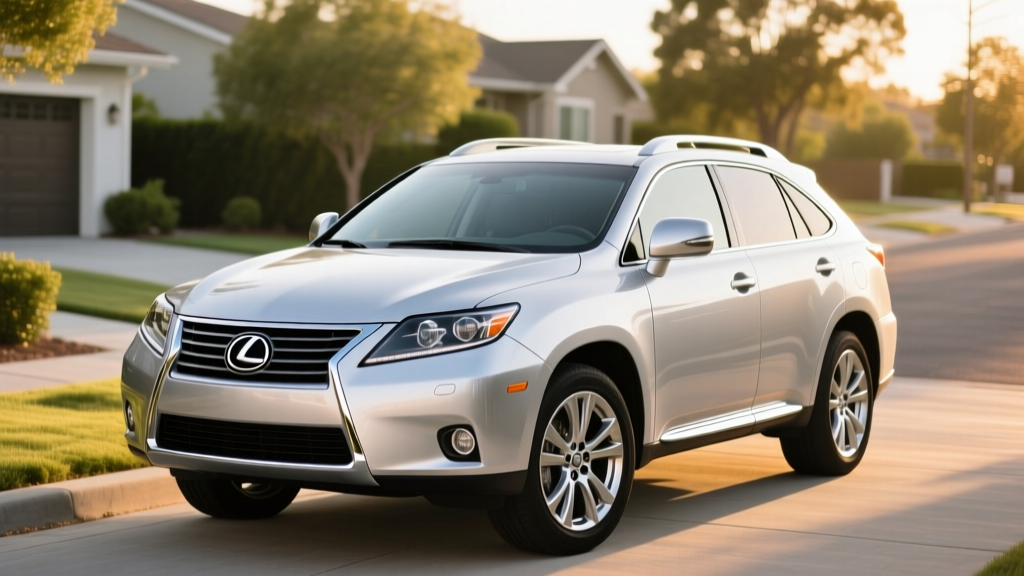
The 2010 Lexus RX 450h occupies a specific niche in the used luxury SUV market: a conventional hybrid (HEV) that delivers meaningful fuel savings over its gas-only RX 350 sibling without requiring any change in driving or fueling habits. As buyers in 2026 weigh newer plug-in hybrids and full electric vehicles against proven used hybrids, the second-generation RX 450h remains a data point worth examining — especially given Lexus's reputation for hybrid powertrain longevity.
This guide covers the 2010 RX 450h's fuel economy, powertrain specifications, hybrid battery health expectations, ownership costs, and how it stacks up against modern PHEV and EV alternatives.
HEV vs PHEV: Where the 2010 RX 450h Fits
Before diving into specs, it's essential to distinguish what the 2010 RX 450h is — and what it is not. This is a conventional hybrid electric vehicle (HEV), meaning it generates all its electricity internally through regenerative braking and its gasoline engine. There is no plug, no electric-only driving range, and no external charging of any kind.
| Feature | HEV (2010 RX 450h) | PHEV (e.g., 2026 RAV4 Prime) | BEV (e.g., 2026 Tesla Model Y) |
|---|---|---|---|
| Plug-in charging | No | Yes (Level 1/2) | Yes (Level 1/2/DC) |
| Electric-only range | 0 miles | 35–42 miles | 280–330+ miles |
| Gas engine | Yes (primary) | Yes (backup) | None |
| Fuel required | Gasoline | Gasoline + electricity | Electricity only |
| Federal tax credit (new) | None | Up to $7,500 (§30D) | Up to $7,500 (§30D) |
| Used EV credit (§25E) | Not eligible | Not eligible | Up to $4,000 |
The distinction matters because buyers sometimes assume all "hybrids" can plug in. The RX 450h operates exactly like a gas car at the pump — you simply fill it with premium unleaded and drive. The hybrid system works invisibly in the background, optimizing the split between engine and electric motor power.
2010 Lexus RX 450h Fuel Economy: EPA and Real-World MPG
The EPA rated the 2010 RX 450h at 32 MPG city / 28 MPG highway / 30 MPG combined for the front-wheel-drive model, and 30 MPG city / 28 MPG highway / 29 MPG combined for the all-wheel-drive variant, according to fueleconomy.gov.
| Drivetrain | City MPG | Highway MPG | Combined MPG |
|---|---|---|---|
| FWD | 32 | 28 | 30 |
| AWD (E-Four) | 30 | 28 | 29 |
Real-World MPG vs. EPA Sticker
Conventional hybrids like the RX 450h often exceed their EPA city rating in stop-and-go driving because regenerative braking recovers energy that a gas-only car wastes as heat. Owners reporting on forums and fuel-tracking apps like Fuelly typically log between 27 and 31 MPG combined in mixed driving, with city-heavy commutes sometimes pushing above 32 MPG.
Highway driving at sustained 75+ MPH speeds reduces the hybrid advantage — expect 26–28 MPG on long interstate trips. Cold weather (below 30°F) typically drops observed fuel economy by 2–4 MPG due to increased engine runtime for cabin heating and reduced battery efficiency in the nickel-metal hydride (NiMH) pack.
For comparison, the 2010 RX 350 (gas-only, AWD) was EPA-rated at 18 city / 24 highway / 20 combined. The hybrid's 29 MPG combined represents roughly a 45% fuel economy improvement over the non-hybrid model in mixed driving.
Powertrain Specifications: V6 Hybrid System
The 2010 RX 450h pairs a 3.5-liter V6 engine (2GR-FXE) operating on the Atkinson cycle with two electric motor-generators and a nickel-metal hydride traction battery. Here's the complete powertrain breakdown:
| Specification | 2010 Lexus RX 450h |
|---|---|
| Engine | 3.5L V6 Atkinson-cycle (2GR-FXE) |
| Engine output | 245 HP @ 6,000 RPM |
| Front electric motor | 123 kW (165 HP) |
| Rear electric motor (AWD only) | 50 kW (67 HP) |
| Net combined system output | 295 HP |
| Transmission | eCVT (planetary gearset) |
| Hybrid battery type | Nickel-metal hydride (NiMH) |
| Hybrid battery capacity | ~1.9 kWh (nominal) |
| 0–60 MPH | 7.4 seconds (FWD), 7.8 seconds (AWD) |
| Drivetrain | FWD or AWD (E-Four electronic) |
| Curb weight | ~4,610 lbs (AWD) |
| Fuel tank capacity | 17.2 gallons |
| Total driving range (est.) | ~499 miles (AWD, combined) |
| Fuel requirement | Premium unleaded (91 octane recommended) |
The eCVT is not a belt-driven continuously variable transmission like those found in some competitors. Toyota/Lexus uses a planetary gearset that seamlessly blends engine and motor power with no belts, pulleys, or fixed gear ratios to wear out. This design is one reason the RX 450h's drivetrain has proven durable well past 200,000 miles with proper maintenance.
Hybrid Battery Longevity, Warranty, and Replacement Cost
The most common concern among used hybrid buyers is the traction battery. The 2010 RX 450h uses a NiMH pack — a chemistry that Toyota and Lexus have deployed in millions of vehicles since the 1997 Prius.
Original Battery Warranty
When new, Lexus covered the hybrid battery for 8 years / 100,000 miles (10 years / 150,000 miles in California and states adopting CARB emissions standards). For a 2010 model, original factory warranty coverage has expired as of 2018–2020 depending on mileage.
Real-World Battery Lifespan
NiMH hybrid batteries in Toyota/Lexus vehicles commonly last 150,000 to 250,000 miles before significant degradation or failure. The relatively small 1.9 kWh pack undergoes shallow charge-discharge cycles (the hybrid system keeps the battery between roughly 40% and 80% state of charge), which reduces stress on the cells.
That said, a 2010 RX 450h in 2026 is 16 years old. Age-related degradation of NiMH cells is a real factor even at lower mileages. Heat is the primary enemy — vehicles operated in hot climates (Arizona, Texas, Southern California) tend to see earlier battery failures than those in cooler regions.
Battery Replacement Cost
If the hybrid battery does fail, replacement options include:
- New OEM Lexus battery: $3,500–$5,000 installed at a dealership
- Refurbished/remanufactured battery: $1,500–$2,800 installed at an independent hybrid specialist
- Individual cell module replacement: $500–$1,200 if only specific modules have failed (requires a technician with hybrid battery diagnostic equipment)
Many owners of 15+ year old Lexus hybrids opt for refurbished packs or cell-level repairs, which can extend the vehicle's life for a fraction of OEM cost. Shops like Green Bean Battery and local hybrid specialists offer warranties of 1–3 years on refurbished units.
Is the 2010 RX 450h Reliable? Ownership Track Record
The third-generation RX platform (2010–2015) is broadly regarded as one of Lexus's most reliable vehicles. The 2GR-FXE V6 engine has no turbocharger, no direct injection carbon buildup issues (it uses port injection), and the eCVT eliminates the mechanical complexity of a traditional automatic transmission.
Common issues to inspect on a used 2010 RX 450h include:
- Hybrid battery health: Request a hybrid system health check via Techstream (Toyota's diagnostic software) or an independent scan tool. Look for voltage delta between modules — a spread greater than 0.3V under load suggests aging cells.
- Brake actuator assembly: The regenerative braking system uses an electronically controlled brake actuator that has been known to fail on 2010–2013 RX models. Replacement runs $1,200–$1,800. Listen for unusual buzzing from the brake pedal area at low speeds.
- Water pump (electric): The engine uses an electric water pump that can fail without the typical coolant-leak warning of a mechanical pump. Check for hybrid system warning codes related to coolant flow.
- Rack-and-pinion steering: Some owners report power steering fluid leaks from the rack around 120,000+ miles.
With proper maintenance — particularly regular transaxle fluid changes (ATF WS, every 60,000 miles) and inverter coolant service — these powertrains routinely exceed 250,000 miles.
Pricing and Tax Credit Eligibility in 2026
The 2010 RX 450h is only available on the used market. Current pricing in early 2026:
- Private party (100K–150K miles): $7,500–$11,000
- Dealer retail (80K–120K miles): $10,000–$14,500
- Low-mileage examples (under 80K miles): $13,000–$17,000
Original MSRP when new was approximately $42,510 (FWD base) to $48,000+ with options and AWD.
Tax Credit Status
The 2010 RX 450h does not qualify for any current federal tax credit:
- The §30D New Clean Vehicle Credit applies only to new vehicle purchases and requires a plug-in electric vehicle with at least 7 kWh of battery capacity. The RX 450h's ~1.9 kWh NiMH pack and HEV architecture do not qualify.
- The §25E Previously Owned Clean Vehicle Credit (up to $4,000 or 30% of sale price, whichever is less) applies only to used plug-in EVs and PHEVs meeting battery-capacity thresholds. Conventional hybrids are excluded.
- Some states and local utilities offer rebates for used hybrids, but these vary widely. Check your state energy office or utility provider for current programs.
For detailed federal credit rules, consult the IRS clean vehicle credits page.
2010 RX 450h vs. Modern PHEV and EV Alternatives
If you're cross-shopping the used RX 450h against newer electrified options, here's how the economics and practicality compare:
Choose the 2010 RX 450h If:
- Your budget is under $15,000 and you need a luxury SUV
- You have no access to home or workplace charging
- You want proven reliability with minimal new-technology risk
- Your annual mileage is moderate (8,000–12,000 miles/year)
- You prefer the simplicity of gas-station-only refueling
Choose a Modern PHEV or EV If:
- You have Level 2 home charging and a short commute (PHEV covers it on electricity)
- You want current safety technology (automatic emergency braking, lane-keeping, blind-spot monitoring)
- You qualify for the §30D or §25E tax credits on a newer vehicle
- You drive 15,000+ miles/year and want lower per-mile fuel costs
- You want a warranty — new vehicles come with 5-year/60,000-mile bumper-to-bumper coverage
Annual Fuel Cost Comparison
Assuming 12,000 miles/year and $3.80/gallon premium gasoline:
- 2010 RX 450h (29 MPG combined): ~$1,572/year
- 2010 RX 350 AWD (20 MPG combined): ~$2,280/year
- 2026 RAV4 Prime PHEV (94 MPGe, partial electric driving): ~$800–$1,200/year depending on electric vs. gas miles
- 2026 Tesla Model Y (home charging at $0.14/kWh): ~$550–$700/year
The RX 450h saves approximately $700/year in fuel over the gas RX 350, but a modern PHEV or EV with home charging can cut fuel costs by $1,000–$1,500/year compared to the hybrid.
Frequently Asked Questions
How many MPG does the 2010 Lexus RX 450h get?
The EPA rates the 2010 RX 450h at 32 city / 28 highway / 30 combined MPG (FWD) or 30 city / 28 highway / 29 combined MPG (AWD). Real-world owners typically report 27–31 MPG combined, with city-heavy driving sometimes exceeding the EPA city rating thanks to regenerative braking.
Does the 2010 RX 450h plug in or have electric-only range?
No. The 2010 RX 450h is a conventional hybrid (HEV), not a plug-in hybrid (PHEV). It has zero electric-only driving range and does not plug into any charger. The hybrid battery charges exclusively through regenerative braking and the gasoline engine. Lexus did not offer a plug-in RX variant until the 2026 model year.
Is the 2010 RX 450h reliable, and what does a battery replacement cost?
The 2010 RX 450h is broadly reliable, with the 2GR-FXE V6 and eCVT proving durable past 200,000 miles. The NiMH hybrid battery typically lasts 150,000–250,000 miles but may fail earlier due to age (16+ years old in 2026). A new OEM replacement costs $3,500–$5,000; refurbished options run $1,500–$2,800. The brake actuator assembly is the other notable expensive failure point ($1,200–$1,800).
Does the 2010 RX 450h qualify for any federal tax credit?
No. Federal tax credits under §30D (new vehicles) and §25E (used vehicles) require plug-in electric vehicles with minimum battery capacities. The RX 450h is a conventional hybrid and is not eligible for any current federal tax incentive. Some state or utility programs may offer rebates for used hybrids — check local programs.
How does the 2010 RX 450h compare to a modern PHEV or EV?
The 2010 RX 450h offers lower upfront cost (typically $8,000–$15,000 used) and no charging infrastructure requirement, but it cannot match the fuel savings, safety technology, or tax credit eligibility of a modern PHEV or EV. A 2026 PHEV like the RAV4 Prime delivers 35–42 miles of electric-only range plus 38 MPG on gas, while a BEV like the Model Y eliminates gasoline entirely. The RX 450h makes sense for budget-conscious buyers without charging access who value Lexus reliability and luxury.
What maintenance does the hybrid system require?
Beyond standard oil changes and fluid service, the hybrid-specific maintenance items are minimal: inverter coolant should be inspected and replaced per the maintenance schedule (typically every 100,000 miles), and the hybrid system air filter (located near the rear seat on the driver's side) should be cleaned or replaced every 30,000 miles to prevent battery overheating. The eCVT transaxle fluid (ATF WS) should be drained and filled every 60,000 miles, though Lexus's official schedule may not explicitly require this — it's a widely recommended practice among hybrid specialists.