Quick Verdict: The Civic Hybrid Hatchback Makes a Strong Case for Electrification Without the Plug
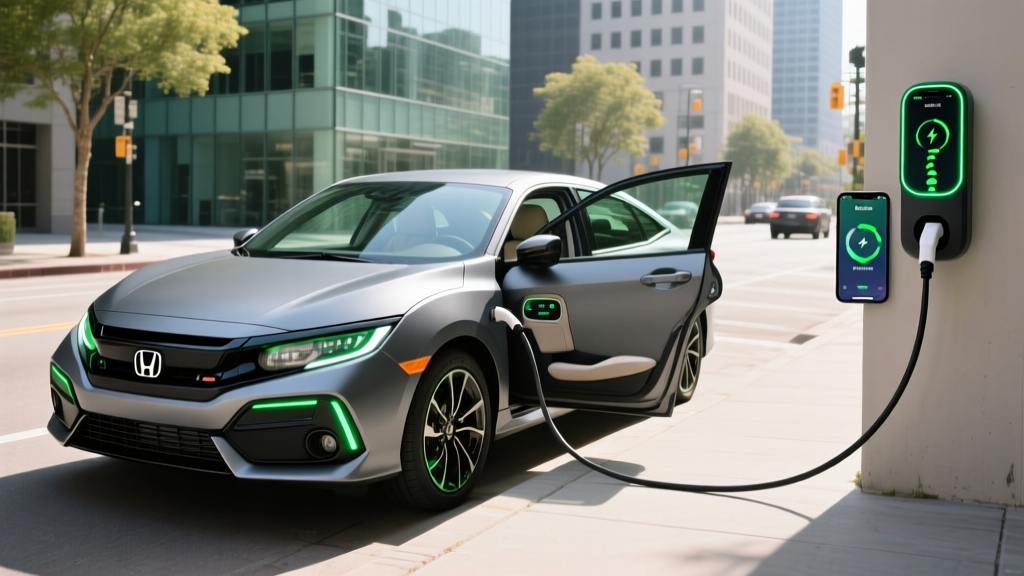
The 2026 Honda Civic Hybrid Hatchback occupies a precise niche: drivers who want electric-motor responsiveness and hybrid efficiency without ever searching for a charging station. With an EPA-rated 50 MPG combined and a two-motor hybrid system producing 200 horsepower, it bridges the gap between the standard Civic's affordability and a full EV's operating cost savings. For buyers not yet ready to commit to plug-in charging infrastructure, this hatchback delivers measurable fuel savings with zero behavioral change required.
This guide covers exactly what you'll get — and what you won't — from the Civic Hybrid Hatchback, including real-world MPG data, battery longevity expectations, and how it compares to plug-in hybrids and full battery-electric vehicles on total cost of ownership.
HEV vs PHEV: What the Civic Hybrid Hatchback Actually Is
Before examining specs, it's essential to clarify what the Civic Hybrid Hatchback is — and isn't.
Conventional Hybrid (HEV) — This Car
- No plug required. The battery charges via regenerative braking and the gasoline engine.
- Battery size: ~1.1 kWh lithium-ion (small buffer, not designed for extended electric-only driving).
- Electric-only range: Less than 1 mile at low speeds; the electric motor assists the engine rather than replacing it.
- Fueling: Gasoline only, at any station.
Plug-In Hybrid (PHEV) — Not This Car
- Requires plug-in charging (Level 1 or Level 2) to access meaningful electric-only range (typically 25–45 miles).
- Battery size: Typically 12–20 kWh — 10x to 20x larger than a conventional hybrid.
- Example: Toyota Prius Prime, Hyundai Tucson PHEV.
Full EV (BEV) — Also Not This Car
- No gasoline engine. 100% electric, requiring home or public charging infrastructure.
- Battery size: 50–100+ kWh.
- Example: Tesla Model 3, Hyundai Ioniq 5, Chevrolet Equinox EV.
The Civic Hybrid Hatchback is a conventional HEV. You will never plug it in. You will never need to. It recaptures energy during braking and coasting, stores it in a small battery, and uses the electric motor to reduce engine load — cutting fuel consumption substantially compared to the gas-only Civic.
Fuel Economy: EPA Ratings and Real-World MPG
The headline number for the 2026 Civic Hybrid Hatchback is its EPA-rated fuel economy. Here's the full breakdown:
| Driving Condition | EPA Rating | Real-World Expectation |
|---|---|---|
| City | 50 MPG | 48–54 MPG (hybrids often exceed EPA in stop-and-go traffic due to regenerative braking) |
| Highway | 47 MPG | 42–46 MPG (sustained high-speed driving reduces hybrid advantage) |
| Combined | 50 MPG | 45–50 MPG (mixed driving) |
Why Hybrids Often Beat EPA in the City
Unlike conventional gas cars, which are least efficient in stop-and-go traffic, the Civic Hybrid thrives there. Every time you brake, the regenerative system captures kinetic energy and stores it in the battery. At low speeds and from stoplights, the electric motor handles initial acceleration — the most fuel-intensive phase. The result: city MPG often matches or exceeds highway MPG, which is the inverse of gas-only vehicles.
Real-World Caveats
Expect fuel economy to drop in these conditions:
- Cold weather (below 30°F): 5–10% reduction as the engine runs longer to warm the cabin and catalytic converter.
- Aggressive acceleration: Heavy throttle use forces the engine to do more work, reducing the electric motor's contribution.
- Highway speeds above 75 mph: Aerodynamic drag dominates, and the hybrid system provides diminishing returns.
- Short trips (under 3 miles): The engine hasn't reached optimal operating temperature, reducing efficiency.
For a driver covering 15,000 miles annually with mixed city/highway driving, the Civic Hybrid Hatchback at 50 MPG combined consumes approximately 300 gallons per year. At $3.50/gallon, that's roughly $1,050 in annual fuel cost — compared to about $1,575 for the gas-only Civic (33 MPG combined) and $0–$600 for a full EV depending on electricity rates.
Powertrain and Performance Specs
| Specification | 2026 Civic Hybrid Hatchback |
|---|---|
| Powertrain | Two-motor hybrid system + 2.0L Atkinson-cycle 4-cylinder |
| Combined Horsepower | 200 HP |
| Combined Torque | 232 lb-ft |
| Transmission | Electronic CVT (e-CVT, no traditional gears) |
| Drivetrain | Front-wheel drive (FWD) |
| 0–60 mph | ~7.2 seconds (estimated) |
| Battery Type | Lithium-ion (~1.1 kWh) |
| Fuel Tank | 12.4 gallons |
| Total Range | ~620 miles (12.4 gal × 50 MPG) |
| Cargo Volume | 24.4 cu ft (rear seats up) |
The two-motor hybrid system is the same architecture used in the Accord Hybrid and CR-V Hybrid. One motor primarily generates electricity from the engine; the other drives the wheels. At highway cruising speeds, a lock-up clutch can connect the engine directly to the wheels for maximum efficiency. This system delivers smooth, linear acceleration without the rubber-band feeling some CVTs produce.
The 200 HP output is a meaningful upgrade over the gas-only Civic's 158 HP (2.0L naturally aspirated) or 180 HP (1.5L turbo). The electric motor's instant torque — available from 0 RPM — makes the hybrid feel quicker in city driving than the 0–60 time alone suggests.
Pricing, Trims, and Tax Credit Eligibility
The 2026 Civic Hybrid Hatchback is available in Sport and Sport Touring trims:
- Sport Hybrid: ~$30,000 MSRP (estimated)
- Sport Touring Hybrid: ~$33,500 MSRP (estimated)
These prices represent a roughly $1,500–$2,000 premium over equivalent gas-only Civic Hatchback trims. At 15,000 miles per year and $3.50/gallon, the hybrid saves approximately $525 annually in fuel costs over the gas model. That means the hybrid premium pays for itself in roughly 3–4 years through fuel savings alone — before considering any resale value premium.
Does the Civic Hybrid Qualify for a Federal Tax Credit?
No. Under current IRS §30D rules, the federal clean vehicle tax credit (up to $7,500) applies only to plug-in electric vehicles — battery-electric vehicles (BEVs) and plug-in hybrids (PHEVs) with at least 7 kWh of battery capacity. The Civic Hybrid Hatchback is a conventional HEV with a ~1.1 kWh battery, making it ineligible for the federal credit.
Some states offer their own hybrid incentives, but these are increasingly rare as state programs shift focus to plug-in vehicles. Check your state's energy or environmental agency for current programs. For federal credit rules, consult the IRS clean vehicle credit page.
Battery Warranty, Lifespan, and Replacement Cost
Honda Hybrid Battery Warranty
- Coverage: 8 years / 100,000 miles (10 years / 150,000 miles in CARB states including CA, NY, MA, and others)
- What's covered: Battery capacity loss below a defined threshold (typically 60–70% of original capacity) or complete failure
- Transferable: Yes, to subsequent owners within the warranty period
How Long Will the Battery Actually Last?
Honda's hybrid battery systems have demonstrated strong longevity in real-world use. The lithium-ion battery in the Civic Hybrid is relatively small (~1.1 kWh) and is managed conservatively — the system never fully charges or fully depletes it, keeping the battery in its optimal state-of-charge window (roughly 20–80%). This shallow-cycling approach dramatically extends cell life.
Based on data from Honda's existing hybrid fleet (Accord Hybrid, CR-V Hybrid), most hybrid batteries last well beyond 150,000 miles without significant degradation. Failures within the warranty period are uncommon. This is a fundamentally different situation from full EV batteries, which undergo deeper charge cycles and hold far more energy.
Battery Replacement Cost
If the hybrid battery fails outside warranty, replacement costs are significantly lower than a full EV battery:
- Estimated replacement cost: $2,500–$4,000 (parts and labor)
- Compared to a full EV: $10,000–$20,000+ for a 60–80 kWh pack
The small battery size makes this a manageable repair, not a vehicle-totaling event. Additionally, refurbished and aftermarket hybrid batteries are increasingly available at lower cost.
Reliability and Ownership Costs
Honda's hybrid powertrain has a strong reliability track record. The two-motor system eliminates the traditional transmission — there are no gears, belts, or torque converters to fail. The e-CVT is essentially a pair of electric motors and a clutch, with far fewer moving parts than a conventional automatic or CVT.
Maintenance requirements are similar to the gas-only Civic:
- Oil changes (the engine still runs on gasoline)
- Brake pad replacement (less frequent due to regenerative braking — many hybrid owners report 80,000+ miles on original pads)
- Tire rotation and replacement
- Cabin air filter, engine air filter
There is no additional maintenance required for the hybrid system itself. The battery, motors, and power electronics are sealed and require no service.
Insurance Costs
Insurance premiums for the Civic Hybrid Hatchback are typically in line with the gas-only Civic — not the elevated rates sometimes seen with full EVs. Insurers generally view conventional hybrids as low-risk, mainstream vehicles with established repair networks.
Civic Hybrid Hatchback vs PHEV vs Full EV: Which Fits You?
Choose the Civic Hybrid Hatchback (HEV) if:
- You don't have access to home or workplace charging (no garage, apartment living, street parking only).
- You want lower fuel costs without changing your fueling behavior.
- Your budget is under $35,000 and you can't absorb the higher upfront cost of a PHEV or EV.
- You take frequent long road trips and don't want to plan around charging stops.
- You want a proven, low-risk powertrain with widespread dealer service support.
Choose a Plug-In Hybrid (PHEV) if:
- You can charge at home (Level 1 or 2) and want 25–45 miles of electric-only commuting.
- Most of your daily driving is under 40 miles, but you occasionally take long trips.
- You want to qualify for the federal tax credit (up to $7,500, subject to income and MSRP caps).
- Examples: Toyota Prius Prime, Hyundai Tucson PHEV.
Choose a Full EV (BEV) if:
- You have reliable home charging (Level 2, 240V) and want the lowest per-mile operating cost.
- You want zero tailpipe emissions and can accept real-world range of 220–320 miles.
- You qualify for the federal tax credit and/or state EV incentives.
- You're comfortable planning DC fast charging stops on road trips (15–30 minutes every 200–250 miles).
- Examples: Tesla Model 3, Chevrolet Equinox EV, Hyundai Ioniq 5.
Pros and Cons
Pros
- 50 MPG combined — real fuel savings without behavioral change
- 200 HP with instant electric torque — noticeably quicker than gas-only Civic
- No plug, no charging anxiety, no infrastructure dependency
- 620+ mile total range — fewer fill-ups on road trips
- Lower brake wear due to regenerative braking
- 8–10 year battery warranty, affordable replacement cost
- Hatchback cargo versatility (24.4 cu ft)
Cons
- No federal tax credit eligibility (HEV, not PHEV or BEV)
- ~$1,500–$2,000 price premium over gas-only Civic
- FWD only — no all-wheel-drive option (unlike some competitors)
- Cannot drive on electric-only power for meaningful distances
- Highway MPG advantage over gas Civic is smaller than city advantage
Frequently Asked Questions
How many MPG does the Civic Hybrid Hatchback get?
The 2026 Honda Civic Hybrid Hatchback is EPA-rated at 50 MPG city, 47 MPG highway, and 50 MPG combined. In real-world driving, expect 48–54 MPG in city conditions and 42–46 MPG on the highway. Cold weather and aggressive driving will reduce these figures.
Does the Civic Hybrid need to be plugged in?
No. The Civic Hybrid Hatchback is a conventional hybrid (HEV), not a plug-in hybrid (PHEV). The battery charges entirely through regenerative braking and the gasoline engine. You fuel it like any other car — at a gas station.
How far can the Civic Hybrid drive on electric power alone?
Less than 1 mile at very low speeds. The electric motor is designed to assist the gasoline engine and handle low-speed driving briefly, not to replace it. If you want meaningful electric-only range (25–45 miles), you need a plug-in hybrid (PHEV) like the Toyota Prius Prime.
Is the Civic Hybrid reliable? What if the battery fails?
Honda's hybrid systems have a strong reliability record. The battery is covered by an 8-year/100,000-mile warranty (10 years/150,000 miles in CARB states). Most hybrid batteries last well beyond 150,000 miles. If replacement is needed outside warranty, expect to pay $2,500–$4,000 — far less than a full EV battery replacement.
Does the Civic Hybrid Hatchback qualify for any tax credit?
No. The federal §30D clean vehicle tax credit applies only to plug-in vehicles (BEVs and PHEVs with at least 7 kWh of battery capacity). The Civic Hybrid is a conventional HEV and does not qualify. Some states may offer their own hybrid incentives — check your state's energy agency. Consult a tax professional for eligibility details.
How does the Civic Hybrid compare to the Toyota Prius?
The Toyota Prius (a liftback, not a hatchback in the traditional sense) offers slightly higher EPA ratings — up to 57 MPG combined for the LE FWD trim. However, the Civic Hybrid Hatchback provides more cargo space (24.4 cu ft vs. the Prius's ~20 cu ft behind rear seats) and more horsepower (200 HP vs. 194 HP for the Prius AWD). The Prius also offers a PHEV variant (Prius Prime) with ~44 miles of electric-only range, which the Civic does not. See EPA data at fueleconomy.gov for direct comparisons.
Is there an all-wheel-drive option for the Civic Hybrid Hatchback?
No. The 2026 Civic Hybrid Hatchback is front-wheel drive only. If AWD is a priority in a hybrid, consider the Toyota Prius AWD (196 HP, ~54 MPG combined) or a hybrid SUV like the Honda CR-V Hybrid AWD.
Bottom Line
The 2026 Honda Civic Hybrid Hatchback delivers on a specific promise: meaningful fuel savings with zero infrastructure requirements. At 50 MPG combined, it cuts fuel costs by roughly a third compared to the gas-only Civic, while adding 42 horsepower and instant electric torque. The hybrid premium pays for itself in 3–4 years for an average driver, and the battery is warrantied for 8–10 years with affordable out-of-warranty replacement costs.
If you can charge at home and want the lowest possible operating cost, a full EV or PHEV may serve you better — and may qualify for the federal tax credit. But if you live in an apartment, park on the street, take frequent road trips, or simply don't want to think about charging, the Civic Hybrid Hatchback is one of the most efficient, practical, and low-risk ways to reduce your fuel consumption. For detailed EPA fuel economy data, visit fueleconomy.gov.