Quick Verdict: A Mild-Hybrid Relic Worth Considering on a Budget
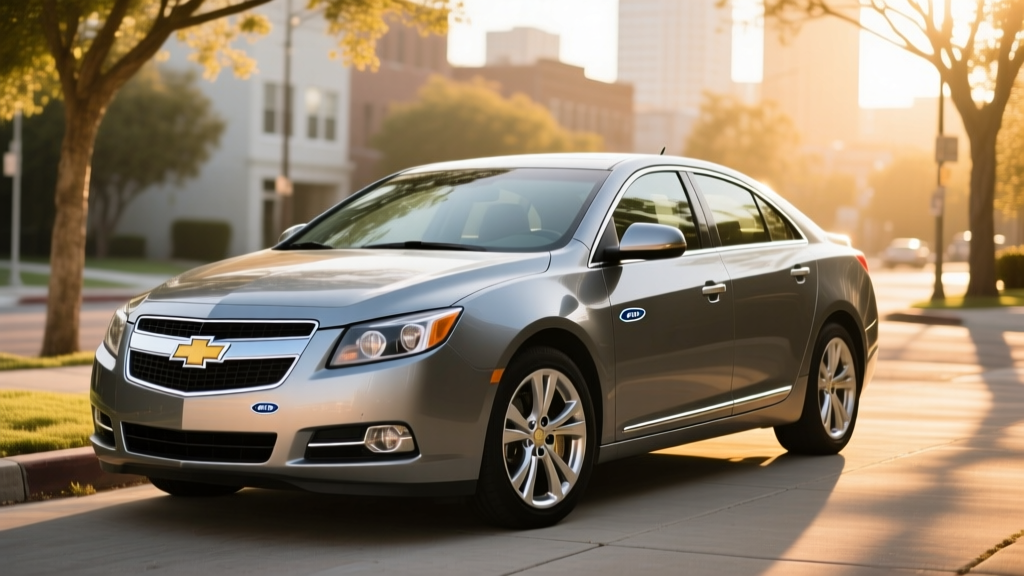
The 2009 Chevrolet Malibu Hybrid occupies an unusual space in the used-car market. It's not a full hybrid like a Toyota Prius, nor is it a plug-in hybrid (PHEV) with electric-only range. Instead, GM equipped this midsize sedan with a mild-hybrid system — a belt-alternator-starter (BAS) setup paired with a 2.4-liter four-cylinder engine. The result is modest fuel-economy gains over the gas-only Malibu, seamless stop-start functionality, and a simpler hybrid architecture that has proven reasonably durable over 17 years of real-world use.
If you're shopping for a cheap, fuel-efficient commuter and you've found a well-maintained 2009 Malibu Hybrid, this guide breaks down exactly what you're getting — the real MPG, the powertrain limitations, battery longevity, and whether this mild hybrid still makes sense in a market now flooded with full HEVs, PHEVs, and used EVs.
HEV vs. PHEV vs. Mild Hybrid: Where the Malibu Hybrid Fits
Before diving into specs, it's critical to understand that the 2009 Malibu Hybrid is not a conventional full hybrid (HEV) like the Toyota Camry Hybrid, nor is it a plug-in hybrid (PHEV). It uses GM's eAssist-style BAS system, which predates the modern eAssist branding. Here's the breakdown:
| Feature | 2009 Malibu Hybrid (Mild) | Full HEV (e.g., Camry Hybrid) | PHEV (e.g., Prius Prime) |
|---|---|---|---|
| Can drive on electric only? | No | Yes (short distances, low speed) | Yes (25-45 mi) |
| Needs to be plugged in? | No | No | Yes (Level 1/2) |
| Regenerative braking? | Yes (mild) | Yes (strong) | Yes (strong) |
| Engine auto stop-start? | Yes | Yes | Yes |
| Electric motor assists acceleration? | Yes (modest) | Yes (significant) | Yes (significant) |
| Battery size | ~0.5 kWh (NiMH) | 1.0-1.6 kWh (NiMH/Li-ion) | 8.8-18.1 kWh (Li-ion) |
Key takeaway: The Malibu Hybrid's electric motor cannot propel the car on its own. It assists the gas engine during acceleration, enables regenerative braking, and powers the stop-start system. Think of it as a fuel-economy enhancement to a conventional powertrain, not a true hybrid in the modern sense.
EPA Fuel Economy: 2009 Malibu Hybrid MPG Breakdown
| Driving Cycle | MPG (EPA) |
|---|---|
| City | 26 MPG |
| Highway | 34 MPG |
| Combined | 29 MPG |
Source: EPA Fuel Economy Guide (fueleconomy.gov)
For context, the 2009 Malibu with the same 2.4L engine but no hybrid system was rated at 22 city / 30 highway / 25 combined. The mild-hybrid system delivers roughly a 4 MPG combined improvement — meaningful for daily commuters but far less dramatic than what modern full hybrids achieve. The 2025 Toyota Camry Hybrid, for comparison, returns up to 51 MPG combined.
Real-World MPG vs. EPA Sticker
The BAS mild-hybrid system provides its greatest benefit in stop-and-go city driving, where the engine shuts off at lights and the electric motor assists during initial acceleration. In real-world use, owners typically report:
- City driving: 25-28 MPG (slightly below EPA due to aging components and battery degradation)
- Highway driving: 32-36 MPG (largely unchanged — the BAS system provides minimal highway benefit)
- Combined real-world: 27-30 MPG depending on driving mix and battery condition
Unlike full hybrids, which often exceed their EPA city rating due to aggressive regenerative braking and electric-only low-speed driving, the Malibu Hybrid's mild system typically delivers right at or slightly below sticker. The small NiMH battery pack simply doesn't store enough energy to provide meaningful electric-only assist beyond initial launch.
Powertrain Specs: Engine, Motor, and Combined Output
| Specification | Value |
|---|---|
| Engine | 2.4L DOHC inline-4 (Ecotec LE5) |
| Engine horsepower | 164 hp @ 5,100 rpm |
| Engine torque | 159 lb-ft @ 4,500 rpm |
| Electric motor (BAS) | Belt-alternator-starter, ~5 kW assist |
| Combined system output | ~164 hp (motor assists but doesn't add peak HP) |
| Transmission | 4-speed automatic |
| 0-60 mph | ~8.8 seconds (est.) |
| Drivetrain | Front-wheel drive |
| Hybrid battery | ~0.5 kWh, nickel-metal hydride (NiMH) |
The 4-speed automatic transmission is a notable weak point by modern standards — even in 2009, competitors were offering 5- and 6-speed automatics, and the limited gear ratios hurt both highway efficiency and acceleration refinement. The BAS motor's ~5 kW of assist is enough to smooth out stop-start transitions and provide a small torque fill during acceleration, but it's not transforming this car into anything quick.
Battery Longevity, Reliability, and Replacement Cost
This is the top concern for any used hybrid buyer, and the 2009 Malibu Hybrid presents a mixed picture.
Battery Degradation and Failure Patterns
The ~0.5 kWh NiMH battery pack in the Malibu Hybrid is small and relatively stressed compared to the larger packs in full hybrids. Owner reports and mechanic surveys indicate:
- Typical battery lifespan: 8-12 years / 100,000-150,000 miles before significant degradation
- Failure symptoms: Reduced fuel economy (loss of stop-start and regen), "Service Hybrid System" dashboard warning, reduced acceleration assist
- Complete failure rate: Moderate — the NiMH chemistry is proven, but the small pack size means cells work harder and heat up more during regen cycles
Hybrid Battery Replacement Cost
| Option | Cost Range |
|---|---|
| OEM replacement (dealer) | $2,500 - $3,500 |
| Aftermarket/remanufactured | $1,500 - $2,500 |
| Used/salvage pack | $500 - $1,000 |
| Individual cell repair (specialist) | $800 - $1,500 |
Given that a clean 2009 Malibu Hybrid typically sells for $3,000-$6,000 in the 2026 used market, a full OEM battery replacement can total 50-100% of the vehicle's value. This is the critical economic calculation for prospective buyers: if the hybrid battery is original and hasn't been replaced, you're likely driving on borrowed time.
Overall Reliability
Beyond the battery, the 2009 Malibu Hybrid shares most of its mechanicals with the conventional Malibu. The 2.4L Ecotec engine is generally reliable but has known issues with timing chain stretch on high-mileage examples. The 4-speed automatic is durable but unremarkable. NHTSA recalls for this model year included power steering and electrical system concerns — verify recall completion via NHTSA's recall lookup.
Tax Credits and Incentives: What Applies in 2026?
The short answer: no federal tax credits apply to the 2009 Chevrolet Malibu Hybrid in 2026.
- The federal §30D new clean vehicle credit (IRS) applies only to new qualifying vehicles, and the Malibu Hybrid was never a plug-in — it doesn't meet the battery-capacity threshold regardless.
- The federal used EV credit (§25E) covers up to $4,000 for used plug-in EVs and PHEVs with at least 7 kWh of battery capacity. The Malibu Hybrid's ~0.5 kWh NiMH pack and non-plug-in architecture make it ineligible.
- No state-level hybrid incentives target 17-year-old conventional or mild hybrids.
The economic case for this vehicle rests entirely on its low purchase price and modest fuel savings — not on government incentives.
Who Should Buy the 2009 Malibu Hybrid (and Who Shouldn't)
- You need a sub-$5,000 commuter with slightly better MPG than a gas-only midsize sedan
- The specific example you're considering has a recently replaced hybrid battery (ask for documentation)
- You drive mostly in stop-and-go city traffic where the stop-start and regen provide the most benefit
- You want a simple hybrid system with fewer complex components than a full HEV or PHEV
- The hybrid battery is original and untested — replacement cost may exceed vehicle value
- You want meaningful electric-only driving (consider a used PHEV like a 2016+ Chevrolet Volt or a 2017+ Prius Prime)
- You prioritize highway MPG — the mild-hybrid system provides almost no highway benefit
- You want modern safety tech, infotainment, or driver-assistance features
- You can stretch your budget to $10,000-$15,000, where used full hybrids (Prius, Camry Hybrid, Fusion Hybrid) offer 40+ MPG and more reliable battery systems
Hybrid vs. PHEV vs. Full EV: Which Fits Your Needs?
If you're researching the 2009 Malibu Hybrid, you're likely weighing fuel efficiency against budget. Here's how the three electrified vehicle categories compare for a cost-conscious buyer in 2026:
| Factor | Mild Hybrid (Malibu) | Full HEV (Used Prius) | PHEV (Used Volt/Prius Prime) | Used BEV (Leaf, Bolt) |
|---|---|---|---|---|
| Typical used price (2026) | $3,000-$6,000 | $8,000-$16,000 | $10,000-$20,000 | $8,000-$18,000 |
| Real-world combined MPG/MPGe | 27-30 MPG | 42-50 MPG | 40-50 MPG + 20-40 mi electric | 100-130 MPGe |
| Plug-in required? | No | No | Recommended | Required |
| Maintenance complexity | Low | Moderate | Moderate-High | Low (fewer moving parts) |
| Battery replacement risk | Moderate | Moderate (proven) | Higher cost | Highest cost |
| Fuel cost per mile (est.) | ~$0.12 | ~$0.07 | ~$0.05-$0.08 | ~$0.03-$0.05 |
The 2009 Malibu Hybrid makes the most sense as a very low-budget stopgap — a car you buy for $4,000, drive for 2-3 years, and accept that fuel savings will be modest. If you can spend even $5,000 more, the efficiency gains from a used full hybrid or PHEV are dramatically larger and the ownership math usually works out better over time.
Frequently Asked Questions
How many MPG does the 2009 Chevrolet Malibu Hybrid get?
The EPA rates it at 26 city / 34 highway / 29 combined. Real-world results typically fall between 27-30 MPG combined, depending on driving conditions and battery health. City driving benefits most from the mild-hybrid system.
Can the 2009 Malibu Hybrid drive on electric power alone?
No. The BAS mild-hybrid system cannot propel the vehicle without the gasoline engine. The electric motor only assists during acceleration and enables engine stop-start at idle.
Does the 2009 Malibu Hybrid need to be plugged in?
No. It is not a plug-in hybrid. The small NiMH battery recharges through regenerative braking and the engine-driven alternator. There is no charge port.
Is the 2009 Malibu Hybrid reliable?
Mechanically, it shares most components with the conventional Malibu and is reasonably reliable. The main risk is the aging hybrid battery — if original, it's 17 years old and likely near end-of-life. Verify battery health and replacement history before purchase.
What does it cost to replace the hybrid battery?
Expect $1,500-$3,500 depending on whether you choose a remanufactured pack, OEM replacement, or individual cell repair. Given the vehicle's $3,000-$6,000 market value, this is a significant expense relative to the car's worth.
Does the 2009 Malibu Hybrid qualify for any tax credits?
No. It does not qualify for the federal §30D new vehicle credit (it's not new and wasn't a plug-in), nor the §25E used EV credit (requires at least 7 kWh battery and plug-in capability). No state incentives target this vehicle in 2026.
How does the 2009 Malibu Hybrid compare to a Toyota Prius of the same era?
The 2009 Prius (3rd generation) was rated at 46 MPG combined — roughly 60% more efficient than the Malibu Hybrid. The Prius uses a full hybrid system with genuine electric-only low-speed capability, a larger battery, and a proven track record. Used Prius prices are higher, but the fuel savings and reliability advantage typically justify the premium.