Quick Verdict: The 2009 Camry Hybrid at a Glance
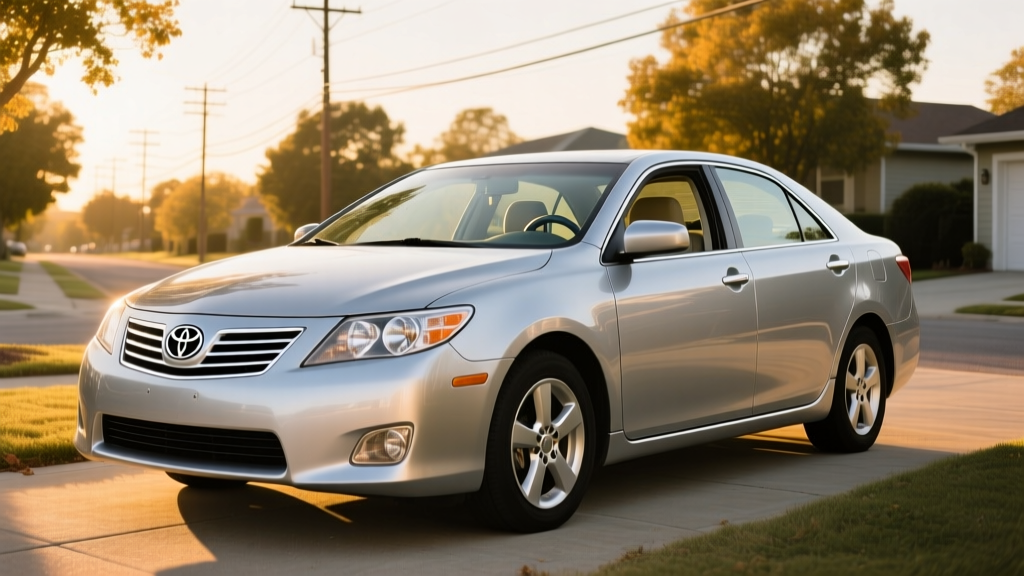
The 2009 Toyota Camry Hybrid was one of the most fuel-efficient midsize sedans of its era, pairing a 2.4-liter four-cylinder engine with an electric motor for an EPA-estimated 33 MPG combined. More than 15 years after it left the showroom, it remains a popular used-car choice for buyers who want hybrid efficiency without plug-in complexity. But with aging nickel-metal hydride (NiMH) batteries and no federal tax credit eligibility on the used market, is it still a smart buy in 2026?
This guide covers the real-world fuel economy you can expect, the battery lifespan and replacement costs that matter most on a 17-year-old hybrid, and how the 2009 Camry Hybrid stacks up against modern HEVs, PHEVs, and full EVs.
| Spec | 2009 Toyota Camry Hybrid |
|---|---|
| Powertrain | 2.4L I4 + electric motor (HEV) |
| Combined Horsepower | 187 hp (net system output) |
| Engine | 147 hp @ 6,000 rpm / 138 lb-ft torque |
| Electric Motor | 40 hp (30 kW) |
| Transmission | eCVT (planetary gearset) |
| Battery Type | NiMH (nickel-metal hydride), ~1.6 kWh |
| EPA MPG (City / Hwy / Combined) | 33 / 34 / 33 |
| 0-60 mph | ~8.4 seconds |
| Drivetrain | Front-wheel drive |
| Cargo Volume | 10.6 cu ft (trunk) |
| Original MSRP (2009) | ~$26,400 |
| Typical Used Price (2026) | $4,500–$8,000 |
How Many MPG Does the 2009 Camry Hybrid Actually Get?
The EPA rates the 2009 Camry Hybrid at 33 MPG city, 34 MPG highway, and 33 MPG combined. That was impressive for a midsize sedan in 2009, and it still holds up against many modern non-hybrid cars. But real-world results vary, and the direction of that variance depends heavily on how and where you drive.
| Driving Scenario | Expected MPG | Notes |
|---|---|---|
| EPA Combined | 33 MPG | Official sticker figure |
| City / Stop-and-Go | 34–38 MPG | Regen braking shines; often exceeds EPA city |
| Highway (70+ mph) | 28–32 MPG | Aero drag and limited electric assist at speed |
| Cold Weather (below 35°F) | 27–31 MPG | Engine runs more for cabin heat; battery less efficient |
| Mixed Real-World Average | 31–35 MPG | Based on owner-reported data on fueleconomy.gov |
Like most conventional hybrids, the 2009 Camry Hybrid actually performs better in city driving than on the highway. The electric motor handles low-speed acceleration and regenerative braking recaptures energy at every stop. On the highway, the gasoline engine does most of the work, and the small NiMH battery provides minimal assist. According to crowdsourced data on fueleconomy.gov, most owners report real-world combined averages between 31 and 35 MPG — close to the EPA sticker, with some drivers exceeding it in warm-climate city driving.
Real-World Fuel Economy Callout: Expect 31–35 MPG combined in moderate climates. City drivers may see 36+ MPG. Highway-heavy commutes and cold weather will pull you down to 28–31 MPG. With a 17.2-gallon fuel tank, that translates to roughly 530–600 miles per tank in mixed driving.
Hybrid (HEV) vs. Plug-In Hybrid (PHEV) vs. Full EV: What's the Difference?
The 2009 Camry Hybrid is a conventional hybrid (HEV) — not a plug-in hybrid. This distinction matters because it determines how the car is fueled, how far it can drive on electricity, and whether it qualifies for tax credits.
| Feature | HEV (2009 Camry Hybrid) | PHEV (e.g., RAV4 Prime) | BEV (e.g., Tesla Model 3) |
|---|---|---|---|
| Plugs In? | No — self-charging via engine + regen | Yes — Level 1/2 charging | Yes — Level 1/2/DC fast charging |
| Electric-Only Range | ~1 mile at low speed | 25–42 miles (typical) | 250–400+ miles |
| Total Range | ~550 miles (gas + electric) | ~450–600 miles (electric + gas) | 250–400+ miles (electric only) |
| Battery Size | ~1.6 kWh (NiMH) | 13–18 kWh (lithium-ion) | 50–100 kWh (lithium-ion) |
| Fuel Cost per Mile | ~$0.10 (gas only) | ~$0.04 electric / ~$0.10 gas | ~$0.03–0.05 (electric) |
| Federal Tax Credit (§30D) | None (used, HEV) | Up to $7,500 (new, if eligible) | Up to $7,500 (new, if eligible) |
| Home Charging Needed? | No | Recommended (Level 2 ideal) | Essential (Level 2 strongly recommended) |
The 2009 Camry Hybrid's electric motor assists the gasoline engine during acceleration and powers the car at very low speeds for brief distances — typically under 1 mile, below about 25 mph. It cannot sustain highway speeds on electric power alone. This is fundamentally different from a modern PHEV like the Toyota RAV4 Prime, which offers 42 miles of electric-only range at full highway speeds before the gas engine kicks in.
Who should choose the 2009 Camry Hybrid (HEV)? Drivers who want better fuel economy without changing their fueling habits. No plug, no charging app, no range planning — just fill up at any gas station and go.
Who should look at a PHEV instead? Drivers with access to home or workplace Level 2 charging who want to do most daily driving on electricity (30–40 miles covers most commutes) but keep a gas engine for road trips.
Who should go full EV? Drivers with reliable home charging, predictable commutes, and the budget for a higher upfront cost offset by lower per-mile energy costs and reduced maintenance.
Powertrain Deep Dive: How the 2009 Camry Hybrid Drives
Toyota's Hybrid Synergy Drive system in the 2009 Camry pairs a 2.4-liter inline-four (the 2AZ-FXE engine, an Atkinson-cycle variant) with a 30 kW permanent-magnet electric motor. The combined net system output is 187 horsepower, routed through an electronically controlled continuously variable transmission (eCVT) that uses a planetary gearset rather than a traditional belt-and-pulley CVT.
This eCVT design is key to Toyota hybrid reliability — there are no belts to wear, no clutch packs to burn out, and no traditional transmission fluid to change at short intervals. The planetary gearset simply manages the power split between the engine, motor, and generator. It's one of the most durable drivetrain designs in the industry.
Acceleration is adequate but unremarkable: 0-60 mph in approximately 8.4 seconds. The electric motor provides instant torque off the line, making the car feel quicker in city driving than the 0-60 number suggests. At highway speeds, passing power is acceptable but not eager. The 2009 Camry Hybrid prioritizes efficiency over performance, and that trade-off is evident in its driving character.
The regenerative braking system captures kinetic energy during deceleration and feeds it back to the NiMH battery pack. The brake feel is typical of early Toyota hybrids — slightly mushy at the pedal top as the regen system engages before the friction brakes kick in. Most owners adapt quickly, but it's noticeably different from a conventional car's brake pedal.
Hybrid Battery Lifespan, Warranty & Replacement Cost
For any used hybrid buyer, the traction battery is the single biggest financial variable. The 2009 Camry Hybrid uses a nickel-metal hydride (NiMH) battery pack with approximately 1.6 kWh of total capacity. This is a fundamentally different chemistry from the lithium-ion packs in modern EVs and PHEVs.
Original Battery Warranty: Toyota warranted the hybrid battery for 8 years / 100,000 miles (extended to 10 years / 150,000 miles in California Air Resources Board states: CA, CT, ME, MA, NJ, NY, OR, RI, VT, WA). For a 2009 model, this factory warranty expired no later than 2019 in most states.
How Long Do These Batteries Actually Last?
NiMH batteries in Toyota hybrids have a strong longevity track record. Based on owner reports and fleet data, the 2009 Camry Hybrid battery typically lasts 150,000 to 200,000 miles or 12–18 years before significant degradation forces replacement. Some units exceed 250,000 miles. The NiMH chemistry degrades more gracefully than early lithium-ion — it loses capacity gradually rather than failing suddenly.
Key factors that shorten battery life:
- Extreme heat: Sustained exposure to 100°F+ ambient temperatures (Arizona, Texas summers) accelerates cell degradation
- Deep cycling: Frequently draining the battery to its minimum state of charge (rare in normal driving, as Toyota's software prevents true deep discharge)
- High mileage: Simply put, more charge/discharge cycles = more wear
- Sitting unused: A hybrid stored for months without being driven can develop cell imbalance issues
Battery Replacement Cost in 2026
| Option | Cost Range | Notes |
|---|---|---|
| New OEM Toyota Battery | $3,000–$4,000 (parts + labor) | Dealership installation; best warranty |
| Remanufactured Battery | $1,500–$2,500 | Rebuilt with tested cells; 1–3 year warranty typical |
| Used/Salvage Battery | $500–$1,200 | From a wrecked Camry; condition unknown; risky |
| Individual Cell Replacement | $300–$800 | Only bad cells replaced; requires skilled tech |
On a car worth $4,500–$8,000, a $3,500 OEM battery replacement is a significant percentage of the vehicle's value. Many owners opt for remanufactured packs or individual cell repairs. Before buying a 2009 Camry Hybrid, get a hybrid battery health check — most Toyota dealers can pull the battery's state of health (SoH) data via OBD-II, and independent hybrid specialists can do the same.
Is the 2009 Camry Hybrid Reliable?
Yes — with caveats. The 2009 Camry Hybrid benefits from Toyota's reputation for hybrid durability and the robustness of the eCVT planetary gearset. The gasoline engine (2AZ-FXE) is well-proven, though it has a known history of excessive oil consumption in some units, particularly those with over 100,000 miles. Toyota issued a technical service bulletin (TSB) for this issue, and some engines were repaired under an extended warranty program, but that coverage has long since expired.
Common issues to watch for:
- Oil consumption: Check the oil level frequently; some engines burn a quart every 1,000–2,000 miles
- Hybrid battery degradation: Dashboard warning light ("Check Hybrid System") indicates a fault; get it scanned immediately
- Brake actuator: The electro-hydraulic brake actuator can fail on higher-mileage examples; replacement runs $1,200–$1,800
- Water pump: The engine water pump is a known wear item around 100,000–120,000 miles
- 12V auxiliary battery: Like any car, the standard 12V battery needs replacement every 4–6 years; in the Camry Hybrid it's located in the trunk
According to NHTSA, the 2009 Camry received a 5-star frontal crash rating for driver and passenger. The IIHS rated it "Good" in moderate overlap front and side impact tests. Safety technology is basic by 2026 standards — no automatic emergency braking, no lane-keeping assist, no blind-spot monitoring. You're getting 2009-era safety in a 2009 car.
Pricing, Tax Credits & Ownership Costs
As of 2026, the 2009 Toyota Camry Hybrid trades in the used market for approximately $4,500 to $8,000, depending on mileage, condition, battery health, and regional demand. Clean, low-mileage examples with documented battery replacements command the top of that range.
Federal Tax Credit Eligibility
The 2009 Camry Hybrid does not qualify for any current federal tax credit. Here's why:
- It is a conventional hybrid (HEV), not a PHEV or BEV — the IRS §30D Qualified Plug-In Electric Drive Motor Vehicle Credit applies only to vehicles with plug-in capability and a minimum battery capacity of 7 kWh (for the used-vehicle credit under §25E, the threshold is 7 kWh as well)
- The Camry Hybrid's ~1.6 kWh NiMH battery falls far short of that threshold
- Even if it were a PHEV, the used-EV credit (§25E, up to $4,000) applies only to vehicles sold by a licensed dealer for $25,000 or less with a battery of at least 7 kWh — the Camry Hybrid doesn't meet the battery requirement
- The original hybrid vehicle tax credit that existed in 2009 was phased out for Toyota after the manufacturer hit 60,000 units sold, and it has been repealed entirely for new purchases
For current incentive details, always check the IRS clean vehicle credits page and consult a tax professional.
Estimated Annual Ownership Costs
| Cost Category | Annual Estimate | Notes |
|---|---|---|
| Fuel (12,000 mi/yr, $3.50/gal) | ~$1,270 | At 33 MPG combined |
| Insurance | ~$900–$1,400 | Varies by driver, state, coverage level |
| Maintenance | ~$400–$700 | Oil, filters, brakes, tires; lower than many gas cars |
| Registration/Taxes | ~$100–$300 | Varies by state; no EV surcharge on HEVs |
| Total Estimated Annual Cost | ~$2,670–$3,670 | Excluding loan payments and depreciation |
2009 Camry Hybrid vs. Modern Alternatives
If you're considering the 2009 Camry Hybrid, you're likely comparing it against other used hybrids or wondering whether to spend more on a newer model. Here's how it stacks up:
Pros
- Proven, durable hybrid system with massive parts availability
- 33 MPG combined — still competitive with many modern non-hybrids
- No plug-in required — fuel anywhere, no charging infrastructure needed
- Low purchase price ($4,500–$8,000) with low running costs
- eCVT planetary gearset is nearly bulletproof
- Comfortable ride, spacious interior for a midsize sedan
Cons
- NiMH battery nearing end of life on most examples; $1,500–$4,000 replacement
- No federal or state tax credits available
- Outdated safety tech — no AEB, no lane-keep, no blind-spot monitoring
- Known oil consumption issue on the 2AZ-FXE engine
- Trunk space reduced to 10.6 cu ft due to battery pack placement
- Dated infotainment — no Apple CarPlay, no Android Auto, basic Bluetooth
vs. a used 2018+ Camry Hybrid: The newer model gets 52 MPG combined (a massive 19 MPG improvement), uses a lighter lithium-ion battery, includes Toyota Safety Sense (AEB, lane departure alert, adaptive cruise), and has modern infotainment. But it costs $16,000–$24,000 used — roughly 3x the price.
vs. a used PHEV (e.g., 2017+ Prius Prime): The Prius Prime offers 25 miles of electric-only range and 54 MPG combined as a hybrid. If you can charge at home, your daily fuel cost drops dramatically. But used prices start around $15,000, and you need access to a plug.
vs. a full EV (e.g., used Nissan Leaf or Chevy Bolt): EVs eliminate fuel and most maintenance costs, but require home charging access and carry range limitations on older models. A used Bolt with 259 miles of range starts around $12,000–$15,000 and may qualify for the $4,000 used-EV tax credit under §25E.
Choose the 2009 Camry Hybrid if: You need a cheap, reliable commuter car, don't have access to charging, and want hybrid MPG without the complexity of a plug-in vehicle. Budget under $8,000 and accept that you may need a battery replacement within a few years.
Look elsewhere if: You want modern safety features, can afford $15,000+ for a newer hybrid or PHEV, have home charging access and want to maximize electric driving, or need the lowest possible cost per mile (a full EV or newer PHEV will beat 33 MPG on operating cost).
Frequently Asked Questions
How many MPG does the 2009 Camry Hybrid get in real-world driving?
The EPA rates it at 33 city / 34 highway / 33 combined. Real-world owner data shows most drivers average 31–35 MPG combined, with city-heavy drivers sometimes exceeding 36 MPG. Cold weather and sustained highway driving at 75+ mph will reduce efficiency to 28–31 MPG.
Does the 2009 Camry Hybrid need to be plugged in?
No. It is a conventional hybrid (HEV), not a plug-in hybrid (PHEV). The battery charges itself through regenerative braking and the gasoline engine. You fuel it exclusively at gas stations, just like a regular car.
How long does the hybrid battery last, and what does replacement cost?
The NiMH battery typically lasts 150,000–200,000 miles or 12–18 years. Replacement costs range from $500 for a used pack to $4,000 for a new OEM unit at a dealership. Remanufactured batteries ($1,500–$2,500) are the most common choice for a car at this price point. The original 8-year/100,000-mile warranty has expired on all 2009 models.
Does the 2009 Camry Hybrid qualify for any tax credit?
No. It does not qualify for the federal §30D new clean vehicle credit (it's used and not a plug-in) or the §25E used clean vehicle credit (its battery is under the 7 kWh minimum). The original 2009-era hybrid tax credit was phased out for Toyota and has been repealed. No current federal incentive applies.
Is the 2009 Camry Hybrid reliable at high mileage?
Generally yes, with the caveat that the hybrid battery is now the primary reliability concern due to age. The eCVT transmission is extremely durable. The 2AZ-FXE engine is reliable but prone to oil consumption — check the dipstick regularly. The brake actuator and water pump are known wear items. With proper maintenance and a healthy battery, these cars routinely exceed 200,000 miles.
How does the 2009 Camry Hybrid compare to the regular 2009 Camry?
The conventional 2009 Camry with the 2.4L four-cylinder gets 21 city / 31 highway / 25 combined — 8 MPG less than the hybrid. The hybrid costs about $3,000–$4,000 more on the used market but saves roughly $400–$500 per year in fuel at 12,000 miles driven annually. The payback period is roughly 6–8 years, though the hybrid's lower emissions and smoother stop-start driving are additional intangible benefits.
What should I check before buying a used 2009 Camry Hybrid?
Get a pre-purchase inspection that includes: (1) a hybrid battery health/SoH scan via OBD-II, (2) an oil consumption history check, (3) a brake actuator test, (4) verification that all recalls and TSBs were addressed. Check the vehicle history report for accident damage, and verify the 12V battery age. If the hybrid battery shows significant degradation, negotiate the price down by $1,500–$2,500 to account for replacement.