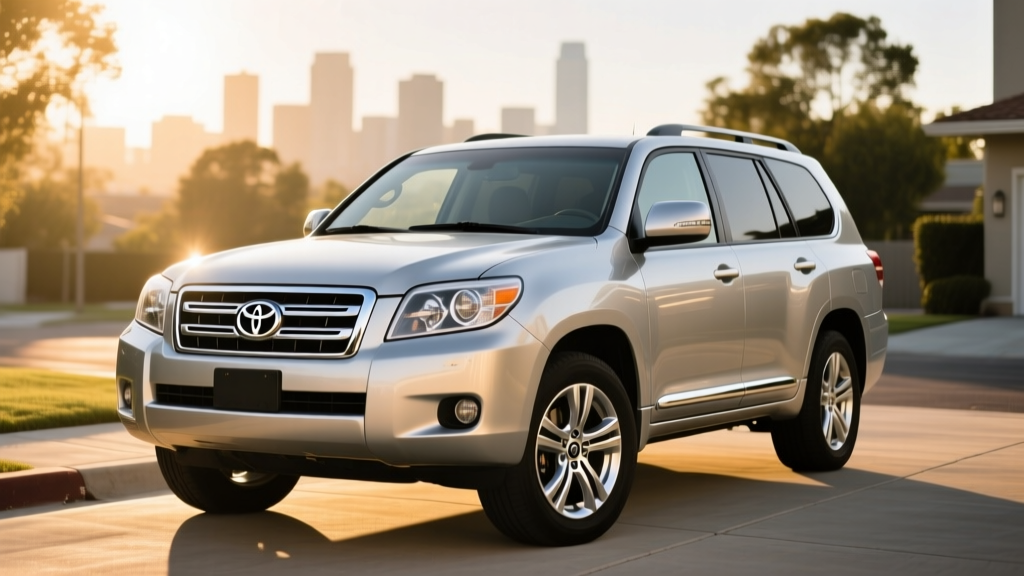
The 2006 Toyota Highlander Hybrid occupies a unique space in the used SUV market. As one of the earliest mainstream hybrid SUVs ever sold in the United States, it pioneered the formula Toyota would later perfect with the RAV4 Hybrid and Venza: pair a V6 engine with electric motors, add all-wheel drive, and deliver meaningful fuel savings over a conventional gas model. Nearly two decades later, budget-conscious shoppers searching for a 2006 Highlander Hybrid want to know whether this early-generation hybrid still holds up — particularly regarding battery longevity, real-world MPG, and maintenance costs.
This guide breaks down everything a used-car buyer needs to evaluate before purchasing a 2006 Highlander Hybrid today, including EPA fuel economy data, the Hybrid Synergy Drive powertrain, battery replacement economics, and how this vehicle compares to modern hybrid and plug-in hybrid alternatives.
HEV vs PHEV: What the 2006 Highlander Hybrid Actually Is
Before evaluating specs, it's critical to understand what this vehicle is — and isn't. The 2006 Highlander Hybrid is a conventional hybrid electric vehicle (HEV), not a plug-in hybrid (PHEV). Here's the distinction:
| Feature | HEV (2006 Highlander Hybrid) | PHEV (e.g., 2026 RAV4 Prime) |
|---|---|---|
| Plug-in charging? | No — charges via engine + regen | Yes — plug into Level 1 or Level 2 |
| Electric-only driving | Very limited, low-speed only (~1 mi) | 20–42 miles on battery alone |
| Battery capacity | ~1.9 kWh (NiMH, small buffer) | 18.1 kWh (lithium-ion) |
| Federal tax credit | No longer eligible | Up to $7,500 under §30D (if eligible) |
| Primary fuel | Gasoline (hybrid assists) | Electricity first, gas as backup |
The 2006 Highlander Hybrid never needs to be plugged in. Its nickel-metal hydride (NiMH) battery pack recharges through regenerative braking and the gasoline engine. If you're looking for electric-only commuting capability, this isn't the vehicle — you'd want a modern PHEV or full BEV instead.
Fuel Economy: EPA Ratings and Real-World MPG
The headline number for any hybrid buyer is fuel economy. According to fueleconomy.gov, the 2006 Toyota Highlander Hybrid 4WD achieves the following EPA estimates:
| Driving Cycle | EPA MPG Estimate |
|---|---|
| City | 31 MPG |
| Highway | 27 MPG |
| Combined | 26 MPG* |
*EPA combined ratings for early 2000s hybrids used a different weighting formula than today's stickers; the arithmetic average of 31/27 is ~29, but the EPA posted 26 combined due to its testing methodology at the time.
Real-World MPG: What Owners Actually Report
Hybrid vehicles tend to exceed their EPA city rating in stop-and-go traffic because regenerative braking recaptures energy that a gas-only vehicle wastes as heat. The 2006 Highlander Hybrid is no exception. Owner-reported data on Fuelly and similar tracking platforms show real-world averages clustering between 24 and 28 MPG combined, with city-heavy drivers sometimes seeing 29–31 MPG.
Highway-heavy driving is where this hybrid loses its advantage. At sustained 70+ MPH speeds, the electric motor provides minimal assist, and the 3.3L V6 engine does most of the work hauling a ~4,500 lb vehicle. Expect 23–25 MPG on highway road trips — respectable for a midsize AWD SUV of this era, but not dramatically better than the non-hybrid V6 Highlander's ~21 MPG combined.
Cold weather also impacts fuel economy. NiMH batteries lose efficiency below freezing, and the engine runs more frequently to heat the cabin and maintain battery temperature. Winter MPG drops of 10–15% are typical in northern climates.
Powertrain and Performance Specs
The 2006 Highlander Hybrid uses Toyota's Hybrid Synergy Drive (HSD) system — the same architecture that powered the second-generation Prius, adapted for a larger, heavier SUV platform.
| Specification | 2006 Highlander Hybrid |
|---|---|
| Engine | 3.3L V6 (3MZ-FE), 208 hp @ 5,600 rpm |
| Front Electric Motor | 123 kW (165 hp) |
| Rear Electric Motor (4WD-i) | 50 kW (67 hp) |
| Combined System Output | 272 hp (net) |
| Transmission | eCVT (electronically controlled) |
| Drivetrain | AWD (electronic rear motor, no mechanical linkage) |
| 0–60 MPH | ~7.8 seconds |
| Curb Weight | ~4,505 lbs |
| Towing Capacity | 3,500 lbs (when properly equipped) |
| Fuel Tank | 17.2 gallons |
| Total Driving Range | ~447 miles (at 26 MPG combined) |
The eCVT is not a belt-driven CVT like those found in some Nissan or Subaru models. It uses a planetary gearset to blend engine and motor power with no belts, cones, or traditional gear shifts. This design has proven extremely durable — Toyota's HSD eCVT is widely considered one of the most reliable transmissions ever produced.
The electronic AWD system (which Toyota branded "4WD-i") uses the rear electric motor to power the rear wheels when slip is detected or under hard acceleration. There is no driveshaft connecting the front and rear axles. This system provides adequate traction for rain and light snow but is not designed for serious off-road use.
Hybrid Battery: Lifespan, Warranty, and Replacement Cost
The single biggest concern for any used hybrid buyer is the traction battery. The 2006 Highlander Hybrid uses a nickel-metal hydride (NiMH) battery pack mounted beneath the rear cargo area.
Original Battery Warranty
When new, Toyota covered the hybrid battery for 8 years / 100,000 miles (10 years / 150,000 miles in California and states that adopted CARB emissions standards). For a 2006 model, original factory coverage expired no later than 2016 in most states.
How Long Do These Batteries Actually Last?
NiMH batteries in Toyota's HSD system have demonstrated remarkable longevity. Data from taxi fleets, owner forums (including Toyota Owners Club and PriusChat), and repair shops indicate that the 2006 Highlander Hybrid battery typically lasts 150,000 to 200,000 miles before significant degradation or failure. Some units have exceeded 250,000 miles with gradual capacity loss rather than sudden failure.
Unlike modern lithium-ion packs, NiMH batteries tend to degrade gradually — you'll notice reduced fuel economy and more frequent engine engagement before the battery fails completely. The system's generous "buffer" (the car never fully charges or fully depletes the pack) protects the cells from extreme states that accelerate degradation.
Battery Replacement Cost
If the hybrid battery does fail, here's what replacement looks like in 2026:
- Remanufactured battery (most common): $2,000–$3,500 installed at an independent hybrid specialist
- New OEM Toyota battery: $3,500–$5,000+ installed at a dealership (availability may be limited for a 2006 model)
- Individual module replacement: $500–$1,200 if only a few cells have failed (requires a shop that does module-level repair)
- Junkyard/salvage battery: $500–$1,000 — risky, as remaining lifespan is unknown
For a 2006 Highlander Hybrid with a current market value of roughly $4,000–$7,500 depending on condition and mileage, a full OEM battery replacement can represent a significant percentage of the vehicle's worth. Most buyers opt for remanufactured units from suppliers like Green Bean Battery or Dorman, which typically include a limited warranty of 1–3 years.
Pricing and Tax Credit Eligibility
When new, the 2006 Highlander Hybrid carried an MSRP starting around $33,030 for the base 4WD model — a roughly $3,500 premium over the equivalent V6 gas Highlander. Toyota sold the hybrid with a federal tax credit of up to $2,200 under the Energy Policy Act of 2005, though this credit phased out for Toyota vehicles after September 2007 once the manufacturer hit the 60,000-unit cap.
Used Market Pricing (2026)
As of early 2026, a 2006 Highlander Hybrid in the used market typically trades between:
- $3,500–$5,000: Higher mileage (160,000+), fair condition, potential battery concerns
- $5,000–$7,500: Moderate mileage (100,000–150,000), good condition, verified battery health
- $7,500–$9,500: Lower mileage (under 100,000), excellent condition, recent battery service
Tax Credit Status
The 2006 Highlander Hybrid does not qualify for any federal EV tax credit. Under IRS §30D, only new plug-in electric vehicles (BEVs and PHEVs meeting battery capacity, sourcing, MSRP cap, and buyer income requirements) are eligible for the current credit of up to $7,500. Conventional hybrids like this one have not qualified for federal purchase incentives since the original Energy Policy Act credits expired. Some states may offer minimal used-vehicle incentives, but these are rare for non-plug-in hybrids. Always verify current rules at irs.gov.
Reliability, Maintenance, and Common Issues
The 2006 Highlander Hybrid benefits from Toyota's reputation for durability, but its age means certain components deserve scrutiny.
What Holds Up Well
- eCVT transmission: Virtually bulletproof — no belts or clutches to wear
- 3MZ-FE V6 engine: Proven Toyota engine; timing belt service every 90,000 miles is critical
- Hybrid inverter and power electronics: Generally reliable, though the inverter coolant pump should be checked
- Regenerative braking: Extends brake pad life significantly — many owners report 80,000+ miles on original pads
Common Problem Areas
- Hybrid battery degradation: The primary age-related concern, as discussed above
- Inverter coolant pump: Can fail silently; check for coolant flow in the reservoir
- Power steering: Electric power steering rack can develop leaks or failures at high mileage
- Rust: Subframe and rear quarter panels in salt-belt states
- A/C compressor: Electrically driven compressor is specific to the hybrid; replacement is pricier than a conventional unit
According to NHTSA records, the 2006 Highlander Hybrid has relatively few recalls and complaints for a vehicle of its age, which aligns with Toyota's strong reliability track record for this generation.
Pros
- Proven, durable HSD hybrid powertrain
- Strong city MPG for a midsize AWD SUV
- 272 hp provides confident acceleration
- 3,500-lb towing capacity
- eCVT transmission has exceptional longevity
- Brake pads last significantly longer than gas models
Cons
- Highway MPG advantage over gas model is modest
- NiMH battery replacement cost is significant relative to vehicle value
- No electric-only driving capability
- Dated interior technology and safety features
- Limited availability of OEM replacement parts
- No federal or state tax credit eligibility
2006 Highlander Hybrid vs Modern Alternatives
Is the 2006 Highlander Hybrid the right choice, or should you consider a newer hybrid, PHEV, or full EV? Here's a decision framework:
Choose the 2006 Highlander Hybrid if:
- Your budget is under $7,000 and you need AWD
- You drive mostly in the city where the hybrid system shines
- You want a simple hybrid with no plug-in requirement
- You can verify battery health before purchase (scan tool or dealer diagnostic)
- You need towing capacity (3,500 lbs) on a tight budget
Choose a modern hybrid (2024–2026 RAV4 Hybrid, CR-V Hybrid) if:
- You want current safety tech (automatic emergency braking, lane keeping, blind-spot monitoring)
- You want a remaining factory warranty (Toyota covers hybrid batteries 10 yr/150,000 mi on new models)
- You value modern infotainment and driver-assist features
- Your budget allows $32,000+ for a new vehicle
Choose a PHEV (RAV4 Prime, Tucson PHEV) if:
- You have home charging access (Level 1 or Level 2)
- Your daily commute is under 35 miles and you want electric-only driving
- You want to qualify for the federal §30D tax credit (up to $7,500, subject to MSRP caps, income limits, and battery sourcing rules — verify at irs.gov)
- You still want gas-engine range for road trips
Choose a full BEV (Tesla Model Y, Hyundai Ioniq 5, Ford Mustang Mach-E) if:
- You have reliable home or workplace charging
- You want the lowest per-mile fuel cost (electricity vs. gasoline)
- You want minimal maintenance (no oil changes, fewer moving parts)
- You want the full $7,500 federal credit via point-of-sale transfer
- You don't regularly tow heavy loads or drive in extreme cold without charging access
Pre-Purchase Checklist for a Used 2006 Highlander Hybrid
If you're seriously considering one, follow this checklist before handing over cash:
- Hybrid battery health check: Have a Toyota dealer or hybrid specialist run a battery diagnostic. Key metrics: internal resistance, voltage delta between modules, and state-of-health percentage.
- Check for hybrid warning lights: A red triangle or "Check Hybrid System" message on the dash is a dealbreaker without a full diagnosis.
- Verify timing belt service: The 3MZ-FE V6 uses an interference engine. If the timing belt hasn't been replaced within the last 90,000 miles, budget $800–$1,200 immediately.
- Test the AWD system: Accelerate hard from a stop on a wet surface. The rear motor should engage smoothly without warning lights.
- Inspect inverter coolant: Open the inverter coolant reservoir (under the hood, separate from the engine coolant). You should see fluid movement when the vehicle is in READY mode, indicating the pump works.
- Check for rust: Inspect the rear subframe, rocker panels, and wheel arches — especially in salt-belt states.
- Review maintenance records: Consistent oil changes (every 5,000 miles), transmission fluid service, and brake inspections indicate a well-maintained example.
Frequently Asked Questions
How many MPG does the 2006 Highlander Hybrid get?
The EPA rates the 2006 Highlander Hybrid 4WD at 31 MPG city, 27 MPG highway, and 26 MPG combined. Real-world owner reports average 24–28 MPG combined, with city-heavy driving yielding the best results and highway cruising producing the lowest numbers.
Does the 2006 Highlander Hybrid need to be plugged in?
No. This is a conventional hybrid (HEV), not a plug-in hybrid. The battery charges entirely through regenerative braking and the gasoline engine. You simply fill it with gas like any other vehicle.
How long does the hybrid battery last?
Toyota's NiMH hybrid batteries in this generation typically last 150,000–200,000 miles before significant degradation. Many have exceeded 200,000 miles. Degradation is usually gradual, giving owners warning through reduced MPG before complete failure.
How much does a replacement hybrid battery cost?
Expect $2,000–$3,500 for a remanufactured battery installed at an independent shop, or $3,500–$5,000+ for a new OEM unit at a Toyota dealer. Module-level repair (replacing individual failed cells) can cost $500–$1,200 if available.
Is the 2006 Highlander Hybrid reliable?
Yes, with proper maintenance. The HSD powertrain, eCVT transmission, and 3MZ-FE V6 engine are all proven, durable components. The main risk is hybrid battery failure at high mileage, which is a known and addressable cost. NHTSA complaint data is relatively low for this model year.
Does the 2006 Highlander Hybrid qualify for any tax credit?
No. Federal hybrid tax credits under the Energy Policy Act of 2005 phased out for Toyota after 2007. The current IRS §30D clean vehicle credit applies only to new plug-in vehicles (BEVs and PHEVs) meeting specific requirements. A used 2006 Highlander Hybrid does not qualify for any federal purchase incentive.
Can the 2006 Highlander Hybrid tow?
Yes. When properly equipped with the factory towing package, it's rated for 3,500 lbs — adequate for a small boat, utility trailer, or light camper. The hybrid system's combined 272 hp provides good low-end torque for towing.
Is the 2006 Highlander Hybrid good in snow?
The electronic AWD system (4WD-i) provides competent traction in light to moderate snow and ice. The rear electric motor engages automatically when front-wheel slip is detected. However, ground clearance is modest, and the system is not designed for deep snow or off-road conditions. Dedicated winter tires make a significant difference.