Why the 2005 Toyota Prius Hybrid Still Matters Two Decades Later
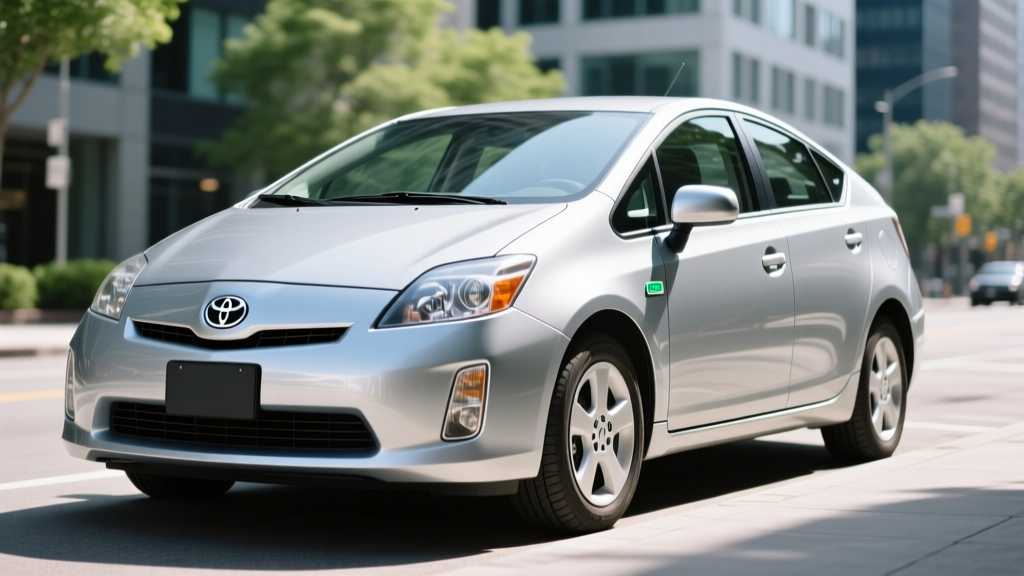
Long before every automaker rushed to electrify its lineup, the 2005 Toyota Prius hybrid established the template for the modern fuel-efficient car. As the first mass-market Prius built on Toyota's dedicated hybrid platform (the second generation, internally coded NHW20), it paired a 1.5-liter Atkinson-cycle gasoline engine with a permanent-magnet electric motor and a nickel-metal hydride (NiMH) traction battery. The result was an EPA-rated 56 MPG city that still competes with many 2026 hybrids.
For used-car shoppers in 2026, the 2005 Toyota Prius hybrid represents an unusual value proposition: a proven, ultra-efficient commuter that can be purchased for $3,000–$6,000 depending on mileage and condition. But two decades of use also mean critical questions about battery health, replacement costs, and whether this pioneer still delivers on its efficiency promises. This guide covers everything you need to know before buying one today.
2005 Toyota Prius Hybrid: Powertrain and Core Specifications
The second-generation Prius introduced Toyota's Hybrid Synergy Drive (HSD), a series-parallel full-hybrid system that was significantly more advanced than the first-generation model. Here is the complete specification breakdown:
| Specification | Detail |
|---|---|
| Powertrain Type | Series-parallel full hybrid (HEV) |
| Gasoline Engine | 1.5L 4-cyl Atkinson-cycle, 76 hp / 82 lb-ft |
| Electric Motor | Permanent-magnet synchronous, 67 hp / 295 lb-ft |
| Net Combined Horsepower | 110 hp |
| Traction Battery | 1.31 kWh NiMH (28 modules, 201.6V nominal) |
| Transmission | eCVT (planetary gearset, no traditional gears) |
| 0–60 mph | ~9.8 seconds |
| Drivetrain | Front-wheel drive |
| Curb Weight | ~2,932 lbs |
| Cargo Volume | 14.4 cu ft (rear seats up), 50.2 cu ft (folded) |
The 1.31 kWh battery pack may look minuscule by 2026 standards — a modern PHEV carries 13–20 kWh, and a full BEV packs 60–100+ kWh — but the 2005 Prius doesn't need a large battery. The NiMH pack serves as an energy buffer for regenerative braking and brief electric assist during acceleration, not for sustained electric-only propulsion. The car can creep at low speeds (roughly under 25 mph for short distances) on electric power alone, but Toyota never rated it for a formal EV-mode range.
Fuel Economy: EPA Ratings vs. Real-World MPG
The 2005 Toyota Prius hybrid's headline number has always been its fuel economy. Here is the official EPA breakdown, sourced from fueleconomy.gov:
| Metric | MPG |
|---|---|
| City | 60 MPG |
| Highway | 51 MPG |
| Combined | 55 MPG |
Note: The EPA revised its testing methodology in 2008, which retroactively lowered some pre-2008 estimates. Under the original 2005 testing cycle, the Prius was rated 60/51/55. Under the revised methodology applied to older models, the adjusted figures are approximately 48/45/46 combined. Check the specific fueleconomy.gov entry for the methodology applied.
Real-World MPG: What Owners Actually Report
Hybrids famously outperform their EPA city ratings in stop-and-go traffic because regenerative braking recovers energy that a gas car wastes as heat. However, the 2005 Prius shows a different pattern than most modern hybrids: its city rating is actually higher than its highway rating, because the original EPA city cycle heavily favored low-speed electric assist.
In real-world 2026 driving, owners of well-maintained 2005 Prius hybrids typically report:
- City / suburban driving: 45–52 MPG (stop-and-go traffic maximizes regen)
- Highway (70 mph): 40–46 MPG (the small engine works harder at sustained speed)
- Cold weather (below 35°F): 35–42 MPG (battery efficiency drops, engine runs more for cabin heat)
- Combined real-world average: 43–48 MPG
These numbers remain impressive. A 2026 Toyota Corolla Hybrid achieves an EPA 50 combined MPG, and a 2026 Honda Civic Hybrid rates 49 combined — so a 21-year-old Prius with a healthy battery is still in the same efficiency ballpark as brand-new hybrids costing $25,000+.
Hybrid Battery Lifespan, Warranty, and Replacement Cost
The single biggest concern for any used 2005 Toyota Prius hybrid buyer is the traction battery. After 20+ years, original NiMH packs are living on borrowed time — but the news isn't all bad.
| Factor | Detail |
|---|---|
| Original Warranty | 8 years / 100,000 miles (10 yr / 150,000 mi in CARB states) |
| Battery Chemistry | Nickel-Metal Hydride (NiMH), 28 modules |
| Typical Original Lifespan | 150,000–200,000 miles before significant degradation |
| OEM Replacement (Toyota dealer) | $2,200–$3,500 (part + labor) |
| Aftermarket / Refurbished | $1,000–$2,000 installed |
| Individual Module Replacement | $30–$60 per bad module (DIY-friendly, 1–3 hours) |
What Happens When the Battery Degrades?
NiMH degradation in the 2005 Prius is typically gradual, not catastrophic. You'll notice:
- Reduced fuel economy — the engine runs more often because the battery can't hold as much regenerative energy.
- More frequent engine cycling — the gasoline engine starts and stops more aggressively at lights and in traffic.
- Reduced acceleration assist — the electric motor contributes less torque during hard acceleration.
- Dashboard warnings — eventually, a "Check Hybrid System" warning appears, often triggered by a voltage imbalance between modules rather than total failure.
The 28-module design is actually an advantage for cost-conscious owners. Rather than replacing the entire $2,500+ pack, a hybrid specialist (or a mechanically inclined DIYer) can identify and swap the 1–3 degraded modules for $30–$60 each. This "rebalancing" approach has kept thousands of second-generation Priuses on the road at minimal cost.
Aftermarket and Reconditioned Battery Options
Several companies offer reconditioned or new aftermarket NiMH packs for the 2005 Prius. Popular options in 2026 include reconditioned packs from established hybrid recyclers at $1,000–$1,800 installed. These typically come with a 1–3 year warranty. While not as robust as a new OEM Toyota pack, they represent a pragmatic choice for a vehicle worth $4,000–$6,000.
Reliability Record: Two Decades of Data
The 2005 Toyota Prius hybrid benefits from one of the longest reliability track records of any electrified vehicle. The second-generation Prius (2004–2009) is widely regarded as one of the most reliable hybrid vehicles Toyota ever produced, and its powertrain components have been validated across millions of vehicles worldwide.
Key reliability points:
- Engine longevity: The 1.5L 1NZ-FXE Atkinson-cycle engine is under-stressed (only 76 hp from a 1.5L) and routinely reaches 250,000+ miles with basic maintenance.
- eCVT transmission: Toyota's planetary gearset eCVT has no belts, no clutches, and no traditional friction components to wear. It is widely considered one of the most durable transmissions ever mass-produced. Fluid changes every 60,000 miles are recommended.
- Inverter and power electronics: The inverter coolant pump is a known failure point on 2004–2009 Prius models. Replacement runs $300–$600. Toyota issued a recall for some model years; verify recall status via NHTSA.gov using the VIN.
- Brakes: Regenerative braking significantly reduces wear on the friction brakes. Original brake pads lasting 80,000–120,000 miles are common.
- 12V auxiliary battery: Located in the rear cargo area (not under the hood), this is a common point of failure if the car sits unused. A dead 12V battery will prevent the car from starting, even if the hybrid battery is fully charged. Replacement: $150–$250.
- Run an OBD-II hybrid battery health scan — check module voltage spread (healthy = within 0.2V across all 28 modules)
- Verify inverter coolant pump recall status on NHTSA.gov
- Check for transaxle whine at low speeds (minor whine is normal; loud grinding is not)
- Inspect the 12V battery age and condition
- Confirm timing chain condition (listen for rattle on cold start — the 1NZ-FXE uses a chain, not a belt, but tensioners can wear)
- Verify catalytic converter is intact (these are theft targets due to precious-metal content)
Pricing in 2026: What You'll Actually Pay
The 2005 Toyota Prius hybrid was originally priced at approximately $21,275 MSRP when new. In the 2026 used market, pricing varies dramatically based on mileage, battery condition, and regional demand:
| Condition | Mileage Range | Estimated Price |
|---|---|---|
| Excellent (new battery, low miles) | 80,000–120,000 | $5,500–$7,500 |
| Good (healthy battery, maintained) | 120,000–180,000 | $3,500–$5,500 |
| Fair (battery may need service) | 180,000–250,000+ | $2,000–$3,500 |
| Project / Battery Needs Replacement | 200,000+ | $1,000–$2,500 |
Tax Credit Eligibility
The 2005 Toyota Prius hybrid does not qualify for the current federal §30D Clean Vehicle Credit. That credit applies only to new plug-in electric vehicles (BEVs and PHEVs) meeting specific battery-sourcing, MSRP, and buyer-income requirements as defined by the IRS. Conventional hybrids (HEVs) have never been eligible for §30D.
Some states previously offered rebates for hybrids, but most state-level hybrid incentive programs have ended or shifted exclusively to plug-in vehicles. Check your state's energy office or Alternative Fuels Data Center for any remaining local incentives — though for a $4,000 used car, the practical savings are negligible.
2005 Prius Hybrid vs. Modern Alternatives: What Should You Buy?
The decision between a used 2005 Prius, a newer hybrid, a PHEV, or a full BEV depends on your budget, driving pattern, and charging access. Here is a practical framework:
Choose the 2005 Prius If:
- Budget is under $6,000
- You want maximum MPG at minimum purchase cost
- You can handle basic DIY maintenance
- You drive mostly city/suburban routes
- You don't need modern safety tech (AEB, lane-keep)
Choose a Newer Hybrid/PHEV/BEV If:
- You want warranty coverage and modern safety (AEB, BSM)
- You have home charging access (PHEV or BEV)
- You want Apple CarPlay / Android Auto / modern infotainment
- You drive long highway routes frequently
- You want to eliminate or reduce gasoline use entirely
| Factor | HEV (2005 Prius) | PHEV (e.g., 2026 Prius Prime) | BEV (e.g., 2026 Model 3) |
|---|---|---|---|
| Plug Required? | No | Optional (benefits greatly from plugging in) | Yes |
| Electric-Only Range | None (brief low-speed assist) | ~44 miles (2026 Prius Prime) | 250–360+ miles |
| Fuel Cost per Mile | ~$0.06–$0.08 | ~$0.03 (electric) / $0.07 (gas) | ~$0.03–$0.05 |
| Federal Tax Credit | None | Up to $7,500 (§30D, subject to eligibility) | Up to $7,500 (§30D, subject to eligibility) |
| Used Purchase Price | $2,000–$7,500 | $22,000+ (limited used supply) | $15,000+ (used BEV market) |
| Maintenance Cost | Low (DIY-friendly) | Moderate | Very low (fewer moving parts) |
Pros and Cons of the 2005 Toyota Prius Hybrid in 2026
Pros
- Exceptional fuel economy (43–48 MPG real-world combined)
- Ultra-low purchase price ($3K–$6K)
- Proven, simple powertrain — DIY-repairable
- Strong parts availability and enthusiast community
- Surprisingly spacious cargo area (50.2 cu ft with seats folded)
- Low brake wear thanks to regenerative braking
- No plug or charging infrastructure needed
Cons
- Traction battery likely needs service or replacement
- No modern safety features (no AEB, lane-keep, blind-spot monitoring)
- Dated interior and infotainment (no Bluetooth audio, no backup camera standard)
- Slow acceleration (9.8 seconds 0–60)
- Highway MPG drops significantly at 75+ mph
- No federal or state tax credits available
- Cold-weather fuel economy drops 15–20%
Frequently Asked Questions
How many MPG does the 2005 Toyota Prius hybrid get?
The original EPA rating is 60 city / 51 highway / 55 combined under the pre-2008 testing methodology. Under the revised EPA methodology applied retroactively, the adjusted figures are approximately 48 city / 45 highway / 46 combined. Real-world owners in 2026 typically report 43–48 MPG combined, depending on driving style, temperature, and battery health.
How far can the 2005 Prius go on electric only?
The 2005 Prius is a conventional hybrid (HEV), not a plug-in hybrid. It has no formal electric-only range. The car can operate on electric power alone at very low speeds (under ~25 mph) for short distances — such as creeping through a parking lot — but the gasoline engine engages almost immediately under any meaningful acceleration or above low speeds. If you need electric-only driving, you want a PHEV like the Prius Prime (44 miles EV range) or a full BEV.
Hybrid vs. PHEV vs. EV — which fits me?
Choose a conventional hybrid (HEV) like the 2005 Prius if you want maximum fuel efficiency with zero lifestyle change — no plug, no charging, no range planning, just fill up with gas and go. Choose a PHEV if you can charge at home and want 25–44 miles of daily electric commuting with a gas engine for road trips. Choose a full BEV if you want the lowest per-mile cost, zero tailpipe emissions, and have reliable charging access. For budget buyers under $6,000, the HEV is the only realistic electrified option.
Is the 2005 Prius hybrid reliable, and what does a battery replacement cost?
Yes — the 2005 Prius has an outstanding reliability record. The engine, eCVT, and power electronics are proven across millions of miles. The main risk is the NiMH traction battery, which typically lasts 150,000–200,000 miles. An OEM replacement costs $2,200–$3,500 at a Toyota dealer; aftermarket or reconditioned packs run $1,000–$2,000 installed. Individual module replacement (for isolated bad cells) can cost as little as $30–$60 per module if done by a hybrid specialist or DIYer.
Does the 2005 Toyota Prius qualify for any tax credit?
No. The federal §30D Clean Vehicle Credit applies only to new plug-in electric vehicles (BEVs and qualifying PHEVs) that meet battery-sourcing, MSRP, and buyer-income requirements. Conventional hybrids like the 2005 Prius are not eligible for any federal tax credit. Some states previously offered hybrid rebates, but nearly all have expired or shifted to plug-in vehicles only. Check the Alternative Fuels Data Center for any remaining state-level programs.
What should I look for when buying a used 2005 Prius?
Prioritize a pre-purchase hybrid battery health scan (module voltage spread should be within 0.2V), verify the inverter coolant pump recall status on NHTSA.gov, check for catalytic converter theft or replacement, and confirm the 12V auxiliary battery is recent. High-mileage examples (200,000+) can still be excellent buys if the battery has been replaced or tested healthy — the engine and eCVT are essentially bulletproof with regular maintenance.