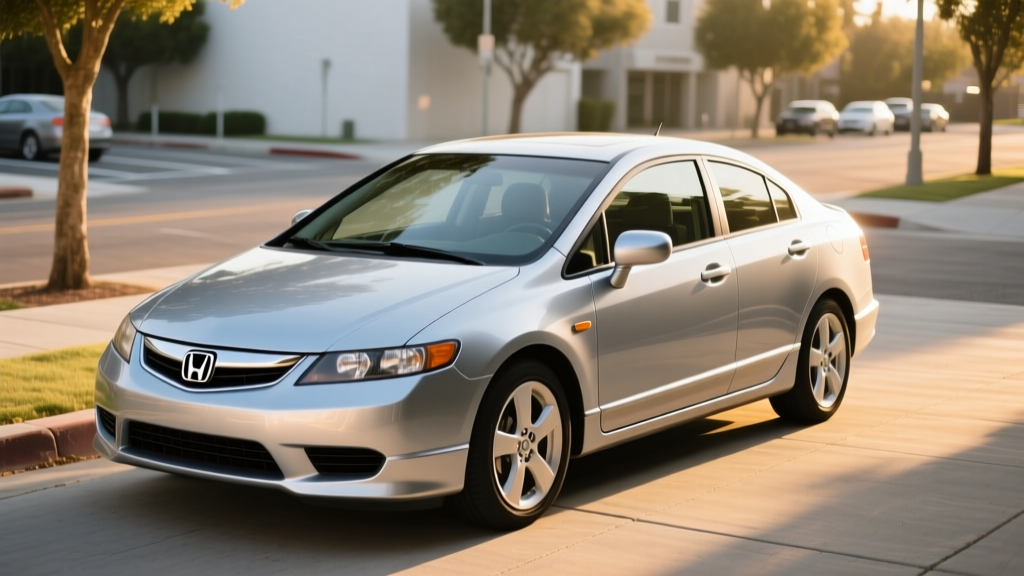
The 2005 Honda Civic Hybrid in 2026: A Pioneer Worth Buying Used?
Two decades after it first hit American roads, the 2005 Honda Civic Hybrid remains one of the most-searched early hybrid vehicles among budget-conscious commuters and hybrid-curious drivers. With used examples trading for $2,500–$5,500 in 2026, this second-generation Civic Hybrid represents the cheapest possible entry into electrified driving — but only if you understand what you're signing up for.
This guide covers the 2005 Honda Civic Hybrid's real-world fuel economy, the state of its now-aging IMA (Integrated Motor Assist) battery, powertrain specs, ownership costs, and whether this pioneer-era hybrid still makes financial sense versus a modern HEV, PHEV, or full BEV.
The 2005 Honda Civic Hybrid is a conventional hybrid (HEV). It cannot be plugged in. Its small battery recharges through regenerative braking and the gasoline engine. A plug-in hybrid (PHEV), like the modern Toyota RAV4 Prime or Chrysler Pacifica Hybrid, has a larger battery (typically 12–22 kWh) that charges via a wall outlet or public charger and delivers 20–50 miles of electric-only driving before the gas engine kicks in. The 2005 Civic Hybrid does none of that — it's a self-charging HEV through and through.
2005 Honda Civic Hybrid: Powertrain and Specs at a Glance
| Specification | Value |
|---|---|
| Powertrain Type | Conventional Hybrid (HEV) — IMA system |
| Gas Engine | 1.3L i-DSI 4-cylinder, 85 hp @ 5,700 rpm |
| Electric Motor | IMA permanent-magnet motor, 13 hp / 58 lb-ft assist |
| Combined System Output | 93 hp @ 5,700 rpm |
| Transmission | CVT (continuously variable) or 5-speed manual |
| Hybrid Battery | Nickel-Metal Hydride (NiMH), ~0.35 kWh (usable) |
| 0–60 mph | ~10.8 seconds |
| Drivetrain | Front-wheel drive |
| Curb Weight | ~2,745 lbs |
| Original MSRP (2005) | $20,140 (CVT) |
| 2026 Used Price Range | $2,500–$5,500 (private party, condition-dependent) |
Honda's IMA system was fundamentally different from Toyota's Hybrid Synergy Drive. Rather than a full parallel hybrid system that could drive the wheels on electric power alone, the IMA motor sat sandwiched between the engine and transmission, providing torque assist during acceleration and enabling regenerative braking. The gas engine could not shut off at highway speeds — it could only deactivate cylinders under light-load conditions via Honda's VCM (Variable Cylinder Management) system.
Fuel Economy: EPA Ratings vs. Real-World MPG
Fuel economy is the entire reason this car exists. Here's what the EPA rated it at and what owners actually report two decades later.
| Driving Cycle | EPA Rating (MPG) | Real-World Owner Reports |
|---|---|---|
| City | 48 MPG | 40–46 MPG |
| Highway | 47 MPG | 42–50 MPG |
| Combined | 47 MPG | 41–47 MPG |
Source: fueleconomy.gov — 2005 Honda Civic Hybrid
A few things to understand about these numbers in 2026:
- Battery degradation matters. A 20-year-old NiMH pack that has lost significant capacity will force the engine to do more work, dropping real-world MPG to the low 40s or even high 30s. Owners who have replaced or reconditioned the IMA battery report MPG closer to original EPA stickers.
- Highway MPG can exceed city MPG in some driving conditions because the IMA system's regenerative braking benefit is smaller on the highway, but the lean-burn 1.3L engine is extremely efficient at steady-state cruising.
- The manual transmission version was rated slightly differently (45 city / 49 highway per EPA) and gave drivers more control over when the electric assist engaged.
- Compared to a 2026 Toyota Prius (57 MPG combined EPA), the 2005 Civic Hybrid trails by about 10 MPG — but its acquisition cost is a fraction of a new vehicle.
EPA combined: 47 MPG. In 2026, with a healthy IMA battery and proper maintenance, expect 41–47 MPG combined in mixed driving. With a degraded battery, plan for 36–42 MPG. On a 12-gallon tank, that translates to roughly 430–560 miles of range depending on battery health and driving style.
IMA Battery Health: The #1 Concern for 2026 Buyers
The 2005 Civic Hybrid's nickel-metal hydride (NiMH) IMA battery was rated at roughly 0.35 kWh of usable capacity — tiny by today's standards, but sufficient for torque assist and regen. Honda originally warranted this battery for 8 years / 80,000 miles (10 years / 150,000 miles in CARB states like California, New York, and Massachusetts).
Original warranty: 8 yr / 80,000 mi (10 yr / 150,000 mi in CARB states)
Current status in 2026: All original warranties have expired.
Typical NiMH lifespan: 10–15 years / 120,000–180,000 miles before significant degradation.
Replacement cost (2026): $1,200–$2,500 for a refurbished NiMH pack; $2,800–$4,000 for a new OEM Honda pack (limited availability).
At 20+ years old, any 2005 Civic Hybrid you're considering has either already had its IMA battery replaced, reconditioned, or is running on a significantly degraded original pack. Here's what to look for:
- IMA warning light on the dash — This indicates the system has detected a battery fault. The car will still drive (the 1.3L engine runs independently), but you lose all electric assist and regen, dropping fuel economy by 5–10 MPG.
- Recalibration cycles — If you notice the battery gauge rapidly dropping and then the engine revving high to recharge it, the pack is struggling to hold charge. This "forced recal" is a classic sign of end-of-life NiMH cells.
- Third-party reconditioning — Several shops and DIY communities offer NiMH cell-level reconditioning for $500–$900, replacing only the failed cells rather than the entire pack.
- Aftermarket replacement packs — Companies like Bumble Bee Batteries and Dorman offer refurbished NiMH packs in the $1,200–$1,800 range, which is often the most cost-effective path.
For context, a full OEM battery replacement at $3,500+ can exceed the entire value of the vehicle. Factor battery condition into your purchase negotiation heavily.
Reliability, Maintenance, and Known Issues
The 2005 Civic Hybrid carries Honda's general reputation for mechanical durability, but the IMA system adds specific failure points that don't exist on a conventional Civic.
Common Issues
- IMA battery failure — The most common and expensive issue, as detailed above. Near-certain on any original pack at this age.
- CVT transmission shudder — Early Honda CVTs from this era can develop a shudder at low speeds, especially if the transmission fluid was never changed. A CVT fluid drain-and-fill ($80–$120) every 30,000 miles is critical.
- 12V battery drain — The IMA system's DC-DC converter charges the standard 12V accessory battery. If the IMA battery is weak, the 12V can also suffer, leading to no-start conditions.
- Motor mount wear — The additional torque pulses from the IMA motor can accelerate engine mount deterioration. Budget $200–$400 for replacement if you feel excessive vibration at idle.
- VCM-related oil consumption — The cylinder deactivation system can cause uneven wear and increased oil consumption in high-mileage examples. Check the dipstick at every fill-up.
What Holds Up Well
- The 1.3L i-DSI engine is under-stressed and can easily exceed 250,000 miles with basic oil changes.
- Manual transmission examples avoid the CVT reliability concerns entirely.
- Suspension, brakes, and body hardware are shared with the standard 7th-gen Civic — parts are abundant and cheap.
Tax Credits and Incentives: What Applies in 2026?
The short answer: no federal tax credits apply to the 2005 Honda Civic Hybrid in 2026.
Here's why, and what limited incentives might still apply:
- Original federal hybrid credit (IRC §179A): The 2005 Civic Hybrid originally qualified for a $2,100 federal tax credit when new, but this credit phased out for Honda after they hit 60,000 cumulative hybrid sales in 2006–2007. It is long expired.
- §30D Clean Vehicle Credit: Under current IRS rules, the §30D credit of up to $7,500 applies only to new qualifying plug-in vehicles (BEVs and PHEVs with ≥7 kWh battery packs). The Civic Hybrid is neither new nor a plug-in vehicle.
- Used EV credit (§25E): Up to $4,000 for used plug-in EVs and PHEVs — but again, the Civic Hybrid is a conventional HEV with no plug, so it does not qualify.
- State incentives: A handful of states offer small rebates for any hybrid purchase, but these are rare and typically apply to new vehicles only. Check your state's energy office for current programs.
The 2005 Honda Civic Hybrid qualifies for $0 in federal tax credits. It is a conventional HEV, not a plug-in vehicle, and the original hybrid purchase credits expired nearly two decades ago. Buy this car for its low purchase price and fuel savings, not for incentives.
2005 Civic Hybrid vs. Modern Alternatives: What Should You Actually Buy?
If you're researching the 2005 Honda Civic Hybrid, you're likely trying to minimize fuel costs on a tight budget. Here's how it stacks up against what else is available in 2026.
| Factor | 2005 Civic Hybrid (HEV) | Used 2018–2020 Prius (HEV) | Used 2019–2021 Prius Prime (PHEV) | Used 2019–2021 Nissan Leaf (BEV) |
|---|---|---|---|---|
| Used Price (2026) | $2,500–$5,500 | $12,000–$18,000 | $16,000–$22,000 | $12,000–$18,000 |
| EPA MPG / MPGe | 47 MPG | 52–56 MPG | 54 MPG + 25 mi EV | 111 MPGe / 150–226 mi range |
| Plug-In Required? | No | No | Yes (optional) | Yes (required) |
| Electric-Only Range | 0 miles | 0 miles | 25 miles | 150–226 miles |
| Battery Replacement Risk | High (age) | Low–Moderate | Low–Moderate | Moderate–High |
| Annual Fuel Cost (12k mi) | ~$850 | ~$720 | ~$400–$650 | ~$480 (electric) |
Fuel cost estimates based on $3.30/gal gasoline and $0.16/kWh electricity national averages, 12,000 miles/year.
Pros — 2005 Civic Hybrid
- Extremely low purchase price ($2,500–$5,500)
- No plug needed — works for apartment dwellers
- 47 MPG combined when battery is healthy
- Honda mechanical parts widely available
- Manual transmission option available
- Low insurance costs
Cons — 2005 Civic Hybrid
- 20-year-old NiMH battery near certain failure
- No electric-only driving capability
- Slow acceleration (10.8 sec 0–60)
- No federal or state tax credits
- Outdated safety features (no ESC on most trims)
- CVT reliability concerns
- $1,200–$4,000 battery replacement can exceed car value
Who Should Buy the 2005 Honda Civic Hybrid?
This car makes sense for a very specific buyer:
- The ultra-budget commuter who needs sub-$5,000 transportation with better fuel economy than a 15-year-old Corolla and has access to a mechanic familiar with Honda IMA systems.
- The DIY hybrid enthusiast who is comfortable reconditioning NiMH cells and wants the cheapest possible hybrid project.
- The short-term bridge vehicle — someone who needs cheap, efficient transportation for 1–3 years while saving for a modern EV or PHEV.
This car does not make sense for:
- Anyone without a trusted mechanic — IMA battery and CVT issues require hybrid-specific diagnostic skills.
- Buyers who can stretch to $12,000+ — a used 2018+ Prius offers 52+ MPG, modern safety features (automatic emergency braking, lane keeping), and a battery with years of life remaining.
- Anyone eligible for the §25E used EV credit — a $15,000 used Nissan Leaf or Chevy Bolt (after the $4,000 credit) costs the same net and eliminates gasoline entirely.
Frequently Asked Questions
How many MPG does the 2005 Honda Civic Hybrid get?
The EPA rates it at 48 city / 47 highway / 47 combined MPG. In 2026 real-world driving with a healthy IMA battery, expect 41–47 MPG combined. A degraded battery will drop this to 36–42 MPG. This is approximately 10 MPG less than a current-generation Toyota Prius.
Can I plug in the 2005 Honda Civic Hybrid to charge it?
No. The 2005 Civic Hybrid is a conventional hybrid (HEV), not a plug-in hybrid (PHEV). It has no charging port. The small NiMH battery recharges exclusively through regenerative braking and the gasoline engine. If you want plug-in capability, you need a PHEV like the Toyota Prius Prime or a full BEV.
Is the 2005 Honda Civic Hybrid reliable?
The underlying 1.3L engine and Honda chassis are reliable, but the IMA hybrid system is now 20+ years old and is the primary reliability risk. The NiMH battery is the most likely failure point ($1,200–$4,000 to replace), followed by the CVT transmission if fluid was neglected. A well-maintained example with a fresh IMA battery can still be a dependable daily driver.
How much does it cost to replace the hybrid battery?
Refurbished/reconditioned NiMH packs run $1,200–$2,500 installed. A new OEM Honda pack (if available) costs $2,800–$4,000. Cell-level DIY reconditioning is possible for $500–$900 but requires technical skill. Given that the entire car is worth $2,500–$5,500, a full OEM battery replacement is rarely economical.
Does the 2005 Honda Civic Hybrid qualify for any tax credit?
No. The original $2,100 federal hybrid credit expired in 2007. The current §30D credit (up to $7,500) and §25E used EV credit (up to $4,000) both require plug-in vehicles — BEVs or PHEVs. The Civic Hybrid is a conventional HEV and qualifies for no federal tax credits. Per IRS guidelines, only vehicles that can be plugged in to charge a battery of at least 7 kWh (for §30D) are eligible.
How does the 2005 Civic Hybrid compare to a modern hybrid?
A 2026 Toyota Prius delivers 57 MPG combined (10 MPG more), 196 hp (more than double), Toyota Safety Sense 3.0 (automatic emergency braking, adaptive cruise, lane centering), and a full warranty. The trade-off is price: $28,000+ new versus $3,000–$5,000 for the 2005 Civic. If your budget allows, a used 2018–2022 Prius in the $12,000–$18,000 range offers a far better ownership experience.
Is the 2005 Honda Civic Hybrid safe by 2026 standards?
By modern standards, no. The 2005 Civic earned acceptable ratings from the NHTSA at the time, but it lacks electronic stability control (not standard until 2009 on Civics), side curtain airbags were optional, and it has no active safety technology. If safety is a priority, look at 2015+ models with standard ESC and available collision-avoidance features.