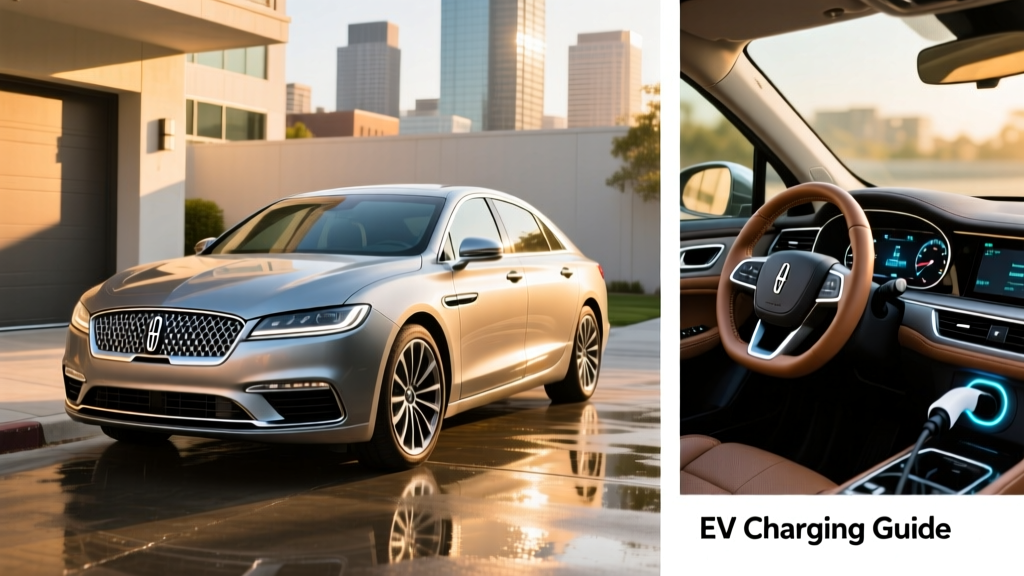
The Lincoln MKZ Hybrid has long been one of the most fuel-efficient luxury sedans on the market, blending Ford's proven hybrid powertrain with Lincoln's premium cabin. But with Lincoln discontinuing the MKZ nameplate after the 2020 model year, anyone searching for a "2024 Lincoln MKZ Hybrid" is actually looking at the used or certified pre-owned (CPO) market. That's not necessarily a bad thing — the MKZ Hybrid's 2.0-liter Atkinson-cycle hybrid system is one of the most battle-tested in the industry, sharing its architecture with the Ford Fusion Hybrid. This guide breaks down everything a prospective buyer needs: real EPA fuel economy, battery longevity, replacement costs, ownership economics, and whether a used MKZ Hybrid still makes sense against newer hybrid and EV alternatives in 2026.
What Exactly Is the Lincoln MKZ Hybrid?
The Lincoln MKZ Hybrid is a conventional hybrid electric vehicle (HEV) — not a plug-in hybrid (PHEV). That distinction matters enormously for buyers cross-shopping options:
HEV (Conventional Hybrid) — MKZ Hybrid
- No plug required — the battery charges via regenerative braking and the gasoline engine
- Small battery (~1.4 kWh usable) — cannot drive on electric power alone for meaningful distances
- Electric motor assists the gas engine for improved MPG, especially in city driving
- No federal tax credit eligibility
- Lower purchase price, simpler ownership
PHEV (Plug-In Hybrid) — For Comparison
- Must be plugged in to realize full efficiency benefits
- Larger battery (typically 10-20 kWh) enabling 20-40 miles of electric-only driving
- Gas engine kicks in after electric range is depleted
- May qualify for federal §30D tax credit (up to $7,500, subject to income/MSRP/sourcing rules)
- Higher upfront cost, requires home charging access
If you've seen references to a "2024 Lincoln MKZ Hybrid" in forums or listings, it's likely either a mislabeled listing (the MKZ ended production in July 2020) or a reference to a CPO unit being sold in 2024. Lincoln's current hybrid sedan offering is effectively the Lincoln Corsair Grand Touring PHEV in the SUV segment, as Lincoln has shifted away from sedans entirely. For a true luxury hybrid sedan from the Lincoln brand, the MKZ Hybrid remains the last of its kind.
EPA Fuel Economy: What the Numbers Say
The final-generation MKZ Hybrid (2017-2020 model years, which is what you'll find on the CPO market) carries the following EPA-rated fuel economy from fueleconomy.gov:
| Metric | EPA Rating |
|---|---|
| City MPG | 42 MPG |
| Highway MPG | 39 MPG |
| Combined MPG | 41 MPG |
| Fuel Tank Capacity | 13.5 gallons |
| Estimated Total Range | ~553 miles |
| Annual Fuel Cost (15k mi/yr) | ~$1,350 (at $3.30/gal) |
The MKZ Hybrid's city MPG actually exceeds its highway rating — a hallmark of conventional hybrids. Regenerative braking recaptures energy in stop-and-go traffic, while the electric motor handles low-speed propulsion where gasoline engines are least efficient. On the highway, the 2.0L engine does more of the work alone, which is why highway numbers drop slightly.
Real-World MPG vs. EPA Sticker
In owner-reported data and long-term testing, the MKZ Hybrid typically delivers 38-44 MPG combined depending on driving style, climate, and route mix. Key variables:
- City-heavy commuters often see 43-45 MPG — regen braking maximizes electric assist
- Highway-dominant drivers (70+ mph sustained) report 36-39 MPG — aerodynamic drag and reduced regen benefit
- Cold weather (below 30°F) reduces MPG by roughly 8-12% due to engine running longer for cabin heat and reduced battery efficiency
- Eco mode and gentle acceleration can push real-world numbers to the mid-40s in ideal conditions
The MKZ Hybrid's real-world efficiency is genuinely excellent for a luxury sedan weighing over 3,700 pounds. It outperforms many smaller non-hybrid compacts in city driving.
Powertrain Specs: Engine, Motor, and Combined Output
| Specification | Detail |
|---|---|
| Engine | 2.0L Atkinson-cycle inline-4 |
| Engine Horsepower | 141 HP @ 6,000 RPM |
| Engine Torque | 129 lb-ft @ 4,000 RPM |
| Electric Motor | Permanent-magnet AC synchronous |
| Motor Output | 120 HP / 166 lb-ft |
| Combined Net Output | 188 HP |
| Transmission | eCVT (electronic continuously variable) |
| Drivetrain | Front-wheel drive (FWD) |
| Hybrid Battery | 1.4 kWh lithium-ion (usable) |
| 0-60 MPH | ~8.4 seconds |
| Curb Weight | ~3,713 lbs |
The MKZ Hybrid uses Ford's second-generation hybrid transaxle, which blends engine and motor power through a planetary gearset rather than a traditional stepped transmission. The eCVT provides seamless power delivery with no shift shock — ideal for luxury-oriented driving, though enthusiasts may find it less engaging. The 188 combined HP is adequate for merging and passing but not sporty; this is a comfort-first sedan.
Because the MKZ Hybrid is an HEV with a 1.4 kWh battery, there is no plug, no charging port, and no DC fast-charge capability. The battery is maintained entirely by the gasoline engine and regenerative braking system. This is a feature, not a limitation, for buyers who lack home charging access or don't want to think about plugging in.
Battery Longevity, Warranty, and Replacement Cost
Hybrid battery anxiety is the single most common concern for used HEV buyers. Here's the data:
Lincoln MKZ Hybrid Battery Warranty (When New)
- Hybrid Battery: 8 years / 100,000 miles (10 years / 150,000 miles in CARB states including CA, NY, MA, and others)
- Hybrid System Components: 8 years / 100,000 miles
- Powertrain (engine, transaxle): 6 years / 70,000 miles
- Capacity Retention Threshold: Warranty covers battery if capacity falls below ~60% of original
Real-World Battery Lifespan
Ford/Lincoln's hybrid system — shared with the Fusion Hybrid, Escape Hybrid, and Toyota-derived architectures — has an outstanding longevity track record. Data from fleet operators (notably NYC taxis using Fusion Hybrids) shows hybrid batteries routinely lasting 150,000-200,000+ miles before needing replacement. Many original Ford Escape Hybrid batteries from 2005-2008 are still in service past 200,000 miles.
For a 2017-2020 MKZ Hybrid with typical mileage (40,000-80,000 miles), the hybrid battery likely has 100,000+ miles of remaining useful life. The lithium-ion cells in the second-gen system degrade far more slowly than early nickel-metal-hydride (NiMH) packs.
Battery Replacement Cost
If replacement is eventually needed:
- OEM new battery (Lincoln/Ford dealer): $2,500-$3,500 (parts + labor)
- Remanufactured/reconditioned battery: $1,200-$2,000
- Individual cell module replacement: $300-$800 (if only specific modules have degraded — a specialist hybrid shop can diagnose this)
Compared to full EV battery replacements ($5,000-$20,000+), the MKZ Hybrid's small 1.4 kWh pack is remarkably affordable to service. This is one of the strongest ownership arguments for conventional hybrids over BEVs for cost-cautious buyers.
Pricing, Tax Credits, and Used Market Value
Original MSRP (When New)
The 2020 Lincoln MKZ Hybrid (final model year) started at approximately $37,230 for the Standard trim and ranged up to $47,000+ for the Reserve and Black Label trims. These figures included destination charges.
Used and CPO Pricing (2026 Market)
As of early 2026, a 2018-2020 MKZ Hybrid in good condition typically trades for:
- 2018-2019 models (50k-80k miles): $16,000-$22,000
- 2020 models (30k-60k miles): $20,000-$27,000
- CPO examples (dealer-certified): $22,000-$28,000 with extended warranty
Federal Tax Credit Eligibility
The Lincoln MKZ Hybrid does not qualify for the federal §30D clean vehicle tax credit, for two reasons:
- It is a conventional hybrid (HEV), not a plug-in hybrid or battery electric vehicle — §30D requires a minimum battery capacity of 7 kWh and plug-in capability
- The model is discontinued and no longer sold new
The IRS §30D credit applies only to new PHEVs and BEVs meeting battery sourcing, MSRP caps ($55,000 for sedans), and buyer income limits. Used EV buyers may qualify for the §25E used clean vehicle credit (up to $4,000 or 30% of sale price, whichever is less), but this also requires the vehicle to be a PHEV or BEV — not a conventional hybrid.
Some states offer separate incentives for efficient vehicles, but most have aligned with the federal plug-in requirement. Check your state's alternative fuel incentive database for any remaining hybrid-specific rebates.
Who Should Buy the MKZ Hybrid — and Who Shouldn't
Pros
- 42 MPG city is exceptional for a luxury sedan
- No plug-in required — works with any lifestyle
- Proven, low-cost hybrid system with cheap battery replacement
- Quiet, comfortable ride with premium Lincoln interior
- 553-mile total range eliminates range anxiety entirely
- Strong reliability record shared with Ford Fusion Hybrid
Cons
- Discontinued — only available used/CPO
- No federal tax credit eligibility
- 188 HP is adequate, not quick (8.4s 0-60)
- FWD only — no AWD option
- Infotainment (SYNC 3) feels dated vs. 2026 competitors
- Outdated ADAS — no hands-free highway driving like BlueCruise
Choose the MKZ Hybrid If:
- You want luxury sedan comfort with 40+ MPG and zero plug-in hassle
- You don't have access to home or workplace charging
- You want low maintenance costs and proven reliability on a budget ($16k-$27k)
- Your commute is city-heavy, where the hybrid system shines brightest
Choose a PHEV or Full EV Instead If:
- You have home Level 2 charging and want electric-only daily commuting (consider a used BMW 330e or Toyota Prius Prime)
- You want the latest ADAS features (Ford BlueCruise, GM Super Cruise)
- You want federal tax credit eligibility — a new PHEV like the Chrysler Pacifica Hybrid or Toyota RAV4 Prime may qualify
- You want all-wheel drive — consider the Lincoln Corsair Grand Touring PHEV or a Tesla Model 3
Ownership Costs: MKZ Hybrid vs. Gas Sedan vs. Full EV
| Cost Category (5 years / 75k mi) | MKZ Hybrid (41 MPG) | Gas Sedan (28 MPG avg) | BEV (3.5 mi/kWh) |
|---|---|---|---|
| Fuel / Electricity | ~$6,750 | ~$9,870 | ~$3,860 |
| Maintenance | ~$2,800 | ~$3,500 | ~$1,800 |
| Insurance (est.) | ~$7,500 | ~$7,000 | ~$8,500 |
| Estimated Depreciation | ~$8,000 | ~$9,000 | ~$12,000 |
| Total 5-Year Cost | ~$25,050 | ~$29,370 | ~$26,160 |
Assumes $3.70/gallon gas, $0.14/kWh electricity, and purchase prices of $22,000 (used MKZ Hybrid), $25,000 (used gas sedan), and $35,000 (new BEV after incentives). The MKZ Hybrid occupies a compelling middle ground: significantly cheaper fuel costs than a gas sedan, without the higher insurance and depreciation of a full EV.
Frequently Asked Questions
How many MPG does the Lincoln MKZ Hybrid get?
The EPA rates the final-generation MKZ Hybrid (2017-2020) at 42 MPG city, 39 MPG highway, and 41 MPG combined. Real-world results typically range from 38-44 MPG combined depending on driving style and climate. City-heavy commuters often exceed the EPA sticker thanks to regenerative braking.
Can the MKZ Hybrid drive on electric power only?
Only at very low speeds (under ~25 MPH) for short distances (roughly 1-2 miles in ideal conditions). The 1.4 kWh battery is too small for meaningful electric-only driving. This is by design — the MKZ Hybrid is an HEV, not a PHEV. The electric motor's primary role is to assist the gasoline engine, not replace it.
Does the Lincoln MKZ Hybrid need to be plugged in?
No. The MKZ Hybrid is a conventional hybrid (HEV). Its battery is charged entirely by the gasoline engine and regenerative braking. There is no charging port on the vehicle. You simply fill it with gasoline like any other car.
Is the MKZ Hybrid reliable, and what does a battery replacement cost?
The MKZ Hybrid uses Ford's proven hybrid system, which has demonstrated excellent reliability across hundreds of thousands of fleet and consumer miles. Hybrid batteries typically last 150,000-200,000+ miles. If replacement is needed, expect $2,500-$3,500 for a new OEM battery or $1,200-$2,000 for a remanufactured unit — far less than a full EV battery swap.
Does the MKZ Hybrid qualify for any tax credit?
No. The federal §30D clean vehicle credit requires plug-in capability and a minimum 7 kWh battery. The MKZ Hybrid has a 1.4 kWh battery and no plug. The used-vehicle §25E credit also applies only to PHEVs and BEVs. No current federal incentive covers conventional hybrids.
What's the difference between the MKZ Hybrid and the MKZ Reserve/Black Label?
The hybrid powertrain was available across all MKZ trims — Standard, Reserve, and Black Label. The difference is interior luxury features (leather grade, audio system, technology packages), not the drivetrain. A Reserve or Black Label Hybrid gets the same 41 MPG combined as the base model.
Should I buy a used MKZ Hybrid or a newer Toyota Camry Hybrid?
The 2024-2025 Toyota Camry Hybrid offers 52 MPG combined (LE trim) and is available new with a full warranty, but starts around $30,000. A used MKZ Hybrid at $18,000-$24,000 offers luxury features and 41 MPG for significantly less money. If budget is the priority, the MKZ Hybrid is a strong value. If you want the latest safety tech, warranty coverage, and best-in-class MPG, the newer Camry Hybrid wins.