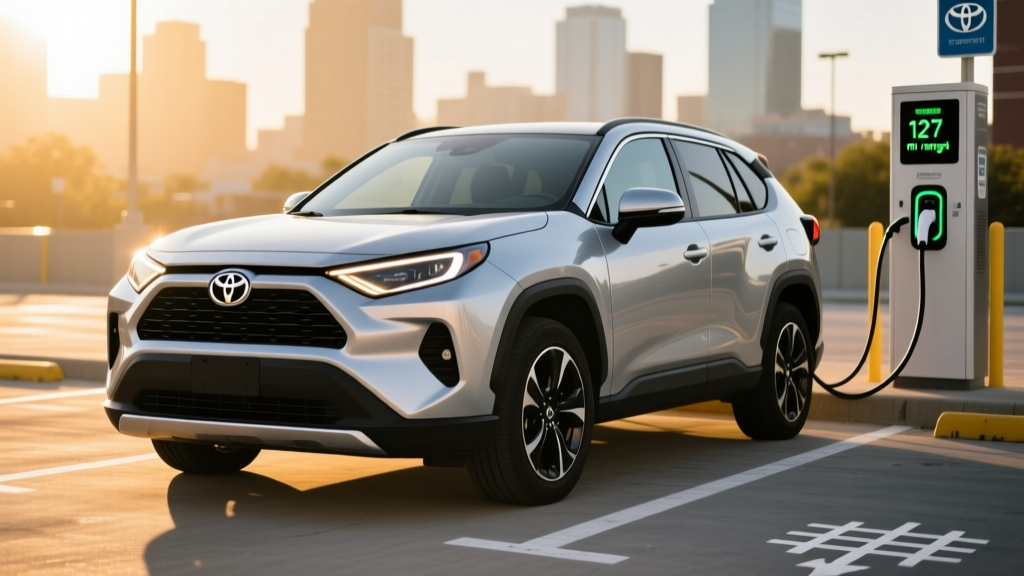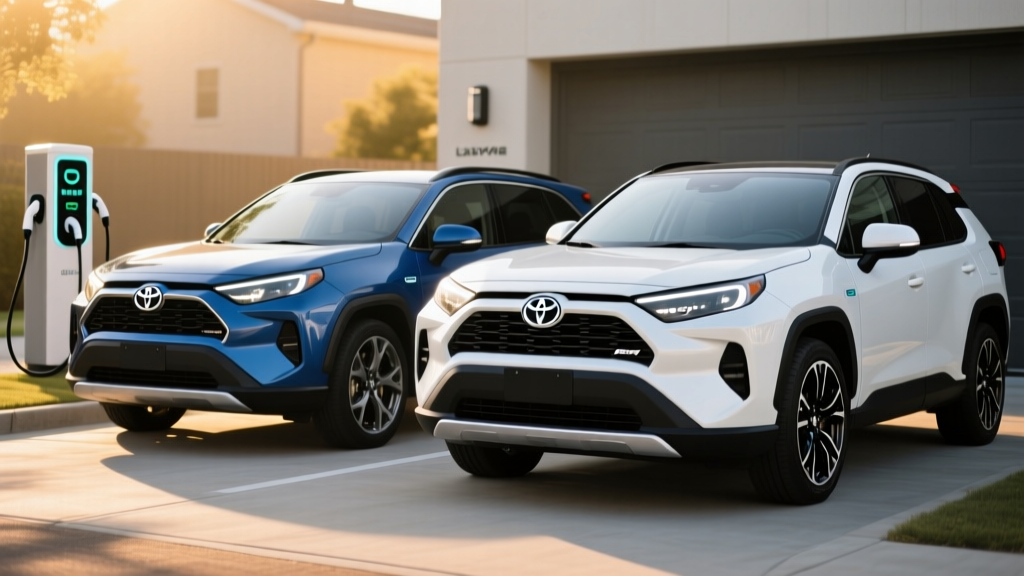
If you're researching your 1st hybrid car, the Toyota RAV4 Hybrid—and its plug-in sibling, the RAV4 Prime—deserve a long look. The RAV4 has been America's best-selling non-truck for years, and its electrified variants pair proven reliability with meaningful fuel savings. But choosing between a conventional hybrid (HEV) and a plug-in hybrid (PHEV) is the first decision you'll need to make, and the wrong choice can cost you thousands in missed savings or unused capability.
This guide walks through every number that matters for a first-time hybrid buyer: EPA MPG, real-world efficiency, electric-only range, battery warranties, tax credit eligibility under current IRS §30D rules, and a clear decision framework so you know exactly which version fits your driving life.
HEV vs PHEV: Know the Difference Before You Buy
The single biggest mistake first-time hybrid shoppers make is confusing a conventional hybrid with a plug-in hybrid. They operate differently, cost differently, and serve different drivers.
| Feature | RAV4 Hybrid (HEV) | RAV4 Prime (PHEV) |
|---|---|---|
| Plug-in charging required? | No — self-charging via engine & regen | Yes — plug in to unlock electric range |
| Electric-only driving | Brief low-speed EV mode only | Up to 42 miles EPA pure electric |
| Battery size (usable) | ~1.6 kWh (NiMH) | ~14.9 kWh (lithium-ion) |
| Home charging needed? | No | Yes — 120V (Level 1) or 240V (Level 2) |
| DC fast charging? | N/A | No DC fast charge capability |
| Federal tax credit eligible? | No | Up to $7,500 (see eligibility below) |
The short version: The HEV generates all its own electricity—you never plug it in. The PHEV has a much larger battery you charge from a wall outlet or public charger, giving you a meaningful electric-only commute before the gas engine kicks in.
Fuel Economy: EPA Numbers and Real-World MPG
Hybrids shine in stop-and-go city driving, where regenerative braking recovers energy that a gas car wastes as heat. Here's how the RAV4 lineup stacks up per EPA data on fueleconomy.gov:
| Model | City MPG | Highway MPG | Combined MPG | Combined MPGe (PHEV) |
|---|---|---|---|---|
| 2026 RAV4 Hybrid AWD | 41 | 38 | 39 | N/A |
| 2026 RAV4 Prime AWD (hybrid mode) | 40 | 36 | 38 | 94 MPGe (electric + gas) |
The RAV4 Prime, when driven within its 42-mile electric range, uses zero gasoline for most commutes. Once the battery depletes, it operates as a conventional hybrid at roughly 38 MPG combined.
RAV4 Prime Electric Range, Charging Times, and Powertrain Specs
For PHEV buyers, electric-only range is the headline number. The 2026 RAV4 Prime delivers 42 miles EPA electric-only, with a total combined range (electric + 14.5-gallon tank) exceeding 600 miles.
| Specification | RAV4 Hybrid | RAV4 Prime |
|---|---|---|
| Combined horsepower | 219 hp | 302 hp |
| Engine | 2.5L 4-cyl + 2 electric motors | 2.5L 4-cyl + 2 electric motors (higher output) |
| 0–60 mph | 7.4 seconds | 5.7 seconds |
| Drivetrain | AWD (electronic rear motor) | AWD (electronic rear motor) |
| Battery (usable) | ~1.6 kWh NiMH | ~14.9 kWh lithium-ion |
| Level 1 charge (120V) | N/A | ~12 hours (0–100%) |
| Level 2 charge (240V) | N/A | ~2.5 hours (0–100%) |
| DC fast charge | N/A | Not supported |
| Cargo volume | 37.6 cu ft (rear seats up) | 33.5 cu ft (rear seats up) |
The Prime's 302 combined horsepower makes it the quickest RAV4 Toyota sells. However, the larger battery does cost you about 4 cubic feet of cargo space—a trade-off worth noting if you regularly haul gear.
Charging practicality: With a standard 120V household outlet (Level 1), a full charge takes roughly 12 hours—adequate for overnight top-ups if your daily commute is under 40 miles. A 240V Level 2 home charger cuts that to about 2.5 hours, making mid-day top-ups feasible. Note that the RAV4 Prime does not support DC fast charging, which is typical for PHEVs in this class.
Pricing, Trims, and Federal Tax Credit Eligibility
Here's where the math gets interesting—and where many first-time hybrid buyers get confused about incentives.
| Model & Trim | 2026 MSRP (est.) | Federal Tax Credit | Effective Price (if credit applies) |
|---|---|---|---|
| RAV4 Hybrid LE | $33,500 | $0 (HEV not eligible) | $33,500 |
| RAV4 Hybrid XLE | $35,800 | $0 | $35,800 |
| RAV4 Prime SE | $44,500 | Up to $7,500* | ~$37,000 |
| RAV4 Prime XSE | $48,200 | Up to $7,500* | ~$40,700 |
*Federal tax credit eligibility depends on multiple factors under IRS §30D rules. Requirements include:
- Buyer income caps: Modified AGI ≤ $150,000 (single), $225,000 (head of household), $300,000 (joint)
- MSRP cap: SUVs/vans ≤ $80,000 — RAV4 Prime qualifies
- Battery sourcing: Critical minerals and battery components must meet phased-in domestic/F TA content thresholds that tighten annually through 2029
- Point-of-sale transfer: As of 2024+, you can transfer the credit to the dealer for an upfront price reduction rather than waiting for tax filing
- Tax liability: You must have sufficient federal tax liability to absorb the credit (unless transferred at point of sale)
Battery Warranty, Reliability, and Replacement Costs
Battery longevity is the number-one anxiety for first-time hybrid buyers. Here's the reassuring data: Toyota's hybrid batteries have an exceptional track record. The original Prius taxis routinely surpassed 300,000 miles on the original battery pack.
Toyota Hybrid Battery Warranty
- Hybrid battery: 10 years / 150,000 miles (whichever comes first)
- Hybrid system components: 8 years / 100,000 miles
- Powertrain: 5 years / 60,000 miles
- Basic: 3 years / 36,000 miles
Replacement cost if out of warranty: approximately $3,000–$5,000 for the RAV4 Hybrid NiMH pack; $8,000–$12,000 for the RAV4 Prime lithium-ion pack (dealer-installed). Independent shops and refurbished packs can reduce this by 30–50%.
Toyota's 10-year/150,000-mile hybrid battery warranty is among the longest in the industry. For context, most owners will trade or sell the vehicle before the battery warranty expires. According to Consumer Reports reliability data, Toyota consistently ranks at or near the top for long-term dependability, and the RAV4 Hybrid's simpler powertrain (no traditional transmission, no starter motor, regenerative braking saves pad wear) means fewer mechanical failure points than a gas-only equivalent.
Who Should Buy This Hybrid vs a Full EV or Gas Car?
Not everyone needs a hybrid, and not every hybrid buyer should actually get a PHEV. Here's a practical decision framework:
Choose the RAV4 Hybrid (HEV) if:
- You don't have access to home or workplace charging
- You want a simple ownership experience—no plugs, no apps, no charging planning
- Your budget is under $36,000
- You drive 12,000–15,000 miles/year in mixed city/highway conditions
- You want proven reliability with minimal learning curve
Choose the RAV4 Prime (PHEV) if:
- You can charge at home (even a standard 120V outlet works for daily needs)
- Your round-trip commute is under 40 miles
- You want EV-like daily driving with gas-engine flexibility for road trips
- You qualify for the federal tax credit (potentially bringing cost close to the HEV)
- You value the 302-hp performance boost
Choose a full BEV (like the Toyota bZ4X or Tesla Model Y) if:
- You have reliable Level 2 home charging
- You rarely drive more than 250 miles in a single day
- You want zero tailpipe emissions and minimal maintenance
- You're comfortable with DC fast charging on road trips
Stick with a gas-only vehicle if:
- You drive very few miles per year (under 6,000) — the hybrid premium won't pay back
- You regularly tow heavy loads beyond the RAV4's 1,500–2,500 lb capacity
Pros and Cons at a Glance
✓ Pros
- Class-leading city MPG (41 city HEV)
- Standard AWD across all trims
- 10-year/150k-mile hybrid battery warranty
- RAV4 Prime: 42-mi electric range + 302 hp
- Excellent resale value (Toyota SUV demand)
- No range anxiety — gas station backup always available
- Proven IIHS Top Safety Pick+ ratings
✗ Cons
- RAV4 Prime carries ~$11,000 premium over HEV LE
- Prime has no DC fast charging
- HEV not eligible for federal tax credit
- Infotainment lags behind Hyundai/Kia competitors
- Prime cargo space reduced by ~4 cu ft
- Dealer markups on Prime trims remain common
- Highway MPG not dramatically better than efficient gas SUVs
Frequently Asked Questions
How many MPG does the RAV4 Hybrid actually get?
The EPA rates the 2026 RAV4 Hybrid AWD at 41 city / 38 highway / 39 combined. In real-world city and suburban driving, many owners report 42–45 MPG in warm weather. Highway-only driving at speeds above 70 mph typically yields 33–36 MPG. Cold weather reduces efficiency by roughly 5–10%.
How far can the RAV4 Prime go on electric only?
The EPA rates the RAV4 Prime at 42 miles of pure electric range. Real-world results vary: gentle suburban driving in mild weather can stretch it to 45–48 miles, while cold weather or aggressive highway driving may reduce it to 30–35 miles. Once depleted, the Prime operates as a conventional hybrid at ~38 MPG combined.
Does the RAV4 Hybrid or Prime qualify for a tax credit?
The conventional RAV4 Hybrid (HEV) does not qualify for any federal tax credit. The RAV4 Prime (PHEV) may qualify for up to $7,500 under IRS §30D, but eligibility depends on your income, the vehicle's battery sourcing compliance, and MSRP caps. Check IRS.gov and fueleconomy.gov for current status, and consult a tax professional.
Is the hybrid battery reliable, and what does replacement cost?
Toyota hybrid batteries are among the most reliable in the industry, backed by a 10-year/150,000-mile warranty. Many first-generation Prius packs exceeded 200,000+ miles. Out-of-warranty replacement runs $3,000–$5,000 for the HEV and $8,000–$12,000 for the Prime. Refurbished options and independent shops can reduce costs substantially.
Do I need to plug in the RAV4 Hybrid?
No. The conventional RAV4 Hybrid (HEV) charges its own small battery through regenerative braking and the gas engine. You never plug it in. Only the RAV4 Prime (PHEV) requires plugging in to access its 42-mile electric range—though it will still drive as a normal hybrid if you forget to charge.
Is a hybrid better than a full EV for a first-time buyer?
It depends on your charging access and driving patterns. If you can install a Level 2 charger at home and your daily driving is under 250 miles, a full EV offers lower operating costs and less maintenance. If you lack home charging, take frequent long road trips, or want zero behavior change from your gas car, a hybrid (especially the HEV) is the lower-risk entry point. The PHEV splits the difference—electric commuting with gas flexibility.
Sources: EPA Fuel Economy (fueleconomy.gov), IRS Clean Vehicle Credits (irs.gov), Toyota Motor Corporation specifications. Pricing reflects estimated 2026 MSRP and is subject to change. Tax credit eligibility varies by individual circumstance and current battery sourcing rules. Always verify before purchase.