Quick Verdict: Who Should Buy the RAV4 Hybrid?
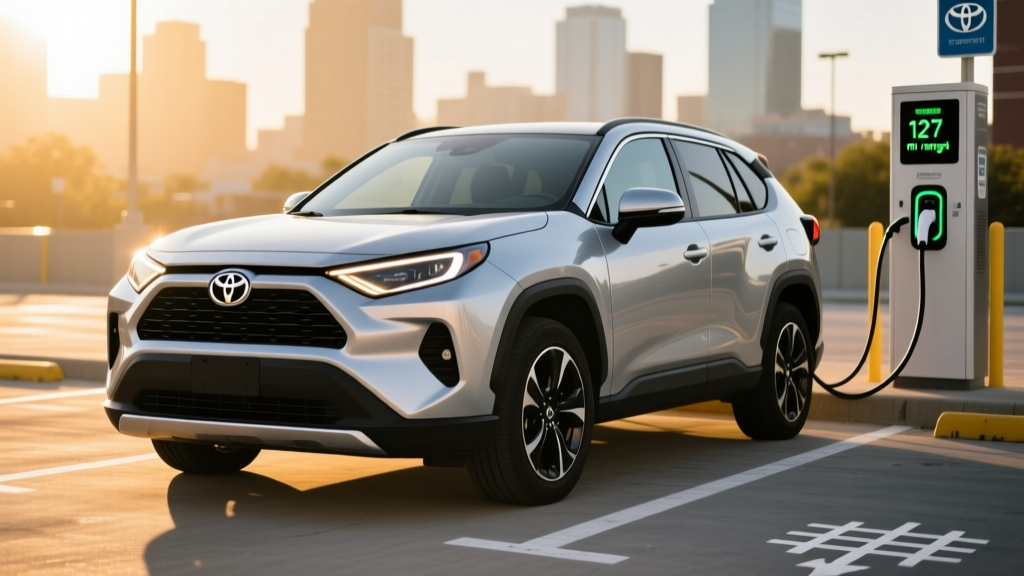
The 2026 Toyota RAV4 Hybrid remains the benchmark compact SUV for buyers who want electrified efficiency without plugging in. Its hybrid energy system pairs a 2.5-liter four-cylinder with dual electric motors to deliver 219 combined horsepower and an EPA-estimated 41 MPG combined — a number that's surprisingly easy to beat in city driving. If you can't charge at home, want a proven powertrain, and drive a mix of city and highway, the RAV4 Hybrid is the right call. If you have home charging and a short commute, the RAV4 Prime PHEV deserves a hard look instead.
HEV vs PHEV: The Core Difference
Conventional Hybrid (HEV) — RAV4 Hybrid: Uses regenerative braking and the gas engine to charge a small battery (~1.6 kWh). You never plug it in. The electric motor assists the engine and enables low-speed EV mode for short distances. Fuel economy gains come primarily from city driving, where the electric motor handles launches and low-speed cruising.
Plug-in Hybrid (PHEV) — RAV4 Prime: Packs a much larger battery (~18.1 kWh usable) that you charge via a wall outlet or Level 2 charger. This unlocks 42 miles of EPA-rated electric-only driving before the gas engine kicks in. Total range exceeds 600 miles. It qualifies for a federal tax credit (details below).
2026 RAV4 Hybrid Fuel Economy: EPA vs Real-World MPG
The EPA rates the 2026 RAV4 Hybrid at 41 MPG city / 38 MPG highway / 41 MPG combined across all trims with standard AWD (Toyota's electronic on-demand AWD is standard on every Hybrid trim). These are strong numbers, but the real story is how hybrid energy management behaves in different conditions.
| Driving Condition | EPA Estimate | Real-World Expectation |
|---|---|---|
| City | 41 MPG | 42–45 MPG (hybrids excel here) |
| Highway (70+ mph) | 38 MPG | 33–36 MPG (aero drag, engine-dominant) |
| Combined | 41 MPG | 37–42 MPG (depends on driving mix) |
| Cold Weather (below 30°F) | — | 34–38 MPG (engine runs more for cabin heat) |
Hybrids consistently exceed their EPA city rating in stop-and-go traffic because the electric motor handles the energy-intensive acceleration from a stop while regenerative braking recaptures kinetic energy. Highway driving flips the script: the gas engine does most of the work at sustained speeds, and aerodynamic drag at 75+ mph erodes efficiency. Owners who do 70%+ city driving regularly report 43–46 MPG on forums and fuel-tracking apps. Source: fueleconomy.gov.
RAV4 Hybrid vs RAV4 Prime PHEV: Specs Side by Side
The hybrid energy system in the RAV4 Hybrid and the plug-in system in the Prime share architecture but deliver very different ownership experiences. Here's how they stack up for the 2026 model year:
| Specification | RAV4 Hybrid (HEV) | RAV4 Prime (PHEV) |
|---|---|---|
| Combined Horsepower | 219 hp | 302 hp |
| Engine | 2.5L 4-cyl + 2 electric motors | 2.5L 4-cyl + 2 electric motors (higher output) |
| Battery Capacity | ~1.6 kWh (NiMH) | ~18.1 kWh usable (Li-ion) |
| Electric-Only Range | N/A (EV mode ~1 mi at low speed) | 42 miles (EPA) |
| Total Range | ~580 miles | ~600+ miles (EV + gas) |
| EPA Combined MPG / MPGe | 41 MPG | 94 MPGe (EV) / 38 MPG (gas-only) |
| 0–60 mph | 7.4 seconds | 5.7 seconds |
| Charging (Level 2, 240V) | Not plug-in | ~2.5 hours (6.6 kW onboard charger) |
| DC Fast Charging | No | No |
| Starting MSRP (2026) | ~$33,500 | ~$45,500 |
| Federal Tax Credit (§30D) | Not eligible | Up to $7,500 (see eligibility below) |
The Prime's 302 hp makes it the quickest RAV4 Toyota sells, and 42 miles of electric range covers most daily commutes. But the $12,000 price gap means you need to drive it primarily on electricity for years to break even — and you need reliable access to a Level 2 charger at home or work. If you can't plug in, the Prime's extra weight and cost work against you, and the standard Hybrid is the smarter buy.
Hybrid Energy System: How the Powertrain Works
Toyota's Hybrid Synergy Drive in the RAV4 uses a power-split device that continuously blends gas-engine and electric-motor torque. At low speeds and light loads, the front electric motor (134 hp on its own) can propel the vehicle without the engine firing. Under hard acceleration, both the engine and motors combine for the full 219 hp output. A second, smaller rear electric motor (54 hp) provides AWD traction by powering the rear axle when slip is detected or during hard launches.
The hybrid energy management is entirely automatic. There are no modes to select beyond an "EV Mode" button that forces electric-only driving at very low speeds for about one mile — useful for creeping through a parking garage at 6 AM without starting the engine. The system prioritizes efficiency: it shuts off the engine at stops, uses the motor for initial acceleration, and seamlessly fires the engine when more power is needed or when the small battery's state of charge drops.
For PHEV buyers, the Prime adds a larger electric motor and a battery large enough to sustain highway-speed electric driving. It also offers charge-sustain and charge-now modes, letting you save battery for a city-driving segment later in your trip — a useful feature for drivers who commute on the highway but want electric mode in stop-and-go traffic at their destination.
Battery Warranty, Lifespan, and Replacement Cost
Hybrid battery longevity is the single biggest concern buyers raise, and Toyota's track record here is among the best in the industry.
2026 RAV4 Hybrid Battery Warranty
- Hybrid Battery: 10 years / 150,000 miles (whichever comes first)
- Hybrid System Components (inverter, motors, ECU): 8 years / 100,000 miles
- Basic Warranty: 3 years / 36,000 miles
- Powertrain: 5 years / 60,000 miles
Toyota extended hybrid battery coverage to 10 years starting with the 2020 model year. This applies to all 2026 RAV4 Hybrid and Prime models. Source: Toyota Warranty Guide.
Real-world lifespan data: Toyota's hybrid batteries in the RAV4 (NiMH in the HEV, lithium-ion in the Prime) routinely last 150,000–200,000+ miles with minimal capacity loss. The NiMH pack in the HEV is particularly robust — it's a mature chemistry that degrades slowly and predictably. Prius taxis have logged 300,000+ miles on original hybrid batteries.
Replacement cost if out of warranty: A new OEM hybrid battery for the RAV4 Hybrid runs approximately $3,000–$4,000 installed at a dealership. Third-party refurbished packs are available for $1,500–$2,500. For the Prime's larger lithium-ion pack, expect $6,000–$8,000+ for OEM replacement. Given the 10-year/150,000-mile warranty and the battery's proven longevity, most owners will sell the vehicle before facing this cost.
Tax Credits and Incentives: What Qualifies?
This is where the HEV vs PHEV distinction matters most for your wallet.
RAV4 Hybrid (HEV): Does NOT qualify for the federal §30D clean vehicle tax credit. Conventional hybrids are not eligible — the credit applies only to plug-in vehicles (PHEVs and BEVs) with sufficient battery capacity. Some states offer modest rebates for hybrids, but these vary by jurisdiction and change frequently. Check your state energy office for current programs.
RAV4 Prime (PHEV): May qualify for up to $7,500 under the federal §30D credit, but eligibility depends on several requirements that must ALL be met:
- MSRP Cap: Vehicle MSRP must not exceed $80,000 for SUVs (RAV4 Prime qualifies)
- Buyer Income Cap: Modified AGI must not exceed $150,000 (single) / $225,000 (head of household) / $300,000 (joint filers)
- Battery Sourcing: Critical minerals and battery components must meet phased-in percentage thresholds from US or FTA-partner countries (check current-year IRS guidance, as these thresholds increase annually)
- Assembly: Final assembly must occur in North America (RAV4 Prime is assembled in Japan — verify current eligibility)
- Point-of-Sale Transfer: The credit can now be transferred to the dealer at purchase, reducing your out-of-pocket cost immediately rather than waiting for tax filing
Critical note: The RAV4 Prime's Japan assembly and battery sourcing have made §30D eligibility inconsistent in recent years. Always verify current eligibility on fueleconomy.gov or consult a tax professional before relying on the credit in your purchase decision. Source: IRS §30D.
Hybrid vs PHEV vs EV: Which Powertrain Fits You?
Choose the RAV4 Hybrid (HEV) if:
- You cannot install a Level 2 charger at home (apartment, street parking, no garage)
- You want maximum simplicity — no plugs, no charging apps, no route planning
- Your driving is a mix of city and highway with no single pattern
- Budget is a priority — $12,000 less than the Prime
- You want proven reliability with the longest track record in hybrid SUVs
Choose the RAV4 Prime (PHEV) if:
- You have reliable home Level 2 charging and a commute under 42 miles
- You want to drive on electricity daily but take gas-powered road trips without range anxiety
- You qualify for the §30D tax credit (effectively reducing the price gap)
- You value the 302 hp performance bump and quieter electric driving
Choose a Full EV (e.g., Tesla Model Y, Hyundai Ioniq 5) if:
- You have home charging and rarely drive more than 250 miles in a single day
- You want the lowest per-mile fuel cost and minimal maintenance
- You want to eliminate gasoline entirely
- Your household has a second vehicle for long road trips (or you're comfortable with DC fast charging on the road)
Pros and Cons: 2026 RAV4 Hybrid
Pros
- 41 MPG combined; routinely exceeds EPA in city driving
- No plug-in required — works with existing gas-station infrastructure
- 10-year / 150,000-mile hybrid battery warranty
- Standard AWD across all Hybrid trims
- Strong resale value (RAV4 Hybrid consistently tops depreciation charts)
- Proven powertrain with 15+ years of Toyota hybrid refinement
Cons
- Highway MPG drops to low-to-mid 30s at 75+ mph
- No federal tax credit eligibility (HEV)
- CVT-style acceleration feel — engine drones under hard throttle
- 219 hp is adequate but not quick for highway merging (7.4s 0–60)
- Cold weather reduces efficiency by 8–15% (engine runs for cabin heat)
- Infotainment system trails competitors in responsiveness
Frequently Asked Questions
How many MPG does the 2026 RAV4 Hybrid actually get?
The EPA rates it at 41 city / 38 highway / 41 combined. In real-world city driving, expect 42–46 MPG. On the highway at 75+ mph, expect 33–36 MPG. Cold weather reduces these figures by roughly 8–15%. Your driving mix determines whether you beat or fall short of the combined sticker.
How far can the RAV4 Prime go on electric only?
The 2026 RAV4 Prime delivers 42 miles of EPA-rated electric-only range. This covers most daily commutes. Once the battery depletes, it operates as a conventional hybrid at 38 MPG combined. Total range exceeds 600 miles with a full tank and full battery.
Is the RAV4 Hybrid reliable, and what does a battery replacement cost?
Toyota's hybrid system is one of the most reliable powertrains in the industry. The hybrid battery is warrantied for 10 years / 150,000 miles. Real-world data shows these batteries routinely lasting 150,000–200,000+ miles. Out-of-warranty replacement runs $3,000–$4,000 for the HEV and $6,000–$8,000+ for the Prime's larger lithium-ion pack.
Does the RAV4 Hybrid qualify for any tax credit?
The conventional RAV4 Hybrid (HEV) does not qualify for the federal §30D clean vehicle credit — that credit applies only to plug-in vehicles. The RAV4 Prime (PHEV) may qualify for up to $7,500, but eligibility depends on income caps, battery sourcing rules, and assembly location. Verify current eligibility on fueleconomy.gov before purchasing.
Do I need to plug in the RAV4 Hybrid?
No. The RAV4 Hybrid (HEV) charges its small battery through regenerative braking and the gas engine. You fuel it exactly like a conventional vehicle — at a gas station. Only the RAV4 Prime (PHEV) requires or benefits from plugging in.
How does the RAV4 Hybrid compare to competitors?
The Honda CR-V Hybrid (40 MPG combined) and Hyundai Tucson Hybrid (38 MPG combined) are the closest rivals. The RAV4 Hybrid edges both on combined MPG and offers standard AWD where competitors charge extra or limit it to higher trims. The Ford Escape Hybrid is discontinued for 2026. The RAV4's advantage is its combination of efficiency, AWD, cargo space (37.5 cu ft behind rear seats), and resale value.