The True Value of Electric-Only Range in PHEVs
Plug-in hybrid electric vehicles (PHEVs) represent the ultimate compromise for drivers who want the environmental and financial benefits of an electric vehicle without the lingering anxiety of range limitations. By combining a robust battery pack for daily commuting with a traditional internal combustion engine for weekend road trips, PHEVs offer unmatched versatility. However, not all plug-in hybrids are created equal. The true value of a PHEV lies in its electric-only range and how that range translates to real-world cost savings.
When evaluating the best PHEVs on the market, looking solely at the Manufacturer's Suggested Retail Price (MSRP) paints an incomplete picture. A vehicle with a longer electric range might carry a higher upfront cost, but it can drastically reduce your daily fuel expenditure, lower maintenance costs, and minimize your carbon footprint. In this comprehensive cost and value breakdown, we rank the top plug-in hybrids by their EPA-estimated electric-only range and analyze the financial return on investment for each model.
How We Calculate Cost Per EV Mile
To determine the true value of each vehicle on this list, we utilize a metric we call 'Cost Per EV Mile.' This is calculated by taking the base MSRP of the vehicle and dividing it by its EPA-estimated electric-only range. While this metric does not account for long-term fuel savings or tax incentives, it provides a baseline understanding of how much upfront capital you are spending for each mile of zero-emission driving capability. A lower Cost Per EV Mile generally indicates a better upfront value proposition for drivers whose primary goal is maximizing their daily electric commute.
Furthermore, we factor in the estimated annual fuel costs provided by the EPA, which assume a mix of electric and gasoline driving based on national averages. According to the U.S. Department of Energy and EPA, PHEVs can significantly reduce fuel consumption and greenhouse gas emissions, especially when drivers consistently charge their vehicles and utilize the electric range for their daily routines.
Top 5 PHEVs Ranked by Electric-Only Range & Value
1. 2024 Toyota Prius Prime (44 Miles EV Range)
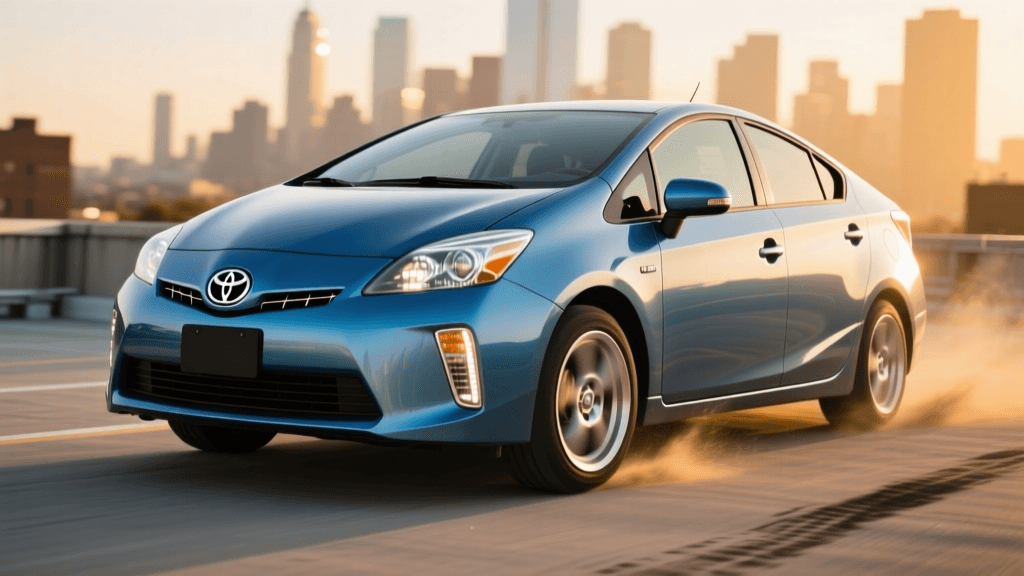
The newly redesigned Toyota Prius Prime is a masterclass in efficiency and value. With an EPA-estimated 44 miles of electric-only range on the SE trim, it tops our list for pure commuting capability. The Prius Prime pairs a 2.0-liter four-cylinder engine with a high-capacity lithium-ion battery, delivering a combined 220 horsepower. This means it is not only efficient but also genuinely quick off the line. Starting at an MSRP of approximately $33,445, the Cost Per EV Mile is an impressive $760. For daily commuters who travel under 40 miles round-trip, the Prius Prime can effectively operate as a pure EV for months at a time, only engaging the gas engine on longer weekend excursions. The interior tech is vastly improved, and the aerodynamic styling makes it a standout in the compact car segment.
2. 2024 Toyota RAV4 Prime (42 Miles EV Range)
If you need the utility of a compact SUV, the Toyota RAV4 Prime is the undisputed king of the PHEV hill. Offering 42 miles of electric range, it comes remarkably close to the Prius Prime while providing all-wheel drive, substantial cargo space, and a towering 302 horsepower. The RAV4 Prime's base MSRP sits around $43,690, yielding a Cost Per EV Mile of roughly $1,040. While it is more expensive upfront than the Prius, the value proposition remains incredibly strong due to its high resale value, standard electronic on-demand AWD, and the ability to tow up to 2,500 pounds. For families looking to eliminate their daily gas station visits without sacrificing the flexibility of an SUV, the RAV4 Prime is a phenomenal financial and practical choice.
3. 2024 Ford Escape PHEV (37 Miles EV Range)
The Ford Escape PHEV offers a comfortable, tech-forward alternative in the compact crossover space. With 37 miles of electric-only range, it is perfectly suited for the average American commute, which the Department of Transportation estimates at around 35 miles per day. Priced starting near $39,500, its Cost Per EV Mile is approximately $1,067. The Escape PHEV prioritizes a smooth, quiet ride and features Ford's latest SYNC 4 infotainment system. While it lacks the standard AWD found on the RAV4 Prime (the Escape PHEV is front-wheel drive only to maximize battery efficiency), it makes up for it with a spacious cabin and highly competitive leasing deals that often make it a bargain for budget-conscious buyers.
4. 2024 Lexus NX 450h+ (37 Miles EV Range)
For those seeking luxury without compromising on electric commuting range, the Lexus NX 450h+ shares its powertrain DNA with the RAV4 Prime but wraps it in a premium, whisper-quiet cabin. It delivers 37 miles of EV range and a robust 304 horsepower. The luxury tax is evident in its starting MSRP of around $59,900, pushing the Cost Per EV Mile to $1,618. However, the value here is derived from the premium materials, advanced Mark Levinson audio options, exceptional ride quality, and Lexus's legendary long-term reliability. If your budget allows for a luxury vehicle, the NX 450h+ ensures that your daily school runs and grocery trips are completed in silent, electric comfort.
5. 2024 Kia Niro PHEV (33 Miles EV Range)
The Kia Niro PHEV is a subcompact crossover that punches well above its weight class in terms of value. Offering 33 miles of electric range, it is ideal for urban dwellers and those with shorter commutes. With a starting MSRP of roughly $34,390, the Cost Per EV Mile is about $1,042. The Niro PHEV stands out with its bold, futuristic exterior design and a highly practical interior that maximizes cabin space despite its smaller footprint. Backed by Kia's industry-leading 10-year/100,000-mile powertrain warranty, the long-term ownership costs and peace of mind make the Niro PHEV an exceptionally safe financial bet for first-time PHEV buyers.
PHEV Range and Cost Comparison Table
| Vehicle Model | EV Range (Miles) | Base MSRP (Est.) | Cost Per EV Mile | Combined MPGe |
|---|---|---|---|---|
| Toyota Prius Prime | 44 | $33,445 | $760 | 114 MPGe |
| Toyota RAV4 Prime | 42 | $43,690 | $1,040 | 94 MPGe |
| Ford Escape PHEV | 37 | $39,500 | $1,067 | 105 MPGe |
| Lexus NX 450h+ | 37 | $59,900 | $1,618 | 84 MPGe |
| Kia Niro PHEV | 33 | $34,390 | $1,042 | 108 MPGe |
Electricity vs. Gasoline: The Commuter’s Savings Breakdown
To truly understand the value of a PHEV's electric range, we must compare the cost of electricity to the cost of gasoline. The national average price for regular unleaded gasoline fluctuates but frequently hovers around $3.50 per gallon. Conversely, the national average cost for residential electricity is approximately $0.16 per kilowatt-hour (kWh). The Alternative Fuels Data Center (AFDC) notes that driving on electricity is generally equivalent to paying around $1.20 to $1.50 per gallon of gasoline, depending on your local utility rates and the vehicle's efficiency.
Let us take the Toyota RAV4 Prime as an example. Its battery holds roughly 18.1 kWh of usable energy. Charging it from empty to full at home costs about $2.90. That $2.90 yields 42 miles of driving, equating to less than $0.07 per mile. If you were to drive those same 42 miles in a traditional gas-powered RAV4 getting 30 MPG, you would consume 1.4 gallons of gas, costing approximately $4.90. By utilizing the PHEV's electric range daily, a commuter driving 40 miles a day, five days a week, can save over $500 annually in fuel costs alone, not including the reduced wear and tear on the engine and brakes.
Factoring in Federal Tax Credits and Incentives
The upfront cost of a PHEV can be heavily mitigated by federal and state incentives. Under the current Inflation Reduction Act, eligible PHEVs can qualify for the Clean Vehicle Credit, which offers up to $7,500 in tax credits. To qualify, the vehicle must meet strict battery component and critical mineral sourcing requirements, and the buyer must meet income caps. Furthermore, the vehicle's MSRP must not exceed $55,000 for sedans or $80,000 for SUVs, pickup trucks, and vans.
Because of these MSRP caps, vehicles like the Toyota Prius Prime and Kia Niro PHEV are often strong candidates for the full or partial credit, drastically lowering their effective purchase price and improving their Cost Per EV Mile ratio. Buyers should always consult the IRS guidelines on Clean Vehicle Credits and check the specific battery sourcing compliance for the exact trim and model year they intend to purchase, as these regulations are subject to periodic updates.
Final Verdict: Which PHEV Offers the Best ROI?
When evaluating plug-in hybrids strictly through the lens of cost and value, the Toyota Prius Prime emerges as the undeniable winner. Its combination of a class-leading 44 miles of EV range, a low starting MSRP, and exceptional overall fuel economy makes it the most financially sound choice for commuters. However, if your lifestyle demands the cargo space and all-weather capability of an SUV, the Toyota RAV4 Prime offers the best return on investment in the utility segment, providing massive power and 42 miles of range without a massive luxury markup.
Ultimately, the financial success of owning a PHEV relies entirely on your charging habits. To maximize the value of your investment, you must have access to reliable Level 1 or Level 2 home charging. If you plug in nightly and stay within your vehicle's electric envelope, a PHEV will pay dividends in fuel savings, maintenance reduction, and daily driving satisfaction for years to come.