The Three-Row Hybrid Dilemma: Upfront Cost vs. Long-Term Value
For growing families, the three-row SUV is a non-negotiable necessity. You need the passenger capacity for school runs and road trips, plus the cargo volume for groceries, sports gear, and luggage. However, the traditional midsize and large SUV segment has long been plagued by a significant downside: abysmal fuel economy. Hauling a heavy, boxy vehicle with a V6 engine routinely results in combined fuel economy figures hovering around 20 to 22 MPG. This is where the hybrid three-row SUV enters the conversation, promising to slash your fuel bills without sacrificing utility.
But hybrid technology comes with an upfront price premium. As a senior automotive analyst evaluating the market through a strict cost and value lens, the critical question is not just 'which hybrid gets the best MPG?' but rather 'which hybrid offers the best return on investment when factoring in cargo space, purchase price, and long-term fuel savings?' In this comprehensive cost and value breakdown, we rank the top mainstream three-row hybrid SUVs to help you determine which model delivers the most metal, space, and efficiency for your hard-earned dollar.
Our Cost & Value Methodology
To accurately rank these vehicles, we cannot simply look at the sticker price or the EPA fuel economy estimates in isolation. True value is derived from a holistic view of ownership. Our rankings are based on the following metrics:
- Upfront MSRP: The starting manufacturer's suggested retail price for the base hybrid trim.
- 5-Year Fuel Cost: Calculated using an assumption of 15,000 miles driven annually (75,000 miles total) at an average national gas price of $3.50 per gallon.
- Maximum Cargo Volume: Total cubic feet of space with the second and third rows folded flat.
- Cost-Per-Cubic-Foot Ratio: A proprietary value metric dividing the starting MSRP by the maximum cargo volume to determine how much you are paying for each unit of utility.
For broader context on how depreciation and maintenance factor into long-term automotive expenses, we recommend reviewing the principles outlined in Kelley Blue Book's Total Cost of Ownership guide, which highlights why fuel and depreciation are the heaviest anchors on a family vehicle's budget.
1. Toyota Grand Highlander Hybrid: The Space and Efficiency King
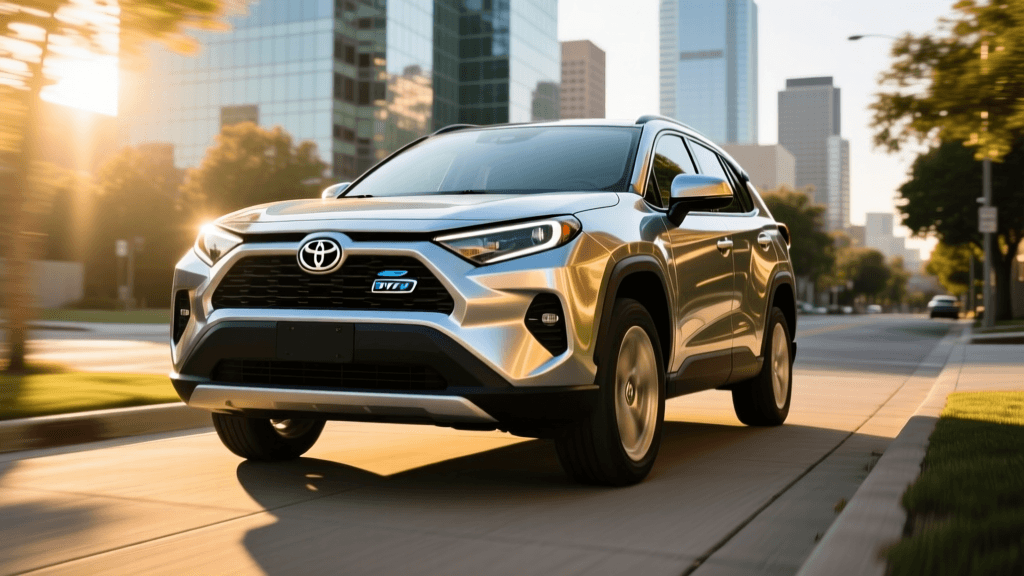
The Toyota Grand Highlander Hybrid is the undisputed heavyweight champion of the mainstream three-row hybrid segment. Toyota recognized that the standard Highlander was too cramped in the third row and too stingy with cargo space, so they stretched the wheelbase and created a masterclass in family utility.
Space and Efficiency Metrics
Powered by a 2.5-liter four-cylinder hybrid powertrain producing 245 horsepower, the Grand Highlander Hybrid achieves an astonishing EPA-estimated 36 MPG combined. More importantly for families, it offers a genuinely usable third row and a massive 97.5 cubic feet of maximum cargo space when the rear seats are folded.
The Cost & Value Breakdown
With a starting MSRP of approximately $45,120 for the LE Hybrid trim, it is the most expensive vehicle on this list. Over 75,000 miles, you will consume roughly 2,083 gallons of fuel, resulting in a 5-year fuel cost of about $7,290. While the initial buy-in is steep, the Grand Highlander's legendary reliability and high resale value mitigate the upfront premium. When you calculate the cost-per-cubic-foot of cargo space, it comes out to $462 per cubic foot—an exceptional value for a vehicle of this physical footprint.
2. Kia Sorento Hybrid: The Budget-Friendly Compact Contender
If the Grand Highlander is a full-size apartment, the Kia Sorento Hybrid is a well-organized studio. It technically offers three rows of seating, but it is fundamentally a compact crossover stretched to accommodate a occasional jump seat in the back. For families with younger children who only need the third row in emergencies, the Sorento Hybrid presents a compelling financial argument.
Space and Efficiency Metrics
The Sorento utilizes a 1.6-liter turbocharged hybrid system generating 227 horsepower. It matches the Toyota's efficiency almost perfectly, delivering an EPA-estimated 35 MPG combined. However, its maximum cargo volume is significantly lower at 75.7 cubic feet, and the third-row legroom is best reserved for toddlers.
The Cost & Value Breakdown
Starting at an MSRP of roughly $38,090, the Sorento Hybrid undercuts the competition by thousands of dollars. Its 5-year fuel cost is nearly identical to the Grand Highlander at $7,499 (due to the 1 MPG difference). However, because the cargo space is much smaller, the cost-per-cubic-foot ratio jumps to $503. You are saving money at the dealership, but you are paying a premium for the utility of the space you actually get.
3. Hyundai Santa Fe Hybrid: The Boxy Value Champion
Completely redesigned with a polarizing but highly functional boxy aesthetic, the Hyundai Santa Fe Hybrid sits squarely between the Sorento and the Grand Highlander in both size and price. It embraces a rugged, outdoor-lifestyle design while maintaining excellent on-road manners and hybrid efficiency.
Space and Efficiency Metrics
Sharing its 1.6-liter turbocharged hybrid underpinnings with the Kia Sorento, the Santa Fe produces 232 horsepower and achieves 34 MPG combined. The boxy roofline pays dividends in the rear, yielding 79.6 cubic feet of maximum cargo space and a third row that is slightly more accommodating than the Kia's.
The Cost & Value Breakdown
The Santa Fe Hybrid starts at an MSRP of around $43,400. Over 5 years, its slightly lower fuel economy results in a fuel cost of $7,720. The cost-per-cubic-foot ratio lands at $545. While it is more expensive per cubic foot than the Toyota, the Santa Fe compensates with a more luxurious interior, superior standard infotainment technology, and a more distinctive design language that appeals to buyers wanting a premium feel without the luxury badge tax.
Data Table: 5-Year Cost of Ownership & Space Metrics
| Vehicle Model | Starting MSRP | Combined MPG | Max Cargo (Cu Ft) | 5-Yr Fuel Cost (75k mi) | Cost / Cu Ft Ratio |
|---|---|---|---|---|---|
| Toyota Grand Highlander Hybrid | $45,120 | 36 MPG | 97.5 | $7,290 | $462 |
| Kia Sorento Hybrid | $38,090 | 35 MPG | 75.7 | $7,499 | $503 |
| Hyundai Santa Fe Hybrid | $43,400 | 34 MPG | 79.6 | $7,720 | $545 |
| Baseline: Avg V6 3-Row SUV | $40,000 | 22 MPG | 85.0 | $11,931 | $470 |
The Math: Hybrid Premium vs. Fuel Savings
To truly understand the value proposition, we must compare these hybrids to the baseline: a traditional, non-hybrid V6 three-row SUV. A typical V6 competitor averages about 22 MPG combined. Over our 75,000-mile testing window, that V6 will consume 3,409 gallons of fuel, costing a staggering $11,931 at $3.50 per gallon.
By choosing the Toyota Grand Highlander Hybrid over a traditional V6, you spend roughly $5,000 more at the dealership, but you save $4,641 at the gas pump over five years. The hybrid premium is almost entirely erased by fuel savings alone, and that is before factoring in the reduced wear on brake pads (thanks to regenerative braking) and the historically stronger resale value of Toyota hybrids. For a deeper dive into the environmental and efficiency impacts of these powertrains, the EPA's Green Vehicle Guide provides excellent data on emissions reductions associated with choosing hybrid systems over conventional combustion engines.
Actionable Advice: Maximizing Your Hybrid ROI
Buying the right vehicle is only half the battle; optimizing how you drive and maintain it will dictate your actual real-world savings. Here are practical steps to maximize the value of your three-row hybrid:
- Master the Regenerative Braking: Hybrids recapture kinetic energy when slowing down. Anticipate stops and coast to red lights rather than braking at the last second. This keeps the battery charged and allows the vehicle to operate in EV mode at low speeds, drastically improving city MPG.
- Utilize the Eco-Mode Climate Settings: HVAC systems draw significant power. Using the 'Eco' climate setting reduces the load on the hybrid battery, forcing the gas engine to run less frequently during idle and low-speed driving.
- Monitor Tire Pressures Monthly: A hybrid's heavy battery pack increases the vehicle's curb weight. Under-inflated tires create excess rolling resistance, which can drop your fuel economy by 2 to 3 MPG. Keep them inflated to the exact PSI listed on the driver's door jamb.
- Leverage Comparison Tools: Before finalizing your purchase, use the FuelEconomy.gov Hybrid Side-by-Side Tool to compare the exact trim levels you are considering, ensuring you aren't accidentally selecting an AWD trim that drops your MPG by 2-3 miles per gallon if you live in a mild climate.
The Verdict: Which 3-Row Hybrid Offers the Best ROI?
When evaluating the intersection of space, efficiency, and cost, the Toyota Grand Highlander Hybrid emerges as the definitive winner. While its starting MSRP is the highest of the group, its unparalleled 97.5 cubic feet of cargo space and class-leading 36 MPG combined create a cost-per-cubic-foot ratio that simply cannot be beaten. It is a true family hauler that pays dividends at the pump and holds its value exceptionally well on the used market.
However, if your budget is strictly capped and your third-row needs are limited to occasional carpools, the Kia Sorento Hybrid remains a highly rational financial choice. It offers near-identical fuel economy to the Toyota but requires a significantly smaller initial capital outlay, making it the best entry-level hybrid SUV on the market today. Ultimately, by choosing any of these top-ranked hybrids over a traditional V6, you are making a mathematically sound decision that will protect your wallet for years to come.