The Compact Hybrid Crossover Boom
The automotive landscape has shifted dramatically over the last five years, with the compact crossover emerging as the undisputed king of the American driveway. But as fuel prices fluctuate and environmental consciousness rises, buyers are no longer satisfied with mere utility; they demand exceptional fuel economy without sacrificing the cargo space and passenger comfort that made crossovers popular in the first place. Enter the hybrid compact crossover. By pairing efficient electric motors with capable gasoline engines, these vehicles offer the perfect middle ground between traditional internal combustion engines and fully electric vehicles.
According to the U.S. Department of Energy's Alternative Fuels Data Center, hybrid electric vehicles (HEVs) can significantly reduce fuel consumption and emissions compared to conventional vehicles, making them an ideal choice for daily commuting and family road trips alike. But with so many options on the market, which one truly deserves your hard-earned money?
In this head-to-head product showdown, we are pitting the three heavyweights of the segment against each other: the Toyota RAV4 Hybrid, the Honda CR-V Hybrid, and the Hyundai Tucson Hybrid. We will rank them by two critical metrics: real-world versatility (cargo, towing, and cabin utility) and fuel economy (MPG). Let the showdown begin.
Meet the Contenders
Toyota RAV4 Hybrid: The Unstoppable Juggernaut
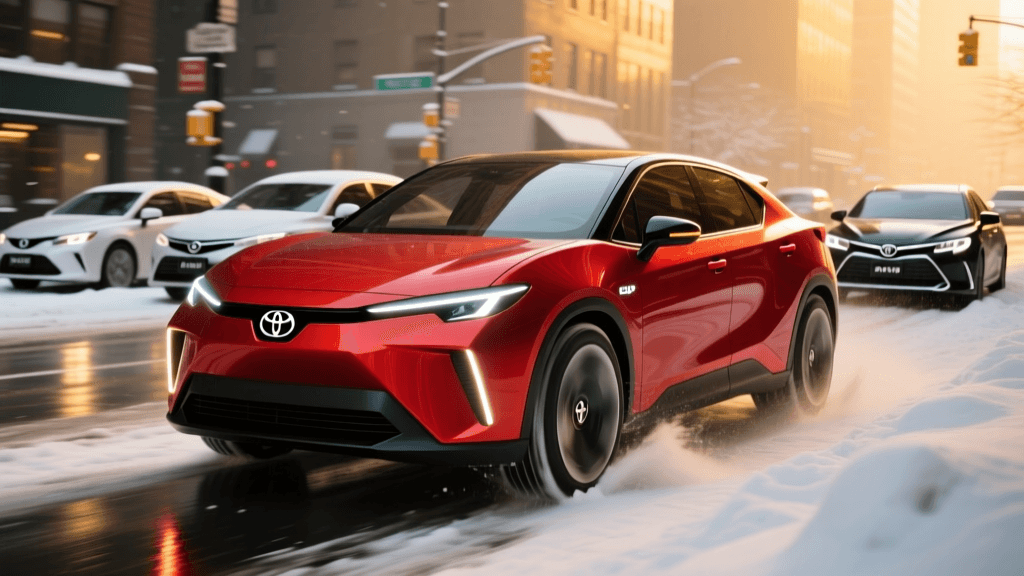
The Toyota RAV4 Hybrid is the segment's perennial best-seller, and for good reason. It offers a rugged, SUV-inspired design, standard all-wheel drive (AWD) across all trims, and a reputation for bulletproof reliability. Under the hood, a 2.5-liter four-cylinder engine pairs with dual electric motors to produce a combined 219 horsepower. It feels punchy off the line, thanks to the instant torque provided by the electric motors, and its slightly stiffer suspension gives it a more commanding, truck-like presence on the road.
Honda CR-V Hybrid: The Refined Space Master
Honda completely redesigned the CR-V recently, and the Hybrid variant is a masterclass in packaging and refinement. Utilizing a two-motor hybrid system mated to a 2.0-liter Atkinson-cycle engine, the CR-V Hybrid generates 204 horsepower. While it has slightly less peak power than the RAV4, Honda's engineering team has tuned the powertrain for seamless, almost imperceptible transitions between electric and gas power. The cabin is noticeably quieter at highway speeds, and the interior materials punch well above their weight class, feeling closer to a luxury entry-level SUV than a mainstream compact.
Hyundai Tucson Hybrid: The Tech-Forward Disruptor
Hyundai has aggressively targeted the hybrid market with the Tucson, offering striking exterior styling and an interior that feels like a spaceship compared to its Japanese rivals. The Tucson Hybrid pairs a 1.6-liter turbocharged engine with a 44-kW electric motor and a traditional six-speed automatic transmission (avoiding the CVT drone found in the Toyota and Honda). This setup yields a segment-leading 226 horsepower and 258 lb-ft of torque. It is the quickest and most powerful of the trio, offering a driving experience that prioritizes engagement and passing power over sheer efficiency.
Head-to-Head Spec Comparison
Before we dive into the nuances of daily living with these vehicles, let us look at the hard data. The following table breaks down the core specifications that dictate versatility and efficiency.
| Feature | Toyota RAV4 Hybrid | Honda CR-V Hybrid | Hyundai Tucson Hybrid |
|---|---|---|---|
| Powertrain | 2.5L 4-Cyl + 3 Motors | 2.0L 4-Cyl + 2 Motors | 1.6L Turbo + 1 Motor |
| Horsepower | 219 hp | 204 hp | 226 hp |
| Drivetrain | AWD (Standard) | AWD (Standard) | AWD (Standard) |
| EPA Combined MPG | 39 MPG | 40 MPG | 38 MPG |
| Cargo Space (Rear Seats Up) | 37.5 cu-ft | 36.3 cu-ft | 38.7 cu-ft |
| Max Towing Capacity | 1,750 lbs | 1,000 lbs | 2,000 lbs |
| Starting MSRP (Approx) | $33,425 | $35,395 | $33,465 |
Versatility Showdown: Cargo, Cabin, and Utility
Versatility is the primary reason buyers choose crossovers over sedans. You need a vehicle that can swallow a week's worth of groceries, accommodate bulky child safety seats, and perhaps tow a small jet ski or utility trailer on the weekend.
Cargo and Interior Space
If maximum cargo volume is your priority, the Hyundai Tucson Hybrid takes the crown with an impressive 38.7 cubic feet of space behind the rear seats. Its boxy rear hatch design and low load floor make sliding in heavy items like dog crates or coolers remarkably easy. Furthermore, the Tucson offers the most rear legroom in the segment, making it the most comfortable option for tall teenagers or rear-facing car seats.
The Toyota RAV4 Hybrid follows closely with 37.5 cubic feet. While slightly smaller on paper, the RAV4's cargo area is exceptionally wide and features clever tie-down points and a reversible cargo mat (carpet on one side, easy-clean rubber on the other) that makes it the most practical for muddy outdoor gear.
The Honda CR-V Hybrid offers 36.3 cubic feet. While it technically has the least volume of the three, Honda's packaging wizardry means the space is incredibly usable. The rear seats recline and slide forward and backward, allowing you to prioritize either passenger legroom or cargo length on the fly.
Towing and Payload
For those who need to tow, the Hyundai Tucson Hybrid is the undisputed winner here, boasting a 2,000-pound towing capacity when properly equipped. This is enough to handle a pair of dirt bikes on a trailer or a small pop-up camper. The Toyota RAV4 Hybrid is rated for 1,750 pounds, which is adequate for light utility trailers. The Honda CR-V Hybrid, conversely, is limited to just 1,000 pounds, effectively restricting it to a small hitch-mounted cargo carrier or a couple of mountain bikes. If towing is on your itinerary, the CR-V is eliminated from the running.
Fuel Economy: EPA Estimates vs. Real-World MPG
When evaluating hybrids, miles per gallon (MPG) is the metric that dictates your long-term cost of ownership. According to the EPA's official hybrid comparison data, the differences between these three vehicles are razor-thin on paper, but real-world driving conditions tell a slightly different story.
The MPG Champion: Honda CR-V Hybrid
The EPA rates the Honda CR-V Hybrid at 40 MPG combined (43 city / 36 highway). In real-world mixed driving, the Honda consistently overachieves in urban environments. Because Honda's hybrid system operates primarily as a series hybrid at low speeds (the gas engine acts as a generator while the electric motor drives the wheels), it is exceptionally efficient in stop-and-go traffic. Commuters facing heavy congestion will see the CR-V easily push past 42 MPG in the city.
The Runner Up: Toyota RAV4 Hybrid
The Toyota RAV4 Hybrid is rated at 39 MPG combined (41 city / 38 highway). Toyota's planetary gearset hybrid system is a marvel of mechanical efficiency. Where the RAV4 shines is on the highway. Thanks to its aerodynamic profile and highly efficient engine cruising RPM, it is not uncommon to see 39-40 MPG on long interstate road trips, slightly outperforming the Honda at sustained high speeds.
The Power Play: Hyundai Tucson Hybrid
The Hyundai Tucson Hybrid trails slightly with an EPA rating of 38 MPG combined (37 city / 38 highway). The trade-off for its 226 horsepower and traditional turbocharged engine is a slight penalty at the pump, particularly in heavy city traffic where the turbo and six-speed transmission cannot match the seamless efficiency of the Japanese CVT-based systems. However, a 1-2 MPG drop is a negligible price to pay for the Tucson's superior passing power and engaging driving dynamics.
Pro-Tip for Hybrid Owners: To maximize your MPG in any of these crossovers, utilize the vehicle's regenerative braking paddles or 'B' gear mode when descending hills or approaching red lights. This captures kinetic energy that would otherwise be lost to brake pad friction, feeding it back into the hybrid battery for later use.
Safety and Family Versatility
A versatile family hauler must also be a safe one. All three vehicles have earned top marks from the Insurance Institute for Highway Safety (IIHS), frequently appearing on the prestigious Top Safety Pick lists. However, the Honda CR-V and Toyota RAV4 generally offer slightly more comprehensive standard active safety suites (Honda Sensing and Toyota Safety Sense) across their base trims, including features like traffic sign recognition and low-light pedestrian detection. The Hyundai Tucson is incredibly safe, but some of its most advanced highway driving assist features are locked behind higher, more expensive trim levels.
The Final Verdict: Which Hybrid Crossover Wins?
Crowning a single winner in this head-to-head showdown is impossible because each crossover excels in a distinctly different area of versatility and efficiency. Your choice should be dictated by your specific lifestyle needs.
- Choose the Honda CR-V Hybrid if: You are a daily commuter navigating heavy city traffic. Its class-leading 40+ MPG in urban environments, ultra-refined cabin, and sliding rear seats make it the ultimate practical family commuter. It is the Efficiency and Refinement Champion.
- Choose the Toyota RAV4 Hybrid if: You frequently mix highway road trips with outdoor adventures. Its standard AWD system is more robust for light snow and dirt trails, its cargo area is easier to clean, and its highway MPG is stellar. It is the All-Weather Utility Champion.
- Choose the Hyundai Tucson Hybrid if: You refuse to sacrifice driving excitement and towing capability for fuel economy. With 226 horsepower, a 2,000-pound towing capacity, and a futuristic interior, it offers the most well-rounded utility package. It is the Power and Versatility Champion.
Ultimately, the hybrid crossover segment has matured to the point where there are no bad choices among these top three contenders. By prioritizing either maximum MPG, rugged outdoor utility, or tech-forward towing capability, you can confidently select the hybrid that perfectly aligns with your daily demands.