The $30,000 Hybrid Myth: You Don't Have to Compromise
The automotive landscape has shifted dramatically over the last few years. With the average transaction price of a new vehicle hovering well above $45,000, finding a brand-new, fuel-efficient car under $30,000 feels like searching for a needle in a haystack. However, the hybrid segment remains a beacon of affordability and efficiency. For budget-conscious commuters and eco-minded drivers, standard hybrids offer a bridge between traditional gas engines and full electric vehicles without the range anxiety or charging infrastructure requirements.
Yet, shopping for budget hybrids is fraught with misconceptions. Many buyers assume that crossing the sub-$30K threshold means sacrificing performance, technology, or long-term reliability. In this guide, we are busting the most pervasive myths about sub-$30K hybrids, highlighting the costly mistakes buyers make at the dealership, and ranking the absolute best hybrid cars under $30,000 based on true long-term value.
Myth Busting: The Budget Hybrid Stigma
Myth: Hybrids under $30K are slow, featureless penalty boxes.
This is entirely false. Modern hybrid powertrains are not just about sipping fuel; they provide instant electric torque that makes city driving surprisingly peppy. Vehicles like the Corolla Hybrid and Elantra Hybrid push out nearly 140 horsepower, offering smooth acceleration and seamless highway merging. Furthermore, the EPA's official fuel economy database shows that modern budget hybrids routinely achieve 50+ MPG combined, rivaling vehicles that cost twice as much, while still including standard adaptive cruise control and lane-keeping assist.
Myth: You will inevitably face a massive battery replacement bill.
According to the U.S. Department of Energy's Alternative Fuels Data Center, modern hybrid batteries are engineered to last the life of the vehicle, typically 12 to 15 years. More importantly, federal law mandates that hybrid batteries carry a minimum warranty of 8 years or 100,000 miles (extended to 10 years/150,000 miles in California and states adopting CARB standards). The fear of a sudden $5,000 out-of-pocket battery replacement is largely based on outdated data from first-generation hybrids built over two decades ago.
3 Costly Mistakes Budget Hybrid Buyers Make
Mistake 1: Confusing Standard Hybrids with PHEVs for Tax Credits
A staggering number of buyers purchase standard hybrids (HEVs) assuming they will qualify for the $7,500 Federal EV Tax Credit. They do not. Only Plug-in Hybrid Electric Vehicles (PHEVs) and Battery Electric Vehicles (BEVs) qualify for federal point-of-sale incentives. Standard hybrids offer their return on investment strictly through massive fuel savings, lower brake wear (due to regenerative braking), and reduced maintenance costs. Factor the fuel savings into your monthly budget rather than expecting a tax windfall.
Mistake 2: Falling into the Trim Level Trap
You might see a hybrid advertised with a starting MSRP of $24,000, but by the time you add the "Technology Package," premium paint, and all-wheel drive, you have crossed the $32,000 threshold. To stay strictly under $30,000 out-the-door, you must be ruthless about trim selection. The base and mid-tier trims of modern hybrids are exceptionally well-equipped; upgrading to the top-tier "Limited" or "Touring" trims is the fastest way to blow your budget.
Mistake 3: Ignoring Dealer Markups and Fees
High-demand hybrids are notorious for dealer market adjustments. Paying $5,000 over MSRP completely destroys the vehicle's value proposition and extends your break-even fuel savings timeline by years. If a local dealer is adding mandatory accessories or markups, you must expand your search radius to 200 miles or wait for end-of-year inventory clear-outs.
The Best Hybrid Cars Under $30,000 Ranked by Value
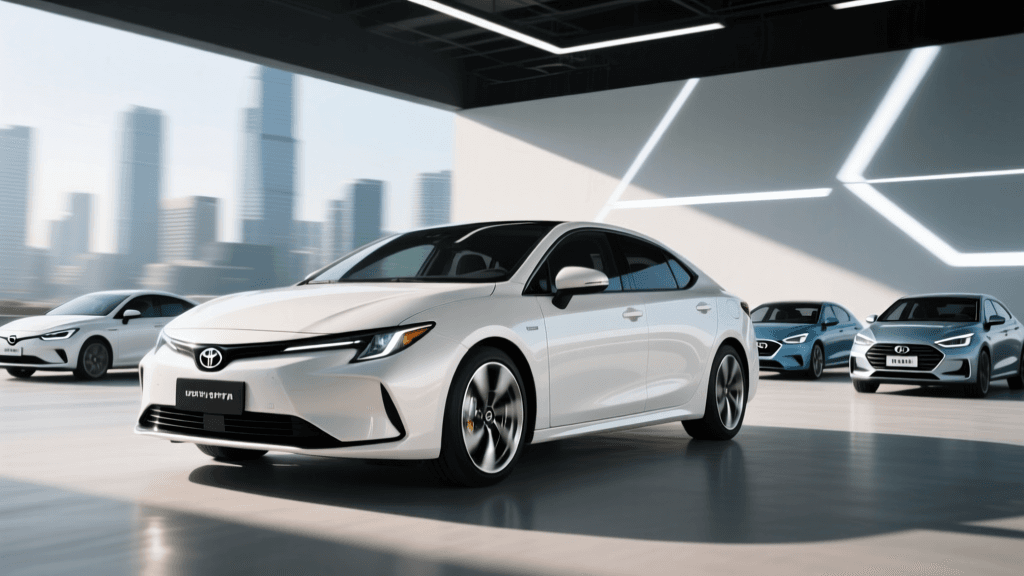
1. Toyota Corolla Hybrid (The Undisputed Value King)
- Starting MSRP: ~$23,500
- Combined MPG: 50 MPG
- Powertrain: 1.8L 4-Cylinder + Electric Motors (138 hp)
The Toyota Corolla Hybrid is the gold standard for budget-friendly efficiency. It shares its core hybrid architecture with the legendary Prius but comes in a traditional, highly reliable sedan package. Standard Toyota Safety Sense 3.0 includes pedestrian detection, dynamic radar cruise control, and lane tracing assist. The available Electronic On-Demand All-Wheel Drive makes it a viable option for buyers in snowy climates, all while keeping the price tag well below $30,000 even when fully loaded with premium audio and navigation.
2. Hyundai Elantra Hybrid Blue (The Warranty & Tech Champion)
- Starting MSRP: ~$26,250
- Combined MPG: 54 MPG
- Powertrain: 1.6L 4-Cylinder + Electric Motor (139 hp)
Hyundai takes the second spot by offering a striking, aerodynamic design and an industry-leading 10-year/100,000-mile powertrain warranty. The "Blue" trim maximizes fuel economy through low-rolling-resistance tires and specific aerodynamic tweaks, making it the ultimate highway commuter. The interior feels a class above its price point, featuring dual 10.25-inch screens, wireless Apple CarPlay, and a highly intuitive infotainment system that outshines many luxury competitors.
3. Kia Niro LX (The Crossover Compromise)
- Starting MSRP: ~$27,000
- Combined MPG: 53 MPG
- Powertrain: 1.6L 4-Cylinder + Electric Motor (139 hp)
For buyers who need the cargo space and elevated seating position of a crossover but cannot stomach the $35,000+ price tags of hybrid SUVs like the RAV4 or CR-V, the Kia Niro is the ultimate loophole. It offers excellent outward visibility, a practical hatchback layout with over 54 cubic feet of maximum cargo space, and stellar city MPG. While the base LX trim lacks some premium amenities, it easily secures a spot under the $30K limit while providing unmatched utility.
Data Table: True Cost of Ownership (TCO) Breakdown
When evaluating value, MSRP is only half the story. The table below compares the estimated annual fuel costs and 5-year fuel savings compared to the average new gasoline vehicle (which gets roughly 28 MPG combined). Data is based on 15,000 annual miles at $3.50 per gallon.
| Vehicle Model | Base MSRP | Combined MPG | Est. Annual Fuel Cost | 5-Yr Fuel Savings (vs. 28 MPG Avg) |
|---|---|---|---|---|
| Toyota Corolla Hybrid | $23,500 | 50 MPG | $1,050 | $3,750 |
| Hyundai Elantra Hybrid Blue | $26,250 | 54 MPG | $972 | $4,140 |
| Kia Niro LX | $27,000 | 53 MPG | $990 | $4,050 |
Pro Tip: The Hyundai Elantra Hybrid Blue offers the highest raw fuel savings, but the Toyota Corolla Hybrid's lower initial MSRP and historically higher resale value often result in a lower overall 5-year Total Cost of Ownership when depreciation is factored in. Always check localized depreciation trends on resources like Consumer Reports' automotive reliability and value indexes before signing the paperwork.
Actionable Dealership Tactics for Sub-$30K Hybrids
To ensure you actually drive one of these vehicles off the lot for under $30,000, you must approach the dealership with a strict strategy:
- Target End-of-Month and End-of-Year Sales: Dealerships operate on volume bonuses from the manufacturer. Shopping on December 28th or the last two days of any given month gives you immense leverage, as sales managers are desperate to hit quotas and clear floorplan inventory.
- Use Manufacturer Portals, Not Third-Party Sites: Sites like Autotrader or CarGurus often show ghost inventory. Use the official Toyota, Hyundai, or Kia build-and-price portals to filter by exact zip code and view real-time, unadjusted dealer inventory.
- Refuse the "Nitrogen" and "Vin Etching" Packages: Dealerships frequently pad the out-the-door price with mandatory add-ons. If a dealer insists on a $999 protection package to sell you a Corolla Hybrid at MSRP, walk away. There is always another dealer within a three-hour drive willing to sell the car at the advertised price.
- Secure Pre-Approval from a Credit Union: Walking into a dealership with a pre-approved auto loan from a local credit union prevents the finance office from marking up your interest rate, potentially saving you thousands of dollars over the life of the loan.
Final Verdict: Maximizing Your Hybrid Investment
The myth that you need to spend $40,000 to get a reliable, tech-forward, and fuel-efficient hybrid is officially busted. The Toyota Corolla Hybrid remains the safest, most well-rounded bet for the vast majority of buyers, offering AWD and legendary reliability at an unbeatable price point. However, if maximum highway MPG and interior screen real estate are your priorities, the Hyundai Elantra Hybrid Blue is a phenomenal alternative. By avoiding the common mistakes of trim-level upselling and tax-credit confusion, you can secure a top-tier hybrid that will pay for its own premium at the pump for the next decade.