The All-Weather Dilemma: Traction vs. Efficiency
When winter storms roll in or rain-slicked highways test your vehicle's limits, all-wheel drive (AWD) transitions from a premium luxury to an absolute necessity. However, traditional AWD systems add significant weight and mechanical drag, inherently punishing fuel economy. For eco-conscious drivers living in snowy or wet climates, this presents a frustrating dilemma: do you sacrifice fuel efficiency for winter traction, or do you risk slipping on ice to save money at the pump? Fortunately, the latest generation of hybrid and plug-in hybrid vehicles has engineered a brilliant compromise. By utilizing electric motors to power the rear wheels or integrating hybrid powertrains with advanced mechanical drivetrains, automakers are delivering exceptional all-weather grip without devastating your MPG.
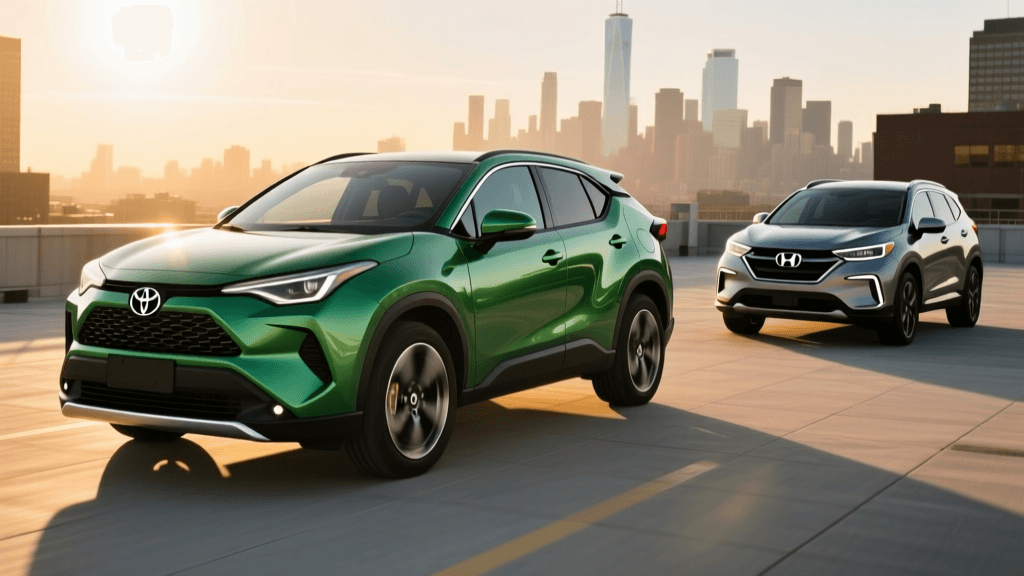
In this head-to-head product showdown, we are pitting the top-selling AWD hybrids against one another. We will evaluate them based on two critical metrics: traction capability (how well the AWD system manages slip, deep snow, and torque distribution) and overall efficiency (combined MPG and real-world energy management). According to data from the U.S. Department of Energy's Fuel Economy Guide, adding a conventional mechanical AWD system to a gas-powered vehicle typically reduces fuel economy by 2 to 4 MPG due to drivetrain friction and added mass. But as we will see in this showdown, hybrid architectures have found innovative ways to bypass this penalty entirely.
The Engineering: Electronic e-AWD vs. Mechanical AWD
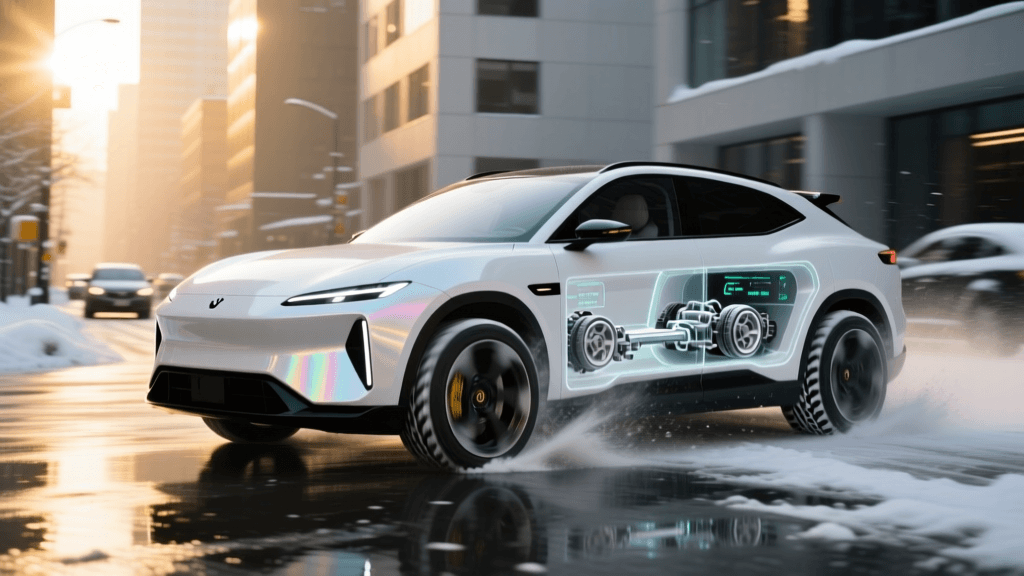
Before we crown a winner, it is vital to understand the fundamental differences in how these hybrids send power to the ground. The showdown largely features two distinct AWD philosophies. The first is Electronic On-Demand AWD (often branded as e-AWD). In this setup, there is no physical driveshaft connecting the front engine to the rear wheels. Instead, an independent electric motor is mounted on the rear axle. The vehicle's computer monitors wheel slip and instantly engages the rear motor to provide traction. This is incredibly efficient because it eliminates the mechanical drag of a spinning driveshaft when AWD is not needed.
The second philosophy is Mechanical AWD, where the hybrid powertrain is mated to a traditional driveshaft and rear differential. While this adds weight and slight mechanical drag, it provides more robust, sustained torque to the rear wheels, making it superior for deep snow, off-road scenarios, and aggressive cornering. Furthermore, the Insurance Institute for Highway Safety (IIHS) consistently reminds consumers that while advanced AWD systems vastly improve acceleration and cornering traction in adverse weather, they do not reduce braking distances. Therefore, a vehicle's overall winter safety is a combination of its AWD traction system, its weight distribution, and the driver's choice of tires.
Head-to-Head Comparison Chart
| Vehicle | AWD System Type | Combined MPG | Ground Clearance | Traction Rating |
|---|---|---|---|---|
| Toyota Prius AWD-e | Electronic On-Demand | 49 MPG | 5.3 inches | Moderate (Ice/Rain) |
| Toyota RAV4 Hybrid | Electronic On-Demand | 40 MPG | 8.1 inches | High (Snow/Light Trail) |
| Honda CR-V Hybrid | Mechanical Real-Time | 40 MPG | 8.2 inches | Very High (Deep Snow) |
| Hyundai Tucson Hybrid | Mechanical HTRAC | 38 MPG | 8.3 inches | Very High (Snow/Mud) |
1. Toyota Prius AWD-e: The Efficiency King
The Toyota Prius has long been the undisputed champion of fuel economy, but the introduction of the AWD-e variant turned it into a surprisingly capable all-weather commuter. The Prius utilizes an independent rear electric motor that provides 5.2 kW of power. Unlike traditional AWD systems that remain active at all speeds, the Prius AWD-e system is highly strategic. It automatically engages the rear wheels from a standstill up to 43 mph to prevent wheel spin on icy intersections or snowy stoplights. Once the vehicle reaches cruising speeds, the rear motor disengages to preserve maximum aerodynamic and electrical efficiency.
The Showdown Verdict: If your primary concern is minimizing fuel costs while surviving icy urban commutes, the Prius AWD-e is untouchable. With an EPA-estimated 49 MPG combined, it suffers virtually no efficiency penalty compared to its front-wheel-drive counterpart. However, its low 5.3 inches of ground clearance and lack of sustained rear-wheel torque mean it will easily high-center in deep snowdrifts. It wins the efficiency category by a landslide, but loses the traction showdown to the SUVs.
2. Toyota RAV4 Hybrid: The Benchmark e-AWD
The Toyota RAV4 Hybrid is the best-selling non-truck in America for a reason, and its Electronic On-Demand AWD system is a masterclass in balancing daily efficiency with weekend capability. The RAV4 uses a more powerful rear electric motor than the Prius, capable of sending up to 1,214 lb-ft of instantaneous torque to the rear wheels the millisecond slip is detected. Because there is no mechanical linkage, the RAV4 Hybrid achieves an astonishing 40 MPG combined while still offering 8.1 inches of ground clearance to clear snowdrifts and rutted winter roads.
The Showdown Verdict: The RAV4 Hybrid takes the crown for the best overall balance. It proves that an e-AWD system can provide confident, safe traction in heavy snow without sacrificing the 40+ MPG that hybrid buyers demand. While it may not be suited for aggressive off-roading or rock crawling, for 95% of drivers facing winter storms, rainstorms, and gravel roads, the RAV4's instant electric torque delivery provides a smooth, secure, and highly efficient driving experience.
3. Honda CR-V Hybrid: Mechanical Grip and Sustained Power
Honda takes a fundamentally different approach in the CR-V Hybrid. Rather than using a separate rear electric motor, Honda utilizes its Real-Time AWD system, which features a physical driveshaft connecting the hybrid powertrain to the rear differential. This mechanical connection means the CR-V can send sustained, high-torque power to the rear wheels at highway speeds and in deep, challenging snow where electronic systems might overheat or lose effectiveness. The system can route up to 50% of the engine's torque to the rear axle, providing a traditional, planted, and predictable AWD feel.
The Showdown Verdict: The CR-V Hybrid wins the pure traction and driving dynamics category. Despite carrying the weight of a mechanical driveshaft and rear differential, Honda's brilliant two-motor hybrid system still manages to deliver 40 MPG combined. If you live in an area with heavy, sustained snowfall, steep unplowed driveways, or frequently tow light loads in wet conditions, the mechanical grip of the CR-V Hybrid inspires significantly more confidence than an e-AWD system.
4. Hyundai Tucson Hybrid: The Traction Heavyweight
Hyundai equips the Tucson Hybrid with its renowned HTRAC AWD system. Like the Honda, this is a mechanical system, but it features advanced electronic clutch packs that allow for highly aggressive torque vectoring. The Tucson Hybrid offers selectable drive modes (including Snow, Mud, and Sand) that alter the transmission shift points, throttle response, and AWD torque distribution to match the terrain. With 8.3 inches of ground clearance and a robust 1.6-liter turbocharged hybrid powertrain, the Tucson is the most off-road capable vehicle in this lineup.
The Showdown Verdict: The Tucson Hybrid is the ultimate traction heavyweight, offering the most customizable and aggressive AWD system in the segment. However, this mechanical complexity and aggressive tuning come at a slight cost to efficiency, dropping the combined MPG to 38. It is the perfect choice for outdoor enthusiasts who need genuine all-terrain capability but still want the low-end torque and fuel savings of a hybrid powertrain.
Deep Dive: The Physics of Hybrid Traction and Weight Distribution
One often-overlooked advantage of hybrid vehicles in the traction showdown is weight distribution. In traditional gas-powered cars, the heavy engine sits over the front axle, leaving the rear end light and prone to fishtailing on ice. In hybrids, the high-voltage battery pack is typically mounted low in the chassis, often beneath the rear seats or in the floorpan. This lowers the vehicle's center of gravity and adds hundreds of pounds of ballast directly over or just ahead of the rear wheels. This natural weight bias dramatically improves rear-wheel bite, making the AWD systems in the RAV4, CR-V, and Tucson even more effective than their gas-only counterparts.
Furthermore, the regenerative braking systems found in these hybrids offer a unique traction benefit. By allowing drivers to adjust the level of regen (or using one-pedal driving modes in PHEVs), drivers can slow the vehicle down on icy downhills using the electric motor's magnetic resistance rather than the friction brakes. This prevents the brake pads from locking the wheels, maintaining steering control and traction when navigating slippery mountain passes. For more information on how hybrid powertrains maximize energy recapture, the U.S. Department of Energy's Hybrid Vehicle Overview provides excellent technical insights into regenerative braking efficiencies.
The Unsung Hero: Tires Matter More Than the Drivetrain
No head-to-head AWD showdown is complete without a critical caveat: your drivetrain is only as good as your tires. The most advanced HTRAC or Real-Time AWD system in the world will fail to stop or corner on black ice if it is equipped with worn all-season tires. While AWD helps you accelerate and climb hills, it does absolutely nothing to help you brake. To truly maximize the traction potential of the RAV4 Hybrid or CR-V Hybrid, investing in a dedicated set of 3-Peak Mountain Snowflake (3PMSF) rated winter tires is the single most effective upgrade you can make. When paired with winter tires, the mechanical AWD systems of the Honda and Hyundai become virtually unstoppable in winter conditions.
Verdict: Which AWD Hybrid Wins the Showdown?
The winner of this head-to-head showdown depends entirely on your specific geographic and lifestyle needs. If you are a commuter navigating icy city intersections and prioritize keeping your carbon footprint and fuel bills as low as possible, the Toyota Prius AWD-e is the undisputed efficiency champion. However, if you need a versatile, do-it-all family vehicle that offers the perfect compromise between excellent fuel economy and reliable snow traction, the Toyota RAV4 Hybrid takes the overall Best in Show award for its brilliant e-AWD execution.
On the other hand, if you frequently battle deep snowdrifts, steep rural inclines, or require sustained all-weather grip for outdoor adventures, the mechanical AWD systems found in the Honda CR-V Hybrid and Hyundai Tucson Hybrid are vastly superior. The Honda wins on mechanical efficiency, matching the RAV4's 40 MPG while offering superior physical grip, making it the ultimate winner for drivers who refuse to compromise on traction.