The Beginner's Complete Guide to City Hybrid Efficiency
If your daily commute involves navigating congested urban streets, waiting at endless red lights, and crawling through rush-hour traffic, a traditional gasoline car is working against you. Internal combustion engines are notoriously inefficient at low speeds and during frequent idling. This is exactly where hybrid technology shines. However, not all hybrids are created equal when it comes to the unique demands of urban environments.
In this beginner's complete guide, we are ranking the best hybrid cars for city driving based specifically on their stop-start efficiency. We will explore how these vehicles capture wasted energy, which models offer the smoothest transitions between electric and gas power, and how you can maximize your fuel savings in the city.
Understanding Stop-Start Efficiency in Hybrids
Before diving into the rankings, it is crucial to understand what makes a hybrid excel in stop-and-go traffic. According to the U.S. Department of Energy's Alternative Fuels Data Center, hybrid electric vehicles (HEVs) combine a conventional internal combustion engine with an electric propulsion system. In city driving, two primary mechanisms dictate efficiency:
- Regenerative Braking: When you lift off the accelerator or press the brake pedal, the electric motor reverses its function, acting as a generator. This captures kinetic energy that would otherwise be lost as heat in traditional brake pads and stores it in the hybrid battery.
- Engine Shut-Off and EV Creep: Full hybrids can completely shut off the gasoline engine when the car is stopped or moving at very low speeds. The vehicle then uses its stored battery power to accelerate from a stop, completely bypassing the engine's most inefficient operating range.
The Environmental Protection Agency (EPA) notes that the true benefit of hybrid technology is realized in city driving, where frequent braking and accelerating allow the system to continuously recycle energy. Therefore, our rankings prioritize city MPG ratings, the smoothness of the engine stop-start transition, and the effectiveness of low-speed electric crawling.
Top 5 Best Hybrids for City Stop-Start Driving
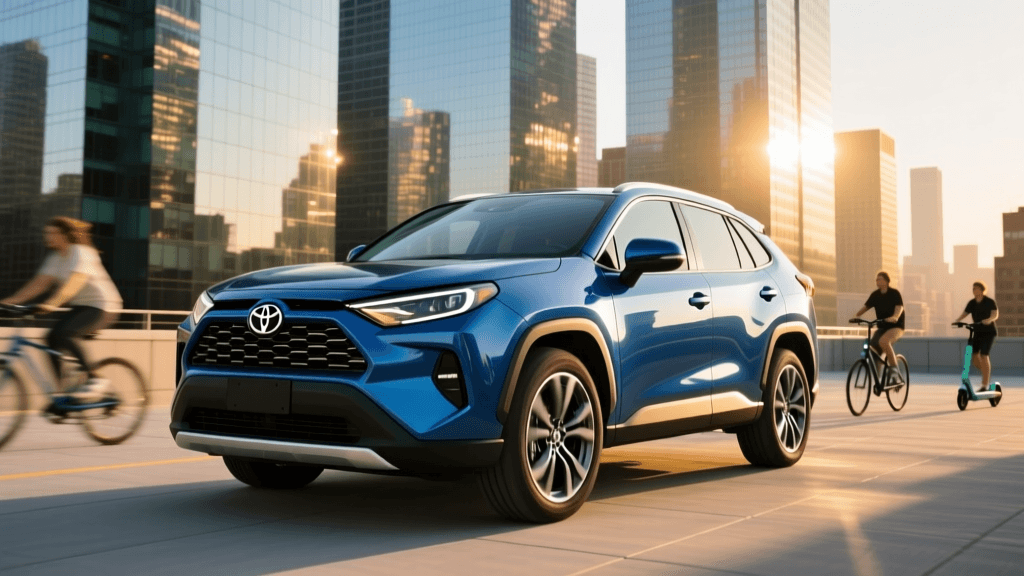
1. Toyota Prius (The Undisputed City King)
The Toyota Prius remains the gold standard for urban efficiency. With its latest generation, Toyota has not only improved the styling and performance but also refined its Hybrid Synergy Drive system for seamless stop-start operation. The Prius achieves an astonishing EPA-estimated 57 MPG in the city. When you come to a halt, the engine shuts off instantly and imperceptibly. When the light turns green, the electric motor provides immediate torque, allowing you to pull away smoothly before the gas engine quietly spins up to assist. Its aggressive regenerative braking profile makes it incredibly easy to capture energy in heavy traffic.
2. Hyundai Elantra Hybrid (The Smooth Operator)
Hyundai has engineered the Elantra Hybrid to be a master of urban commuting, boasting an EPA-estimated 53 MPG in the city. What sets the Elantra apart for beginners is the sheer smoothness of its stop-start system. Unlike some competitors that exhibit a slight shudder when the gas engine engages, the Elantra's 6-speed dual-clutch automatic transmission and electric motor integration provide a linear, jolt-free acceleration from a standstill. It also features adjustable regenerative braking levels via steering wheel paddles, allowing you to maximize energy recapture as you approach red lights.
3. Kia Niro (The Urban Crossover)
For city dwellers who need a higher seating position and crossover cargo space without sacrificing stop-start efficiency, the Kia Niro is the perfect solution. Rated at 53 MPG in the city, the Niro shares its powertrain DNA with the Elantra but is packaged in a highly practical urban footprint. Its dedicated hybrid platform means the battery is placed under the rear seats, preserving cargo space. In stop-and-go traffic, the Niro's EV mode is highly responsive, allowing you to creep through gridlock entirely on electric power, completely eliminating idle fuel consumption.
4. Toyota Camry Hybrid (The Midsize Marvel)
If you need the spaciousness of a midsize sedan but refuse to compromise on city efficiency, the Toyota Camry Hybrid is your best bet. Achieving up to 51 MPG in the city (and even higher in the newest model years), the Camry utilizes Toyota's proven power-split device. This system acts as an infinitely variable transmission, ensuring the gas engine only turns on when absolutely necessary or when operating at its peak efficiency RPM. The transition from electric stop to gas-assisted acceleration is remarkably well-damped, making it a luxurious and efficient choice for urban professionals.
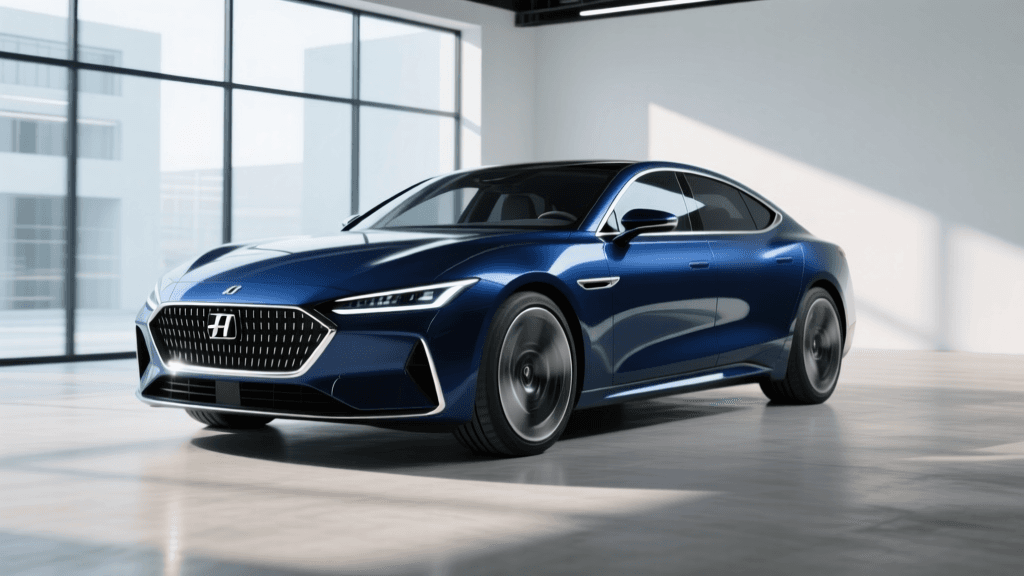
5. Honda Accord Hybrid (The Commuter's Choice)
The Honda Accord Hybrid takes a slightly different approach to stop-start efficiency. Utilizing a two-motor hybrid system, the Accord operates primarily as a series hybrid at low city speeds. This means the gas engine rarely drives the wheels directly in the city; instead, it acts as a generator to feed electricity to the drive motor. This results in an EV-like driving experience with instantaneous torque off the line. While its city rating of 46 MPG is slightly lower than the Prius or Elantra, the sheer smoothness and responsiveness of its stop-start behavior make it a joy to drive in congested areas.
Comparison Chart: City MPG and Stop-Start Specs
| Vehicle Model | City MPG (EPA Est.) | Hybrid System Type | Best Stop-Start Feature |
|---|---|---|---|
| Toyota Prius | 57 MPG | Series-Parallel (Power-Split) | Immediate EV torque & highest energy recapture |
| Hyundai Elantra Hybrid | 53 MPG | Parallel (6-Speed DCT) | Smoothest engine engagement & paddle regen |
| Kia Niro | 53 MPG | Parallel (6-Speed DCT) | Extended low-speed EV creeping capability |
| Toyota Camry Hybrid | 51 MPG | Series-Parallel (Power-Split) | Seamless power-split transition in heavy traffic |
| Honda Accord Hybrid | 46 MPG | Series-Parallel (Two-Motor) | EV-like series mode for stop-and-go acceleration |
Beginner Tips for Maximizing City Stop-Start Efficiency
Owning a highly efficient hybrid is only half the equation. How you drive in the city drastically impacts your real-world MPG. Here are actionable tips to master urban hybrid driving:
- Master the 'Pulse and Glide' Technique: Instead of maintaining a constant speed by lightly resting your foot on the accelerator, accelerate briskly to your target speed (the 'pulse'), then lift off the pedal entirely to let the car coast (the 'glide'). This allows the hybrid system to shut off the gas engine and coast on zero fuel, engaging the electric motor only when you need to maintain momentum.
- Anticipate Traffic Lights: Regenerative braking is most effective when applied gradually over a long distance. If you see a red light ahead, take your foot off the gas early and let the regenerative system slow the car down, rather than waiting until the last second and using the friction brakes.
- Utilize 'B' Mode or Regen Paddles: Most hybrids offer a 'B' (Brake) gear setting or steering wheel paddles to increase regenerative braking aggressiveness. Use these in heavy, slow-moving traffic to capture maximum energy every time the car in front of you taps its brakes.
- Manage Climate Control: Running the air conditioning compressor requires energy, which can force the gas engine to turn on even when the car is stopped. Use the 'Eco' climate setting, which reduces the compressor's load and allows the car to stay in EV mode longer at red lights.
Conclusion
Navigating the concrete jungle doesn't have to mean burning through expensive fuel. By choosing a vehicle optimized for stop-start efficiency, you can turn the frustration of city traffic into an opportunity to maximize your fuel economy. Whether you opt for the unmatched 57 MPG of the Toyota Prius, the smooth shifting of the Hyundai Elantra, or the practicality of the Kia Niro, understanding how your hybrid captures and deploys energy will transform your daily commute. For further reading on reducing your carbon footprint and choosing efficient vehicles, consult the EPA's Green Vehicle Guide to see how your city hybrid stacks up against the broader automotive market.