The AWD Hybrid Dilemma: Traction vs. Fuel Economy
For decades, automotive buyers faced a frustrating compromise: choose the sure-footed traction of all-wheel drive (AWD) for harsh weather, or opt for front-wheel drive to preserve fuel economy. Traditional mechanical AWD systems added hundreds of pounds of weight, introduced parasitic drivetrain losses, and required a physical driveshaft that compromised cabin packaging. Consequently, adding AWD to a vehicle historically meant sacrificing miles per gallon (MPG). However, the modern hybrid landscape has completely rewritten this rulebook.
Today, automakers are leveraging electric motors to power secondary axles, eliminating the need for heavy mechanical driveshafts while providing instantaneous torque to the wheels that need it most. According to the U.S. Department of Energy's Alternative Fuels Data Center, modern hybrid powertrains utilize sophisticated electronic controls to seamlessly distribute power between the internal combustion engine and electric motors, maximizing both efficiency and grip. But not all hybrid AWD systems are created equal. Some rely on traditional mechanical linkages for sustained off-road traction, while others use lightweight electronic rear motors designed strictly for snowy driveway escapes.
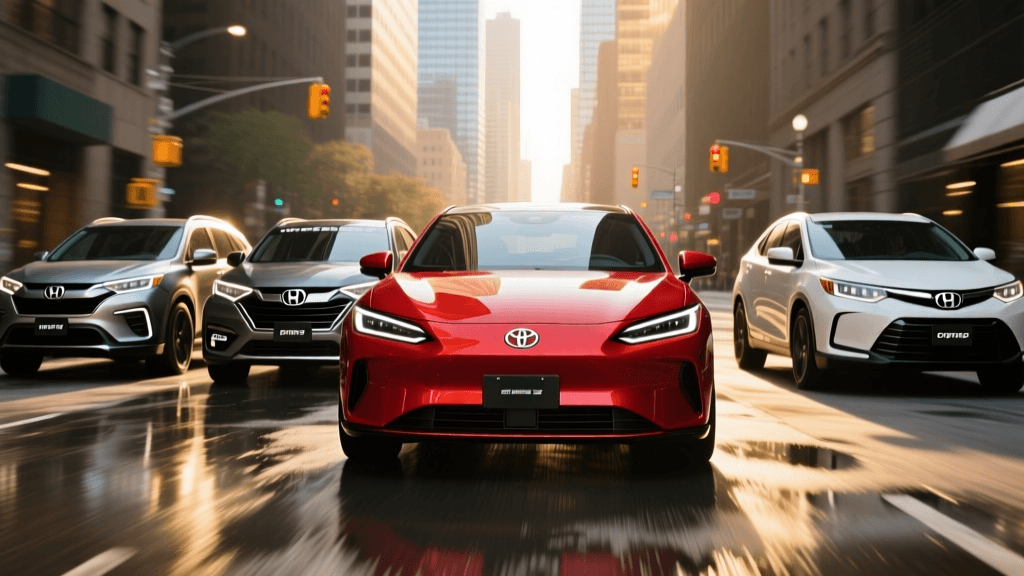
In this head-to-head product showdown, we are ranking the best AWD hybrids on the market by evaluating their traction capabilities, AWD system architecture, and real-world fuel efficiency. We have selected four distinct category benchmarks: the Hyundai Tucson Hybrid, Honda CR-V Hybrid, Toyota RAV4 Hybrid, and the Toyota Prius AWD.
Head-to-Head Contenders: Specs at a Glance
Before diving into the nuanced differences between mechanical and electronic AWD systems, let us establish the baseline specifications for our four contenders. The following table outlines the factory powertrain data, EPA-estimated fuel economy, and the specific type of AWD system each vehicle employs.
| Vehicle | AWD System Type | Total System HP | EPA Combined MPG | Starting Price (Approx.) |
|---|---|---|---|---|
| Toyota Prius AWD | Electronic On-Demand (E-AWD) | 196 hp | 54 MPG | $29,500 |
| Toyota RAV4 Hybrid | Electronic On-Demand (E-Four) | 219 hp | 39 MPG | $33,500 |
| Honda CR-V Hybrid | Mechanical Real-Time AWD | 204 hp | 37 MPG | $36,000 |
| Hyundai Tucson Hybrid | Mechanical HTRAC AWD | 226 hp | 35 MPG | $34,500 |
Traction Showdown: Mechanical vs. E-AWD Systems
When evaluating traction, we must distinguish between 'slip-and-grip' scenarios (like launching from a stop on an icy intersection) and 'sustained traction' scenarios (like climbing a long, steep, snow-covered mountain pass). The hardware dictating how power reaches the rear wheels fundamentally changes the vehicle's behavior in these environments.
1. Hyundai Tucson Hybrid (HTRAC AWD) - The Traction Champion
The Hyundai Tucson Hybrid utilizes the brand's renowned HTRAC AWD system. Unlike its Japanese competitors, the Tucson relies on a traditional mechanical driveshaft connected to the hybrid transmission, sending physical torque to a rear differential. This mechanical linkage ensures that the rear wheels receive consistent, sustained power without relying solely on the hybrid battery's state of charge. Furthermore, Hyundai's system features an active torque-vectoring rear differential that can shift power side-to-side across the rear axle. In deep snow or muddy rutted trails, the Tucson Hybrid offers the most confidence and the highest ceiling for traction among compact hybrid SUVs.
2. Honda CR-V Hybrid (Real-Time AWD) - The Balanced All-Rounder
Honda equips the CR-V Hybrid with its Real-Time AWD system. Similar to the Tucson, this is a mechanical system featuring a physical driveshaft that runs beneath the floorboards to a rear differential. However, Honda's system uses a dual hydraulic pump setup that engages the rear axle only when the front wheels lose traction. This mechanical connection provides excellent durability and sustained grip on long, slippery inclines where an electric-only rear motor might overheat or deplete the battery. It sacrifices a small amount of fuel efficiency due to the spinning driveshaft, but for drivers in the Snow Belt, the CR-V Hybrid offers highly predictable, traditional AWD security.
3. Toyota RAV4 Hybrid (E-Four AWD) - The Efficiency-Focused SUV
The Toyota RAV4 Hybrid takes a radically different approach with its E-Four AWD system. There is no mechanical driveshaft connecting the front transaxle to the rear wheels. Instead, a dedicated 40-kilowatt electric motor is mounted directly on the rear axle. This setup drastically reduces weight and eliminates parasitic drivetrain loss, which is why the RAV4 Hybrid achieves an impressive 39 MPG combined despite being a spacious SUV. The rear motor provides instantaneous torque the millisecond the front wheels slip, making it exceptional for rainy highway merging and snowy suburban driveways. However, in extreme, sustained low-traction environments (like deep sand or miles of unplowed forest roads), the system will limit rear power to protect the electric motor and preserve the hybrid battery.
4. Toyota Prius AWD (Electronic On-Demand) - The Commuter's Winter Insurance
The newly redesigned Toyota Prius AWD employs a similar electronic on-demand system to the RAV4, but scaled down for a passenger car. A small rear electric motor provides just enough torque to push the rear wheels during initial acceleration on slick surfaces. It is strictly designed as a 'winter insurance' policy, ensuring the driver can safely navigate an icy intersection or a steep, wet suburban hill. It is not intended for off-road use or deep snow traversal, but for 95% of paved-road winter driving, it provides ample stability while allowing the Prius to maintain its class-leading 54 MPG rating.
Efficiency Rankings: Real-World MPG vs. EPA Estimates
While traction keeps you safe, efficiency keeps you out of the gas station. The Environmental Protection Agency (EPA) rigorously tests vehicles to establish baseline fuel economy estimates, but real-world hybrid efficiency is heavily influenced by temperature, terrain, and driving style. Cold weather temporarily reduces lithium-ion battery efficiency and forces the internal combustion engine to run longer to generate cabin heat, which can drop winter MPG by 10% to 15% across all hybrids.
Rank 1: Toyota Prius AWD (54 MPG Combined)
The undisputed king of efficiency. The electronic rear motor draws minimal power and only engages when necessary. Its aerodynamic teardrop shape and low curb weight allow it to achieve sedan-like efficiency with the added security of all-wheel drive.
Rank 2: Toyota RAV4 Hybrid (39 MPG Combined)
By eliminating the heavy mechanical driveshaft, Toyota has created an SUV that sips fuel like a compact sedan. The E-Four system is a masterclass in packaging and efficiency, making it the ideal choice for eco-conscious families.
Rank 3: Honda CR-V Hybrid (37 MPG Combined)
The mechanical Real-Time AWD system introduces a slight fuel penalty compared to the RAV4, but the CR-V's highly efficient Atkinson-cycle 2.0L engine and excellent regenerative braking keep it competitive in the real world.
Rank 4: Hyundai Tucson Hybrid (35 MPG Combined)
The Tucson's robust HTRAC mechanical system, combined with a turbocharged 1.6L engine and a heavier overall curb weight, results in the lowest MPG of the group. However, many owners argue the trade-off is worth it for the superior all-weather capability and towing confidence.
Practical Advice: Matching the AWD Hybrid to Your Climate
Choosing the right AWD hybrid requires an honest assessment of your local climate and driving habits. A common misconception among consumers is that AWD improves braking and cornering on ice. As highlighted by the National Highway Traffic Safety Administration (NHTSA), vehicle stability is heavily dependent on tire grip and electronic stability control, not just the drivetrain. AWD helps you accelerate and maintain momentum, but it does not help you stop.
If you live in a region with mild winters, occasional rain, and plowed city streets (such as the Pacific Northwest or the mid-Atlantic), the Toyota RAV4 Hybrid or Toyota Prius AWD are your best choices. Their electronic AWD systems will easily handle wet leaves, light snow, and rainy highway ramps while maximizing your fuel savings.
If you reside in the Snow Belt, frequently travel to mountain ski resorts, or deal with unplowed rural roads (such as in the Midwest or New England), the Honda CR-V Hybrid or Hyundai Tucson Hybrid are vastly superior. Their mechanical driveshafts provide the sustained, reliable torque required for deep snow and steep, slippery inclines without the risk of battery depletion or electric motor thermal limits.
Actionable Tire Tip: To maximize both traction and efficiency, avoid dedicated winter tires during the summer months, as their soft rubber compounds increase rolling resistance and severely penalize hybrid MPG. Instead, invest in a set of 'All-Weather' tires that carry the Three-Peak Mountain Snowflake (3PMSF) symbol. These tires offer excellent year-round rolling efficiency for your hybrid while providing legitimate, severe-snow-tested traction when winter arrives.
Final Verdict: Which AWD Hybrid Wins?
There is no single 'best' AWD hybrid; the winner depends entirely on your prioritization of traction versus efficiency. If your primary goal is minimizing carbon emissions and fuel costs while retaining basic winter security, the Toyota Prius AWD and Toyota RAV4 Hybrid are engineering marvels that dominate the efficiency rankings. Conversely, if you demand robust, mechanical all-weather capability without sacrificing the benefits of hybrid regenerative braking and city fuel economy, the Hyundai Tucson Hybrid and Honda CR-V Hybrid stand as the undisputed champions of traction.