The Sub-$30,000 Hybrid Hunt: Separating Fact from Fiction
In today's automotive market, finding a brand-new vehicle under $30,000 feels like an exercise in futility. Add the word 'hybrid' to your search criteria, and many buyers assume they are entirely priced out of the market. Inflation, supply chain hangovers, and aggressive dealer markups have pushed the average transaction price of new vehicles well past $45,000. However, the rumor that you cannot find a reliable, tech-forward, and fuel-efficient hybrid for under $30,000 is simply false. The sub-$30K hybrid segment is alive and well, but it requires a strategic approach to navigate.
As a senior automotive analyst, I frequently see shoppers make critical errors that either push them over their strict $30,000 budget or cause them to settle for a gas-guzzling compromise. In this guide, we are busting the most pervasive myths about budget hybrids, exposing the common mistakes that inflate out-the-door prices, and ranking the absolute best hybrid cars under $30,000 based on overall value, fuel economy, and total cost of ownership.
Myth Busting: Budget Hybrids Are Not 'Cheap' Compromises
Myth 1: The Hybrid Battery Will Degrade and Cost a Fortune to Replace
One of the most persistent myths preventing buyers from purchasing budget-friendly hybrids is the fear of catastrophic battery failure. Many shoppers assume that because a car has a lower MSRP, the manufacturer must have used inferior battery chemistry that will fail the moment the warranty expires. This is entirely incorrect. According to the U.S. Department of Energy's Alternative Fuels Data Center, modern hybrid battery packs are engineered to last the lifetime of the vehicle, often exceeding 150,000 miles without significant degradation. Furthermore, federal law mandates that hybrid batteries be covered by a warranty for at least 8 years or 100,000 miles. Manufacturers like Hyundai and Kia go even further, offering 10-year/100,000-mile powertrain warranties on their budget hybrid models, completely neutralizing the long-term financial risk.
Myth 2: You Must Sacrifice Critical Safety and Tech Features
Another common misconception is that to hit a sub-$30,000 price point, automakers strip out advanced driver-assistance systems (ADAS) and modern infotainment. In reality, the budget hybrid segment currently features some of the most comprehensive standard safety suites on the market. For example, Toyota Safety Sense 3.0 and Honda Sensing are standard on base-trim hybrids, offering features like adaptive cruise control, lane-keeping assist, and automatic emergency braking. The Insurance Institute for Highway Safety (IIHS) regularly awards its highest 'Top Safety Pick+' honors to budget-friendly hybrids like the Toyota Corolla and Honda Civic, proving that a lower MSRP does not equate to lower crashworthiness or active safety performance.
Common Mistakes That Push You Over the $30K Limit
Mistake 1: Confusing MSRP with Out-the-Door (OTD) Price
The most frequent mistake buyers make is anchoring their budget strictly to the Manufacturer's Suggested Retail Price (MSRP). A hybrid with an MSRP of $28,500 will rarely cost $28,500 when you drive it off the lot. Buyers routinely forget to factor in destination charges (which now average $1,100 to $1,350), state sales tax, registration fees, and dealership documentation fees. If you are shopping with a hard $30,000 limit, you must target hybrids with an MSRP closer to $25,000 or $26,000 to leave room for these unavoidable out-the-door costs. Additionally, you must be prepared to walk away from dealers attempting to add 'market adjustment' markups or mandatory accessory packages (like nitrogen-filled tires or VIN etching) that artificially inflate the price of budget inventory.
Mistake 2: Ignoring Total Cost of Ownership (TCO)
Value is not just about the purchase price; it is about what the car costs you over five years. Some buyers will cross a highly efficient hybrid off their list because it costs $1,500 more upfront than a traditional internal combustion engine (ICE) vehicle, failing to calculate the fuel savings. Using the EPA's Hybrid Side-by-Side Comparison Tool, you can easily see that a 50+ MPG hybrid will save the average commuter (driving 15,000 miles annually at $3.50/gallon) over $4,500 in fuel costs over five years compared to a 30 MPG gas-only equivalent. Focusing solely on the sticker price while ignoring TCO is a mathematical error that costs budget-conscious buyers thousands in the long run.
Mistake 3: Dismissing Base Trims as 'Too Basic'
Car shoppers are conditioned to believe that base trims are penalty boxes with steel wheels and roll-up windows. In the modern hybrid market, this is a massive mistake. The 'base' hybrid trims from Toyota, Hyundai, and Kia come standard with Apple CarPlay, Android Auto, 8-inch touchscreens, LED headlights, and full ADAS suites. Upgrading to mid-level trims often adds synthetic leather, sunroofs, and larger alloy wheels, but it will immediately push your OTD price past the $30,000 threshold. Smart buyers secure the base or mid-tier hybrid trims and use the saved capital to cover insurance and maintenance.
Ranked: The Best Hybrid Cars Under $30,000 by Value
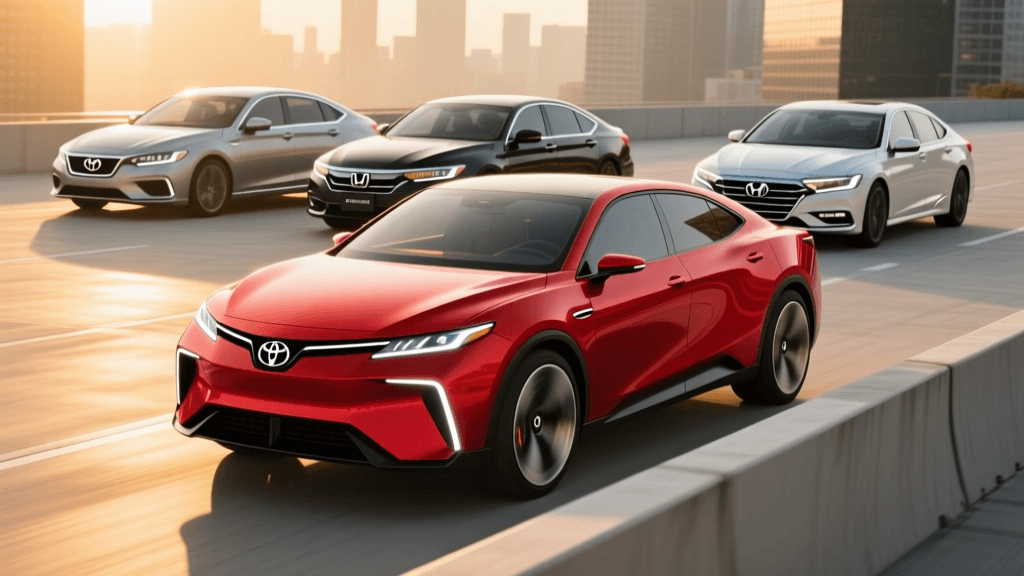
Below is our definitive ranking of the best new hybrid vehicles that can realistically be purchased for under $30,000 out-the-door (targeting MSRP models between $24,000 and $27,000). These are ranked strictly by overall value, blending fuel efficiency, standard equipment, warranty coverage, and driving dynamics.
| Rank & Model | Target MSRP | Combined MPG | Standard Safety Suite | Value Proposition |
|---|---|---|---|---|
| #1 Toyota Corolla Hybrid LE | $24,350 | 50 MPG | Toyota Safety Sense 3.0 | Unbeatable reliability & AWD option |
| #2 Hyundai Elantra Hybrid Blue | $26,250 | 54 MPG | SmartSense | Class-leading MPG & 10-yr warranty |
| #3 Kia Niro LX | $26,940 | 53 MPG | Drive Wise | Crossover utility & cargo space |
| #4 Honda Civic Hybrid Sport | $28,750 | 49 MPG | Honda Sensing | Premium feel & 200-hp performance |
#1: Toyota Corolla Hybrid LE (The Value & Reliability King)
The Toyota Corolla Hybrid remains the undisputed champion of the sub-$30K segment. Starting at an MSRP of just $24,350, it leaves ample room for taxes and fees while keeping you well under your $30,000 ceiling. It delivers an EPA-estimated 50 MPG combined. The true value proposition here is the availability of Electronic On-Demand All-Wheel Drive (AWD) for roughly $1,400 extra, making it one of the cheapest AWD hybrids on the market. Combined with Toyota's legendary resale value and standard TSS 3.0, the Corolla Hybrid offers the lowest total cost of ownership in its class.
#2: Hyundai Elantra Hybrid Blue (The Efficiency & Warranty King)
If your primary goal is minimizing trips to the gas station, the Hyundai Elantra Hybrid Blue is your answer. Achieving a staggering 54 MPG combined, it edges out the Corolla in pure efficiency. Priced around $26,250, it features a striking, aerodynamic exterior and a surprisingly spacious cabin. Hyundai's value proposition is anchored by its industry-leading 10-year/100,000-mile powertrain warranty and 3 years of complimentary maintenance. For buyers who plan to hold onto their vehicle for a decade, the Elantra Hybrid provides unmatched peace of mind on a budget.
#3: Kia Niro LX (The Utility & Space King)
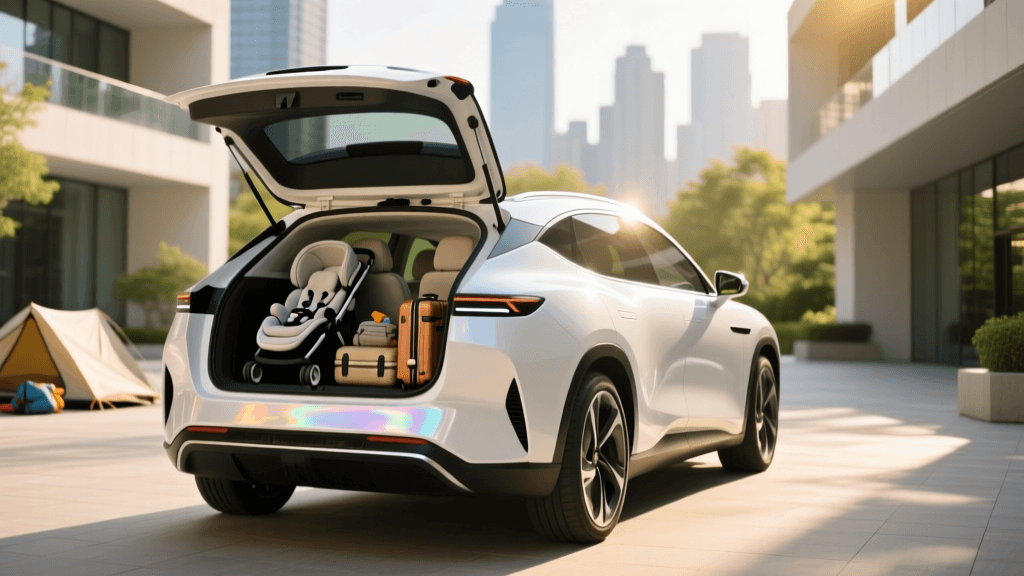
Sedan buyers have plenty of options, but what if you need cargo space? The Kia Niro is a dedicated hybrid crossover that starts at $26,940. It achieves 53 MPG combined and offers significantly more rear headroom and cargo capacity than the Elantra or Corolla. The Niro's 'LX' base trim is far from basic, featuring an 8-inch touchscreen, wireless smartphone integration, and a comprehensive suite of active safety features. It is the ultimate choice for small families or urban dwellers who need the versatility of a hatchback without crossing the $30,000 threshold.
#4: Honda Civic Hybrid Sport (The Performance & Premium King)
Pushing right up against the budget limit, the newly redesigned Honda Civic Hybrid Sport starts at an MSRP of $28,750. While it requires strict negotiation to avoid dealer markups and stay under $30K out-the-door, the value it provides is immense. Unlike its competitors focused purely on economy, the Civic Hybrid utilizes a two-motor system producing 200 horsepower and 232 lb-ft of torque. It feels like a premium, near-luxury compact car inside, offering a refined ride, exceptional sound deadening, and 49 MPG combined. It is the best choice for driving enthusiasts who refuse to sacrifice engagement for fuel economy.
Actionable Steps to Secure Your Hybrid at MSRP
To successfully execute your sub-$30,000 hybrid purchase, you must approach the dealership with a rigid strategy. First, utilize manufacturer 'Build and Order' portals on their official websites. Ordering your car directly from the factory locks in the MSRP and prevents dealers from adding arbitrary market adjustments to existing lot inventory. Second, expand your search radius to 100 miles; rural dealerships are historically less likely to apply aggressive markups than urban or suburban franchises. Finally, get pre-approved for financing through a local credit union before stepping onto the lot. This prevents the finance manager from manipulating the monthly payment to hide added fees or extended warranties that will quietly push your final contract price past your hard $30,000 limit. By avoiding common myths and sticking to these high-value models, you can secure a top-tier hybrid without breaking the bank.