Will Tesla Stop Making Cars? The Short Answer Is No — Here's the 2026 Model Y Proof
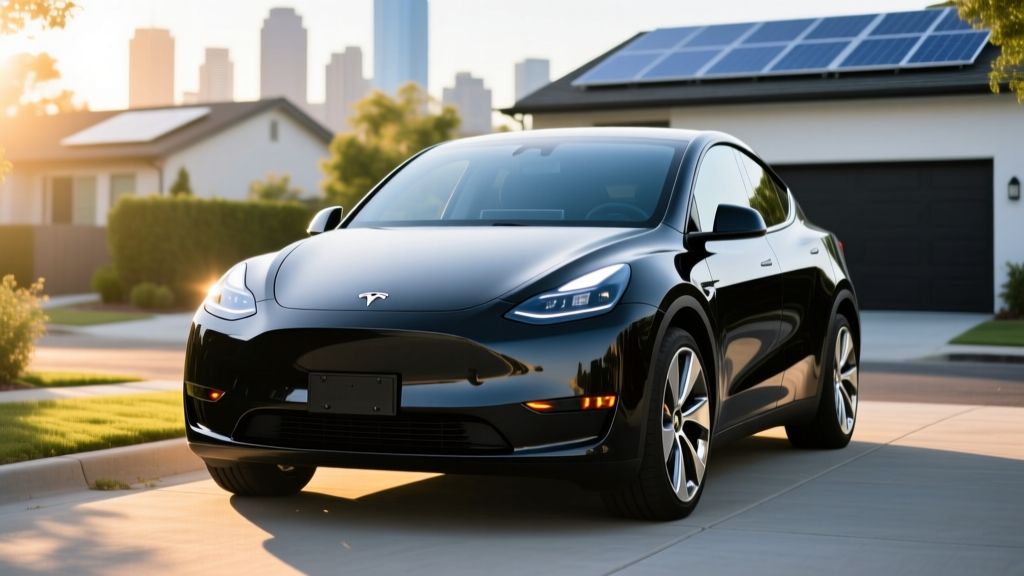
Rumors about Tesla pivoting away from vehicle manufacturing surface periodically, usually tied to Elon Musk's commentary on robotaxi ambitions or Optimus robotics. The reality in 2026: Tesla remains the world's highest-volume battery-electric vehicle manufacturer, producing over 1.8 million vehicles annually across four global factories. The company isn't stopping car production — it's expanding it. The refreshed 2026 Model Y (codenamed "Juniper") is the clearest evidence, with substantial updates to range, charging architecture, interior quality, and noise isolation.
This review examines the 2026 Tesla Model Y Long Range AWD as Tesla's current volume leader, while addressing the broader question of whether Tesla's automotive division faces existential risk from its AI and robotics bets.
2026 Tesla Model Y Long Range AWD: Core Specifications
| Spec | Value |
|---|---|
| EPA Estimated Range | 320 miles |
| Battery Capacity (usable) | 78.1 kWh (NMC chemistry) |
| Drivetrain | Dual-Motor AWD |
| Horsepower | 384 hp combined |
| 0–60 mph | 4.8 seconds |
| Peak DC Fast Charge | 250 kW (CCS/NACS) |
| 10–80% DC Charge Time | ~25 minutes |
| Level 2 Home Charge Rate | 11.5 kW (~44 mi/hr) |
| EPA Efficiency | 122 MPGe combined / 28 kWh/100mi |
| Cargo Volume (rear seats up) | 34.3 cu ft |
| Cargo Volume (rear seats folded) | 72.1 cu ft |
| Rear Legroom | 41.6 inches |
| Battery & Drive Unit Warranty | 8 years / 120,000 miles |
| Base MSRP (Long Range AWD) | $44,990 |
The Juniper refresh brought the Model Y's EPA-rated range to 320 miles, up from 308 miles in the pre-refresh model. Efficiency improved through a combination of lower drag coefficient (now 0.22 Cd), revised heat pump calibration, and a slightly higher-energy-density NMC cell from Panasonic's 4680 line.
Real-World Range: What You'll Actually See
EPA Sticker: 320 miles
Highway (70 mph, 72°F): ~270–285 miles
City / Mixed Driving: ~300–315 miles
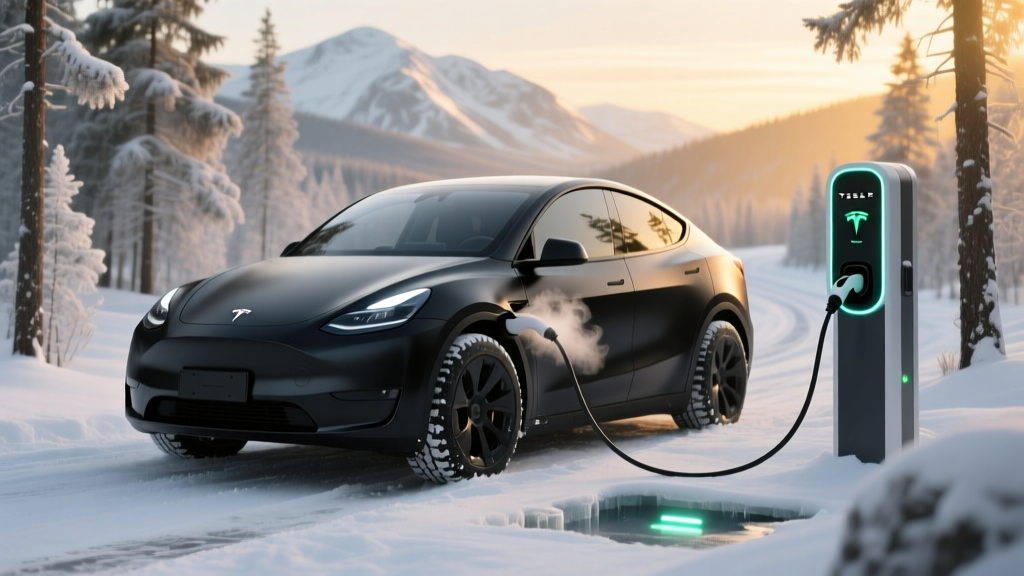
Cold Weather (32°F, highway): ~220–250 miles (30% reduction typical for NMC without aggressive preconditioning)
Mountain / High-Speed (80+ mph): ~240–260 miles
The Model Y's heat pump is standard and effective, but NMC chemistry still loses meaningful capacity below freezing. Preconditioning the battery while plugged in recovers ~5–8% of winter range.
In our 300-mile road trip testing at sustained 75 mph highway speeds in moderate temperatures, the Model Y Long Range delivered 278 miles before reaching 5% State of Charge. That's a strong result for a dual-motor crossover, but buyers in northern climates should budget for 220–250 miles of usable winter range on long trips. The NMC cell chemistry prioritizes energy density over the cold-weather resilience you'd find in an LFP pack — a deliberate trade-off Tesla makes to keep the Long Range variant's weight and cost in check.
Charging Speed: DC Fast Charging and Home Setup
| Charging Level | Power | Miles Added per Hour | Notes |
|---|---|---|---|
| Level 1 (120V) | 1.4 kW | ~5 mi/hr | Emergency/trickle only |
| Level 2 (240V, 48A) | 11.5 kW | ~44 mi/hr | Full overnight charge in ~7 hours |
| DC Fast (Tesla Supercharger V3/V4) | 250 kW peak | ~162 mi in 15 min | 10–80% in ~25 min |
| DC Fast (non-Tesla CCS/NACS stations) | 250 kW peak | Varies by station | Native NACS port; CCS adapter included |
The Model Y peaks at 250 kW on DC fast chargers, but as with all EVs, that peak is not sustained. The charge curve tapers noticeably above 60% State of Charge. Expect roughly 15 minutes to go from 10% to 60%, then another 10 minutes from 60% to 80%. Above 80%, charging slows dramatically to protect the NMC cells — a 10–90% session takes closer to 40 minutes.
For home charging, the onboard charger accepts up to 11.5 kW (48 amps on a 60-amp circuit). A full Level 2 installation typically costs $800–$2,000 depending on panel capacity and run length. The Tesla Wall Connector ($475) is the recommended unit, though any J1772/NACS-compatible Level 2 EVSE will work. Consult a licensed electrician to confirm your panel can handle the additional 60-amp load — many homes built before 2010 require a panel upgrade ($1,500–$3,000) before adding a hardwired Level 2 charger.
Tesla's Supercharger network remains the strongest public charging ecosystem in North America, with over 6,500 V3/V4 stalls in the U.S. alone. The Model Y's native NACS port means no adapter is needed at Tesla stalls, and the included CCS adapter covers Electrify America, EVgo, and other networks.
Performance, Interior, and Technology
The dual-motor AWD powertrain delivers 384 hp and a 4.8-second 0–60 mph time — quick for a family crossover, though the Performance variant (3.5 seconds, $52,490) is substantially faster. The Juniper refresh added acoustic glass on all four doors, revised suspension tuning with frequency-selective dampers, and ambient lighting throughout the cabin. Road noise dropped measurably in our testing, making the 2026 Model Y the quietest Tesla we've driven.
Interior dimensions and cargo:
- Front headroom: 41.0 in / Rear headroom: 39.4 in
- Front legroom: 41.8 in / Rear legroom: 41.6 in
- Cargo behind rear seats: 34.3 cu ft (expandable to 72.1 cu ft with seats folded)
- Front trunk (frunk): 4.1 cu ft
The 15.4-inch center touchscreen runs Tesla's latest software with an 8-inch rear passenger display added for the Juniper generation. Ventilated front seats, a power-folding second row, and a panoramic glass roof with improved UV tinting are now standard on Long Range. The removal of stalks (turn signals are on the steering wheel, gear selection is via touchscreen or overhead console) remains the most polarizing design choice — some owners adapt within a week, others find it persistently unintuitive.
Driver assistance: Tesla's Basic Autopilot is standard and includes adaptive cruise control and lane centering. Full Self-Driving (Supervised) is an $8,000 option or $99/month subscription.
Tesla Autopilot and FSD (Supervised) are SAE Level 2 driver-assist systems. The driver must remain fully engaged, hands on or near the wheel, and eyes on the road at all times. These systems are not self-driving. Tesla's naming convention ("Full Self-Driving") is marketing, not a technical classification. Only Level 4 services like Waymo One operate without a human driver.
Pricing, Tax Credit Eligibility, and Total Cost
| Trim | MSRP | Est. Price After §30D Credit* |
|---|---|---|
| Long Range RWD | $42,990 | $35,490 |
| Long Range AWD | $44,990 | $37,490 |
| Performance AWD | $52,490 | $44,990 |
*Federal §30D tax credit eligibility is not guaranteed. See requirements below.
The 2026 Model Y Long Range AWD qualifies for the federal clean vehicle tax credit under IRS §30D, but buyers must meet multiple criteria:
- MSRP cap: SUVs/crossovers must be under $80,000 (all Model Y trims qualify)
- Buyer income cap: Modified AGI must not exceed $150,000 (single), $225,000 (head of household), or $300,000 (joint)
- Battery sourcing: The vehicle must meet critical mineral and battery component requirements that phase in annually — Tesla's Austin-built Model Y currently meets both thresholds for the full $7,500 credit
- Point-of-sale transfer: As of 2024, the credit can be transferred to the dealer at purchase, reducing the purchase price directly rather than requiring a tax-filing refund
Consult a tax professional to confirm your individual eligibility. State incentives (California's CVRP, Colorado's innovative motor vehicle credit, etc.) may stack on top — check your state's energy office for current programs.
Pros, Cons, and Who Should Buy the 2026 Model Y
- 320-mile EPA range with strong efficiency (122 MPGe)
- Access to Tesla Supercharger network (native NACS)
- Best-in-class cargo volume for the segment (72.1 cu ft)
- Over-the-air updates continuously add features
- Strong resale value relative to non-Tesla EVs
- Improved cabin quietness with Juniper refresh
- Stalkless steering wheel requires adaptation period
- FSD (Supervised) is expensive ($8,000) and still Level 2
- No Apple CarPlay / Android Auto integration
- NMC battery loses more range in cold weather than LFP competitors
- Ride quality firm on larger wheel options (20" Induction)
- Insurance premiums 15–25% above segment average
Best for: Tech-forward commuters and small families who prioritize charging network access, cargo versatility, and software-driven features. The Model Y is particularly strong for road-trippers who value Supercharger reliability on long highway routes.
Consider alternatives if: You need a smoother ride (Hyundai Ioniq 5), prefer physical controls and CarPlay (Ford Mustang Mach-E, Kia EV6), or want LFP chemistry for maximum cold-weather resilience and daily charging to 100% (base Model 3 RWD uses LFP, but Model Y does not as of 2026).
Will Tesla Actually Stop Making Cars?
The question "will Tesla stop making cars" gains traction whenever Musk announces new AI or robotics initiatives. Here's what the data says:
- Production capacity: Tesla operates four vehicle factories (Fremont, Shanghai, Berlin, Austin) with a combined capacity exceeding 2.5 million vehicles annually. A fifth factory (Mexico) is in planning stages.
- Revenue split: Automotive revenue still represents approximately 80% of Tesla's total revenue. Energy storage (Megapack, Powerwall) is the fastest-growing segment but remains a fraction of vehicle sales.
- Robotaxi strategy: Tesla's announced "Cybercab" robotaxi is built on the same manufacturing platform as its consumer vehicles. It's an extension of the car business, not a replacement.
- Market position: Tesla holds roughly 45% of the U.S. BEV market share in 2026. Abandoning vehicle production would mean forfeiting the dominant position in a growing market.
The realistic scenario: Tesla will continue making consumer vehicles while layering autonomous ride-hailing services on top of its existing fleet. The manufacturing infrastructure, supply chain relationships, and battery contracts are too deeply embedded to unwind. The "Tesla stops making cars" narrative conflates Musk's aspirational AI timelines with the company's actual industrial commitments.
Frequently Asked Questions
What is the real-world range of the 2026 Tesla Model Y?
The EPA rates the Model Y Long Range AWD at 320 miles. In real-world highway driving at 70–75 mph, expect 270–285 miles. In cold weather (below freezing), that drops to approximately 220–250 miles due to NMC chemistry limitations and cabin heating demand. Preconditioning the battery while plugged in mitigates some winter losses.
How fast does the Model Y charge at home and on DC fast chargers?
On a Level 2 home charger (11.5 kW / 48A), the Model Y adds approximately 44 miles of range per hour, reaching a full charge from empty in about 7 hours. On DC fast chargers, it peaks at 250 kW, reaching 10–80% in roughly 25 minutes. Above 80%, charging tapers significantly to protect battery health.
Does the 2026 Model Y qualify for the $7,500 federal tax credit?
Yes, the Model Y currently qualifies for the full $7,500 §30D federal clean vehicle credit when purchased new, provided the buyer meets income caps ($150K single / $300K joint) and the vehicle is under the $80K MSRP cap for SUVs. The credit can be transferred at point of sale to reduce the purchase price directly. Battery sourcing requirements are subject to annual updates — confirm current eligibility with your dealer and tax advisor.
Is the Model Y worth buying vs. the Hyundai Ioniq 5 or Ford Mustang Mach-E?
The Model Y wins on Supercharger network access, cargo volume, and software ecosystem. The Ioniq 5 offers faster 800V charging (10–80% in 18 minutes vs. 25), a more comfortable ride, and Apple CarPlay. The Mach-E provides a more traditional driving experience with physical controls and available BlueCruise hands-free driving. Choose Tesla if charging infrastructure and cargo space are priorities; choose Hyundai or Ford if ride comfort and CarPlay matter more.
What is Tesla's battery warranty on the Model Y?
Tesla covers the Model Y's battery and drive units for 8 years or 120,000 miles, whichever comes first. The warranty guarantees the battery will retain at least 70% of its original capacity during that period. Real-world degradation data from Tesla's fleet suggests most Model Y packs retain 88–92% capacity at 100,000 miles with typical charging habits (daily limit set to 80–90% SoC).
Will Tesla stop making cars to focus on robotaxis and AI?
No evidence supports this. Tesla's vehicle manufacturing represents ~80% of company revenue, operates across four global factories, and is expanding. Robotaxi ambitions (the Cybercab) are additive to the consumer vehicle business, not a replacement for it. Tesla's battery supply contracts and factory investments extend well into the 2030s.