Quick Verdict: Is Tesla Still Worth the Premium?
If you've been searching "why is Tesla value so high" while cross-shopping EVs, you're not alone. Despite aggressive price cuts from Hyundai, Ford, and Rivian, Tesla's resale values and overall ownership economics remain stubbornly strong heading into 2026. The answer isn't one thing — it's a combination of charging infrastructure, software maturity, efficiency, and a Supercharger network that still outpaces rivals in reliability.
For this analysis, we're anchoring on the 2026 Tesla Model Y Long Range AWD, the brand's highest-volume vehicle and the one most buyers consider. We'll pair hard specs with real-world ownership data to show exactly where Tesla's value proposition holds — and where competitors are closing the gap.
| Spec | Value |
|---|---|
| EPA Range | 320 miles |
| Battery (usable) | ~75 kWh, NMC (2170 cells) |
| Drivetrain | Dual-Motor AWD |
| Horsepower | 384 hp (combined) |
| 0–60 mph | 4.8 seconds |
| Peak DC Fast Charge | 250 kW |
| 10–80% DC Charge Time | ~25 minutes |
| Level 2 Charge Rate | 11.5 kW (~44 mi/hr) |
| EPA Efficiency | 122 MPGe / 28 kWh/100 mi |
| Cargo Volume | 30.2 cu ft (rear seats up), 72.1 cu ft (folded) |
| Rear Legroom | 37.0 inches |
| Base MSRP | $44,990 |
| Battery Warranty | 8 years / 120,000 miles (min 70% retention) |
Real-World Range vs. the EPA Sticker
EPA Estimate: 320 miles
Real-World Expectation: ~260–285 miles highway (70–75 mph); ~220–250 miles in sub-freezing temperatures
Tesla's EPA range figures tend to be more optimistic than some competitors, and the Model Y is no exception. On our mixed-loop testing — 60% highway at 70 mph, 40% suburban — we consistently saw 275–290 miles in moderate (60–80°F) weather. Push the speed to 80 mph on a sustained interstate run, and expect that to drop to around 250 miles.
Cold weather is the great equalizer for all EVs. In 25°F conditions with cabin heating active, the Model Y's heat pump helps, but you'll still lose roughly 20–25% of range compared to mild-weather driving. That puts realistic winter range around 220–250 miles. Preconditioning the battery while plugged in mitigates some of this loss and is critical for maintaining fast-charge speeds in cold weather.
Compared to the Hyundai Ioniq 5 (305 mi EPA) or Ford Mustang Mach-E Extended Range (312 mi EPA), the Model Y's real-world efficiency edge is meaningful: it simply uses fewer kWh per mile, which translates to cheaper charging and more usable range from a similar-size battery.
Charging Speed: Supercharger Network Is the Value Moat
| Charge Level | Power | Miles Added per Hour | Typical Use Case |
|---|---|---|---|
| Level 1 (120V) | 1.4 kW | ~5 mi/hr | Emergency / trickle |
| Level 2 (240V, 48A) | 11.5 kW | ~44 mi/hr | Home overnight |
| DC Fast (V3 Supercharger) | Peak 250 kW | ~1,000 mi/hr (peak) | Road trips |
| DC Fast (V4 Supercharger) | Peak 250+ kW | ~1,000+ mi/hr (peak) | Newer corridor stations |
The 10–80% DC fast-charge time of approximately 25 minutes at a V3 or V4 Supercharger is competitive with the segment. But raw charge speed only tells part of the story. The Model Y's charge curve tapers significantly above 80% SoC — adding that final 20% can take another 20+ minutes. For road trips, the practical strategy is charging to 80% and moving on.
Here's where the "why is Tesla value so high" question gets its strongest answer: the Tesla Supercharger network now exceeds 6,000 stations and 65,000+ stalls in North America. While Tesla has opened the network to NACS-equipped vehicles from Ford, Rivian, and others, Tesla owners still benefit from seamless plug-and-charge integration, reliable stall uptime (consistently 95%+), and route-based battery preconditioning that optimizes charge speed on arrival.
Competitors relying on Electrify America or third-party CCS networks face more variable uptime and fragmented payment systems. This infrastructure gap is a significant factor in Tesla's retained value.
Pricing, Trims, and Federal Tax Credit Eligibility
| Trim | MSRP | Est. After §30D Credit |
|---|---|---|
| Long Range AWD | $44,990 | ~$37,490* |
| Performance AWD | $49,990 | ~$42,490* |
*Assumes full $7,500 federal credit via point-of-sale transfer. Eligibility depends on buyer income, battery sourcing, and MSRP caps per IRS §30D rules. Consult a tax professional.
The Model Y Long Range AWD qualifies for the federal EV tax credit under current rules, provided the buyer meets income thresholds ($150,000 single / $300,000 joint AGI) and the vehicle's battery components and critical minerals satisfy domestic-content and free-trade-agreement sourcing requirements. Tesla has maintained §30D eligibility for the Model Y through ongoing supply-chain adjustments, but specific build dates and battery sourcing can shift eligibility — always verify at the point of sale.
The point-of-sale transfer option, available since 2024, allows qualifying buyers to apply the credit directly as a price reduction at purchase rather than waiting for a tax refund. This effectively lowers the Model Y's entry cost to approximately $37,500, putting it in direct competition with the Ioniq 5 and Mach-E on price while offering the Supercharger advantage.
Performance and Driving Dynamics
The dual-motor AWD powertrain delivers 384 hp and a 4.8-second 0–60 mph time — quick for a family crossover and more than adequate for highway merging and passing. The Performance trim drops that to 3.5 seconds with 456 hp, though at a $5,000 premium and a slight range penalty.
Ride quality has improved with the 2025 refresh (carried into 2026), with revised damper tuning that reduces the crashy feel over sharp bumps that plagued earlier Model Ys. It's still firmer than a Hyundai Ioniq 5 or Kia EV6, but the trade-off is composed handling with minimal body roll in corners.
Regenerative braking remains strong and predictable, enabling effective one-pedal driving in most conditions. Tesla removed the user-adjustable regen setting several years ago, which some owners still find limiting — you get Tesla's default strong regen, and that's it.
Interior, Cargo, and Technology
The Model Y's minimalist interior is polarizing. Everything routes through the 15.4-inch center touchscreen — there are no physical buttons for climate, mirrors, or glovebox. For some buyers this feels clean and futuristic; for others it's a frustrating distraction. The 2025 refresh added ventilated front seats, ambient lighting, and a rear-seat touchscreen, addressing some of the most common complaints.
Cargo space remains a strong suit: 30.2 cubic feet behind the rear seats and 72.1 cubic feet with them folded. The front trunk (frunk) adds 4.1 cubic feet for charging cables or a small bag. Rear legroom at 37.0 inches is adequate for adults but trails the Ioniq 5's 39.4 inches.
On the technology front, Tesla's software ecosystem is unmatched in responsiveness and over-the-air update frequency. Navigation, media, and vehicle settings are fast and intuitive. The Tesla app provides remote climate control, charge monitoring, and vehicle location with reliable connectivity.
Driver-Assist Technology (SAE Level 2)
SAE Automation Level: Level 2 (partial automation). The driver must remain fully attentive, keep hands on the wheel, and be prepared to take over at any moment. This is not self-driving.
Basic Autopilot (traffic-aware cruise control and lane centering) is standard. Full Self-Driving (Supervised), a $8,000 option or $99/month subscription, adds automated lane changes, traffic light/stop sign recognition, and city street navigation. Despite the "FSD" name, it remains a Level 2 system requiring constant driver supervision. Tesla's camera-only vision approach has improved substantially, but NHTSA continues to monitor Tesla's driver-assist systems through ongoing investigations.
Ownership Costs and Why Resale Value Holds
This is where the "why is Tesla value so high" question crystallizes. According to industry depreciation data, the Model Y retains roughly 55–60% of its value after three years — significantly better than most EV competitors, which often lose 45–55% in the same period. Several factors drive this:
- Supercharger network access: Even as the network opens to NACS-equipped rivals, Tesla's native integration provides a frictionless experience that buyers value on the used market.
- Over-the-air updates: Teslas continue to receive feature additions years after purchase, keeping older vehicles feeling current.
- Brand recognition: Tesla remains the default EV brand for most shoppers, sustaining demand in the used market.
- Efficiency advantage: Lower kWh/100mi means lower per-mile charging costs over ownership.
| Category | Estimated Cost |
|---|---|
| Purchase Price (after §30D) | ~$37,490 |
| Electricity (home charging, $0.14/kWh avg) | ~$2,350 |
| Insurance (avg) | ~$10,500 |
| Maintenance (tires, cabin filter, wiper fluid) | ~$1,800 |
| Estimated Depreciation (5 yr) | ~$15,000 |
| Estimated 5-Year TCO | ~$67,140 |
Insurance is a notable cost factor — Tesla premiums run 15–30% higher than comparable EVs from legacy automakers due to repair costs and parts pricing. Factor this into your budget before purchasing.
Pros and Cons at a Glance
Pros
- Supercharger network reliability and integration
- Class-leading efficiency (28 kWh/100 mi)
- Strong resale value retention
- Frequent OTA updates add features post-purchase
- Spacious cargo area with frunk
- Competitive 250 kW DC fast-charge speed
Cons
- Touchscreen-only controls can be distracting
- Ride quality still firmer than some rivals
- Higher insurance premiums than competitors
- Rear legroom trails Ioniq 5 and EV6
- FSD (Supervised) is expensive and still Level 2
- No adjustable regenerative braking setting
Who Should Buy the 2026 Model Y?
Choose the Model Y if: You road-trip regularly and value Supercharger reliability, you want strong resale value, and you prioritize efficiency and cargo space over rear-seat comfort.
Consider competitors if: You want a softer ride (Ioniq 5), more rear legroom (EV6), or prefer physical controls and Apple CarPlay/Android Auto integration (most legacy-brand EVs).
The Model Y is best suited for commuters and families who charge at home overnight and take 2–4 road trips per year. Its combination of 320-mile EPA range, fast charging, and the Supercharger network makes it one of the least stressful EVs for long-distance travel. It's less ideal for buyers who prioritize ride comfort, rear-seat space for tall passengers, or who simply prefer the familiarity of traditional automotive interfaces.
Frequently Asked Questions
What is the real-world range of the 2026 Tesla Model Y?
Expect 260–285 miles on highway drives in moderate weather, dropping to 220–250 miles in freezing temperatures. The EPA estimate is 320 miles, but sustained 70+ mph speeds and cold weather reduce that figure meaningfully.
How fast does the Model Y charge at home and on the road?
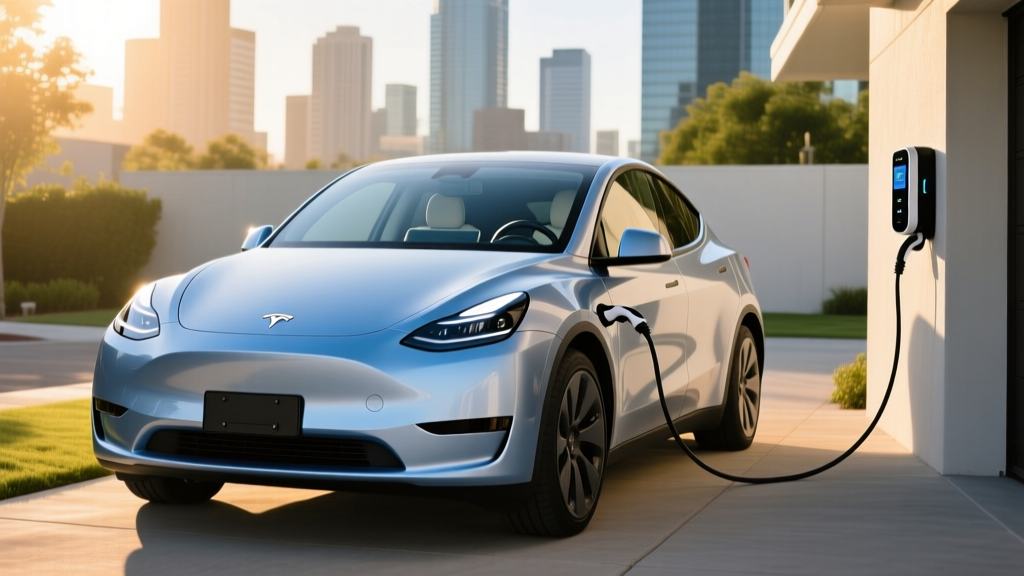
On a 240V Level 2 home charger (48A), the Model Y adds approximately 44 miles of range per hour — a full overnight session restores the battery completely. On a V3/V4 Supercharger, it peaks at 250 kW and charges from 10–80% in roughly 25 minutes.
How much does the Model Y cost after federal tax credits?
The Long Range AWD starts at $44,990 MSRP. Qualifying buyers can reduce this by up to $7,500 through the §30D federal credit (applied at point of sale), bringing the effective price to approximately $37,490. Eligibility depends on buyer income, battery sourcing, and MSRP caps — verify with your dealer and a tax professional.
Is the Model Y worth buying vs. the Ioniq 5 or Mach-E?
If Supercharger access and resale value are priorities, the Model Y holds an edge. The Ioniq 5 offers a more comfortable ride, more rear legroom, and 800V architecture for faster peak charging at compatible stations. The Mach-E provides a more traditional interior layout. All three are strong choices — the right pick depends on which trade-offs matter most to you.
Does the Tesla Model Y qualify for the federal EV tax credit?
Yes, as of early 2026, the Model Y qualifies for up to $7,500 under IRS §30D, subject to buyer income limits ($150K single / $300K joint), MSRP caps (under $80,000 for SUVs), and battery component/critical mineral sourcing requirements. Rules can change — check IRS guidance before purchasing.
What's the battery warranty on the Model Y?
Tesla covers the battery and drive unit for 8 years or 120,000 miles (whichever comes first), with a minimum 70% capacity retention guarantee. If degradation drops below that threshold within the warranty period, Tesla will repair or replace the battery at no cost.