If you've been searching what's a Fisker in 2026, the honest answer is complicated: Fisker Inc. — the Henrik Fisker-led startup behind the Fisker Ocean SUV — filed for Chapter 11 bankruptcy in June 2024 and liquidated its remaining assets by early 2025. The brand no longer manufactures vehicles, operates no direct-to-consumer sales network, and provides no factory warranty support. Yet thousands of Fisker Ocean SUVs remain on American roads, and a growing used market has emerged with steeply discounted prices that tempt bargain hunters.
This profile breaks down exactly what the Fisker Ocean was, what its specs look like against 2026 competitors, and the real ownership risks you must weigh before buying one on the secondary market.
The Fisker Ocean at a Glance: Specs That Still Compete
The Fisker Ocean was produced in three primary trims from 2023–2024: the single-motor Sport, the dual-motor Ultra, and the high-performance Extreme (later renamed One for early reservation holders). A fourth variant, the Pear, was announced but never reached production. Here are the official EPA and manufacturer specifications for the most common model, the Ocean Ultra:
| Specification | Ocean Sport (FWD) | Ocean Ultra (AWD) | Ocean Extreme/One (AWD) |
|---|---|---|---|
| EPA Range | 250 mi | 340 mi | 350 mi |
| Battery (usable) | ~80 kWh (Hyper Range, NMC) | ~113 kWh (Hyper Range, NMC) | ~113 kWh (Hyper Range, NMC) |
| Battery Chemistry | NMC (nickel manganese cobalt) | NMC | NMC |
| Peak DC Fast Charge | ~170 kW | ~250 kW | ~250 kW |
| 10–80% DC Time | ~37 min | ~30 min | ~30 min |
| Level 2 Home Charging | 11 kW (~30 mi/hr) | 11 kW (~36 mi/hr) | 11 kW (~36 mi/hr) |
| 0–60 mph | 6.9 sec | 3.7 sec | 3.7 sec |
| Horsepower | 275 hp | 540 hp | 550 hp |
| Drivetrain | Single-motor FWD | Dual-motor AWD | Dual-motor AWD |
| MPGe (combined) | ~95 MPGe | ~86 MPGe | ~84 MPGe |
| Efficiency | ~35 kWh/100 mi | ~39 kWh/100 mi | ~40 kWh/100 mi |
| Cargo Volume | 32.5 cu ft (rear up) / 56.5 cu ft (folded) | 32.5 / 56.5 cu ft | 32.5 / 56.5 cu ft |
| Original Base MSRP | $37,499 | $49,999 | $68,999 |
On paper, the Ocean Ultra's 340-mile EPA range and 250 kW peak charging placed it squarely against the Hyundai Ioniq 5, Kia EV6, and Tesla Model Y. The 113 kWh usable battery was among the largest in any mainstream crossover at launch, supplied by CATL with NMC chemistry.
Real-World Range: What Owners Actually Report
Expect 280–310 miles in mixed city/highway driving at moderate temperatures. Sustained highway speeds above 70 mph drop range to approximately 250–275 miles. In cold weather (below 32°F), owners report 220–260 miles due to battery conditioning demands and cabin heating load. The Ocean's heat pump helps mitigate winter losses compared to resistive heating, but its large, heavy platform works against efficiency at speed.
The Ocean's real-world range fell short of EPA figures more noticeably than competitors like the Ioniq 5 or Model Y. Part of this stems from the vehicle's 5,500-pound curb weight and relatively upright, SUV-profile aerodynamics. The larger 113 kWh battery also means more mass to move, even when that capacity enables longer absolute distances. Early owners on forums documented highway loops yielding as low as 2.1–2.3 mi/kWh, translating to roughly 240–260 miles from the Ultra's pack.
For the Sport trim with its smaller ~80 kWh battery, real-world highway range often settled around 200–225 miles, making it better suited to city commuting than road trips.
Charging Speed: The Curve Behind the Peak Number
Fisker advertised 250 kW peak DC fast-charging for the Ultra and Extreme trims, but as with every EV, peak rate is not sustained rate. The Ocean's charging curve is front-loaded:
| Charging Method | Power | Speed / Time |
|---|---|---|
| DC Fast Charge (10–40%) | Up to 250 kW (Ultra/Extreme) | ~15 min to 40% |
| DC Fast Charge (10–80%) | Avg ~140 kW sustained | ~30 min (Ultra/Extreme) |
| DC Fast Charge (80–100%) | Tapers to <50 kW | ~35 additional min |
| Level 2 Home (240V, 48A) | 11 kW | ~36 mi/hr (Ultra) — full charge ~11 hrs |
| Level 1 (120V, 12A) | ~1.4 kW | ~4 mi/hr — full charge ~80+ hrs |
The Ocean's 113 kWh battery means that even with strong peak speeds, total 10–80% sessions take around 30 minutes at a capable 350 kW charger. The taper above 80% is aggressive — a characteristic of large NMC packs prioritizing longevity over top-off speed. Plan road trips around 10–80% charging windows and you'll find the Ocean competitive with peers. Attempt 10–100% and you'll spend nearly an hour at the stall.
Home Level 2 charging at 11 kW is adequate but not class-leading. A full charge from near-empty takes roughly 11 hours, which works fine for overnight replenishment but means you cannot easily "top off" a depleted battery in a single evening if you arrive home low.
Technology, Interior, and the Features That Drew Buyers
The Ocean's interior was a mixed bag of genuinely innovative ideas and first-generation execution problems:
Standout features included:
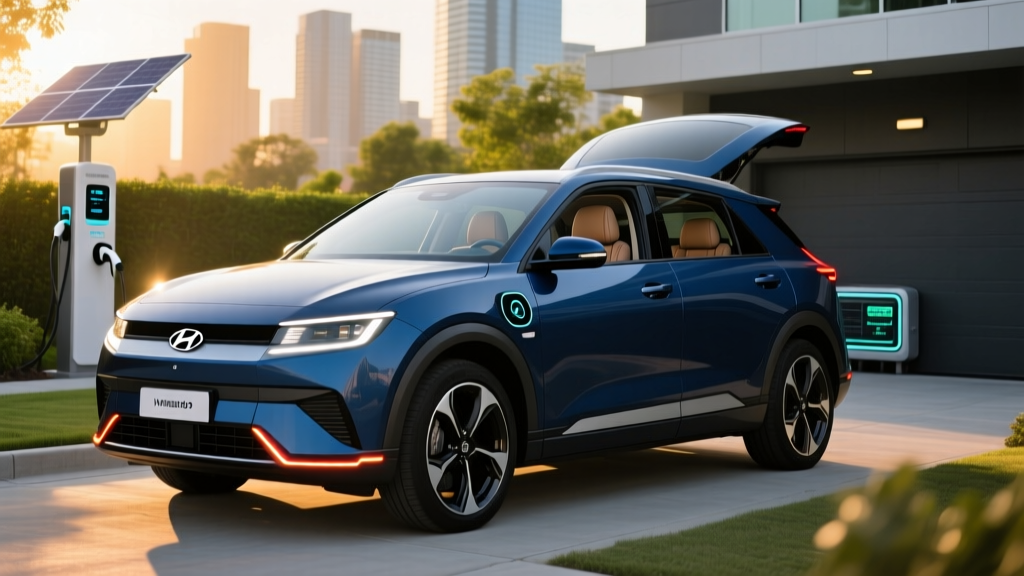
- California Mode — a one-touch setting that simultaneously lowered all windows and opened the rear hatch glass, creating a convertible-like open-air experience unique in the EV crossover segment.
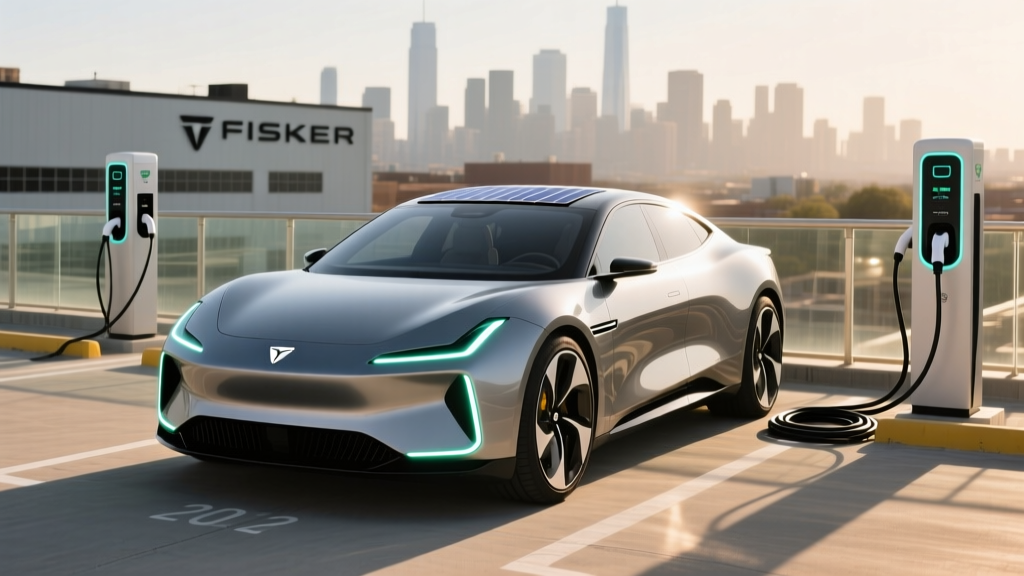
- SolarSky roof (Extreme/One trim) — a full-length solar panel roof that Fisker claimed could add up to 1,500 miles of range per year under ideal conditions. Real-world gains were modest (1–3 miles/day in sunny climates), but the feature was genuinely distinctive.
- Revolve screen — a 17.1-inch center touchscreen that rotated from landscape ("Control Mode") to portrait ("Hollywood Mode") for media consumption while parked.
- Recycled and vegan interior materials — Fisker marketed heavily on sustainability, using recycled plastics and eco-friendly textiles throughout.
- 32.5 cu ft cargo volume behind the second row (56.5 cu ft folded) — competitive with the Model Y and slightly larger than the Ioniq 5.
Notable drawbacks:
- Software instability — the Ocean launched with persistent infotainment bugs, phantom braking from ADAS sensors, and OTA update failures that frustrated early adopters.
- No Apple CarPlay or Android Auto — Fisker opted for a proprietary infotainment stack, a decision that alienated many buyers accustomed to phone projection.
- Build quality inconsistencies — panel gaps, rattles, and trim misalignment were common complaints in 2023–2024 production units.
- ADAS limitations — the Fisker Intelligent Pilot system used a camera-and-radar suite for Level 2 driver assistance (adaptive cruise, lane centering). It was not competitive with Tesla Autopilot, GM Super Cruise, or Ford BlueCruise in real-world reliability or highway confidence.
What Bankruptcy Means for Buyers in 2026
Fisker Inc.'s June 2024 Chapter 11 filing and subsequent liquidation fundamentally changed the ownership equation. Here is what that means practically:
No factory warranty support. The original 6-year/60,000-mile bumper-to-bumper warranty and 10-year/100,000-mile battery warranty are effectively unbacked. There is no entity honoring claims as of 2026. Some third-party warranty providers may offer aftermarket coverage, but terms vary and exclusions for bankrupt-manufacturer vehicles are common.
Parts scarcity. Replacement body panels, proprietary trim pieces, and model-specific electronic modules are increasingly difficult to source. Independent shops and salvage yards are the primary supply chain. Routine consumables (brake pads, tires, cabin filters) remain available since the Ocean used standard industry components, but collision repair is a genuine concern.
Software and connectivity uncertainty. OTA updates ceased. The Fisker app and connected services have been shuttered. Features that depended on cloud connectivity — remote preconditioning, vehicle location, OTA improvements — no longer function. The vehicle's core driving systems operate independently, but the "smart" layer of ownership is frozen in time.
Insurance complications. Some insurers have increased premiums or declined to write new policies on Fisker vehicles due to parts-availability risk and uncertain repair timelines. Always get an insurance quote before purchasing.
Pricing and Used Market Value in 2026
The Fisker Ocean's used-market trajectory has been dramatic. What launched at $49,999–$68,999 MSRP now trades at steep discounts:
| Trim | Original MSRP | Typical 2026 Used Price | Depreciation |
|---|---|---|---|
| Ocean Sport | $37,499 | $16,000–$22,000 | ~45–55% |
| Ocean Ultra | $49,999 | $22,000–$30,000 | ~40–55% |
| Ocean Extreme/One | $68,999 | $28,000–$38,000 | ~45–60% |
These prices make the Ocean one of the most range-per-dollar EVs on the used market. A $25,000 Ocean Ultra with 340 miles of EPA range is difficult to match from any current-production rival at that price point.
Federal Tax Credit Eligibility on Used Fiskers
The IRS §25E used clean vehicle credit offers up to $4,000 (30% of sale price, capped at $4,000) for qualifying used EVs. Key eligibility requirements for a used Fisker Ocean:
- Sale price must be $25,000 or below — this eliminates most Ultra and Extreme examples from eligibility
- Buyer income caps: AGI ≤ $75,000 (single), ≤ $112,500 (head of household), ≤ $150,000 (joint)
- Vehicle must be at least 2 model years old — 2023 and 2024 Fisker Oceans qualify in 2026
- Must purchase from a licensed dealer — private-party sales do not qualify
- Vehicle must have a battery ≥ 7 kWh — all Ocean trims qualify
- Credit is non-refundable — you must have tax liability to benefit (unless transferred at point of sale under current IRS rules)
In practice, a used Ocean Sport priced at $20,000 from a qualifying dealer could net a buyer a $4,000 credit, bringing effective cost to $16,000 — an exceptional value for a 250-mile EV, assuming you accept the ownership risks outlined above. Always consult a tax professional and verify current IRS §25E rules before purchase.
Fisker Ocean vs. 2026 Competitors: Is It Worth the Risk?
For buyers weighing a used Fisker Ocean against a new 2026 EV with full warranty support, here is a practical comparison framework:
Choose a used Fisker Ocean if:
- You need maximum range per dollar and can accept parts/warranty risk
- You have access to reliable independent EV service in your area
- You primarily drive in mild climates (less cold-range anxiety)
- You value distinctive design and features like California Mode or the SolarSky roof
- You can self-insure against potential battery replacement costs ($15,000–$25,000+ for a 113 kWh NMC pack)
Choose a new 2026 competitor (Hyundai Ioniq 5, Tesla Model Y, Kia EV6) if:
- You need full warranty protection and dealer service infrastructure
- You want current-generation software, CarPlay/Android Auto, and ongoing OTA updates
- You plan to keep the vehicle 5+ years and want predictable long-term support
- You value strong resale value and easy insurance procurement
- You need reliable ADAS for highway commuting
Who the Fisker Ocean Suits Best
The Ocean's ideal 2026 buyer is a budget-conscious EV adopter who wants long range and distinctive styling, has mechanical self-reliance or access to independent EV technicians, and views the vehicle as a 3–5 year ownership proposition rather than a decade-long commitment. It works well as a commuter and light family hauler. It is not recommended as a primary road-trip vehicle for those who cannot tolerate charging-infrastructure variability, nor for buyers in remote areas where parts logistics would compound repair delays.
Pros
- Class-leading range-per-dollar on the used market (340 mi EPA for ~$25K)
- Distinctive design with unique features (California Mode, SolarSky, Revolve screen)
- Spacious cargo area (32.5 cu ft) and comfortable rear seating
- Strong straight-line performance in Ultra/Extreme trims (3.7 sec 0–60)
- Eco-friendly materials and sustainability-focused brand ethos
- Potential $4,000 used EV tax credit on sub-$25K examples
Cons
- No factory warranty — battery and powertrain coverage is void
- Parts scarcity and collision repair delays
- Frozen software with no CarPlay, Android Auto, or OTA updates
- Real-world range below EPA sticker, especially at highway speeds
- Build quality issues on many 2023–2024 production units
- Insurance may be expensive or unavailable from some carriers
- Weak ADAS compared to Tesla, GM, or Ford systems
Frequently Asked Questions
What is the real-world range of the Fisker Ocean?
The Ocean Ultra's 340-mile EPA rating translates to roughly 280–310 miles in mixed driving, 250–275 miles on the highway, and 220–260 miles in freezing temperatures. The Sport trim yields approximately 200–225 miles on the highway.
How fast does the Fisker Ocean charge?
The Ultra and Extreme trims peak at 250 kW on DC fast chargers, achieving 10–80% in approximately 30 minutes with an average sustained rate around 140 kW. Home Level 2 charging runs at 11 kW, adding about 36 miles per hour.
Does the Fisker Ocean qualify for the federal EV tax credit?
New Fisker Oceans no longer qualify (production ended). However, used Oceans sold for $25,000 or less through a licensed dealer may qualify for the IRS §25E used clean vehicle credit of up to $4,000, subject to buyer income caps. Verify current rules at irs.gov.
Is it worth buying a used Fisker Ocean vs. a new competitor?
If you prioritize value and can accept warranty, parts, and software risks, the Ocean offers unmatched range-per-dollar. If you need reliability, dealer service, and modern software, a new Ioniq 5, Model Y, or EV6 is the safer investment.
What are the biggest risks of owning a Fisker Ocean in 2026?
No factory warranty, scarce proprietary parts, frozen software with no phone integration, potential insurance difficulties, and uncertain battery replacement costs ($15,000–$25,000+) if the pack degrades beyond usable capacity.
What happened to Fisker Inc.?
Fisker Inc. filed for Chapter 11 bankruptcy in June 2024 after failing to secure additional funding or a viable partnership. The company liquidated its remaining inventory and assets through late 2024 and early 2025. Henrik Fisker's earlier venture, Fisker Automotive (maker of the 2011–2012 Karma), was a separate company that failed in 2013 — a different entity entirely.