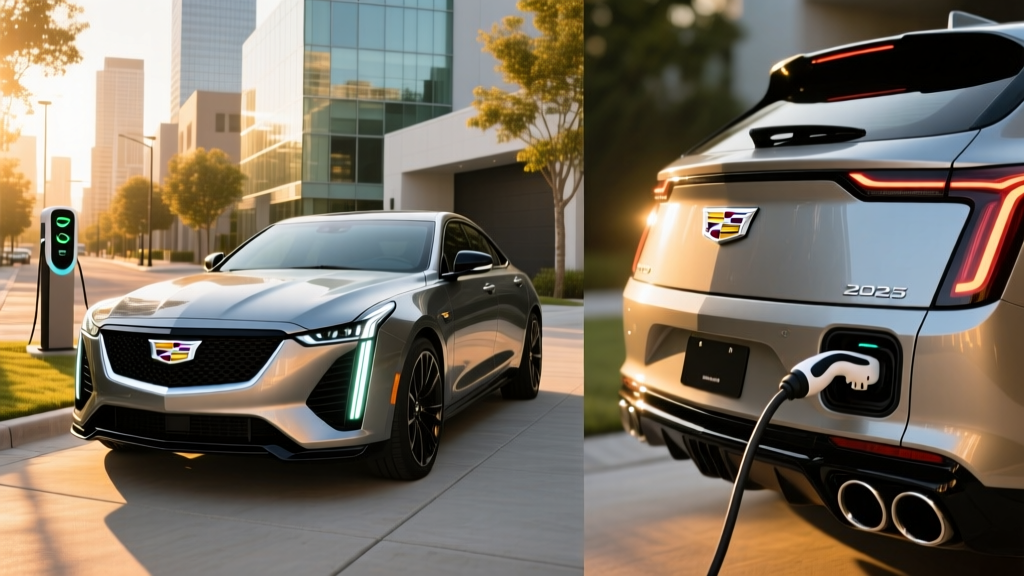
The 2025 Cadillac Optiq Sport enters the compact luxury EV SUV segment with a clear mission: deliver Cadillac's signature refinement and tech-forward cabin in a package sized for urban commuting and weekend road trips alike. Built on GM's Ultium platform and slotted below the Lyriq, the Optiq Sport aims to undercut European rivals on price while matching them on interior quality. After digging into the specs, charging behavior, and ownership economics, here's what prospective buyers need to know before signing on the dotted line.
Quick Verdict: Who Should Consider the Optiq Sport
The Optiq Sport is best suited for luxury-minded buyers who want a premium badge, a well-insulated cabin, and GM's latest infotainment — without stepping up to Lyriq pricing or the six-figure European competition. It works well as a daily commuter with comfortable range and as a road-trip vehicle thanks to DC fast charging on the growing NACS/Supercharger network. Families with young children will find adequate space, though those needing maximum cargo volume or three rows should look elsewhere. Towing is not a primary use case here.
Range, Battery, and Efficiency
The 2025 Cadillac Optiq Sport is equipped with a usable battery capacity of approximately 85 kWh, utilizing GM's Ultium pouch-cell architecture with NMC (nickel manganese cobalt) chemistry. This chemistry prioritizes energy density over the LFP (lithium iron phosphate) approach seen in some Tesla and Ford models — meaning more range in a smaller, lighter pack, though with slightly different long-term degradation characteristics and a recommended daily charge limit of 80-90% for longevity.
The Optiq Sport carries an EPA-estimated range of 305 miles (AWD Sport trim). In real-world driving, expect closer to 260–280 miles on highway-heavy trips at 70+ mph, where aerodynamic drag and higher speeds reduce efficiency. In cold weather (below 32°F), range can drop an additional 15–25%, putting winter highway range in the 210–240 mile neighborhood. City driving with regenerative braking can push range toward or slightly above the EPA figure in mild conditions. (Source: fueleconomy.gov)
| Spec | Value |
|---|---|
| EPA Range (AWD Sport) | 305 miles |
| Battery (usable) | ~85 kWh, NMC (Ultium) |
| Efficiency | ~89 MPGe combined / 38 kWh/100 mi |
| Peak DC Fast Charge | 150 kW (NACS) |
| 10–80% DC Charge Time | ~28 minutes |
| Level 2 Home Charging | 11.5 kW (~34 mi/hr) |
| Drivetrain | Dual-motor AWD |
| Horsepower | ~340 hp |
| 0–60 mph | ~5.5 seconds |
| Cargo Volume (rear seats up) | ~26 cu ft |
| Cargo Volume (rear seats folded) | ~55 cu ft |
| Base MSRP (Sport AWD) | $54,095 (incl. destination) |
| Battery/Powertrain Warranty | 8 years / 100,000 miles |
Efficiency lands at an estimated 89 MPGe combined, or roughly 38 kWh per 100 miles. That's competitive with the BMW iX xDrive50 and slightly behind the Tesla Model Y Long Range, which benefits from exceptional aerodynamic efficiency. For buyers charging at home on a national-average electricity rate of ~$0.16/kWh, that translates to about $6.08 per 100 miles — roughly one-third the fuel cost of a comparable gas-powered luxury compact SUV.
Charging Speed: DC Fast and Home Level 2
The Optiq Sport uses the NACS (North American Charging Standard) connector natively, giving it direct access to Tesla's Supercharger network — now the largest and most reliable DC fast-charging network in the U.S. This is a significant practical advantage over CCS-equipped competitors that still require adapters for Supercharger access.
| Level | Power (kW) | Miles Added per Hour | Notes |
|---|---|---|---|
| Level 1 (120V) | ~1.4 kW | ~4 mi/hr | Emergency/trickle only |
| Level 2 (240V home) | 11.5 kW | ~34 mi/hr | Full charge overnight (~9 hrs) |
| DC Fast (peak) | 150 kW | ~180 mi in 30 min | 10–80% in ~28 min; tapers above 80% |
Understanding the charge curve: The 150 kW peak rate is achieved at a low state of charge (roughly 10–30% SoC) with the battery preconditioned. As the battery fills, the charge rate tapers — expect roughly 100 kW through the 50% mark and a steep drop above 80%. This is normal behavior for NMC packs protecting cell longevity. For road trips, plan charging stops around the 10–80% window to minimize time at the charger. Charging from 80–100% on DC can add 15+ minutes for relatively few miles.
At home on a Level 2 wall connector (requiring a 48-amp circuit on a 60-amp breaker), the Optiq Sport replenishes roughly 34 miles of range per hour. A full overnight session easily restores a day's worth of driving. Home Level 2 installation typically costs $800–$2,000 depending on panel capacity and wiring distance — budget for a licensed electrician to assess your 200-amp panel headroom.
Performance and Drivetrain
The Optiq Sport comes standard with a dual-motor all-wheel-drive powertrain producing approximately 340 horsepower and a manufacturer-estimated 0–60 mph time of 5.5 seconds. That's brisk enough for confident highway merging and passing, though it doesn't chase the sub-4-second territory of performance-oriented rivals like the BMW iX M60 or Tesla Model Y Performance.
Ride quality benefits from GM's well-tuned suspension and the inherent low center of gravity from the Ultium battery pack mounted under the floor. Cabin noise isolation is a Cadillac strong suit — expect minimal wind and road noise at highway speeds, aided by acoustic glass. Regenerative braking offers multiple levels selectable through the infotainment system, though true one-pedal driving (bringing the car to a complete stop without touching the brake) is available but not as aggressive as some competitors.
Interior, Cargo, and Technology
Step inside and the Optiq Sport presents a cabin that punches above its price class. The centerpiece is a 33-inch diagonal LED display spanning the driver cluster and infotainment touchscreen, running GM's latest Android-based infotainment system with Google built-in (Maps, Assistant, Play Store). Wireless Apple CarPlay and Android Auto are standard, along with a Wi-Fi hotspot.
Passenger space is competitive for the segment. Front-seat legroom is generous at approximately 41 inches, while rear-seat legroom sits around 37 inches — adequate for adults on shorter trips but tighter than the Lyriq or Model Y for taller passengers. The rear seat comfortably fits two adults; a middle passenger is possible but the floor hump from the drivetrain tunnel is minimal thanks to the EV platform.
Cargo volume comes in at approximately 26 cubic feet behind the rear seats and 55 cubic feet with the 60/40 split rear seats folded. There is no front trunk (frunk) — a missed opportunity for additional storage that some rivals offer. For a compact luxury SUV, this is reasonable but not class-leading; the Tesla Model Y offers significantly more cargo space, while the BMW iX is comparable.
On the driver-assistance front, the Optiq Sport comes equipped with GM's Super Cruise-capable hardware. Super Cruise is a Level 2 (SAE) hands-free driver-assistance system that operates on pre-mapped divided highways — it allows hands-off-wheel driving but requires the driver to remain attentive, with an infrared camera monitoring eye gaze. This is not autonomous driving; the driver is legally and practically responsible at all times. Super Cruise coverage continues to expand across U.S. highways and is one of the most polished Level 2 systems available.
Pricing, Trims, and Federal Tax Credit Eligibility
The 2025 Cadillac Optiq is offered in multiple trims. The Sport AWD — the focus of this review — starts at an MSRP of approximately $54,095 including destination. Higher trims and option packages (premium audio, advanced Super Cruise subscription, larger wheels) can push an as-tested price into the $60,000–$64,000 range.
| Item | Amount |
|---|---|
| Base MSRP (Sport AWD, incl. destination) | $54,095 |
| As-Tested (w/ options, Super Cruise pkg) | ~$60,500–$64,000 |
| Federal Tax Credit (§30D, max) | Up to $7,500* |
| Effective Price After Max Credit | ~$46,595–$56,500 |
Federal tax credit eligibility (§30D): The Optiq Sport may qualify for up to $7,500 in federal EV tax credits, but eligibility is not automatic. Under current IRS rules (irs.gov), buyers must meet several conditions:
- MSRP cap: SUVs must have an MSRP at or below $80,000 — the Optiq Sport clears this easily.
- Income cap: Modified adjusted gross income must not exceed $150,000 (single), $225,000 (head of household), or $300,000 (joint).
- Battery sourcing: The credit splits into two halves ($3,750 each) — one tied to critical-minerals sourcing and one to battery-component manufacturing. GM's Ultium battery sourcing has been evolving; verify current-year eligibility on the IRS qualified vehicles list before purchase.
- Point-of-sale transfer: As of 2024+, buyers can transfer the credit to the dealer at purchase, reducing the out-of-pocket price immediately rather than waiting for a tax refund.
*Tax credit eligibility is subject to change. Consult a tax professional and verify on the IRS qualified clean vehicles list before purchasing. State and local incentives may also apply — check your state's energy office or afdc.energy.gov for details.
Warranty and Long-Term Ownership
GM backs the Optiq Sport's battery and powertrain with an 8-year / 100,000-mile warranty, covering defects and excessive capacity degradation (typically defined as falling below 60–70% of original capacity, though confirm the exact threshold with your dealer). The bumper-to-bumper limited warranty runs 4 years / 50,000 miles.
NMC batteries in the Ultium platform have shown promising early degradation data across GM's EV lineup, with most owners reporting minimal range loss in the first 2–3 years. Best practices for longevity include keeping daily charge between 20–80%, using DC fast charging sparingly (not as a daily routine), and leveraging the vehicle's preconditioning feature before fast-charging sessions. GM's battery thermal management system actively regulates cell temperature, which is critical for preserving capacity in extreme climates.
Competitive Landscape: Optiq Sport vs. Key Rivals
The Optiq Sport competes against a growing field. Here's how it stacks up on paper:
| Metric | Cadillac Optiq Sport | Tesla Model Y LR | BMW iX xDrive50 | Genesis GV60 |
|---|---|---|---|---|
| EPA Range | 305 mi | 320 mi | 324 mi | 294 mi |
| Peak DC Charge | 150 kW | 250 kW | 195 kW | 233 kW |
| Base MSRP | $54,095 | $48,590 | $87,250 | $53,350 |
| Connector | NACS (native) | NACS (native) | CCS1 | CCS1 |
| Hands-Free ADAS | Super Cruise | Autopilot (no) | No | No |
The Optiq Sport's main advantage is its combination of luxury interior quality, native Supercharger access, and hands-free Super Cruise at a price well below the BMW iX. The Tesla Model Y undercuts it on price, range, and charging speed but lacks the premium cabin materials and dealer service network. The Genesis GV60 is its closest rival in price and luxury positioning, but the GV60 uses CCS1 (requiring an adapter for Superchargers) and offers slightly less range.
Choose the Optiq Sport if: You prioritize a premium, quiet cabin; want native NACS/Supercharger access without an adapter; value hands-free highway driving via Super Cruise; and prefer a traditional luxury dealer experience.
Look elsewhere if: Maximum range and fastest DC charging are your top priorities (Tesla Model Y); you need three rows or maximum cargo space; or you want to minimize purchase price above all else.
Pros, Cons, and the Bottom Line
- Premium, quiet cabin with standout 33-inch display
- Native NACS connector — direct Supercharger access
- Super Cruise hands-free highway driving
- 305-mile EPA range covers most commutes and road trips
- Under $80K MSRP cap — eligible for full federal tax credit (if sourcing qualifies)
- Competitive pricing vs. European luxury rivals
- 150 kW peak DC charging trails rivals (Model Y: 250 kW, GV60: 233 kW)
- No front trunk (frunk) for additional storage
- Rear-seat legroom is adequate but not generous for taller adults
- One-pedal driving mode could be more aggressive
- Super Cruise requires a subscription after the initial trial period
- Real-world winter highway range drops significantly (~210–240 mi)
The 2025 Cadillac Optiq Sport occupies a compelling middle ground in the luxury compact EV SUV market. It doesn't lead in any single spec — the Model Y charges faster, the iX has more range, the GV60 offers bolder styling — but it delivers a well-rounded package where Cadillac's traditional strengths (refinement, ride comfort, dealer service) meet the practical realities of EV ownership in 2026. If you can charge at home, your daily commute falls within its real-world range, and you value the Supercharger network for road trips, the Optiq Sport deserves a serious test drive.
Frequently Asked Questions
What is the real-world range of the 2025 Cadillac Optiq Sport?
The EPA estimates 305 miles for the AWD Sport trim. In practice, expect 260–280 miles on highway-heavy trips in moderate weather, and 210–240 miles in cold winter conditions below freezing. City driving with regenerative braking can approach or slightly exceed the EPA number in mild temperatures.
How fast does the Optiq Sport charge at home and on the road?
On a Level 2 home charger (240V, 48A), it charges at 11.5 kW, adding about 34 miles per hour — a full charge takes roughly 9 hours overnight. On DC fast chargers, it peaks at 150 kW and charges from 10–80% in approximately 28 minutes when the battery is preconditioned.
Does the 2025 Cadillac Optiq Sport qualify for the federal EV tax credit?
It may qualify for up to $7,500 under IRS §30D, but eligibility depends on your income (under $150K single / $300K joint), the vehicle's MSRP (under $80K — the Optiq clears this), and current battery-sourcing compliance. The credit can be transferred to the dealer at point of sale. Verify on the IRS qualified vehicles list and consult a tax professional before purchasing.
Is the Optiq Sport worth buying over the Tesla Model Y or Genesis GV60?
It depends on priorities. The Model Y wins on price, range, and charging speed but trails in cabin luxury and doesn't offer hands-free driving. The GV60 is a close luxury rival but uses CCS1 (needs an adapter for Superchargers). The Optiq Sport's edge is its combination of premium interior, native Supercharger access, and Super Cruise at a mid-$50K starting price.
What is Super Cruise and is it self-driving?
Super Cruise is GM's Level 2 (SAE) hands-free driver-assistance system. On compatible divided highways, it allows hands-off-wheel operation while monitoring driver attention via an infrared camera. It is not self-driving — you must remain alert and ready to take over at any time. It's one of the most capable Level 2 systems available, but it does not handle city streets, construction zones, or unmapped roads.
How long will the Optiq Sport's battery last?
GM covers the battery with an 8-year / 100,000-mile warranty against defects and excessive degradation. NMC Ultium packs are expected to retain the vast majority of their capacity over the first 100,000+ miles when properly maintained (avoiding frequent DC fast charging and extreme SoC states). Real-world long-term data is still accumulating for the Optiq specifically, but GM's Ultium platform in the Lyriq and Hummer EV has shown promising early results.