Who Makes the Rivian? The Company Behind America's Electric Truck
Rivian Automotive, Inc. is an American electric vehicle manufacturer headquartered in Irvine, California. Founded in 2009 by MIT graduate RJ Scaringe, Rivian designed and builds the R1T electric pickup truck and R1S electric SUV at its manufacturing facility in Normal, Illinois — a former Mitsubishi plant that Rivian retrofitted for dedicated EV production. Amazon is a major investor and also uses Rivian's commercial EDV delivery vans, but Rivian remains an independent, publicly traded company (NASDAQ: RIVN). Unlike legacy automakers retrofitting gas platforms, Rivian engineered its "skateboard" chassis — housing the battery pack and drive units between the axles — from the ground up for electric propulsion.
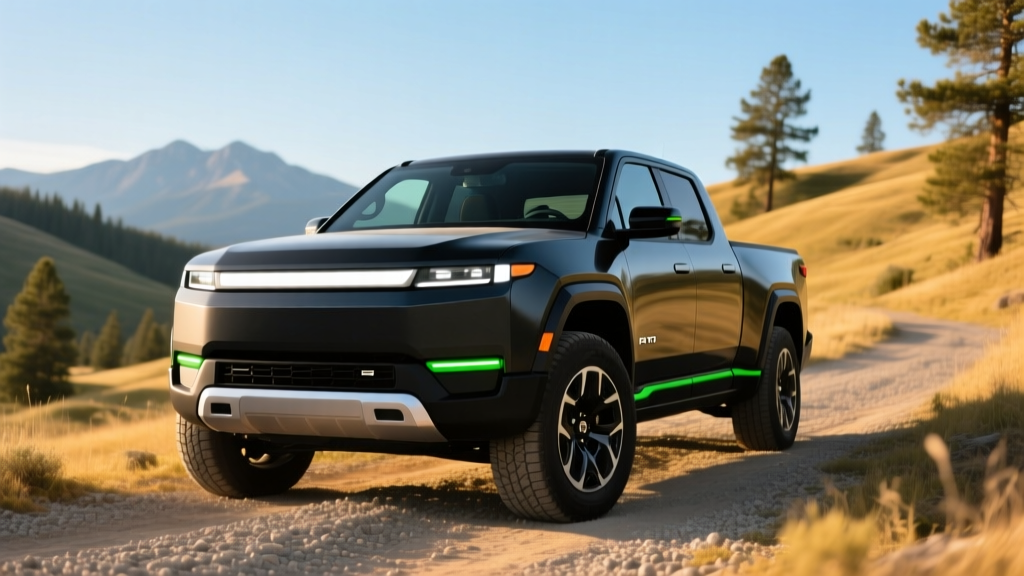
This review focuses on the 2026 Rivian R1T, the second-generation refresh of the truck that launched for the 2022 model year. The R1T competes directly with the Ford F-150 Lightning, Chevrolet Silverado EV, and GMC Sierra EV, but occupies a distinct niche as a mid-size adventure truck rather than a full-size work hauler.
2026 Rivian R1T Spec Sheet at a Glance
| Specification | R1T Dual-Motor Standard | R1T Dual-Motor Max | R1T Tri-Motor (Performance) |
|---|---|---|---|
| EPA Range | 270 miles | 410 miles | 350 miles |
| Battery (usable) | ~95 kWh (Standard Pack, LFP) | ~141 kWh (Max Pack, NMC) | ~120 kWh (Large Pack, NMC) |
| Horsepower | 533 hp | 533 hp | 850 hp |
| 0–60 mph | 4.5 sec | 4.5 sec | 2.9 sec |
| Drivetrain | AWD (dual-motor) | AWD (dual-motor) | AWD (tri-motor) |
| Max DC Fast Charge | 200 kW | 200 kW | 220 kW |
| 10–80% DC Charge | ~28 min | ~42 min | ~30 min |
| Level 2 Home Charge | 11.5 kW (~16 mi/hr) | 11.5 kW (~25 mi/hr) | 11.5 kW (~20 mi/hr) |
| Towing Capacity | 11,000 lbs | 11,000 lbs | 11,000 lbs |
| Payload | 1,760 lbs | 1,760 lbs | 1,760 lbs |
| Base MSRP | $69,900 | $84,000 | $99,000 |
Note: Battery chemistry and usable kWh are based on Rivian's published pack configurations. Standard Pack uses LFP (lithium iron phosphate); Large and Max Packs use NMC (nickel manganese cobalt). Specs reflect 2026 model-year data and are subject to change. Source: Rivian R1T specifications.
Range and Efficiency: EPA vs. Real-World Miles
The R1T's EPA-estimated range spans from 270 miles (Standard Pack) to 410 miles (Max Pack), depending on configuration. Efficiency varies significantly by drivetrain: the Dual-Motor models achieve approximately 73 MPGe combined (46 kWh/100 mi), while the Tri-Motor drops to roughly 64 MPGe combined (53 kWh/100 mi) due to the additional motor's weight and power draw. Full EPA data is available at fueleconomy.gov.
The EPA sticker tells part of the story. In real-world highway driving at 75 mph with climate control active, expect:
- Dual-Motor Standard (270 mi EPA): ~220–240 miles highway; ~185–210 miles in freezing temperatures
- Dual-Motor Max (410 mi EPA): ~340–370 miles highway; ~290–330 miles in freezing temperatures
- Tri-Motor (350 mi EPA): ~280–310 miles highway; ~240–270 miles in freezing temperatures
EV range drops 15–30% in cold weather due to battery chemistry limitations and cabin heating demand. The R1T's heat pump helps, but physics wins. If you regularly tow, cut these numbers by 35–50% depending on trailer weight and aerodynamics — a 7,000 lb travel trailer can reduce range to under 160 miles on the Standard Pack.
Charging Speed: DC Fast Charge and Home Level 2
The R1T uses the NACS (North American Charging Standard) connector, giving it native access to the Tesla Supercharger network — a major practical advantage over CCS-equipped competitors that require adapters. Rivian's onboard charge management software actively preconditions the battery when a DC fast charger is set as your navigation destination, warming the pack to optimize charge rate.
| Charging Level | Power (kW) | Approximate Speed | Best Use Case |
|---|---|---|---|
| Level 1 (120V household) | ~1.4 kW | ~2–3 mi/hr | Emergency top-off only |
| Level 2 (240V home, Rivian Wall Charger) | 11.5 kW | ~16–25 mi/hr (pack-dependent) | Daily overnight charging |
| DC Fast Charge (Standard/Large Pack) | 200 kW peak | 10–80% in ~28–30 min | Road trips |
| DC Fast Charge (Max Pack) | 200 kW peak | 10–80% in ~42 min | Road trips (larger battery = longer session) |
Charging curve reality: The "200 kW peak" figure is not sustained across the full session. Like all EVs, the R1T's charge rate tapers significantly above 80% State of Charge to protect battery health. The 10–80% time is the relevant metric — charging from 80–100% can add another 20–30 minutes. For road trips, plan stops around the 10–80% window and skip the final 20% unless you're at your overnight destination. The Max Pack's 42-minute 10–80% session is longer than some competitors because it's filling a much larger 141 kWh battery — the total energy added is greater even at the same peak kW.
Performance, Drivetrain, and Capability
Every R1T is all-wheel drive. The Dual-Motor configuration uses one motor per axle producing a combined 533 hp and 610 lb-ft of torque. The Tri-Motor adds a second rear motor for 850 hp and 1,103 lb-ft — making it one of the quickest production trucks ever built, with a 2.9-second 0–60 mph time that outpaces most sports cars.
Off-road capability is where Rivian differentiates from the F-150 Lightning. The R1T features an available air suspension with up to 14.9 inches of ground clearance, a wading mode rated to 3+ feet of water depth, and a quad-motor torque-vectoring system (on Tri-Motor) that can send precise torque to individual wheels. The 4.5-foot bed is shorter than full-size trucks, but the gear tunnel — a lockable, pass-through storage compartment behind the rear seats — adds 11 cubic feet of enclosed cargo space unique to the R1T.
Cargo and passenger dimensions:
- Bed length: 54.2 inches (4.5 ft)
- Gear tunnel: 11 cu ft, lockable, with 120V outlet
- Front trunk (frunk): 11 cu ft, with drain plug for use as a cooler
- Rear-seat legroom: 36.4 inches
- Total enclosed cargo (frunk + gear tunnel + bed with tonneau): ~76 cu ft
Pricing, Trims, and Federal Tax Credit Eligibility
The 2026 R1T starts at $69,900 for the Dual-Motor Standard Pack and climbs to $99,000 for the Tri-Motor Performance. As-tested prices with options (adventure packages, premium interior, camp kitchen) routinely exceed $105,000 on upper trims.
| Trim | Base MSRP | Federal §30D Credit Eligible? | Effective Price (with max credit) |
|---|---|---|---|
| Dual-Motor Standard | $69,900 | Yes — under $80K MSRP cap | ~$62,400 |
| Dual-Motor Large | $76,000 | Yes — under $80K MSRP cap | ~$68,500 |
| Dual-Motor Max | $84,000 | No — exceeds $80K MSRP cap for trucks | $84,000 |
| Tri-Motor Performance | $99,000 | No — exceeds $80K MSRP cap for trucks | $99,000 |
The IRS §30D clean vehicle credit offers up to $7,500, but eligibility depends on multiple requirements that change periodically:
- MSRP cap: Trucks, vans, and SUVs must have a base MSRP ≤ $80,000. Only the Standard and Large Pack R1T trims qualify.
- Buyer income cap: AGI ≤ $150,000 (single) or ≤ $300,000 (joint filers).
- Battery sourcing: A percentage of critical minerals and battery components must be sourced from the US or free-trade-agreement countries. Rivian's LFP Standard Pack sources cells from suppliers that may affect eligibility — confirm current-year sourcing compliance on the IRS qualified vehicle list.
- Point-of-sale transfer: Eligible buyers can transfer the credit to the dealer at purchase, reducing the purchase price directly rather than waiting for a tax refund.
Always verify eligibility with a tax professional and the IRS qualified vehicles list before purchasing. Rules are subject to legislative change.
Technology, Safety, and Driver Assistance
The R1T runs Rivian's proprietary software stack on a 15.6-inch center touchscreen with a 12.3-inch digital instrument cluster. The infotainment system is responsive and features built-in navigation with real-time charger routing, over-the-air updates, and a camp mode that maintains climate control for overnight sleeping in the truck. Apple CarPlay and Android Auto are wireless.
Rivian's Driver+ suite is a Level 2 driver-assistance system (per SAE automation levels) that combines adaptive cruise control with lane-centering on divided highways. It requires continuous driver supervision — hands must remain on the wheel and eyes on the road. This is not "self-driving" (Level 4 autonomy, like Waymo's robotaxi service); it's an advanced cruise system comparable to Ford's BlueCruise or GM's Super Cruise, though without the hands-free corridor mapping those competitors offer. The R1T has earned strong safety marks from NHTSA; check current ratings at nhtsa.gov.
Unique tech features include the built-in air compressor (with preset pressures for tires and gear), the gear tunnel's integrated lighting and 120V outlet, and the vehicle-to-load (V2L) capability that can power campsite equipment or tools from the truck's battery pack.
Pros and Cons: Living With the R1T
Pros
- Class-leading off-road capability with air suspension and wading mode
- 410-mile Max Pack eliminates range anxiety for most road trips
- NACS connector = native Supercharger access (no adapter needed)
- Gear tunnel is genuinely useful for secure, weatherproof gear storage
- Tri-Motor's 2.9-sec 0–60 is absurd performance for a truck
- Frunk with drain plug doubles as a cooler — a thoughtful touch
- OTA updates continuously add features and refine software
Cons
- 4.5-foot bed is short for traditional truck work (lumber, full sheets of plywood)
- Only Standard and Large Pack trims qualify for the $7,500 tax credit
- Max Pack's 42-min 10–80% charge time is lengthy on road trips
- Driver+ is competent but not hands-free like Super Cruise or BlueCruise
- Insurance costs run 15–25% higher than comparable gas trucks
- Rear-seat legroom is tight for tall adults on long trips
- Service center network is still expanding — rural owners may face long tow distances for warranty work
Who Should Buy the Rivian R1T?
The R1T is best suited for buyers who want a mid-size adventure truck rather than a full-size work truck. If your use case involves weekend camping, light-to-moderate towing (up to 11,000 lbs), off-road trails, and daily commuting, the R1T is arguably the most capable electric option available. The Max Pack's 410-mile range makes it viable as a one-vehicle household for road trips across the lower 48.
Choose the Dual-Motor Standard ($69,900) if you commute under 100 miles daily, have home charging, and want the tax credit. Choose the Dual-Motor Max ($84,000) if you take regular road trips or live in a cold climate where range loss matters. Choose the Tri-Motor ($99,000) only if you value sports-car acceleration and maximum off-road torque vectoring.
If you need a full-size 6.5-foot bed for job-site work, look at the Ford F-150 Lightning or Chevrolet Silverado EV instead. If you don't need a bed at all, the Rivian R1S (the SUV variant on the same platform) offers three-row seating and similar capability.
Frequently Asked Questions
Who makes the Rivian R1T and where is it built?
Rivian Automotive, Inc., an independent American EV company founded in 2009, designs and manufactures the R1T. Production takes place at Rivian's factory in Normal, Illinois. Amazon holds a significant ownership stake but Rivian operates as a standalone public company.
What is the real-world range of the Rivian R1T?
The EPA rates the R1T between 270 and 410 miles depending on pack size. Real-world highway range is typically 15–20% lower: expect ~220–240 miles from the Standard Pack and ~340–370 miles from the Max Pack at highway speeds. Cold weather (below 32°F) reduces range an additional 15–30%. Towing cuts range by 35–50%.
How fast does the R1T charge at home and on the road?
At home on a 240V Level 2 charger (11.5 kW), the R1T adds 16–25 miles of range per hour depending on pack size — enough to fully replenish the Standard Pack overnight in ~8–9 hours. On DC fast chargers, the Dual-Motor models peak at 200 kW, reaching 10–80% in roughly 28–42 minutes. The R1T uses the NACS connector natively, granting direct access to Tesla Superchargers.
Does the Rivian R1T qualify for the federal EV tax credit?
The Dual-Motor Standard ($69,900) and Dual-Motor Large ($76,000) trims fall under the IRS §30D $80,000 MSRP cap for trucks and may qualify for up to $7,500, provided the buyer's income is within limits (≤$150K single / ≤$300K joint) and battery sourcing requirements are met. The Max Pack ($84,000) and Tri-Motor ($99,000) exceed the MSRP cap and do not qualify. Always verify current eligibility on the IRS qualified vehicle list.
Is the Rivian R1T worth buying over the Ford F-150 Lightning?
It depends on your needs. The R1T offers superior off-road capability, a more premium interior, the gear tunnel, and native NACS/Supercharger access. The F-150 Lightning provides a larger bed (5.5 or 6.5 ft), more rear-seat space, a lower entry price, and a far larger dealer/service network. For adventure and lifestyle use, the R1T wins. For traditional truck work and fleet buying, the Lightning is more practical.
What is the R1T's battery warranty?
Rivian covers the battery pack and drive units for 8 years or 175,000 miles (whichever comes first), with a capacity retention threshold of 70% — meaning if the battery degrades below 70% of its original capacity within the warranty period, Rivian will repair or replace it. This is competitive with the industry standard of 8 years/100,000 miles and actually exceeds it on mileage.
Battery Longevity and Ownership Costs
The R1T's battery warranty — 8 years/175,000 miles with a 70% retention floor — reflects confidence in pack durability. The LFP chemistry in the Standard Pack typically degrades more slowly than NMC and tolerates frequent 100% charging sessions, making it well-suited for daily commuters who charge nightly. The NMC packs (Large and Max) benefit from daily charge limits around 80–90% for longevity, with 100% reserved for road trips.
Ownership costs to budget for beyond the purchase price:
- Insurance: Expect $2,400–$3,600 annually depending on state and driving record — higher than a gas F-150 due to repair costs and vehicle value.
- Home charging installation: A Level 2 home charger with a 60A circuit typically costs $800–$2,000 for equipment and electrician labor, assuming your panel has capacity. Older homes may need a $2,000–$5,000 panel upgrade.
- Electricity cost: At the US average of $0.16/kWh, charging the Standard Pack from 0–100% costs roughly $15.20 — equivalent to about 4 gallons of gas. The R1T's efficiency of 46 kWh/100 mi translates to approximately $0.074/mile in electricity, versus $0.15–$0.20/mile for a gas truck at 17 MPG.
- Tires: The R1T's weight (~7,100 lbs) and instant torque accelerate tire wear. Budget $1,200–$2,000 for a set of replacement tires every 25,000–35,000 miles.
The bottom line: Rivian has built the most adventure-capable electric truck on the market, with genuine engineering innovation in the skateboard chassis, gear tunnel, and off-road systems. If your lifestyle demands off-pavement exploration, the R1T has no electric equal. If you need a conventional work truck, competitors offer more practical bed sizes and service networks at lower prices.