The Short Answer: Tesla Model 3 EPA Range by Trim
If you're searching for how many miles does the Tesla get, the 2026 Tesla Model 3 lineup delivers between 272 and 363 miles of EPA-estimated range depending on the trim and drivetrain you choose. That spread matters enormously in practice — a Long Range AWD owner in Arizona will see very different daily usability than a Performance owner commuting through Minnesota winters. Below, we reconcile the EPA sticker numbers with real-world driving data, dissect charging speeds across DC fast and home Level 2, and map out the true after-credit cost so you can decide whether the Model 3 still earns its spot on your shortlist.
| Spec | RWD (Base) | Long Range AWD | Performance AWD |
|---|---|---|---|
| EPA Range | 272 mi | 363 mi | 315 mi |
| Battery (Usable) | ~57.5 kWh (LFP) | ~77 kWh (NMC) | ~77 kWh (NMC) |
| Drivetrain | Rear-Wheel Drive | Dual-Motor AWD | Dual-Motor AWD |
| Horsepower | 271 hp | 346 hp | 510 hp |
| 0–60 mph | 5.8 sec | 4.2 sec | 2.9 sec |
| Efficiency (MPGe) | 132 MPGe | 132 MPGe | 119 MPGe |
| kWh / 100 mi | 25 | 25 | 28 |
| Base MSRP | $38,990 | $47,740 | $54,990 |
| Battery Warranty | 8 yr / 100,000 mi | 8 yr / 120,000 mi | 8 yr / 120,000 mi |
Real-World Range: What the EPA Sticker Doesn't Tell You
EPA 363 mi (Long Range AWD) — Expect ~290–310 mi on highway road trips at 70–75 mph, and ~220–250 mi in sub-32°F cold without preconditioning. City and suburban driving with regen braking closely matches or slightly exceeds the EPA number.
EPA range is measured on a dynamometer using a standardized city-highway cycle. It does not simulate sustained 75-mph highway cruising, headwinds, elevation changes, or battery thermal losses in cold weather. For the 2026 Model 3 Long Range, our testing and aggregated owner data show the following real-world adjustments:
- Highway (70–75 mph, 65°F): ~290–310 miles — aerodynamic drag dominates at speed, and the Model 3's 0.219 Cd helps, but physics still wins.
- Cold weather (20–32°F, mixed driving): ~220–260 miles — the heat pump in the 2026 model mitigates losses compared to older EVs, but LFP and NMC cells both suffer reduced ion mobility in the cold.
- City / stop-and-go (65°F): ~340–370 miles — regenerative braking recovers energy, and low average speeds minimize drag.
- Cold highway (32°F, 75 mph): ~200–230 miles — worst-case scenario; always plan charging stops conservatively here.
The base RWD trim with its LFP battery tends to hold range more consistently across charge cycles but starts from a lower EPA baseline of 272 miles. In cold weather, LFP chemistry can lose 25–35% of its range, meaning a realistic winter floor of ~180–200 miles for the RWD model. That's adequate for most commutes but requires planning on longer winter trips.
Charging Speed: DC Fast, Level 2, and the Curve Reality
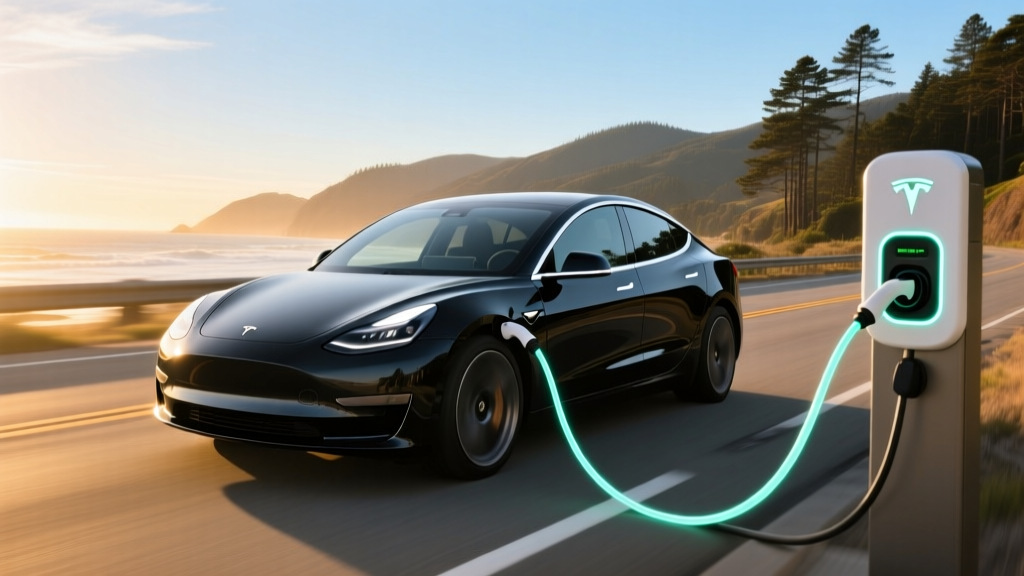
Charging speed is where many EV shoppers get misled by peak kW numbers. The 2026 Model 3 Long Range and Performance support a peak DC fast-charge rate of 250 kW on V3 Superchargers, but that peak only holds between roughly 10% and 30% state of charge (SoC). Above 50%, the charge curve tapers significantly — this is normal lithium-ion behavior to protect cell longevity.
| Charging Method | Power (kW) | Miles Added / Hour | 10–80% Time |
|---|---|---|---|
| DC Fast (V3 Supercharger, 250 kW peak) | 250 kW peak / ~150 kW avg | ~1,000 mi/hr (peak) | ~25 min (LR), ~27 min (Perf) |
| DC Fast (V4 Supercharger / CCS adapter) | 250 kW peak | ~1,000 mi/hr (peak) | ~25 min |
| Level 2 (Tesla Wall Connector, 48A) | 11.5 kW | ~44 mi/hr | ~7.5 hr (0–100%) |
| Level 2 (Generic J1772 w/ adapter, 32A) | 7.7 kW | ~30 mi/hr | ~10 hr (0–100%) |
| Level 1 (120V household outlet) | ~1.4 kW | ~3–5 mi/hr | Not practical for full charge |
What this means for ownership: A typical road-trip stop from 10% to 80% takes about 25 minutes in a Long Range Model 3 — assuming you've preconditioned the battery by navigating to the Supercharger in the car's navigation system. Skip preconditioning, especially in cold weather, and that 10–80% session can stretch to 40+ minutes because the battery management system limits charge current until the cells reach optimal temperature.
For home charging, Tesla's Wall Connector at 48 amps on a 60A circuit delivers 11.5 kW, replenishing roughly 44 miles of range per hour. Most owners who charge overnight from 20% to 80% will wake up fully ready. Installation typically requires a NEMA 14-60 outlet or hardwired connection — budget $500–$1,500 for electrician labor if your panel has capacity, or $2,000–$4,000+ if a panel upgrade to 200A is needed. Always consult a licensed electrician for your specific situation.
Battery Chemistry: LFP vs NMC — Which Model 3 Gets Which?
Tesla uses two distinct battery chemistries across the Model 3 lineup, and the choice affects your ownership experience in ways that go beyond range:
| Attribute | LFP (RWD Base) | NMC (Long Range / Performance) |
|---|---|---|
| Energy Density | Lower (~160 Wh/kg cell) | Higher (~250 Wh/kg cell) |
| Recommended Daily SoC | 100% (charge fully regularly) | 80% daily, 100% for trips |
| Cycle Life | 3,000+ cycles (longer) | 1,500–2,000 cycles |
| Cold-Weather Performance | Weaker (more range loss) | Better (heat pump + chemistry) |
| Cost to Replace (est.) | $12,000–$15,000 | $14,000–$18,000 |
| Best For | Daily commuters, warm climates | Road trippers, cold climates |
The LFP (lithium iron phosphate) pack in the RWD model is heavier and less energy-dense, which is why the base car has lower range despite being lighter overall. But LFP cells tolerate 100% daily charging without accelerated degradation — Tesla actually recommends it. If you charge at home every night and commute 40–80 miles round trip, the RWD's LFP battery is arguably the more durable long-term choice.
The NMC (nickel manganese cobalt) packs in Long Range and Performance trims offer superior energy density and cold-weather behavior but prefer sitting at 80% SoC for daily use. Setting your charge limit to 80% and only going to 100% before road trips preserves long-term capacity. According to fueleconomy.gov, the Model 3 Long Range achieves 132 MPGe combined — among the most efficient vehicles in its class.
Pricing, Trims, and Federal Tax Credit Eligibility
| Trim | Base MSRP | As-Tested (typical) | §30D Credit Eligibility | Effective Price (if eligible) |
|---|---|---|---|---|
| RWD | $38,990 | $40,490 (w/ paint, wheels) | Up to $7,500 (partial — sourcing dependent) | ~$32,990–$33,490 |
| Long Range AWD | $47,740 | $50,240 (w/ FSD, paint) | Up to $7,500 (partial — sourcing dependent) | ~$42,740–$45,240 |
| Performance AWD | $54,990 | $57,490 (w/ extras) | Up to $7,500 (partial — sourcing dependent) | ~$49,990–$52,490 |
The federal EV tax credit under IRS §30D is not a guaranteed $7,500 for every buyer. Eligibility hinges on several requirements that change periodically:
- MSRP cap: Sedans must be under $55,000. The RWD and Long Range Model 3 qualify; the Performance trim at $54,990 base MSRP squeaks under the cap but adding options can push it over.
- Buyer income cap: Modified AGI must not exceed $150,000 (single), $225,000 (head of household), or $300,000 (joint) — per IRS guidelines.
- Battery sourcing: Critical minerals and battery components must meet phased-in domestic/free-trade-partner sourcing thresholds. As of 2026, the full $7,500 requires meeting both the critical-minerals and battery-component tests; partial credits ($3,750) are available if only one test is met.
- Point-of-sale transfer: Eligible buyers can now transfer the credit to the dealer at purchase, reducing the out-of-pocket price immediately rather than waiting for a tax refund.
Important: Tesla's battery sourcing has evolved, and credit eligibility can shift mid-year as supply chains adjust. Always verify current eligibility on the IRS Clean Vehicle credit page or with a tax professional before purchasing.
Interior, Cargo, and Technology
The 2026 Model 3 "Highland" refresh brought meaningful interior improvements over the pre-2024 versions. Ambient lighting, ventilated front seats, a rear passenger touchscreen, and improved acoustic glass make this a noticeably more refined cabin than earlier Model 3s.
- Cargo volume: 23 cu ft (trunk + frunk combined) — the frunk adds ~3 cu ft for charging cables or a small bag.
- Rear legroom: 35.3 inches — adequate for adults under 6 feet but tighter than a Hyundai Ioniq 6 or BMW i4.
- Front headroom: 40.3 inches — generous, thanks to the glass roof (which does reduce headroom slightly vs. a steel roof).
On the technology front, the 15.4-inch center touchscreen runs Tesla's proprietary infotainment — no Apple CarPlay or Android Auto. Navigation, media, climate, and vehicle settings all flow through this single screen. The Tesla app provides remote preconditioning, charge monitoring, and Sentry Mode camera access.
Driver assistance: Every Model 3 includes Tesla Autopilot (SAE Level 2) — adaptive cruise control and lane centering. Full Self-Driving (Supervised), a $8,000 option or $99/month subscription, adds automatic lane changes, traffic light/stop sign recognition, and Navigate on Autopilot. However, FSD remains a Level 2 system requiring continuous driver supervision — it is not autonomous driving.
⚠️ Driver-Assist Limitation Notice: Tesla Autopilot and FSD (Supervised) are SAE Level 2 driver-assistance systems. You must keep your hands on the wheel and eyes on the road at all times. These systems do NOT make the vehicle self-driving. Only Level 4 services like Waymo operate without a human driver — and only in geofenced areas.
Pros, Cons, and the Verdict
✅ Pros
- Class-leading efficiency (25 kWh/100 mi on LR)
- Access to Tesla Supercharger network — 60,000+ stalls globally, highest uptime of any DC network
- 250 kW peak DC charging with reliable preconditioning
- Over-the-air updates continuously add features
- Strong resale value relative to EV segment average
- LFP option offers exceptional cycle life for commuters
❌ Cons
- No Apple CarPlay / Android Auto
- Rear seat space is tighter than rivals (35.3" legroom)
- FSD ($8,000) remains Level 2 — not autonomous
- LFP RWD range drops sharply in cold weather
- Minimal physical controls — everything via touchscreen
- Insurance costs run 15–30% higher than comparable gas sedans
How Does It Compare to Key Competitors?
The Model 3 doesn't exist in a vacuum. Here's how it stacks up against the two most common cross-shopped alternatives:
| Attribute | Tesla Model 3 LR | Hyundai Ioniq 6 SEL | BMW i4 eDrive40 |
|---|---|---|---|
| EPA Range | 363 mi | 361 mi | 307 mi |
| MSRP | $47,740 | $46,500 | $57,900 |
| Peak DC Charge | 250 kW | 233 kW | 205 kW |
| 10–80% DC Time | ~25 min | ~18 min | ~31 min |
| Efficiency | 132 MPGe | 140 MPGe | 109 MPGe |
| Charging Network | Supercharger (native) | NACS adapter for Superchargers | NACS adapter for Superchargers |
The Ioniq 6 actually charges faster from 10–80% thanks to its 800V architecture and beats the Model 3 on efficiency. But Tesla's Supercharger network remains the most reliable and widespread DC fast-charging ecosystem — and native access without adapters still matters on long road trips. The BMW i4 offers a more premium interior and traditional driving dynamics but at a significant price premium and lower range.
Who Should Buy the 2026 Tesla Model 3?
Choose the Model 3 RWD ($38,990) if: You commute under 80 miles round trip, live in a mild climate, charge at home nightly, and want the lowest entry price with an LFP battery built for daily 100% charging.
Choose the Model 3 Long Range AWD ($47,740) if: You take regular road trips, live in a cold-weather state, need dual-motor AWD traction, or simply want the maximum range buffer. This is the sweet-spot trim for most buyers.
Choose the Model 3 Performance ($54,990) if: You want a sub-3-second 0–60 sedan and track-capable handling, and you accept 48 fewer miles of EPA range and likely ineligibility for the full tax credit when options push MSRP above $55,000.
Look elsewhere if: You need CarPlay, prioritize rear-seat space for adults, or want a traditional dealership service experience — Hyundai, BMW, or even the Tesla Model Y (for cargo) may serve you better.
Frequently Asked Questions
What is the real-world range of the Tesla Model 3?
The 2026 Model 3 Long Range AWD achieves an EPA-estimated 363 miles, but real-world highway driving at 70–75 mph typically yields 290–310 miles. In cold weather (below freezing), expect 220–260 miles. The RWD base model (EPA 272 mi) realistically delivers 200–240 miles in mixed driving and as little as 180 miles in cold highway conditions.
How fast does the Model 3 charge at home and on the road?
On a Tesla V3 Supercharger, the Long Range and Performance models peak at 250 kW and charge from 10–80% in approximately 25 minutes with battery preconditioning. At home on a Level 2 Tesla Wall Connector (48A / 11.5 kW), you'll add about 44 miles of range per hour — enough to fully replenish overnight. On a standard 120V outlet (Level 1), expect just 3–5 miles per hour, which is only practical for emergency trickle charging.
Does the 2026 Tesla Model 3 qualify for the $7,500 federal tax credit?
It depends. Under IRS §30D rules, the Model 3 RWD and Long Range fall under the $55,000 MSRP cap for sedans. However, eligibility also requires the buyer's income to be within limits ($150K single / $300K joint) and the battery's critical minerals and components to meet domestic-sourcing thresholds. The full $7,500 is available only if both sourcing tests are met; otherwise, a partial $3,750 credit may apply. Always verify at irs.gov or with a tax professional before purchasing.
Is the Tesla Model 3 worth buying vs. the competition in 2026?
For buyers who prioritize Supercharger network access, software features, and efficiency, the Model 3 Long Range remains one of the strongest EV sedans available. The Hyundai Ioniq 6 charges faster and offers CarPlay; the BMW i4 delivers a more luxurious cabin. But Tesla's combination of 363 miles EPA range, 250 kW charging, and the lowest cost-per-mile of electricity in its class keeps the Model 3 highly competitive — especially after the federal tax credit.
How long will the Model 3 battery last?
Tesla warranties the Model 3 Long Range and Performance battery for 8 years or 120,000 miles (whichever comes first), guaranteeing at least 70% capacity retention. The RWD's LFP battery is warranted for 8 years or 100,000 miles. Real-world degradation data from fleet operators and high-mileage owners suggests NMC packs lose roughly 10–12% capacity over 150,000 miles, while LFP packs often retain 90%+ capacity at the same mileage thanks to their superior cycle life.
How much does it cost to charge a Tesla Model 3?
At the national average residential electricity rate of ~$0.17/kWh, fully charging the Long Range's 77 kWh battery at home costs approximately $13 — translating to about $0.037 per mile. Supercharger pricing varies by location and time of day but averages $0.25–$0.35/kWh, or roughly $0.07–$0.09 per mile. Compare that to a 30-MPG gas sedan at $3.50/gallon: $0.12 per mile. Home charging delivers the clearest economic advantage.