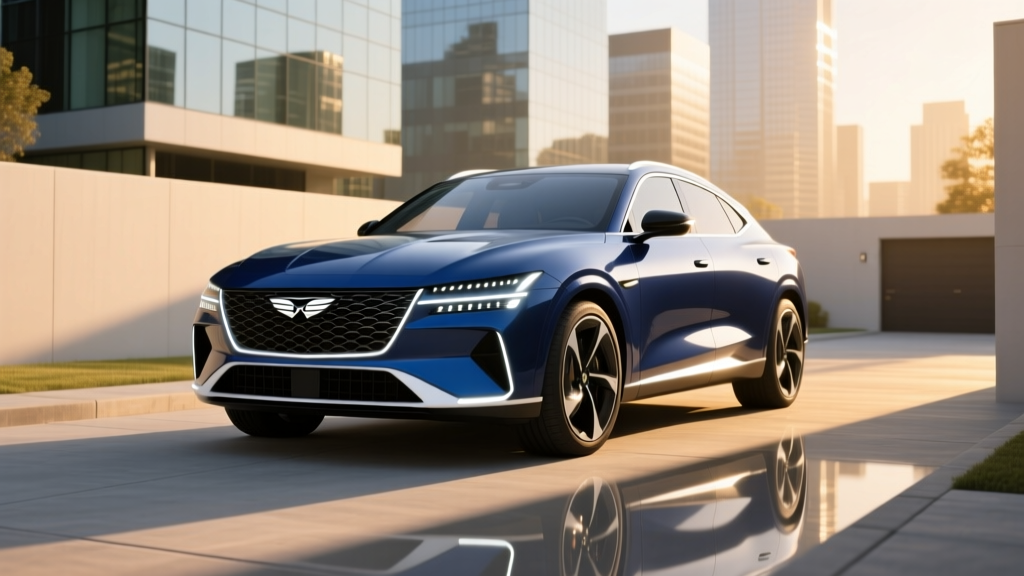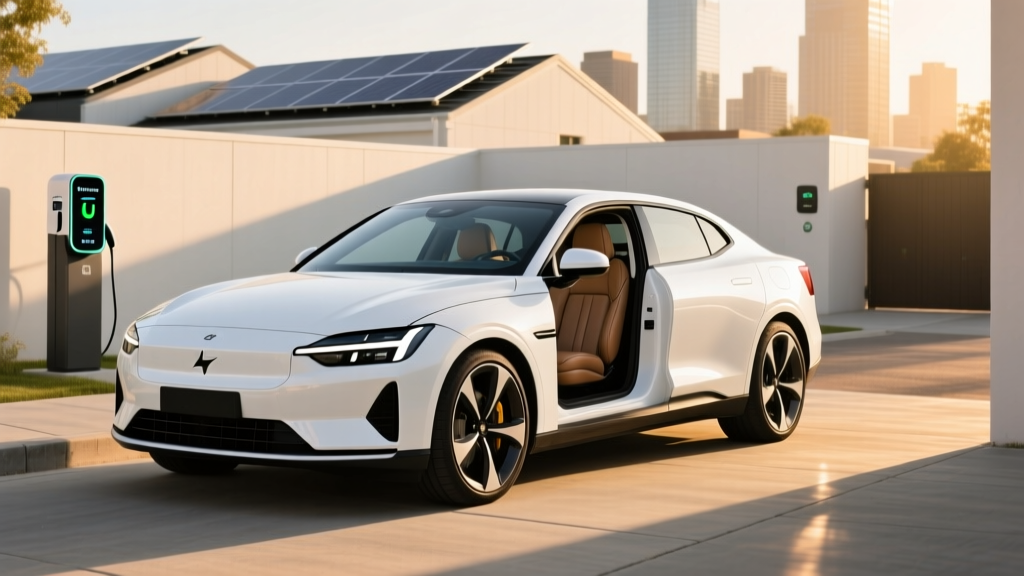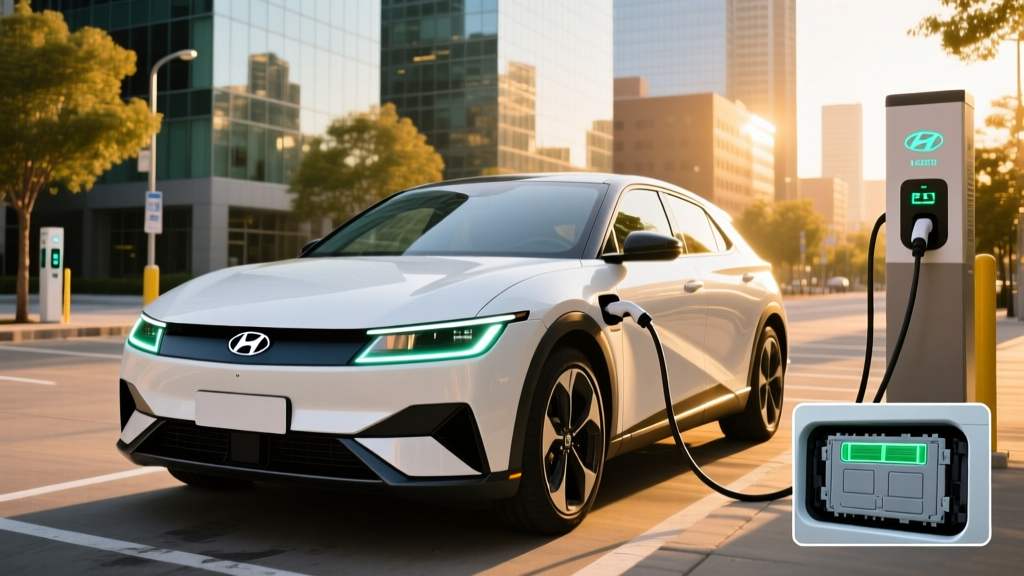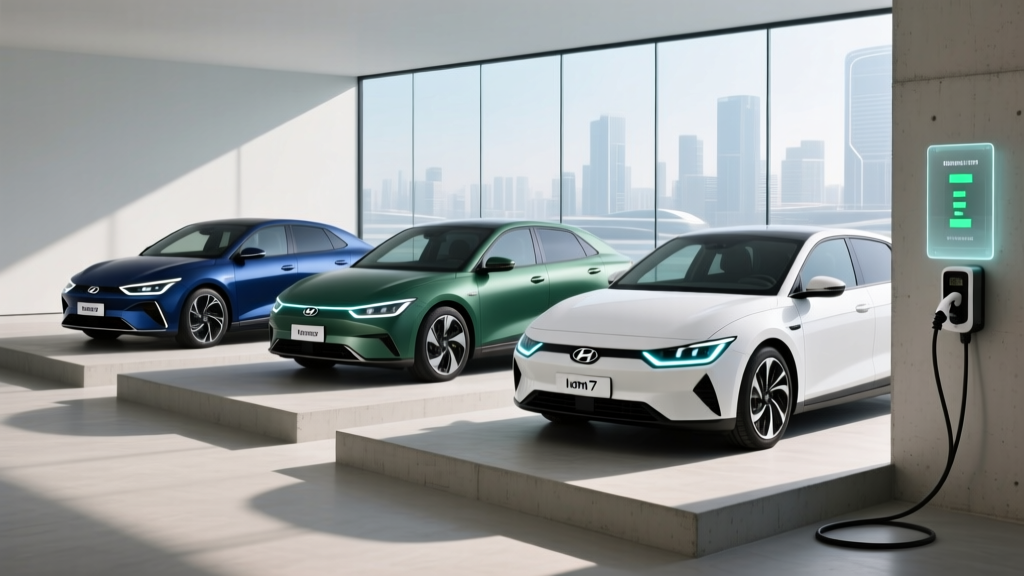
If you've seen the name "Ioniq" on the road and wondered who makes Ioniq cars, the answer is Hyundai Motor Company. Hyundai launched Ioniq as a dedicated battery-electric sub-brand in 2020, built on its Electric-Global Modular Platform (E-GMP). The nameplate first appeared on the original Ioniq Hybrid/PHEV/BEV trio (2017–2022), but since 2021 it has designated Hyundai's purpose-built EVs: the Ioniq 5 crossover, the Ioniq 6 sedan, and the three-row Ioniq 9 SUV.
Below, we break down every current Ioniq model you can buy in 2026 — with exact EPA range, battery chemistry, DC fast-charge speeds, pricing, and federal tax credit eligibility. If you're cross-shopping Hyundai's EV sub-brand against Tesla, Ford, Kia, or Rivian, this is the data-driven buyer's guide you need.
Hyundai Ioniq 5: The Volume Seller
The Ioniq 5 is Hyundai's best-selling electric vehicle and the model most buyers associate with the brand. Its retro-futuristic design, 800-volt architecture, and available NACS port (adopted for the 2025+ model years) make it one of the most versatile EVs on the market. For 2026, Hyundai continues the Ioniq 5 with Standard Range and Long Range powertrains, plus the high-performance Ioniq 5 N.
| Spec | Standard Range RWD | Long Range RWD | Long Range AWD | Ioniq 5 N |
|---|---|---|---|---|
| EPA Range | 245 mi | 318 mi | 290 mi | 221 mi |
| Battery (usable) | 63.0 kWh | 84.0 kWh | 84.0 kWh | 84.0 kWh |
| Chemistry | NMC | NMC | NMC | NMC |
| Horsepower | 168 hp | 225 hp | 320 hp | 641 hp (N Grin Boost) |
| 0-60 mph | 7.5 sec | 6.2 sec | 4.5 sec | 3.3 sec |
| Max DC Charge | 180 kW | 240 kW | 240 kW | 240 kW |
| 10-80% DC Time | ~22 min | ~18 min | ~18 min | ~18 min |
| Level 2 Rate | 10.9 kW | 10.9 kW | 10.9 kW | 10.9 kW |
| MPGe (combined) | 114 MPGe | 117 MPGe | 107 MPGe | 85 MPGe |
| Base MSRP | $42,600 | $47,150 | $50,650 | $67,500 |
Charging: 800-Volt Advantage
The Ioniq 5's 800-volt E-GMP architecture is its biggest charging differentiator. On a 350 kW DC fast charger (like Electrify America or Tesla Supercharger V4 with NACS adapter), the Long Range models peak at 240 kW and sustain above 180 kW through roughly 60% state of charge before tapering. The 10-80% sprint in approximately 18 minutes is among the fastest in its class.
At home on a 48-amp Level 2 charger (240V), the onboard 10.9 kW charger adds roughly 35–37 miles of range per hour — a full overnight replenishment for most commuters. Note: the Ioniq 5 now ships with the NACS (Tesla) connector natively on 2025+ models, granting direct access to Tesla's Supercharger network without an adapter.
Interior, Cargo, and Tech
The Ioniq 5 offers 106.5 cu ft of passenger volume with 41.7 inches of front legroom and 39.4 inches rear. Cargo space is 27.2 cu ft behind the rear seats and 59.3 cu ft with seats folded, plus a modest front trunk (frunk) on AWD models. The dual 12.3-inch displays run Hyundai's latest infotainment with wireless Apple CarPlay/Android Auto, and the available Highway Driving Assist 2 (HDA2) provides Level 2 driver assistance with lane-centering and adaptive cruise — not self-driving, but among the smoother systems in its class.
Hyundai Ioniq 6: The Aero Sedan
The Ioniq 6 is Hyundai's efficiency champion. Its teardrop silhouette achieves a drag coefficient of just 0.21, translating to class-leading range per kWh. If you prioritize maximum range and don't need crossover ride height, the Ioniq 6 is arguably the most underrated EV sedan on the market.
| Spec | Standard Range RWD | Long Range RWD | Long Range AWD |
|---|---|---|---|
| EPA Range | 240 mi | 361 mi | 316 mi |
| Battery (usable) | 63.0 kWh | 84.0 kWh | 84.0 kWh |
| Chemistry | NMC | NMC | NMC |
| Horsepower | 168 hp | 225 hp | 320 hp |
| 0-60 mph | 7.6 sec | 6.0 sec | 4.7 sec |
| Max DC Charge | 180 kW | 240 kW | 240 kW |
| 10-80% DC Time | ~22 min | ~18 min | ~18 min |
| MPGe (combined) | 111 MPGe | 140 MPGe | 115 MPGe |
| Base MSRP | $41,600 | $46,150 | $49,650 |
Cargo capacity is the trade-off: 12.3 cu ft in the trunk (no hatchback), and rear headroom is tighter than the Ioniq 5 due to the sloping roofline. If you can live with sedan practicality, the range and efficiency payoffs are substantial.
Hyundai Ioniq 9: The Three-Row Family SUV
New for the 2025 model year and continuing into 2026, the Ioniq 9 is Hyundai's largest electric vehicle — a three-row SUV targeting families who need space but want EV running costs. Built on an extended E-GMP platform, it competes directly with the Kia EV9, Rivian R1S, and Tesla Model X at a significantly lower entry price.
| Spec | Standard Range RWD | Long Range RWD | Long Range AWD |
|---|---|---|---|
| EPA Range | 245 mi | 335 mi | 311 mi |
| Battery (usable) | 63.0 kWh | 110.3 kWh | 110.3 kWh |
| Chemistry | NMC | NMC | NMC |
| Horsepower | 215 hp | 255 hp | 378 hp |
| 0-60 mph | 7.8 sec | 7.0 sec | 5.2 sec |
| Max DC Charge | 180 kW | 240 kW | 240 kW |
| 10-80% DC Time | ~24 min | ~24 min | ~24 min |
| MPGe (combined) | 97 MPGe | 96 MPGe | 89 MPGe |
| Base MSRP | $52,500 | $58,500 | $62,500 |
Interior space is where the Ioniq 9 earns its keep: three usable rows (adults can fit in the third row for short trips), up to 87 cu ft of cargo volume with both rear rows folded, and a flat floor thanks to the dedicated EV platform. Available captain's chairs in the second row and a panoramic sunroof make it a compelling family hauler.
Federal Tax Credit Eligibility (§30D)
Tax credit eligibility for Ioniq vehicles is nuanced and changes as battery sourcing requirements tighten. Under current IRS §30D rules, the credit is up to $7,500, split into two halves: $3,750 for critical minerals sourcing and $3,750 for battery component sourcing. Here's what applies to the 2026 Ioniq lineup:
- MSRP Caps: SUVs (Ioniq 5, Ioniq 9) must have an MSRP at or below $80,000. Sedans (Ioniq 6) must be at or below $55,000. All Ioniq trims currently fall within these caps.
- Income Caps: Modified adjusted gross income must not exceed $150,000 (single), $225,000 (head of household), or $300,000 (joint).
- Battery Sourcing: Hyundai has been working to shift battery component and critical mineral supply chains to comply with North American sourcing requirements. However, eligibility for the full $7,500 versus a partial $3,750 varies by model year and production batch. Always verify current eligibility on IRS.gov or via the dealer's point-of-sale transfer documentation.
- Point-of-Sale Transfer: As of 2024, buyers can transfer the credit to the dealer at purchase, reducing the upfront price rather than waiting for a tax refund.
| Model / Trim | Base MSRP | Est. Credit | Effective Price |
|---|---|---|---|
| Ioniq 5 Standard Range RWD | $42,600 | $3,750–$7,500 | $35,100–$38,850 |
| Ioniq 5 Long Range RWD | $47,150 | $3,750–$7,500 | $39,650–$43,400 |
| Ioniq 6 Long Range RWD | $46,150 | $3,750–$7,500 | $38,650–$42,400 |
| Ioniq 9 Long Range RWD | $58,500 | $3,750–$7,500 | $51,000–$54,750 |
| Ioniq 5 N | $67,500 | $3,750–$7,500 | $60,000–$63,750 |
Note: Credit amounts depend on battery sourcing compliance at time of delivery. Confirm with your dealer and consult a tax professional before relying on a specific credit amount. State and local incentives may stack on top — check afdc.energy.gov for your area.
Warranty and Battery Longevity
Hyundai backs all Ioniq models with one of the strongest warranty packages in the EV market:
- Battery & Powertrain: 10 years / 100,000 miles (whichever comes first). Hyundai guarantees the battery will retain at least 70% of its original capacity during the warranty period.
- New Vehicle Limited: 5 years / 60,000 miles.
- Roadside Assistance: 5 years / unlimited miles.
- Complimentary Maintenance: 3 years / 36,000 miles (oil changes don't apply, but tire rotations and inspections are covered).
All current Ioniq models use NMC (nickel manganese cobalt) battery chemistry, which offers higher energy density than LFP but benefits from keeping state of charge between 20–80% for daily use to maximize long-term longevity. Hyundai's thermal management system (liquid cooling with heat pump on most trims) helps mitigate degradation in extreme climates.
Who Should Buy an Ioniq — and Who Shouldn't
✅ Pros
- 800V architecture: 10-80% in ~18 min (Ioniq 5/6)
- NACS port standard — native Supercharger access
- Class-leading efficiency (Ioniq 6: 140 MPGe)
- 10-yr/100,000-mi battery warranty
- Vehicle-to-load (V2L) power capability
- Strong IIHS safety ratings across the lineup
❌ Cons
- Ioniq 6 trunk is small (12.3 cu ft) and not a hatchback
- No LFP battery option (NMC requires more careful SoC management)
- Dealer markups still occur on high-demand trims
- Infotainment can lag behind Tesla/Rivian interfaces
- Ioniq 5 N range is just 221 mi EPA
- HDA2 is good but not as widely available as Tesla Autopilot
Decision Framework: Which Ioniq Is Right for You?
Choose the Ioniq 5 if: You want a practical daily-driver crossover with fast charging, good cargo space, and Supercharger access. Best for commuters and small families.
Choose the Ioniq 6 if: Range and efficiency are your top priorities and you don't need SUV cargo space. Best for long-distance commuters and efficiency-focused buyers.
Choose the Ioniq 9 if: You need three rows for a growing family but want EV running costs. Best for family road-trippers who can charge at home.
Look elsewhere if: You need a pickup truck (Rivian R1T, Ford F-150 Lightning), want LFP chemistry for worry-free 100% daily charging (Tesla Model 3 RWD), or need over 350 miles of EPA range (Lucid Air).
Competitor Comparison
| Spec | Hyundai Ioniq 5 LR RWD | Tesla Model Y LR | Ford Mustang Mach-E ER RWD | Kia EV6 LR RWD |
|---|---|---|---|---|
| EPA Range | 318 mi | 320 mi | 320 mi | 310 mi |
| Battery | 84.0 kWh NMC | ~78 kWh NMC | 91 kWh NMC | 77.4 kWh NMC |
| Max DC Charge | 240 kW | 250 kW | 150 kW | 240 kW |
| 10-80% Time | ~18 min | ~22 min | ~33 min | ~18 min |
| Base MSRP | $47,150 | $46,630 | $45,995 | $45,900 |
| NACS Native | Yes | Yes | No (adapter) | No (adapter) |
| Battery Warranty | 10yr/100k | 8yr/120k | 8yr/100k | 10yr/100k |
The Ioniq 5's closest sibling is the Kia EV6 (Hyundai and Kia share the E-GMP platform), but the Ioniq 5 offers slightly more cargo space and a more upright seating position. Against the Tesla Model Y, the Ioniq 5 matches on range and now matches on charging network access, but Tesla's Supercharger reliability and software ecosystem remain advantages. The Mach-E lags on charging speed — its 150 kW peak is a significant road-trip drawback.
Frequently Asked Questions
Who makes Ioniq cars?
Hyundai Motor Company manufactures all Ioniq vehicles. Ioniq is Hyundai's dedicated EV sub-brand, and all models are built on Hyundai's Electric-Global Modular Platform (E-GMP). Hyundai also owns Kia, which shares the same platform for models like the EV6 and EV9.
What is the real-world range of Ioniq vehicles?
Real-world range varies by model and conditions. The Ioniq 5 Long Range RWD (EPA 318 mi) typically delivers 260–280 mi on the highway and 210–240 mi in freezing weather. The Ioniq 6 Long Range RWD (EPA 361 mi) holds up better at highway speeds due to its aerodynamic design — expect 310–330 mi. The Ioniq 9 Long Range (EPA 335 mi) returns about 280–300 mi loaded on road trips.
How fast do Ioniq vehicles charge?
Long Range Ioniq 5 and 6 models peak at 240 kW DC fast charging, reaching 10-80% in approximately 18 minutes on a 350 kW station. The Ioniq 9, with its larger 110.3 kWh battery, takes about 24 minutes for the same window. At home on Level 2 (240V, 48A), all models charge at 10.9 kW, adding roughly 35 miles of range per hour.
Does the Ioniq qualify for the $7,500 federal EV tax credit?
Eligibility depends on current IRS §30D rules including battery sourcing, buyer income limits ($150k single / $300k joint), and MSRP caps ($80k for SUVs, $55k for sedans). All 2026 Ioniq models fall within MSRP caps, but the full $7,500 versus a partial $3,750 depends on battery component and critical mineral sourcing at time of delivery. Verify on IRS.gov and with your dealer before purchase.
Is the Ioniq 5 worth buying over a Tesla Model Y?
It depends on your priorities. The Ioniq 5 charges faster (18 vs ~22 min 10-80%), has a longer battery warranty (10yr vs 8yr), and offers V2L capability. The Model Y wins on software, Supercharger network reliability, and slightly lower pricing. With Hyundai adopting NACS, the charging network gap has narrowed considerably for 2025+ models.
Are Ioniq cars reliable?
Hyundai's E-GMP platform has proven robust since its 2021 debut, with no widespread battery or drivetrain recalls on Ioniq 5/6 models. Hyundai's 10-year/100,000-mile battery warranty provides strong long-term protection. IIHS has awarded the Ioniq 5 a Top Safety Pick+ rating. Check NHTSA.gov for the latest recall and complaint data.