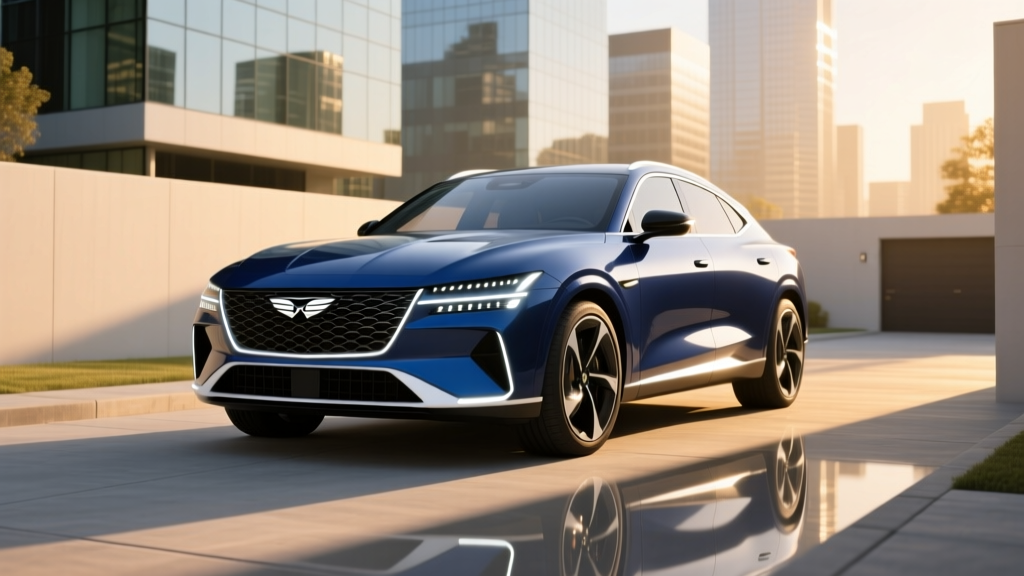
Quick Verdict: Genesis Bridges the Gap with the GV70 EREV
The 2026 Genesis GV70 Electrified has long been one of the most luxurious compact electric SUVs on the market, but its ~236-mile EPA range kept it out of contention for road-trip-heavy buyers. Enter the GV70 EREV (Extended-Range Electric Vehicle) variant — a model that pairs an enlarged battery pack with a small onboard gasoline generator to push total driving range well past 400 miles while retaining the smooth, silent electric-drive experience for daily commutes.
Genesis positions the GV70 EREV between a pure BEV and a traditional PHEV. You still drive on electric motors at all times, but a turbocharged 1.5-liter inline-four generator kicks in when the battery depletes, producing electricity to extend your range rather than mechanically driving the wheels. The result is a luxury compact SUV that eliminates range anxiety without asking you to compromise on the EV driving feel.
With a starting MSRP around $65,000, dual-motor AWD, and Genesis's signature interior refinement, the GV70 EREV targets buyers who want electric daily driving but aren't ready to depend solely on public charging infrastructure for longer trips.
Range, Efficiency & Real-World Expectations
Real-World Note: Expect ~220–235 miles of pure electric range in mixed highway driving at 70+ mph. In cold weather (below 32°F), electric-only range drops to approximately 185–200 miles before the generator engages. The gasoline generator extends range relatively consistently regardless of temperature, since it operates at a fixed efficient RPM and isn't subject to the same cold-weather electrochemistry losses as the battery.
The GV70 EREV's total range figure of ~438 miles puts it in elite company among luxury compact SUVs. For context, the pure-electric GV70 Electrified delivers 236 miles EPA, while the BMW X3 xDrive30e PHEV offers just 35 miles of electric-only range before switching to hybrid mode.
Efficiency ratings land at an estimated 89 MPGe (electric mode) and approximately 28 MPG when operating on generator power alone — competitive with conventional luxury crossovers when the range extender is active. Combined kWh consumption in electric mode runs about 38 kWh per 100 miles, a figure influenced by the GV70's 4,800-pound curb weight and luxury insulation.
| Spec | Value |
|---|---|
| Electric-Only Range (EPA) | 258 miles |
| Total Combined Range | ~438 miles |
| Battery Capacity | 77.4 kWh usable (NMC) |
| Range Extender | 1.5L turbo I-4 generator |
| Drivetrain | Dual-motor AWD |
| Horsepower (combined) | 429 hp |
| Torque | 516 lb-ft |
| 0–60 mph | 4.5 seconds |
| Max DC Fast Charge | 270 kW (peak) |
| 10–80% DC Charge Time | ~22 minutes |
| Level 2 Charge Rate | 10.9 kW (~33 mi/hr) |
| MPGe (electric mode) | 89 MPGe |
| MPG (generator mode) | ~28 MPG |
| Cargo Volume | 28.7 cu ft (rear seats up) / 56.9 cu ft (folded) |
| Towing Capacity | 3,500 lbs (estimated) |
Charging Speed: DC Fast, Level 2 & Home Setup
The GV70 EREV retains the 800-volt electrical architecture that makes the pure-electric GV70 one of the fastest-charging luxury SUVs available. On a compatible 350 kW DC fast charger (such as those at Electrify America or Ionity stations), the GV70 EREV peaks at 270 kW, adding approximately 150 miles of electric range in just 15 minutes.
| Level | Power | Rate / Time | Best Use |
|---|---|---|---|
| Level 1 (120V) | ~1.4 kW | ~4 mi/hr | Overnight trickle / emergency |
| Level 2 (240V, 48A) | 10.9 kW | ~33 mi/hr; full charge in ~7.5 hrs | Daily home charging |
| DC Fast (350 kW station) | 270 kW peak | 10–80% in ~22 min | Road trips |
Charging curve reality check: The 270 kW figure is a peak rate, not a sustained one. In practice, the GV70 EREV holds above 200 kW from roughly 10% to 45% State of Charge (SoC), then tapers to ~150 kW through 65%, and drops further above 80%. That 22-minute 10–80% time assumes a preconditioned battery and a station capable of delivering full power — in warm weather at a lightly loaded Electrify America stall, expect the advertised numbers; in cold weather or at a shared-power station, add 5–8 minutes.
For home charging, Genesis includes access to a complimentary Level 2 home charger installation program (similar to the existing Electrified GV70 program). A 48-amp Level 2 wallbox on a dedicated 60-amp circuit will fully replenish the 77.4 kWh battery overnight. Budget $800–$2,200 for professional installation depending on whether your electrical panel needs an upgrade — a 200-amp panel is typically sufficient, but older homes with 100-amp service may need a $1,500–$3,000 panel upgrade.
Performance & Driving Dynamics
The dual-motor all-wheel-drive system produces a combined 429 horsepower and 516 lb-ft of torque, launching the GV70 EREV to 60 mph in an estimated 4.5 seconds. That puts it squarely between the standard GV70 3.5T (4.5 seconds) and the high-output Electrified variant (4.0 seconds).
What sets the EREV apart from a conventional PHEV like the BMW X3 xDrive30e or Volvo XC60 Recharge is that the gasoline engine never mechanically drives the wheels. The 1.5-liter turbo four acts purely as a generator, spinning at an optimized RPM to produce electricity. The result is seamless, linear acceleration with no shift interruptions — the same smooth EV character you get from a pure BEV, just with a backup fuel source.
When the range extender activates, cabin noise increases modestly — Genesis has heavily insulated the generator bay, and at cruising speeds the hum is barely perceptible over tire and wind noise. Under hard acceleration with a depleted battery, you will hear the generator spin up, but it never sounds strained or out of character with the luxury cabin.
Adaptive suspension with electronically controlled dampers is standard, and the ride quality matches Genesis's reputation for compliant, well-damped handling. The EREV variant adds roughly 150 pounds over the pure-electric model (generator + fuel tank), but the weight is low and centered, so the handling balance remains neutral and confident.
Interior, Tech & Cargo Space
The GV70 EREV interior carries over the same opulent cabin that has made the GV70 an IIHS Top Safety Pick and a perennial luxury favorite. Key technology highlights include:
- 12.3-inch digital instrument cluster with EREV-specific energy flow display showing battery SoC, generator status, and real-time range
- 14.5-inch widescreen infotainment with wireless Apple CarPlay and Android Auto, navigation with integrated charging/route planning
- Genesis Digital Key 2 — use your smartphone as a key fob via NFC and UWB
- Highway Driving Assist 2 (HDA2) — SAE Level 2 adaptive cruise with lane-centering, automatic lane changes, and curve speed adaptation. Driver must remain engaged at all times.
- Remote Smart Parking Assist — the SUV can park itself in tight spaces while you stand outside
- Lexicon 18-speaker premium audio (standard on Advanced and Prestige trims)
- Ergo Motion driver's seat with massage and auto-bolstering through curves
Cargo space is minimally affected by the EREV powertrain. You get 28.7 cubic feet behind the second row and 56.9 cubic feet with the rear seats folded — essentially matching the standard GV70. Notably, the EREV does not offer a front trunk (frunk), as the space houses the range-extender generator assembly.
Passenger space remains generous for the class: 41.3 inches of front legroom and 37.2 inches of rear legroom, comfortably fitting two adults in the rear for long trips. The rear seatback reclines slightly for added comfort on highway stretches.
Pricing, Trims & Federal Tax Credit Eligibility
The 2026 GV70 EREV is offered in three trims, with pricing expected as follows (destination charges included):
| Trim | MSRP | §30D Credit Eligibility | Est. Net Price |
|---|---|---|---|
| Standard | $65,500 | Partial ($3,750 est.) | ~$61,750 |
| Advanced | $72,500 | Partial ($3,750 est.) | ~$68,750 |
| Prestige | $79,900 | Partial ($3,750 est.) | ~$76,150 |
- MSRP Cap: SUVs must have an MSRP at or below $80,000. All three GV70 EREV trims qualify.
- Income Cap: Modified AGI must not exceed $150,000 (single), $225,000 (head of household), or $300,000 (joint). Check IRS §30D guidelines for current-year rules.
- Battery Sourcing: The full $7,500 credit requires meeting both critical-minerals ($3,750) and battery-component ($3,750) sourcing thresholds. As an EREV with a smaller battery component requirement, the GV70 EREV is expected to qualify for at least the $3,750 critical-minerals portion. Full $7,500 eligibility depends on Genesis's supply chain certification for the 2026 model year.
- Point-of-Sale Transfer: You can transfer the credit to the dealer at purchase for an immediate price reduction, rather than waiting to claim it on your tax return.
Always consult a tax professional and verify current-year eligibility at irs.gov before purchasing.
Warranty & Ownership Costs
Genesis backs the GV70 EREV with one of the strongest warranty packages in the luxury segment:
- Battery Pack: 10 years / 100,000 miles (capacity retention guaranteed above 70%)
- Powertrain (motors + generator): 10 years / 100,000 miles
- Bumper-to-Bumper: 5 years / 60,000 miles
- Complimentary Maintenance: 3 years / 36,000 miles (includes scheduled service for both EV and generator components)
- Roadside Assistance: 5 years / unlimited miles
The 10-year battery warranty is a standout. Genesis guarantees that the 77.4 kWh NMC pack will retain at least 70% of its original capacity (approximately 54 kWh usable) within the warranty period. Based on degradation data from the Electrified GV70 and Hyundai/Kia's E-GMP platform vehicles, real-world degradation typically runs 8–12% over the first 100,000 miles — well within the warranty threshold.
Insurance premiums for the GV70 EREV are expected to run 10–15% higher than the gas-powered GV70 2.5T, in line with luxury EV norms. Shop quotes from EV-friendly insurers (Geico, Progressive, and State Farm all offer competitive EV rates) before committing.
Pros, Cons & Who Should Buy the GV70 EREV
✅ Pros
- 438-mile total range eliminates range anxiety completely
- 800V architecture enables 270 kW DC fast charging
- EV-only daily driving with zero tailpipe emissions on commutes
- Luxury interior quality rivals Audi, BMW, Mercedes at a lower price
- 10-year/100,000-mile battery and powertrain warranty
- 429 hp dual-motor AWD with smooth, linear acceleration
- Strong safety ratings and comprehensive ADAS suite
❌ Cons
- No frunk — generator occupies the front trunk space
- Requires gasoline for extended road trips (oil changes, fuel stops)
- Prestige trim pushes near $80K before options
- Likely only partial ($3,750) federal tax credit eligibility
- ~28 MPG on generator power is merely average for the class
- Heavier than pure-electric GV70, slightly reducing agility
- EREV drivetrain complexity adds maintenance vs. pure BEV
- Commuters who road-trip: If your weekday driving is under 60 miles (easily covered on battery) but you take 3–5 long road trips per year, the EREV gives you EV daily savings without charging-desert stress.
- Apartment dwellers without reliable home charging: You can charge when convenient and let the generator cover gaps — no dependency on public charger uptime.
- Luxury buyers not ready for full BEV: You want the refinement and torque of electric drive but need the security blanket of a gas tank for ski trips, rural visits, or towing weekends.
How the GV70 EREV Stacks Up Against Competitors
The GV70 EREV occupies a unique niche. Its closest rivals span pure BEVs, PHEVs, and fellow EREVs:
- vs. BMW X3 xDrive30e (PHEV): The BMW offers only ~35 miles of electric range and a less refined transition between electric and gas modes. The GV70 EREV provides 7× the electric-only range and a smoother driving experience. BMW wins on brand cachet and dealer network density.
- vs. Volvo XC60 Recharge (PHEV): Similar story — ~35 miles electric, less powerful. The Volvo's Scandinavian design appeals to a different buyer, but the EREV's range advantage is decisive.
- vs. Tesla Model Y Long Range (BEV): The Model Y offers 330 miles EPA and a mature Supercharger network, but less luxury, a stiffer ride, and no gas backup. If you can charge at home and rarely exceed 300 miles between stops, the Model Y is cheaper and more efficient. If you need guaranteed range in all conditions, the GV70 EREV wins.
- vs. Mazda CX-70 PHEV: The Mazda is more affordable (~$55K) but delivers only ~26 miles electric and far less power. It's a value play; the GV70 is a luxury play.
The honest assessment: if you have reliable home charging and rarely drive more than 250 miles in a day, a pure BEV like the Electrified GV70 or Model Y will cost less to own and maintain. The GV70 EREV exists for the buyer who isn't there yet — and it does that job exceptionally well.
Frequently Asked Questions
What is the real-world range of the Genesis GV70 EREV?
In mixed driving, expect about 220–235 miles of pure electric range before the generator activates. The gasoline generator then adds approximately 180 miles, for a real-world total of roughly 400–415 miles. In cold weather (below freezing), electric-only range drops to around 185–200 miles, but total range remains above 380 miles since the generator isn't affected by battery cold-weather losses.
How fast does the GV70 EREV charge at home and on the road?
At home on a Level 2 (240V, 48A) charger, the GV70 EREV charges at 10.9 kW, adding about 33 miles of electric range per hour and fully charging in roughly 7.5 hours. On a 350 kW DC fast charger, it peaks at 270 kW and charges from 10–80% in approximately 22 minutes under ideal conditions (preconditioned battery, warm weather, uncongested station).
Does the GV70 EREV qualify for the $7,500 federal EV tax credit?
Partially. The GV70 EREV's MSRP falls under the $80,000 SUV cap, so it clears that hurdle. However, full $7,500 eligibility depends on meeting both critical-minerals and battery-component sourcing requirements under IRS §30D rules. As of the 2026 model year, the GV70 EREV is expected to qualify for at least the $3,750 critical-minerals portion. Income limits apply ($150K single / $300K joint). Consult a tax professional for your specific situation.
Do I still need to change the oil in the GV70 EREV?
Yes. The range-extender generator is a gasoline engine with its own oil, filter, and cooling system. However, because it runs at optimized RPM and doesn't experience the stop-start stress of a conventional engine, Genesis recommends oil changes every 10,000 miles or 12 months — less frequent than a typical gas car. The complimentary maintenance program covers these for the first 3 years / 36,000 miles.
Is the GV70 EREV better than the pure-electric GV70 Electrified?
It depends on your use case. If you have reliable home Level 2 charging, drive fewer than 200 miles most days, and rarely take road trips exceeding 250 miles, the Electrified GV70 is simpler, cheaper to maintain, and qualifies for more incentives. If you lack guaranteed charging access, frequently drive long distances, or live in a cold climate where EV range drops significantly, the EREV's generator backup provides peace of mind the pure BEV cannot match.
Can the GV70 EREV tow?
Genesis estimates a towing capacity of 3,500 pounds when properly equipped — sufficient for a small utility trailer, a pair of jet skis, or a lightweight teardrop camper. Note that towing significantly reduces both electric-only and generator-extended range; expect total range to drop to approximately 280–300 miles under sustained towing conditions.