Quick Verdict: The Ioniq 5 Lease Equation in 2026
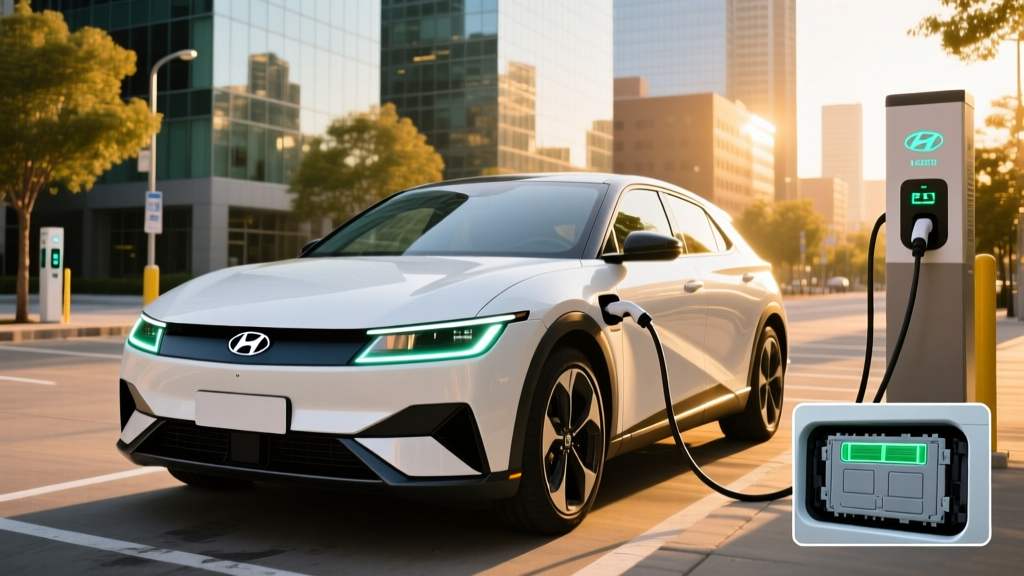
The Hyundai Ioniq 5 remains one of the most compelling electric crossovers on the market, and a Hyundai Ioniq 5 lease can be a smart way to access its 800-volt architecture and segment-leading charge speeds without committing to long-term ownership. With the 2026 model year, Hyundai has refined the formula: a larger 84.0 kWh battery on Long Range trims, NACS (Tesla Supercharger) compatibility from the factory, and updated interior materials. But leasing an EV comes with a unique wrinkle — the federal tax credit flows through the lessor, not directly to you, which changes the math considerably compared to buying.
Below, we break down every number that matters for your lease decision: real-world range, actual charging speeds at DC fast chargers and at home, trim-level pricing, and whether the §30D tax credit actually lowers your monthly payment.
Range and Efficiency: EPA vs. Real World
- SE/SEL Long Range RWD: EPA 318 miles | Real-world highway: ~265–285 mi | Cold weather (below 30°F): ~220–245 mi
- Long Range AWD: EPA 290 miles | Real-world highway: ~245–260 mi | Cold weather: ~200–220 mi
- Standard Range RWD: EPA 245 miles | Real-world highway: ~200–220 mi | Cold weather: ~170–190 mi
Real-world figures based on 70–75 mph sustained highway driving with climate control active. Cold-weather estimates reflect lithium-ion chemistry behavior below freezing with preconditioning off.
The Long Range RWD variant is the sweet spot for lessees prioritizing distance. Its 84.0 kWh usable battery (NMC chemistry — nickel-manganese-cobalt) delivers an EPA-estimated 114 MPGe combined, which translates to roughly 29 kWh per 100 miles. That's competitive with the Tesla Model Y Long Range and slightly behind the BMW iX xDrive50 in efficiency terms.
For city-dominant commuters, the Ioniq 5's regenerative braking system — adjustable through four levels via steering-wheel paddles, including a true one-pedal "i-Pedal" mode — recovers meaningful energy in stop-and-go traffic. Expect to meet or slightly exceed the EPA sticker in urban driving. Highway cruising at 75+ mph, however, will drop you to roughly 83–87% of the sticker number. In sub-freezing temperatures without battery preconditioning, plan for a 25–30% range reduction on the AWD model.
Charging Speed: 800-Volt Architecture Explained
The Ioniq 5's E-GMP platform operates at 800 volts nominal, which is the key engineering advantage over competitors still running 400V systems. Higher voltage means the car can accept more power at lower current, reducing heat and sustaining peak charge rates longer. Here's what that looks like in practice:
| Charging Level | Power (kW) | Speed / Time | Notes |
|---|---|---|---|
| Level 1 (120V household) | ~1.4 kW | ~4 mi/hr | Emergency/trickle only |
| Level 2 (240V home, 48A) | 10.9 kW | ~32 mi/hr | Full charge ~8.5 hr | Recommended home setup |
| DC Fast (350 kW station) | Peak 238 kW | 10–80% in ~18 min | Peak sustained to ~55% SoC, then tapers |
| DC Fast (150 kW station) | Peak ~145 kW | 10–80% in ~26 min | More common public infrastructure |
| Tesla Supercharger (NACS) | Up to ~200 kW | 10–80% in ~22 min | V3 stalls; V4 stalls may deliver higher |
The headline number — 10–80% in 18 minutes on a 350 kW charger — is real, but only under ideal conditions: battery preconditioned to optimal temperature, state of charge below 10%, and ambient temps above 50°F. The charge curve peaks around 238 kW and holds strong to approximately 55% SoC before tapering to ~150 kW through 70%, then further to ~80 kW above 80%. This is why the 10–80% metric matters more than peak kW — sustained power delivery is what gets you back on the road.
For 2026, the Ioniq 5 ships with the NACS charge port natively, meaning direct access to Tesla's Supercharger network without an adapter. This dramatically improves road-trip practicality, especially in rural corridors where CCS infrastructure remains sparse. CCS1 compatibility is maintained via the adapter Hyundai includes in the trunk.
Performance, Drivetrain, and Daily Driving
| Spec | Standard Range RWD | Long Range RWD | Long Range AWD |
|---|---|---|---|
| Battery (usable) | 63.0 kWh (NMC) | 84.0 kWh (NMC) | 84.0 kWh (NMC) |
| Horsepower | 168 hp | 225 hp | 320 hp |
| Torque | 258 lb-ft | 258 lb-ft | 446 lb-ft |
| 0–60 mph | ~7.5 sec | ~6.8 sec | ~4.5 sec |
| Drivetrain | Rear-wheel drive | Rear-wheel drive | Dual-motor AWD |
| Towing Capacity | Not rated | Not rated | 2,300 lbs (braked) |
The Long Range AWD is genuinely quick — 4.5 seconds to 60 mph puts it in hot-hatch territory, and the instant torque from dual permanent-magnet synchronous motors makes highway merging effortless. The RWD models are more sedate but still responsive; the single-motor layout gives the Long Range RWD a slight efficiency edge that translates directly to those extra 28 miles of EPA range.
Ride quality is composed, with a multi-link rear suspension that absorbs highway imperfections better than the Model Y's firmer setup. Steering is light and precise, if a bit numb at center — typical for the segment. The turning circle of 39.4 feet is average, making urban parking straightforward.
Interior, Cargo, and Technology
Hyundai's "Living Space" interior concept translates to a flat floor (no transmission tunnel), a dual 12.3-inch panoramic display setup, and a center console that slides fore and aft by up to 5.5 inches — a genuinely useful feature for tight parking spaces where you need to exit through the passenger side.
Dimensions that matter:
- Cargo volume (behind rear seats): 27.2 cu ft
- Cargo volume (rear seats folded): 59.3 cu ft
- Front trunk (frunk): 0.85 cu ft (AWD) / 2.0 cu ft (RWD) — enough for charging cables, not much more
- Rear legroom: 39.4 inches — bests the Model Y and VW ID.4
- Front headroom: 39.6 inches
The infotainment system runs Hyundai's latest ccNC (connected car Navigation Cockpit) software with wireless Apple CarPlay and Android Auto, over-the-air updates, and a digital key feature that lets your smartphone or smartwatch act as the key fob. Hyundai's Highway Driving Assist 2 (HDA 2) is standard on SEL and above — this is a SAE Level 2 driver-assistance system combining adaptive cruise with lane-centering and automatic lane-change assist. It is not autonomous driving; you must keep your hands on the wheel and eyes on the road at all times.
Notable drawbacks: the capacitive-touch climate controls lack physical buttons, which is frustrating to adjust while driving. The frunk on AWD models is nearly useless. And while the Ioniq 5's retro-pixel design language is polarizing in a good way, rear visibility is compromised by the thick C-pillars — a rearview camera is essential, and thankfully standard.
2026 Pricing, Lease Economics, and the Tax Credit Question
| Trim | MSRP | Estimated Lease (36 mo, $3,500 down) | Federal Credit Impact |
|---|---|---|---|
| SE Standard Range | $42,600 | ~$375–$425/mo | Pass-through varies by lessor |
| SE Long Range RWD | $46,100 | ~$410–$460/mo | Pass-through varies by lessor |
| SEL Long Range AWD | $51,200 | ~$465–$530/mo | Pass-through varies by lessor |
| Limited Long Range AWD | $57,400 | ~$545–$620/mo | Pass-through varies by lessor |
Critical tax credit context: Under IRS §30D rules, the new clean vehicle credit of up to $7,500 has strict requirements for 2026:
- MSRP cap: SUVs/crossovers must be priced at or below $80,000 — all Ioniq 5 trims qualify.
- Buyer income cap: AGI must not exceed $150,000 (single), $225,000 (head of household), or $300,000 (joint).
- Battery sourcing: The credit splits into two halves — $3,750 for critical-mineral sourcing and $3,750 for battery-component assembly. Hyundai's supply chain for the Georgia-built Ioniq 5 has improved domestic sourcing, but the exact credit amount ($3,750 or $7,500) depends on current-year battery-component compliance. Verify with your dealer and a tax professional before signing.
- Lease loophole: When you lease, the §30D credit technically goes to the lessor (the financing company), not you. However, most major lessors — including Hyundai Motor Finance — pass this through as a capitalized-cost reduction, effectively lowering your monthly payment. This is sometimes called the "lease loophole" because it bypasses the income and sourcing restrictions that apply to purchases under §30D, falling instead under §45W commercial credit rules. Confirm with your dealer that the credit is reflected in the lease quote.
Warranty, Reliability, and Ownership Costs
Hyundai's warranty coverage is among the best in the industry, and it applies whether you buy or lease:
- Battery warranty: 10 years / 100,000 miles (retains ≥70% capacity)
- Powertrain warranty: 10 years / 100,000 miles
- New vehicle limited: 5 years / 60,000 miles
- Roadside assistance: 5 years / unlimited miles
- Complimentary maintenance: 3 years / 36,000 miles (oil changes irrelevant, but includes tire rotations and multi-point inspections)
For a 36-month lease, you'll be fully covered under every warranty tier. The 10-year battery warranty matters less for lessees — you won't own the car at year 10 — but it signals Hyundai's confidence in the NMC pack's longevity and protects the residual value that determines your lease payments.
How It Compares: Ioniq 5 vs. Key Lease Competitors
| Metric | 2026 Ioniq 5 LR AWD | 2026 Tesla Model Y LR | 2026 VW ID.4 AWD Pro S |
|---|---|---|---|
| EPA Range | 290 mi | 320 mi | 275 mi |
| Battery | 84.0 kWh (NMC) | ~78 kWh (NMC) | 82.0 kWh (NMC) |
| DC Fast 10–80% | ~18 min (350 kW) | ~22 min (250 kW) | ~29 min (175 kW) |
| 0–60 mph | 4.5 sec | 4.8 sec | 5.7 sec |
| Rear Legroom | 39.4 in | 38.4 in | 37.6 in |
| Base MSRP (AWD) | $51,200 | $48,990 | $49,495 |
| NACS Native | Yes (2026) | Yes | No (CCS; adapter avail.) |
Pros
- Class-leading DC fast-charge speed on 350 kW stations
- Native NACS port opens full Supercharger network
- Spacious rear seat with best-in-class legroom
- Strong 10-year/100,000-mi battery and powertrain warranty
- Competitive lease pricing with potential §30D pass-through
- Vehicle-to-load (V2L) powers devices up to 3.6 kW
Cons
- Frunk is nearly useless on AWD trims (0.85 cu ft)
- Capacitive-touch climate controls are distracting while driving
- AWD range drops noticeably in cold weather
- Rear visibility hampered by thick C-pillars
- No rear wiper (dealer-installable aftermarket only)
- Towing limited to 2,300 lbs — trails behind Model Y and ID.4
Who Should Lease the Ioniq 5?
Lease the Ioniq 5 if: You want the fastest public charging in the crossover segment, you value rear-seat space for family duty, you drive 25–60 miles daily with regular highway stretches, and you want to avoid long-term battery-depreciation risk by returning the car at 36 months.
Look elsewhere if: You need maximum range above all else (Model Y Long Range wins by ~30 miles), you tow more than 2,000 lbs regularly, you live in a region with no 350 kW DC fast chargers (the Ioniq 5's 800V advantage is wasted on 50 kW stations), or you prefer physical buttons for climate and audio controls.
Frequently Asked Questions
What is the real-world range of the Hyundai Ioniq 5?
The Long Range RWD achieves an EPA-estimated 318 miles, but expect roughly 265–285 miles on sustained highway driving at 70–75 mph. In cold weather below 30°F, range can drop to 220–245 miles without battery preconditioning. The AWD model delivers about 290 EPA miles, with real-world highway driving yielding 245–260 miles.
How fast does the Ioniq 5 charge at home and on the road?
On a 350 kW DC fast charger, the Ioniq 5 peaks at 238 kW and charges from 10–80% in approximately 18 minutes under ideal conditions. At home on a 48-amp Level 2 (240V) charger, it adds about 32 miles of range per hour, fully charging the 84 kWh battery overnight in roughly 8.5 hours.
Does the Ioniq 5 qualify for the federal EV tax credit?
All 2026 Ioniq 5 trims fall under the $80,000 MSRP cap for SUVs. However, the full $7,500 credit depends on battery-critical-mineral sourcing and buyer income limits ($150K single / $300K joint). When leasing, the credit goes to the lessor under §45W commercial rules and is typically passed through as a cap-cost reduction — confirm this with your dealer before signing.
Is leasing the Ioniq 5 better than buying?
Leasing makes sense if you want lower monthly payments, plan to upgrade in 3 years, and want to avoid long-term battery degradation risk. The §30D "lease loophole" may also let you benefit from the tax credit even if your income exceeds purchase caps. Buying is better if you drive high annual miles (lease penalties apply above 10–15K mi/yr), plan to keep the car 7+ years, or want to build equity.
Is the Ioniq 5 worth it over the Tesla Model Y or VW ID.4?
The Ioniq 5 wins on DC fast-charge speed (18 min vs. 22–29 min for rivals) and rear-seat space. The Model Y wins on range and Supercharger network maturity. The ID.4 offers a softer ride and more traditional SUV feel but charges significantly slower. For lessees who road-trip frequently and have access to 350 kW chargers, the Ioniq 5's charge-speed advantage is the most tangible daily benefit.
What warranty covers the Ioniq 5 battery?
Hyundai covers the traction battery for 10 years or 100,000 miles, guaranteeing it retains at least 70% of original capacity. For a 36-month lease, you'll never approach this threshold, but the strong warranty protects residual values — which directly affects your lease payment.