The Quick Answer: What Is the Nissan GT-R Electric?
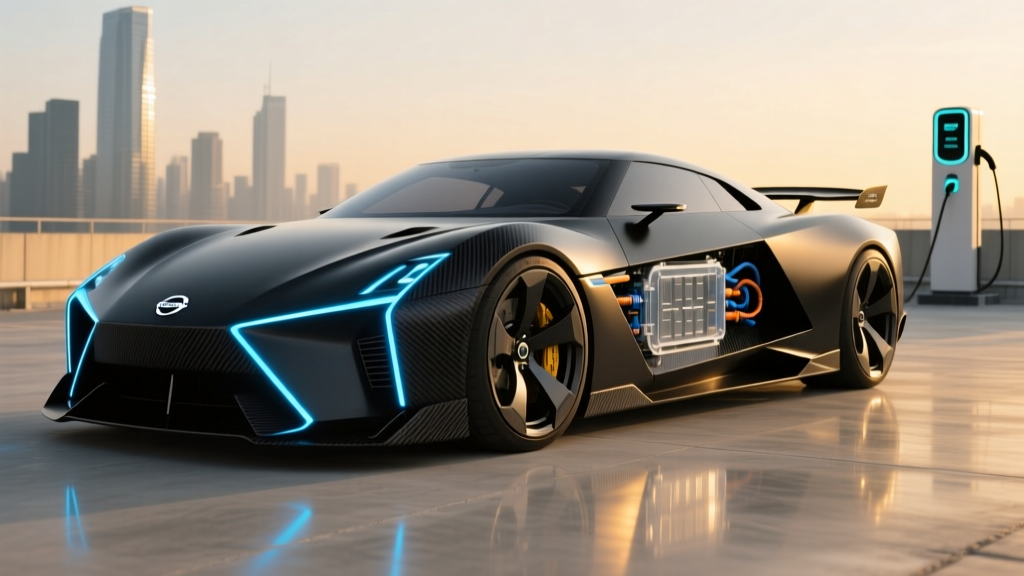
As of early 2026, Nissan has not yet released a production electric GT-R for sale. The current R35 GT-R (gasoline-powered, last updated for the 2024 model year) remains on sale while Nissan develops its next-generation electric sports car. Nissan has confirmed an all-electric GT-R successor is in development, previewed by the Hyper Force concept unveiled at the 2023 Japan Mobility Show. That concept teased a solid-state battery, approximately 1,341 horsepower (1,000 kW), and a target range of around 370 miles (600 km) on a yet-to-be-confirmed cycle. Production timing, final specs, pricing, and U.S. availability remain unannounced. Everything below reflects Nissan's published concept data, industry analysis, and reasonable projections — not confirmed production figures.
What We Know: Nissan's Electric GT-R Roadmap
Nissan CEO Makoto Uchida confirmed in 2023 that the next GT-R would be electric, calling it a "pure electric sports car." The Hyper Force concept served as the design and technology blueprint. Key confirmed or strongly signaled details include:
- Powertrain: Dual-motor all-wheel drive with torque vectoring, targeting 1,000 kW (approximately 1,341 hp)
- Battery: Solid-state battery pack — Nissan has invested heavily in this technology through its partnership with NASA and internal R&D, targeting commercialization by 2028
- Target range: ~600 km (~373 miles) — test cycle not specified (likely JC08 or WLTP; EPA equivalent would be lower)
- Weight target: Nissan has emphasized keeping mass competitive, though a solid-state pack large enough for 370+ miles will still be heavy — expect 4,800–5,200 lbs based on comparable EVs
- Platform: Likely a dedicated EV sports architecture, not a modified Ariana or LEAF platform
- Aerodynamics: Active aero elements previewed in the concept, including a deployable rear wing and underbody airflow management
Nissan's solid-state battery timeline is the critical variable. The company initially targeted 2024 for pilot production, then pushed to 2028 for mass-market vehicles. A low-volume, high-performance application like a GT-R successor could arrive earlier in limited form, but a 2027–2029 production window is more realistic than 2026.
Estimated Specs: Nissan GT-R Electric vs. Current Gas GT-R
Until Nissan publishes official production specs, here is a comparison using the Hyper Force concept data against the final-generation R35 GT-R NISMO (2024 model year):
| Specification | 2024 Nissan GT-R NISMO (Gas) | Nissan GT-R Electric (Estimated/Concept) |
|---|---|---|
| Powertrain | 3.8L twin-turbo V6, 6-speed DCT | Dual-motor AWD, single-speed reduction |
| Horsepower | 600 hp | ~1,341 hp (1,000 kW) target |
| Torque | 481 lb-ft | Estimated 1,100+ lb-ft (instant) |
| 0–60 mph | ~2.5 seconds | Estimated sub-2.0 seconds |
| Top Speed | 205 mph | Unknown (likely electronically limited) |
| Fuel/Energy Capacity | 18.5-gallon tank | Estimated 100–130 kWh solid-state pack |
| Range (EPA est.) | ~280 miles (15/22 mpg) | ~250–300 miles (EPA est. projection) |
| Curb Weight | 3,902 lbs | Estimated 4,800–5,200 lbs |
| Drivetrain | AWD (ATTESA E-TS) | AWD (dual-motor torque vectoring) |
| Base MSRP | $225,090 (NISMO) | Estimated $180,000–$250,000+ |
Range reality check: The concept's 600 km figure likely uses the JC08 or WLTP cycle, which tends to overstate range versus the U.S. EPA test. Applying the typical 20–30% EPA discount seen on performance EVs, expect a real-world EPA rating closer to 250–300 miles. Highway driving at 75+ mph and cold-weather operation could reduce that to 200–230 miles — a significant consideration for a grand-touring vehicle.
Solid-State Batteries: The Make-or-Break Technology
The electric GT-R's viability hinges on solid-state battery (SSB) technology. Here's why it matters and where the technology stands:
| Claim | Reality |
|---|---|
| "Solid-state batteries double energy density" | Current prototypes show 30–50% improvement over NMC lithium-ion — meaningful but not revolutionary in isolation |
| "They charge in 10 minutes" | Lab results show 10–15 min to 80% SoC, but sustained high-C-rate charging degrades solid electrolytes — real-world curves will taper |
| "They eliminate fire risk" | Solid electrolytes are less flammable than liquid, but lithium-metal anodes introduce dendrite risk — not zero-risk |
| "They'll be cheap by 2028" | Manufacturing scale-up is the bottleneck; initial SSB costs will be 2–3x current NMC per kWh, limiting SSB to premium vehicles first |
For the GT-R, solid-state batteries offer two critical advantages: higher energy density (more range in a lighter, more compact pack — essential for a sports car) and faster charge acceptance (potentially sustaining 300+ kW DC fast charging without aggressive taper). If Nissan delivers a 120 kWh SSB pack at roughly 900 kg, the weight penalty versus the gas GT-R's 3,902-lb curb weight becomes manageable.
However, Nissan's own timeline has slipped multiple times. Toyota, the SSB leader, has pushed its mass-production target to 2027–2028. Buyers should not plan a purchase around SSB availability until Nissan confirms a production date with a firm order book.
Ownership Cost Projection: Electric GT-R vs. Gas GT-R
Even without confirmed pricing, we can model 5-year ownership costs using the gas GT-R NISMO as a baseline and reasonable EV projections:
| Cost Category (5-Year) | 2024 GT-R NISMO (Gas) | Electric GT-R (Projected) |
|---|---|---|
| Purchase Price (est.) | $225,090 | $200,000 (mid-estimate) |
| Fuel/Energy (75,000 mi) | $18,750 (15 mpg avg, $3.75/gal) | $4,500 (3 mi/kWh avg, $0.18/kWh) |
| Maintenance | $8,500 (oil, brakes, tires, DCT fluid) | $3,200 (tires, cabin filter, brake fluid) |
| Insurance (est. annual × 5) | $32,500 ($6,500/yr) | $35,000 ($7,000/yr — EV surcharge) |
| Federal Tax Credit (§30D) | $0 | $0 (MSRP exceeds $80,000 cap for sedans/sports cars) |
| Depreciation (est. 5-yr) | $90,000 (40%) | $100,000 (50% — EV sports car uncertainty) |
| Total 5-Year Cost | $374,840 | $342,700 |
Key takeaways:
- The electric GT-R saves roughly $14,250 in fuel and $5,300 in maintenance over 5 years — meaningful but modest against a $200K+ purchase price
- Insurance will likely be higher for the EV variant due to repair-cost uncertainty, battery replacement risk, and the general EV insurance premium (typically 15–25% above equivalent gas cars, per III.org data)
- The §30D federal tax credit has an $80,000 MSRP cap for non-SUV/non-truck vehicles (per IRS.gov). A GT-R electric at $180K–$250K will not qualify
- Depreciation is the wild card — first-generation EV sports cars carry technology-obsolescence risk that established nameplates like the GT-R NISMO do not
Real-World Ownership Considerations
Before committing to an electric hypercar (or waiting for one), prospective buyers should evaluate these practical factors:
Home Charging Is Non-Negotiable at This Price Point
A vehicle costing $200K+ demands a dedicated Level 2 home charging setup. Budget $1,200–$3,500 for a 48-amp Level 2 charger (like the ChargePoint Home Flex or Tesla Wall Connector) plus professional electrical installation. If your home has a 200-amp panel with capacity, installation runs $800–$1,500. A panel upgrade to 200A or 400A adds $2,000–$5,000. Public DC fast charging alone is impractical for daily ownership of any EV, let alone a sports car you'll want ready for spontaneous drives.
DC Fast Charging: What to Expect
If the solid-state battery delivers on its promise, the electric GT-R could accept 300–400 kW peak DC charging, potentially reaching 10–80% in 12–18 minutes. However, the U.S. charging infrastructure in 2026 has limited 350+ kW stations. Electrify America and Tesla Supercharger V4 stalls max out at 350 kW, but sustained availability at that rate depends on station load, ambient temperature, and battery preconditioning. On a road trip, plan for 20–25 minute stops at best — not the 5-minute gas fill-up of the R35.
Cold-Weather Performance
Solid-state batteries theoretically perform better in cold temperatures than liquid-electrolyte NMC cells, but real-world data at scale doesn't yet exist. Expect 15–25% range loss in sub-freezing conditions, consistent with current EV behavior. A GT-R owner in Minnesota will see notably different range than one in Southern California.
The Sound and Feel Question
The R35 GT-R's VR38DETT V6 is iconic partly for its exhaust note and mechanical character. An electric GT-R will be silent at low speeds and produce only wind/tire noise and synthetic motor sound at high speeds. Nissan has experimented with simulated gear shifts and sound profiles (as seen in the Ariya and the concept's "e-4ORCE" haptic feedback), but no EV has yet replicated the emotional engagement of a turbocharged six. This is a subjective but real ownership factor for GT-R buyers.
Decision Framework: Should You Wait or Buy Now?
Choose the Current Gas GT-R (R35) If:
- You want a GT-R now — the R35 is a proven, final-edition collectible with known depreciation curves
- You value mechanical engagement: turbo spool, DCT shifts, exhaust note
- You track the car — the R35 has a decade of aftermarket support and known track durability
- You live in an area with limited DC fast-charging infrastructure
- You want predictable long-term maintenance from a known powertrain
Wait for the Electric GT-R If:
- You prioritize straight-line performance above all — sub-2.0-second 0–60 will eclipse any gas GT-R ever built
- You have reliable Level 2 home charging and access to 150+ kW DC fast chargers for road trips
- You're interested in solid-state battery technology as a first-mover investment (with depreciation risk)
- Daily-driver usability matters — EVs are smoother, quieter, and cheaper to commute in
- You can tolerate a 2027–2029 timeline and potential first-model-year issues
Consider an Alternative Electric Sports Car If:
- The Porsche Taycan Turbo GT (1,019 hp, 280 mi EPA range, $230,000) is available now with proven charging and track performance
- The Lotus Eletre R or upcoming Lotus Evija (1,972 hp, limited production) fills the electric exotic niche today
- The Tesla Model S Plaid (1,020 hp, 396 mi EPA, $89,990) delivers hypercar acceleration at a fraction of the cost
Frequently Asked Questions
Is the Nissan GT-R electric officially confirmed for production?
Nissan has confirmed an electric GT-R successor is in development, and the Hyper Force concept previews its direction. However, no production date, final specifications, pricing, or U.S. market availability has been officially announced as of early 2026. Nissan's CEO has publicly committed to the electric GT-R, making it highly likely — but not yet orderable.
Will the electric GT-R use solid-state batteries?
Nissan has strongly indicated the electric GT-R will use solid-state battery technology, which the company is developing in-house. However, Nissan's SSB mass-production timeline has shifted to 2028. The GT-R could be a low-volume halo application that launches alongside or slightly ahead of mainstream SSB vehicles, but this is not confirmed.
How much will the electric Nissan GT-R cost?
No official pricing exists. Given the current GT-R NISMO's $225,090 MSRP, the cost of solid-state battery technology, and the 1,000 kW powertrain target, a reasonable estimate falls between $180,000 and $250,000. It will not qualify for the §30D federal EV tax credit due to the $80,000 MSRP cap for non-SUV/truck vehicles.
Will the electric GT-R be faster than the gas GT-R?
In straight-line acceleration, almost certainly yes. The concept targets 1,341 hp versus the gas NISMO's 600 hp, and electric motors deliver instant torque. A sub-2.0-second 0–60 mph time is plausible. On a road course, the comparison is less clear — the EV will be significantly heavier (estimated 4,800–5,200 lbs vs. 3,902 lbs), and sustained high-speed lap performance depends on battery thermal management, which solid-state technology may or may not solve.
What's the best electric sports car I can buy right now instead?
The Porsche Taycan Turbo GT is the most accomplished electric sports car available in 2026, with 1,019 hp, a Nürburgring record, 280 miles of EPA range, and 270 kW peak DC charging (10–80% in ~18 minutes). The Tesla Model S Plaid offers 1,020 hp and 396 miles of range at $89,990 — dramatically cheaper, though less focused as a sports car. The Lucid Air Sapphire (1,234 hp, 427 mi EPA, $249,000) is the closest analog to a luxury electric hyper-sedan.
Will the electric GT-R be a good daily driver?
Electric powertrains inherently make better daily drivers than turbocharged performance cars — no turbo lag, no transmission clunk in traffic, silent operation, lower running costs, and no warm-up requirements. If Nissan tunes the electric GT-R with a comfortable ride mode and adequate range (250+ miles EPA), it could be the most livable GT-R ever made. The question is whether the target buyer wants a livable GT-R.