When Were Electric Cars Invented?
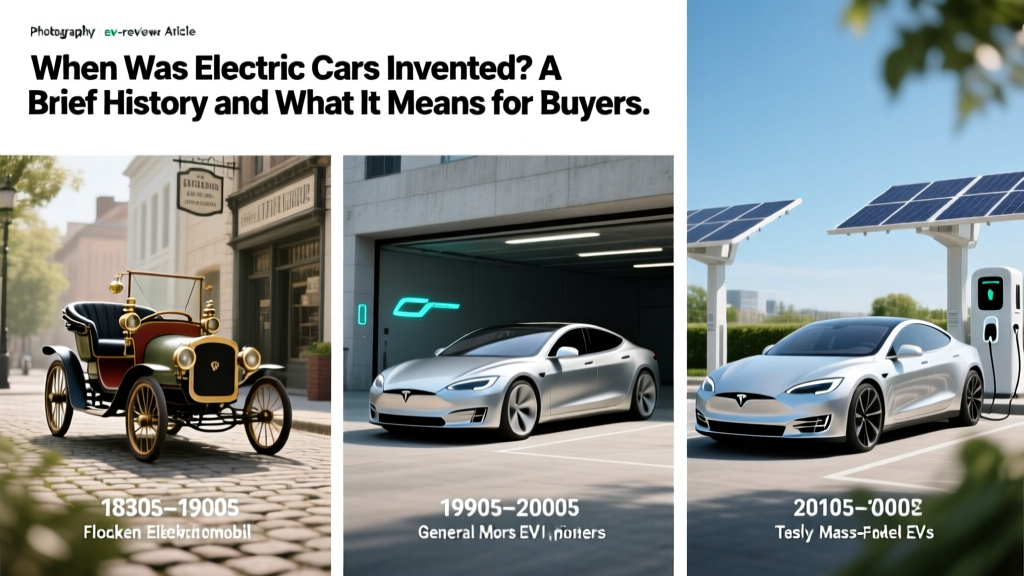
The first practical electric car was invented in 1884 by British inventor Thomas Parker, though crude electric carriages date back to the 1830s. By 1900, electric vehicles accounted for roughly one-third of all cars on American roads. After nearly a century of gasoline dominance, the modern EV era restarted in earnest with the 1996 GM EV1, followed by the 2008 Tesla Roadster, and finally mass-market adoption beginning with the Nissan Leaf and Chevrolet Bolt in the 2010s. In 2026, EVs represent approximately 25% of new car sales in the United States.
A Timeline of Electric Vehicle Milestones
Understanding when electric cars were invented helps contextualize where today's technology actually stands. EVs aren't new — they predate the internal combustion engine's dominance. Here's a timeline of the moments that matter for anyone considering an EV purchase today:
- 1832–1839: Robert Anderson builds a crude electric carriage in Scotland — non-rechargeable, essentially a proof of concept.
- 1884: Thomas Parker builds the first practical, rechargeable electric car in London using high-capacity batteries.
- 1897: Electric taxis begin operating in New York City. The Electric Carriage and Wagon Company runs a fleet of 60+ cabs.
- 1900: EVs make up ~33% of U.S. cars, with steam at ~40% and gasoline at ~22%.
- 1908: The Ford Model T launches at $850, and with the electric starter (1912) and cheap gasoline, gasoline cars take over.
- 1996: GM launches the EV1 — the first mass-produced modern electric car. GM later reclaims and crushes most units.
- 2008: The Tesla Roadster ships with a 244-mile EPA range, proving lithium-ion EVs can compete on range.
- 2010: Nissan Leaf and Chevrolet Volt launch, bringing electrification to mainstream buyers.
- 2020s: Battery costs drop below $130/kWh; 800V architectures, 300+ mile ranges, and 250+ kW DC fast charging become standard.
- 2026: Over 20 EV models qualify for the federal §30D tax credit; average new EV EPA range exceeds 290 miles.
From 1884 to 2026: What History Teaches Today's Buyer
The reason electric cars lost to gasoline in the early 1900s wasn't that they were inferior machines — it was that energy infrastructure favored gasoline. Oil was cheap, gas stations proliferated, and battery technology stagnated for decades.
Today's EV buyer faces a parallel infrastructure question: Can you charge conveniently? The answer depends on your living situation, driving patterns, and local charging network. Here's how that breaks down with real numbers.
The Home Charging Advantage
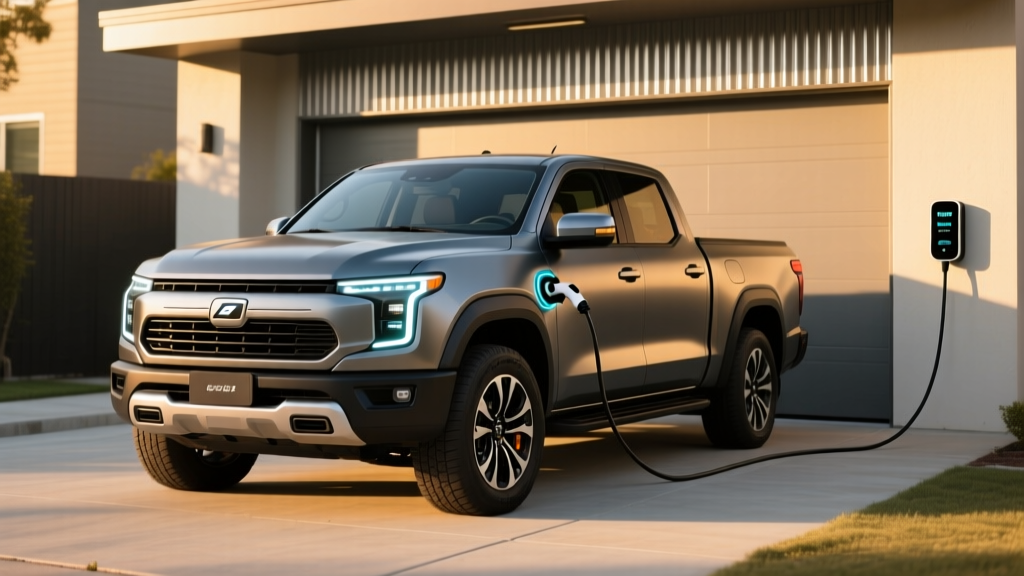
According to fueleconomy.gov, the average U.S. electricity rate is roughly $0.16/kWh as of early 2026. Charging a 77 kWh battery (like the Tesla Model Y Long Range) from 10–80% at home costs approximately $8.62, yielding roughly 240 real-world miles — that's about $0.036 per mile.
A comparable gas vehicle at 28 MPG combined and $3.30/gallon costs $0.118 per mile — more than three times the EV's fuel cost.
But this math only works if you have reliable home charging. If you're in an apartment without Level 2 access, your per-mile cost jumps significantly when relying on public DC fast charging at $0.35–$0.55/kWh.
EV vs Gas vs Hybrid: A Real Cost Comparison
History shows that EVs succeed or fail on total economics, not just sticker price. Here's how a typical 2026 compact SUV EV stacks up against its gas and hybrid equivalents over 5 years and 75,000 miles:
| Cost Category | Compact SUV EV (e.g., Hyundai Ioniq 5 SEL) |
Compact SUV Gas (e.g., Toyota RAV4 LE) |
Compact SUV Hybrid (e.g., Toyota RAV4 Hybrid) |
|---|---|---|---|
| Base MSRP (2026) | $43,175 | $30,425 | $33,425 |
| Federal Tax Credit (§30D) | Up to $7,500* | $0 | $0 |
| Effective Purchase Price | ~$35,675 | $30,425 | $33,425 |
| Fuel/Energy (75k mi) | $2,700 (home L2) | $8,839 (28 MPG, $3.30/gal) | $5,893 (40 MPG, $3.30/gal) |
| Maintenance (5 yr) | ~$1,800 | ~$3,500 | ~$3,200 |
| Insurance (5 yr avg) | ~$9,500 | ~$7,200 | ~$7,400 |
| 5-Year Total Cost | ~$49,675 | ~$49,964 | ~$49,918 |
*§30D credit eligibility requires meeting MSRP caps ($80,000 SUVs), buyer income limits ($150K single / $300K joint), and critical-mineral/battery-sourcing requirements. Rules change annually — verify at irs.gov or consult a tax professional. Point-of-sale transfer available at participating dealers.
The takeaway: EVs reach cost parity with gas vehicles around year 4–5 for most drivers who charge at home. Without home charging, that parity point extends to year 6–7 or may not arrive at all.
Common EV Misconceptions — Fact-Checked with Data
Many of the myths surrounding electric cars today echo the same skepticism that killed them in the 1910s. Here's what the numbers actually say in 2026:
| Myth | Fact (with data) |
|---|---|
| "EVs don't have enough range." | The 2026 median new EV has an EPA range of 290+ miles. Models like the Lucid Air Grand Touring achieve 516 miles EPA. Real-world highway range is typically 15–20% below EPA; cold weather (below 25°F) can reduce range an additional 20–30%. Plan for ~220 real-world highway miles from a 290-mile EPA vehicle in winter. |
| "Batteries need replacing every few years." | Modern NMC and LFP batteries are warrantied for 8 years/100,000 miles at ≥70% capacity retention. Data from Recurrent Auto shows average degradation of ~5–8% over the first 100,000 miles. Replacement costs $8,000–$18,000 out of warranty, but most batteries outlast the vehicle. |
| "Charging takes too long." | Modern 800V-architecture EVs (Hyundai Ioniq 5, Kia EV6, Porsche Taycan) charge at 250–350 kW peak, achieving 10–80% in 18–20 minutes on capable DC fast chargers. Level 2 home charging adds ~25–35 miles per hour overnight. |
| "EVs are worse in cold weather." | Range loss in cold is real (20–30%), but vehicles with heat pumps (standard on most 2026 models) mitigate cabin energy draw. Preconditioning the battery while plugged in preserves range and enables faster DC charging. |
| "The grid can't handle it." | The U.S. DOE estimates that even with 50 million EVs, total electricity demand would increase by ~10%. Most charging happens overnight during off-peak hours when grid capacity is underutilized. |
Real-World Ownership: What First-Time EV Buyers Must Know
History's lesson from 1900 is clear: an EV's practicality depends entirely on your infrastructure access. Before purchasing, honestly assess these four factors:
1. Home Charging Access
If you can install a Level 2 (240V) charger at home, EV ownership is dramatically easier. A typical Level 2 installation costs $800–$2,500 (equipment + electrician + permit) assuming your electrical panel has capacity. If you need a panel upgrade (100A to 200A), add $1,500–$3,500. Without home charging, you'll rely on public infrastructure — viable in some cities, frustrating in others.
2. Your Typical Drive Distance
The average American drives 37 miles per day (FHWA data). A 250-mile EPA range EV covers a week of commuting with margin. If your daily commute exceeds 80 miles round-trip, target a 300+ mile EPA vehicle or a PHEV as a bridge solution.
3. Road Trip Frequency
If you take 4+ road trips per year exceeding 250 miles one-way, examine the DC fast-charging network along your routes. Tesla Superchargers (now open to NACS-equipped non-Tesla EVs) offer the most reliable coverage. Electrify America and EVgo fill gaps but vary in uptime. Plan for one 20-minute charge stop per 200–230 highway miles.
4. Climate Considerations
If you live where winter temperatures routinely drop below 25°F, budget for 20–30% range loss. Choose an EV with a heat pump and battery preconditioning. A 300-mile EPA vehicle in Minnesota January may deliver only 210–240 real-world miles.
Decision Framework: Is an EV Right for You in 2026?
Choose a Battery EV (BEV) If:
- You have home Level 2 charging or confirmed workplace charging access.
- Your daily driving is under 80 miles, with occasional 300+ mile trips you're willing to plan around.
- You want the lowest per-mile fuel cost ($0.03–$0.05/mi at home) and minimal maintenance.
- You qualify for the §30D federal credit or applicable state incentives.
- You're buying a second vehicle or have a flexible schedule for road-trip charging stops.
Choose a Plug-in Hybrid (PHEV) If:
- You can charge at home but frequently drive 200+ miles without stopping.
- You want 25–45 miles of daily electric-only range for commuting but gas flexibility for road trips.
- You live in a rural area with sparse DC fast-charging infrastructure.
- You want to reduce fuel costs without range-planning anxiety.
Stick with a Hybrid (HEV) or Gas Vehicle If:
- You have no home or workplace charging access and your area lacks reliable public chargers.
- You regularly tow heavy loads (trailers, boats) over long distances — EV towing cuts range by 40–50%.
- Your budget is strictly under $30,000 and you need a new vehicle (EV options are limited at this price point in 2026, though the used EV market offers strong value).
The Full Circle: Why EV History Matters for Your Purchase
Electric cars were invented in the 1830s, perfected in the 1880s, dominated in 1900, disappeared by 1930, and have now returned with fundamentally different technology. The lithium-ion batteries of 2026 share almost nothing with the lead-acid cells of Thomas Parker's era — energy density has increased roughly 10x, costs have dropped from thousands of dollars per kWh to roughly $130/kWh at the pack level, and charging speeds have gone from "overnight" to 10–80% in under 20 minutes.
But the core lesson from 140+ years of EV history remains unchanged: an electric car is only as practical as its fueling infrastructure. In 1900, that meant proximity to electric trolley lines. In 2026, it means a 240V outlet in your garage and a DC fast charger within 30 miles of your home.
If those infrastructure boxes are checked, today's EVs deliver lower total cost of ownership, stronger acceleration, and dramatically simpler maintenance than anything the gasoline era produced. If they aren't, a PHEV or hybrid remains the smarter bridge — and there's no shame in that. The technology will keep improving, and the charging map will keep expanding. The smart move is the one that fits your life today, not the one that fits a marketing narrative.
Who invented the first electric car?
The first crude electric carriage is attributed to Scottish inventor Robert Anderson (circa 1832–1839), but the first practical electric car with rechargeable batteries was built by English inventor Thomas Parker in 1884.
Why did electric cars disappear in the early 1900s?
Three factors: the 1912 invention of the electric starter eliminated hand-cranking gas cars, Ford's Model T dropped to $300 by the 1920s (vs. $1,000+ for EVs), and cheap Texas oil plus expanding gas station infrastructure made gasoline more convenient. Battery technology stagnated for 70 years afterward.
When did electric cars come back?
The modern EV revival started with the GM EV1 in 1996, but the real turning point was the 2008 Tesla Roadster (244-mile range, lithium-ion battery). Mass adoption accelerated after 2010 with the Nissan Leaf and Chevrolet Volt, and hit mainstream scale from 2020 onward as battery costs fell below $140/kWh.
Are today's EV batteries the same as early electric cars?
No. Early EVs used lead-acid batteries with energy density around 30–40 Wh/kg. Modern lithium-ion NMC and LFP batteries achieve 250–300 Wh/kg at the cell level — roughly 7–8x the energy density — and support fast charging at rates the 1890s couldn't conceive. Solid-state batteries, expected in limited production vehicles by 2028–2030, promise another 2x improvement.
Is buying an EV in 2026 a good financial decision?
For most buyers with home charging access, yes. A 2026 EV priced around $40,000–$45,000 with the §30D credit (up to $7,500 point-of-sale) reaches total-cost-of-ownership parity with a gas vehicle within 4–5 years, driven by fuel savings ($0.03–$0.05/mi vs. $0.12–$0.15/mi) and lower maintenance costs. Without home charging, the payback period extends significantly. Always verify current credit eligibility at irs.gov.