Why Tesla Sales in China Matter for the 2026 Model 3
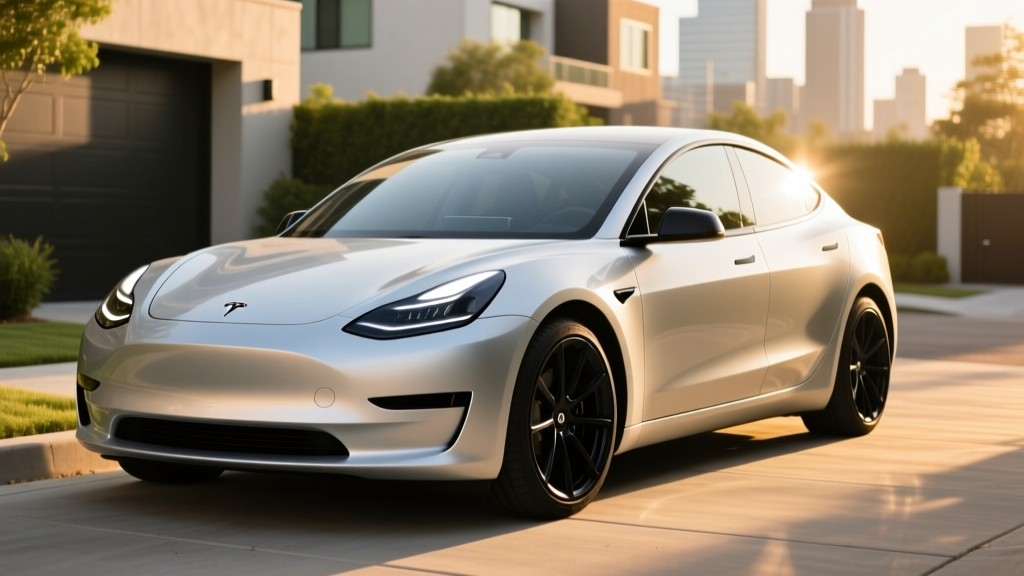
Tracking Tesla sales in China is more than an exercise in global market analysis — it directly shapes the Tesla Model 3 that lands in your driveway. Giga Shanghai is Tesla's highest-volume factory and the primary production hub for the refreshed Model 3 (codenamed "Highland" and its 2026 iterations). When Chinese-market demand shifts, Tesla adjusts pricing, battery sourcing, and feature rollouts globally. In early 2026, Tesla's China deliveries have faced intensifying pressure from BYD's Seal, NIO's ET5, and Xiaomi's SU7, pushing Tesla to keep US pricing aggressive and feature content high.
This review breaks down the 2026 Tesla Model 3 with the exact numbers buyers need: real-world range, charging curves, tax credit eligibility under current IRS §30D rules, and how it stacks up against a rapidly evolving midsize EV sedan segment.
| Spec | RWD (Base) | Long Range AWD | Performance AWD |
|---|---|---|---|
| EPA Range | 272 mi | 363 mi | 315 mi |
| Battery (usable) | ~57 kWh (LFP) | ~75 kWh (NMC) | ~75 kWh (NMC) |
| Peak DC Charge Rate | 170 kW | 250 kW | 250 kW |
| 10–80% DC Fast Charge | ~25 min | ~18 min | ~18 min |
| Level 2 Home Charging | 11.5 kW (~44 mi/hr) | 11.5 kW (~44 mi/hr) | 11.5 kW (~44 mi/hr) |
| 0–60 mph | 5.8 sec | 4.2 sec | 2.9 sec |
| Horsepower | 271 hp | 384 hp | 510 hp |
| Drivetrain | RWD | Dual-Motor AWD | Dual-Motor AWD |
| MPGe (combined) | 132 MPGe | 125 MPGe | 116 MPGe |
| Efficiency (kWh/100 mi) | 25 kWh | 27 kWh | 29 kWh |
| Base MSRP | $38,990 | $44,990 | $52,990 |
| Battery/Drive Unit Warranty | 8 yr / 100,000 mi | 8 yr / 120,000 mi | 8 yr / 120,000 mi |
Range and Efficiency: EPA Sticker vs. Real World
The 2026 Model 3 Long Range AWD carries an EPA-estimated 363 miles of range — among the highest of any sedan at its price point, per fueleconomy.gov. The base RWD model is rated at 272 miles, while the Performance trim delivers 315 miles.
EPA Sticker: 363 mi (Long Range AWD)
Highway (70–75 mph, moderate temps): Expect ~300–320 mi. Aerodynamic drag at sustained highway speeds cuts into the EPA figure by roughly 12–17%.
Cold Weather (below 32°F): Plan for 240–280 mi. LFP batteries in the RWD model are more susceptible to cold-weather range loss (up to 30%), while the NMC pack in the Long Range benefits from Tesla's heat pump and active thermal management, limiting losses to roughly 20–25%.
City/Commuter Driving: Real-world results often match or slightly exceed the EPA estimate thanks to regenerative braking recapturing energy in stop-and-go traffic.
The base RWD Model 3 uses a lithium iron phosphate (LFP) battery — CATL-sourced cells from Giga Shanghai. LFP chemistry sacrifices some energy density (hence the lower 272-mile range from a smaller ~57 kWh pack) but offers superior cycle life and thermal stability. Tesla recommends charging LFP packs to 100% regularly to maintain cell balancing, unlike NMC packs where an 80–90% daily charge limit is ideal for longevity. The Long Range and Performance trims use NMC (nickel manganese cobalt) chemistry for higher energy density.
Charging Speed: DC Fast Charging and Home Level 2
Charging speed is where the Model 3's 2026 refresh shows its maturity. The Long Range and Performance trims peak at 250 kW on DC fast chargers — the same V3 Supercharger rate Tesla has offered since 2019. It's no longer class-leading (the Hyundai Ioniq 6 peaks at 350 kW on 800V architecture), but Tesla's sustained charge curve remains one of the best in the industry.
| Charging Level | Power | Miles Added per Hour | Notes |
|---|---|---|---|
| Level 1 (120V household) | ~1.4 kW | ~5 mi/hr | Emergency/trickle only |
| Level 2 (240V, 48A) | 11.5 kW | ~44 mi/hr | Full overnight charge in 7–9 hours |
| DC Fast (V3 Supercharger) | Peak 250 kW | ~200 mi in 15 min | 10–80% in ~18 min (LR/Perf) |
| DC Fast (CCS adapter) | Up to 250 kW | Varies by station | Requires Tesla CCS adapter (included since 2024) |
Charge curve reality check: The 250 kW peak is not sustained across the full session. In testing, the Long Range Model 3 holds above 200 kW from roughly 10–30% State of Charge, then tapers progressively. From 80–100%, charging slows dramatically to protect the battery — expect the final 20% to take as long as the first 70%. Preconditioning the battery (automatic when you navigate to a Supercharger) is essential for achieving peak rates; without it, cold-soak can cut your peak charge rate by 40% or more.
At home, the Model 3's onboard charger accepts up to 11.5 kW on a 240V/48A circuit. This means a full charge from 10% to 100% takes roughly 7 hours for the Long Range — easily achievable overnight. Installation of a Tesla Wall Connector on a 60A dedicated circuit typically costs $800–$2,000 depending on panel proximity and local permitting, though a panel upgrade to 200A service can push the total to $3,000–$5,000 in older homes.
Performance and Driving Dynamics
The 2026 Model 3 Performance AWD hits 0–60 mph in 2.9 seconds with 510 horsepower from its dual-motor setup — supercar territory in a $53,000 sedan. The Long Range AWD manages a brisk 4.2 seconds with 384 hp, and even the base RWD at 5.8 seconds and 271 hp is quicker than most gas-powered compact sedans.
The Highland refresh (introduced for the 2024 model year and carried forward into 2026) substantially improved ride quality over the pre-2024 Model 3. New frequency-selective dampers, additional sound deadening, and rear-seat ventilation addressed the most common owner complaints. The steering remains quick and precise, though some drivers find it artificially weighted compared to traditional sport sedans.
Regenerative braking in the Model 3 is aggressive enough for true one-pedal driving in most conditions. However, Tesla removed the user-adjustable regen setting in recent software updates — it's on or off, with "on" being the default and recommended mode for maximum efficiency.
Interior, Cargo, and Technology
The 2026 Model 3's cabin is minimalist by design. A single 15.4-inch touchscreen handles infotainment, climate, and vehicle controls. The 2024+ refresh added a rear 8-inch touchscreen for rear passengers (climate, media, and entertainment), ventilated front seats, ambient lighting, and power-folding side mirrors.
Cargo space: 23.1 cubic feet total (19.8 cu ft trunk + 3.3 cu ft frunk). That's competitive with the BMW i4 (22.2 cu ft total) but less than the Hyundai Ioniq 6's combined storage. Rear legroom measures 35.3 inches — adequate for adults on shorter trips, though taller passengers will find it tighter than a Toyota Camry.
Standout tech:
- Tesla Autopilot (standard): SAE Level 2 driver assistance with adaptive cruise, lane centering, and automatic emergency braking. The driver must remain engaged at all times — this is not self-driving.
- Full Self-Driving (Supervised): Available as a $8,000 add-on or $99/month subscription. Adds automatic lane changes, traffic light/stop sign recognition, and Navigate on Autopilot. Still SAE Level 2 — hands-on-wheel supervision is legally and practically required.
- Over-the-air updates: Tesla's software pipeline regularly adds features post-purchase, from UI improvements to efficiency optimizations.
- Sentry Mode / Dashcam: Built-in camera recording with cloud storage options.
Notable drawbacks: No Apple CarPlay or Android Auto (Tesla's proprietary system only). Turn signals are on steering-wheel buttons rather than a traditional stalk (a 2024+ change that remains polarizing). No physical buttons for climate or volume — everything routes through the touchscreen, which can be distracting while driving.
Pricing, Tax Credits, and Total Cost
The 2026 Model 3 lineup starts at $38,990 for the RWD base model, rises to $44,990 for the Long Range AWD, and tops out at $52,990 for the Performance. These prices include destination but exclude the $1,200 FSD subscription or $8,000 outright purchase.
| Trim | Base MSRP | Federal Credit (§30D) | Effective Price* |
|---|---|---|---|
| RWD | $38,990 | Up to $7,500 | ~$31,490 |
| Long Range AWD | $44,990 | Up to $7,500 | ~$37,490 |
| Performance AWD | $52,990 | Up to $7,500 | ~$45,490 |
*Effective price assumes full §30D credit eligibility. Actual credit depends on battery sourcing, buyer income, and MSRP caps per IRS rules. Point-of-sale transfer available at participating dealers.
Tax credit eligibility is not automatic. Under current IRS §30D rules for 2026:
- MSRP cap: Sedans must be under $55,000 MSRP. The RWD and Long Range qualify; the Performance at $52,990 also qualifies, but adding FSD or certain packages can push the effective price above the cap.
- Buyer income cap: Modified adjusted gross income must not exceed $150,000 (single), $225,000 (head of household), or $300,000 (married filing jointly).
- Battery sourcing: The credit splits into two halves ($3,750 each) — one for critical minerals and one for battery component manufacturing. Tesla's LFP cells in the RWD model are CATL-sourced from China, which may disqualify the RWD from the critical-minerals half under 2026 Foreign Entity of Concern (FEOC) rules. The Long Range's NMC pack has a higher likelihood of qualifying for the full $7,500, but exact eligibility shifts as Tesla adjusts supply chains. Always verify on the IRS clean vehicle credit page before purchasing.
- Point-of-sale transfer: Since 2024, buyers can transfer the credit to the dealer at purchase, reducing the upfront price rather than waiting for a tax refund.
What Tesla Sales in China Signal About Competition
In 2025 and early 2026, Tesla's China sales volumes have fluctuated as domestic competitors like BYD, NIO, and newcomer Xiaomi have launched aggressively priced EVs. The BYD Seal, for example, undercuts the Model 3 in China with comparable range and a starting price roughly 20% lower. Xiaomi's SU7 sedan generated massive order volumes in 2024–2025, directly targeting the Model 3 buyer.
For US buyers, this competitive pressure is a net positive. Tesla has responded by keeping US Model 3 pricing flat year-over-year while adding features (rear touchscreen, ventilated seats, improved suspension) that were previously absent. Giga Shanghai's manufacturing efficiency — Tesla's lowest-cost-per-vehicle plant — gives the company margin flexibility that competitors building in higher-cost regions cannot match.
However, the China competitive dynamic also means Tesla's LFP battery supply chain is deeply intertwined with Chinese manufacturers. This creates potential vulnerability under evolving US trade and sourcing rules, which could affect future tax credit eligibility for the RWD model.
How the Model 3 Compares to Key Rivals
| Spec | Tesla Model 3 LR | Hyundai Ioniq 6 SEL | BMW i4 eDrive40 |
|---|---|---|---|
| EPA Range | 363 mi | 361 mi | 307 mi |
| Battery | ~75 kWh (NMC) | 77.4 kWh (NMC) | 83.9 kWh (NMC) |
| Peak DC Charge | 250 kW | 350 kW (800V) | 205 kW |
| 10–80% Time | ~18 min | ~18 min | ~31 min |
| 0–60 mph | 4.2 sec | 5.1 sec | 5.5 sec |
| Base MSRP | $44,990 | $42,600 | $57,900 |
| Supercharger Network | Native access | NACS adapter required | NACS adapter required |
The Ioniq 6's 800V architecture gives it faster peak charging on compatible stations, but Tesla's Supercharger network reliability remains a significant advantage — particularly for road-trip-heavy owners. The BMW i4 offers a more traditional luxury interior and superior rear-seat comfort, but at a $13,000+ premium with less range.
- Choose the RWD ($38,990) if you commute under 60 miles daily, charge at home, and want the lowest entry price with an LFP battery built for long cycle life.
- Choose the Long Range AWD ($44,990) if you road-trip regularly, live in a cold climate, or need all-wheel drive. The 363-mile EPA range and NMC chemistry offer the best versatility.
- Choose the Performance ($52,990) if you prioritize acceleration (2.9-sec 0–60) and track-day capability, but understand that the MSRP pushes close to the §30D tax credit cap for sedans.
- Look elsewhere if you need Apple CarPlay, prefer physical buttons, want a traditional luxury interior, or require more than 23 cu ft of cargo space.
- Class-leading 363-mi EPA range (Long Range)
- Native Supercharger network access — still the most reliable public charging ecosystem
- Best-in-class efficiency (25–29 kWh/100 mi)
- Strong over-the-air update pipeline
- Competitive pricing given feature content
- LFP battery option with excellent cycle life
- No Apple CarPlay / Android Auto
- Steering-wheel touch buttons for turn signals are divisive
- Rear seat legroom tighter than midsize rivals
- FSD (Supervised) is expensive and still Level 2 only
- RWD tax credit eligibility uncertain due to LFP/CATL sourcing
- 250 kW peak charge rate trails 800V competitors
Frequently Asked Questions
What is the real-world range of the 2026 Tesla Model 3?
The Long Range AWD is EPA-rated at 363 miles. In real-world highway driving at 70–75 mph, expect 300–320 miles. In freezing temperatures, plan for 240–280 miles. The RWD model's LFP battery is more affected by cold, with potential 30% range loss below freezing.
How fast does the Model 3 charge at home and on the road?
On DC fast chargers, the Long Range and Performance peak at 250 kW, achieving 10–80% in approximately 18 minutes with proper battery preconditioning. At home on a 240V/48A Level 2 charger, the Model 3 adds about 44 miles of range per hour (11.5 kW), fully charging overnight in 7–9 hours.
Does the 2026 Model 3 qualify for the $7,500 federal EV tax credit?
Potentially, but it depends on the trim and your tax situation. All trims fall under the $55,000 MSRP cap for sedans. However, the RWD's CATL-sourced LFP battery may not meet critical-minerals requirements under 2026 FEOC rules, potentially limiting the credit to $3,750 instead of $7,500. Buyer income caps also apply. Verify current eligibility at IRS.gov before purchasing.
Is the Tesla Model 3 worth buying over the Hyundai Ioniq 6 or BMW i4?
The Model 3 Long Range wins on efficiency, Supercharger network access, and value. The Ioniq 6 offers faster 800V charging and Apple CarPlay but lacks native Supercharger access. The BMW i4 delivers superior interior luxury and ride comfort but at a significant price premium with less range. If public charging reliability is a priority, Tesla's network advantage remains substantial.
Is Tesla Autopilot or FSD actually self-driving?
No. Both Autopilot and Full Self-Driving (Supervised) are SAE Level 2 driver-assistance systems. The driver must remain attentive, keep hands on the wheel, and be prepared to take over at any time. Only Level 4 services like Waymo operate without a driver. Tesla's naming conventions are misleading — treat FSD as an advanced cruise control system, not a chauffeur.
How long will the Model 3 battery last?
Tesla warranties the battery for 8 years / 100,000 miles (RWD) or 8 years / 120,000 miles (Long Range/Performance), guaranteeing at least 70% capacity retention. Real-world degradation data from Tesla's fleet suggests NMC packs retain roughly 85–90% capacity at 100,000 miles. LFP packs in the RWD model generally show slower degradation but have a lower starting energy density.