If you've been researching a Tesla purchase or browsing used listings, you've likely encountered the term "HW3" — but deciphering what it actually means for your daily driving experience isn't straightforward. Hardware 3 (HW3) is Tesla's third-generation Autopilot computer, the processing brain behind every Autopilot and Full Self-Driving (Supervised) feature the vehicle offers. With Tesla now shipping HW4 on most 2025–2026 production vehicles, understanding HW3's capabilities, limitations, and future support is critical for buyers evaluating both new and pre-owned Teslas.
This guide breaks down exactly what HW3 is, how it performs in real-world driving, which current and recent Tesla models carry it, and whether it remains a smart buy in 2026 against the newer HW4 platform.
What Is HW3? The Technical Breakdown
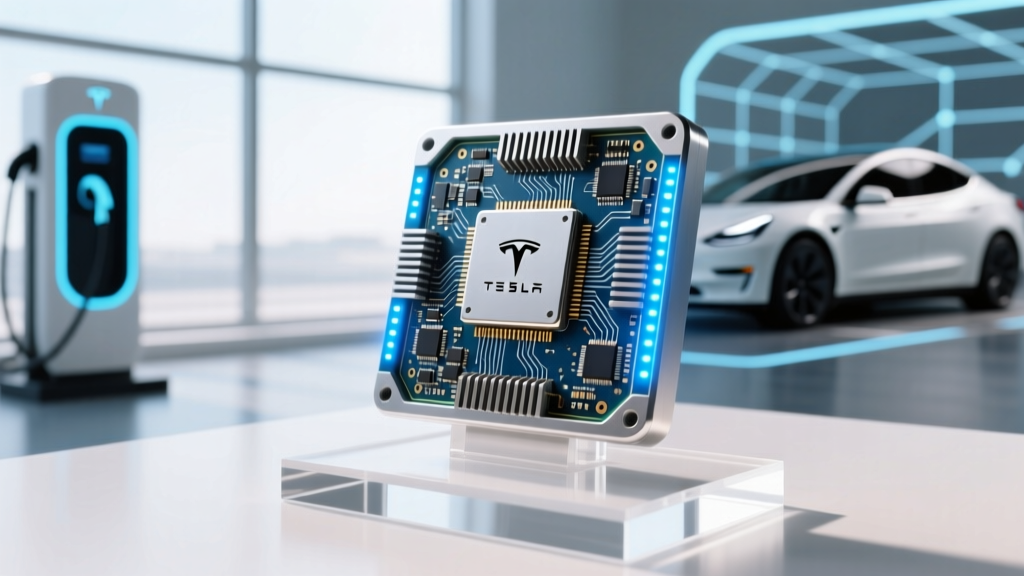
HW3, officially called "Full Self-Driving Computer" by Tesla, launched in April 2019 as a retrofit-capable upgrade over the older HW2.5 platform. It replaced Nvidia's Drive PX2 chip with Tesla's own custom-designed dual neural network processors — a significant architectural shift that gave Tesla full control over silicon optimization for its vision-based Autopilot stack.
HW3 Specifications at a Glance
| Specification | HW3 Details |
|---|---|
| Processor | Dual Tesla-custom FSD chips (redundant) |
| Processing Power | ~144 TOPS (trillions of operations per second) |
| Camera Support | 8 surround cameras (up to 1.2 MP resolution) |
| Neural Network Acceleration | Dedicated NPU per chip |
| Redundancy | Dual independent compute paths |
| Introduced | April 2019 |
| Phased Out (New Production) | ~March 2023 (replaced by HW4) |
The dual-chip architecture was a deliberate safety choice: if one processor fails, the second can maintain basic Autopilot functionality. HW3 processes input from Tesla's eight-camera surround vision suite, replacing the radar-and-ultrasonic approach used in earlier hardware generations. By 2022, Tesla had fully transitioned to its "Tesla Vision" (camera-only) approach across all HW3-equipped vehicles.
Which Tesla Models Have HW3 in 2026?
As of 2026, no new-production Tesla vehicles ship with HW3. Tesla began equipping Model S, Model X, Model 3, and Model Y with HW4 (also called AI4) starting in early-to-mid 2023. However, HW3 remains highly relevant because:
- Used/CPO market: Hundreds of thousands of 2019–2023 Teslas on the road still run HW3.
- No retrofit path: Unlike the HW2.5-to-HW3 upgrade Tesla offered (and later discontinued), Tesla has not announced a HW3-to-HW4 retrofit program. What you buy is what you keep.
- Software updates continue: Tesla has continued pushing FSD (Supervised) updates to HW3 vehicles through 2025 and into 2026, though feature parity with HW4 is not guaranteed long-term.
HW3 vs. HW4: Key Hardware Differences
| Feature | HW3 | HW4 (AI4) |
|---|---|---|
| Processing Power | ~144 TOPS | ~300–500 TOPS (estimated) |
| Camera Resolution | 1.2 MP | 5 MP |
| Camera Count | 8 | 7–8 (revised placement) |
| Radar | None (Tesla Vision) | None (Tesla Vision); HD radar on some builds |
| Inference Speed | Baseline | ~2–3x faster |
| Production Era | 2019–early 2023 | 2023–present |
The practical takeaway: HW4's higher-resolution cameras and faster inference allow the FSD neural network to detect smaller objects at greater distances and react more quickly. In real-world FSD (Supervised) driving, HW4 vehicles tend to demonstrate smoother lane changes, earlier obstacle detection, and fewer phantom-braking events — though HW3 remains fully capable of running the current FSD stack.
Real-World Autopilot and FSD Performance on HW3
Hardware alone doesn't define the driving experience — Tesla's continuously updated neural network software is the larger variable. That said, HW3 imposes some practical ceilings.
What HW3 Handles Well
- Highway Autopilot: Lane centering, adaptive cruise control, and automatic lane changes on divided highways remain confident and reliable on HW3.
- FSD (Supervised) city streets: As of the v13.x and v14.x branches, HW3 runs Tesla's end-to-end neural network for traffic light recognition, stop sign compliance, unprotected left turns, and roundabout navigation.
- Smart Summon: The parking-lot navigation feature works on HW3, though with occasional hesitancy in complex multi-lane lots.
Where HW3 Shows Its Limits
- Phantom braking: HW3 vehicles exhibit slightly more frequent phantom-braking events (sudden deceleration with no visible obstacle) compared to HW4, particularly in shadow-heavy or high-contrast lighting conditions.
- Low-light and adverse weather: The 1.2 MP cameras struggle more than HW4's 5 MP sensors in heavy rain, fog, or poorly lit nighttime roads.
- Complex urban scenarios: Construction zones with shifted lanes, temporary signage, or unusual road geometries challenge HW3 more often, requiring earlier driver takeover.
- Future feature risk: Tesla may eventually gate newer FSD capabilities behind HW4's compute headroom. There is no guarantee of indefinite feature parity.
Tesla Models with HW3: Range, Charging, and Pricing Context
Because HW3 spans multiple model years and vehicles, the table below reflects representative specs for the most common HW3-equipped vehicles you'll encounter on the used and CPO market in 2026. Specs reflect the model year most likely to carry HW3 (2021–2022 for Model 3/Y; 2021–2022 for Model S/X post-refresh).
| Spec | Model 3 Long Range (2022, HW3) | Model Y Long Range (2022, HW3) | Model S LR (2022, HW3) | Model X LR (2022, HW3) |
|---|---|---|---|---|
| EPA Range | 358 mi | 330 mi | 405 mi | 348 mi |
| Battery (usable) | ~75 kWh (NMC) | ~75 kWh (NMC) | ~95 kWh (NMC) | ~95 kWh (NMC) |
| Peak DC Fast Charge | 250 kW | 250 kW | 250 kW | 250 kW |
| 10–80% DCFC Time | ~30 min | ~30 min | ~35 min | ~37 min |
| Level 2 Home Charge | 11.5 kW (~44 mi/hr) | 11.5 kW (~44 mi/hr) | 11.5 kW (~44 mi/hr) | 11.5 kW (~44 mi/hr) |
| 0–60 mph | 4.2 sec | 4.8 sec | 3.1 sec | 3.8 sec |
| Horsepower | 346 hp | 384 hp | 670 hp | 670 hp |
| Drivetrain | Dual-Motor AWD | Dual-Motor AWD | Dual-Motor AWD | Dual-Motor AWD |
| EPA Efficiency | 132 MPGe | 122 MPGe | 120 MPGe | 102 MPGe |
| Cargo (rear seats up) | 23 cu ft | 30 cu ft | 28 cu ft | 42 cu ft |
| Battery Warranty | 8 yr / 120,000 mi | 8 yr / 120,000 mi | 8 yr / 150,000 mi | 8 yr / 150,000 mi |
Charging in Practice: HW3-Era Teslas
All HW3-era Teslas use the NACS (North American Charging Standard) connector natively — Tesla's proprietary plug, which has since been adopted by Ford, GM, Rivian, Hyundai, and most major automakers as the industry standard. This gives HW3 Teslas seamless access to the entire Supercharger network, which remains the most reliable DC fast-charging ecosystem in North America.
| Charging Level | Power / Rate | Speed (Approx.) |
|---|---|---|
| Level 1 (120V household) | ~1.4 kW | ~3–5 miles per hour |
| Level 2 (240V home Wall Connector) | 11.5 kW | ~44 miles per hour |
| DC Fast Charge (Supercharger V3) | Peak 250 kW | 10–80% in ~30 min (Model 3/Y) |
| DC Fast Charge (Supercharger V2) | Peak 150 kW | 10–80% in ~40–45 min |
Charging curve reality: The 250 kW peak only holds between roughly 10–30% State of Charge. Above 50%, the rate tapers significantly — often dropping below 100 kW past 60% SoC. Charging from 80–100% at a DC fast charger is painfully slow; plan to unplug at 80% on road trips unless you need the full range to reach your next stop.
Pricing, Tax Credits, and Used Market Value
Because new Teslas no longer ship with HW3, pricing here focuses on the used and Certified Pre-Owned (CPO) market as of early 2026.
| Model (2021–2022 HW3 era) | Used Market Range (2026) | Federal Used EV Credit (§25E) |
|---|---|---|
| Model 3 Long Range | $22,000–$30,000 | Up to $4,000 (if eligible) |
| Model Y Long Range | $27,000–$36,000 | Up to $4,000 (if eligible) |
| Model S Long Range | $45,000–$60,000 | Up to $4,000 (if eligible) |
| Model X Long Range | $48,000–$65,000 | Up to $4,000 (if eligible) |
Federal Tax Credit Rules for Used HW3 Teslas
New Tesla purchases in 2026 qualify for the §30D Clean Vehicle Credit (up to $7,500), but since new Teslas now ship with HW4, that credit applies to HW4 vehicles. For used HW3 Teslas, the relevant incentive is the §25E Previously-Owned Clean Vehicle Credit:
- Credit amount: 30% of the sale price, up to a maximum of $4,000.
- Vehicle price cap: The used vehicle must sell for $25,000 or less to qualify.
- Buyer income caps: AGI must not exceed $75,000 (single), $112,500 (head of household), or $150,000 (joint).
- Dealer requirement: Must be purchased from a licensed dealer (private-party sales do not qualify).
- Vehicle age: Must be at least 2 model years old.
- One-time use: Each buyer can claim this credit once every 3 years.
Verify current eligibility on IRS.gov's §25E page before purchasing, as rules and income thresholds may adjust. Consult a tax professional for your specific situation.
Pros and Cons of Buying an HW3 Tesla in 2026
✅ Pros
- Significantly lower used pricing vs. new HW4 equivalents
- Full access to Tesla Supercharger network (NACS native)
- Still receives FSD (Supervised) software updates as of 2026
- Proven battery longevity — many HW3-era vehicles show minimal degradation at 60k–100k miles
- Strong over-the-air update history keeps features current
- Eligible for up to $4,000 used EV tax credit at qualifying prices
❌ Cons
- No confirmed HW3-to-HW4 retrofit path — hardware is final
- Lower-resolution cameras vs. HW4 (1.2 MP vs. 5 MP)
- Higher phantom-braking frequency than HW4 vehicles
- Future FSD features may be HW4-exclusive
- Older interior on 2019–2020 Model 3/Y vs. current Highland/Juniper refreshes
- Battery degradation varies — pre-purchase health check is essential
Is an HW3 Tesla Worth Buying in 2026?
The answer depends entirely on your priorities and budget.
Choose an HW3 Tesla If:
- You want a Tesla at a significant discount and accept that you won't have the latest hardware.
- Your primary use case is highway commuting where basic Autopilot excels.
- You don't plan to purchase the FSD (Supervised) package, or you're comfortable with its current capabilities without expecting future parity with HW4.
- You value the Supercharger network and NACS compatibility above having the newest camera suite.
Choose an HW4 (New) Tesla If:
- You want the best available FSD performance and future-proofing.
- You frequently drive in adverse weather or complex urban environments where HW4's superior cameras and compute make a tangible difference.
- You plan to keep the vehicle 7+ years and want maximum software support longevity.
- You want the latest interior, efficiency, and range improvements from the Highland (Model 3) and Juniper (Model Y) refreshes.
Frequently Asked Questions
Can Tesla upgrade my HW3 to HW4?
As of 2026, Tesla has not offered an HW3-to-HW4 retrofit program, and no such upgrade has been announced. Tesla previously offered free HW2.5-to-HW3 upgrades for customers who purchased the FSD package before HW3 launched, but that program ended. If a retrofit becomes available, it would likely require significant hardware changes (new cameras, wiring harnesses, and compute unit), making it costly and logistically complex.
Does FSD (Supervised) work the same on HW3 and HW4?
Tesla continues to support FSD (Supervised) on HW3 with ongoing software updates, and the core functionality — city street navigation, traffic light/stop sign recognition, and highway driving — works on both platforms. However, HW4's faster processing and higher-resolution cameras deliver measurably better performance in edge cases: low light, complex intersections, and distant obstacle detection. Feature parity is not guaranteed indefinitely.
What's the real-world range of a used HW3 Model 3 or Model Y?
For a 2022 Model 3 Long Range (EPA 358 mi), expect approximately 300–320 miles in mixed real-world driving, 275–300 miles at sustained 75 mph highway speeds, and as low as 250 miles in freezing temperatures. Battery degradation on a 3-year-old vehicle with 40,000–60,000 miles is typically 5–10%, depending on charging habits. Always request a battery health reading before purchasing used.
Is HW3 safe for highway Autopilot use?
Yes — HW3 Autopilot (lane centering + adaptive cruise) is well-proven for highway use and has accumulated billions of miles of real-world data. However, it is a Level 2 driver-assist system, not autonomous driving. You must remain attentive and ready to intervene. Review IIHS safety ratings and NHTSA data for crash-test performance and incident context.
Does a used HW3 Tesla qualify for any federal tax credit?
Used HW3 Teslas may qualify for the §25E Previously-Owned Clean Vehicle Credit — up to $4,000 — if the sale price is $25,000 or less, you purchase from a licensed dealer, and your income falls within IRS caps ($75k single / $150k joint). The new-vehicle §30D credit does not apply to used purchases. Check IRS.gov for current rules and consult a tax professional.
Should I be worried about HW3 losing software support?
Tesla has a strong track record of supporting older hardware with OTA updates, and HW3 continues to receive FSD (Supervised) updates in 2026. However, as Tesla's neural networks grow more compute-intensive, there is a realistic possibility that future FSD versions could require HW4's processing power. There is no official timeline or commitment from Tesla regarding HW3 end-of-support. If long-term FSD access is a priority, HW4 is the safer bet.