Quick Verdict: The Dual-Motor i4 Finally Arrives
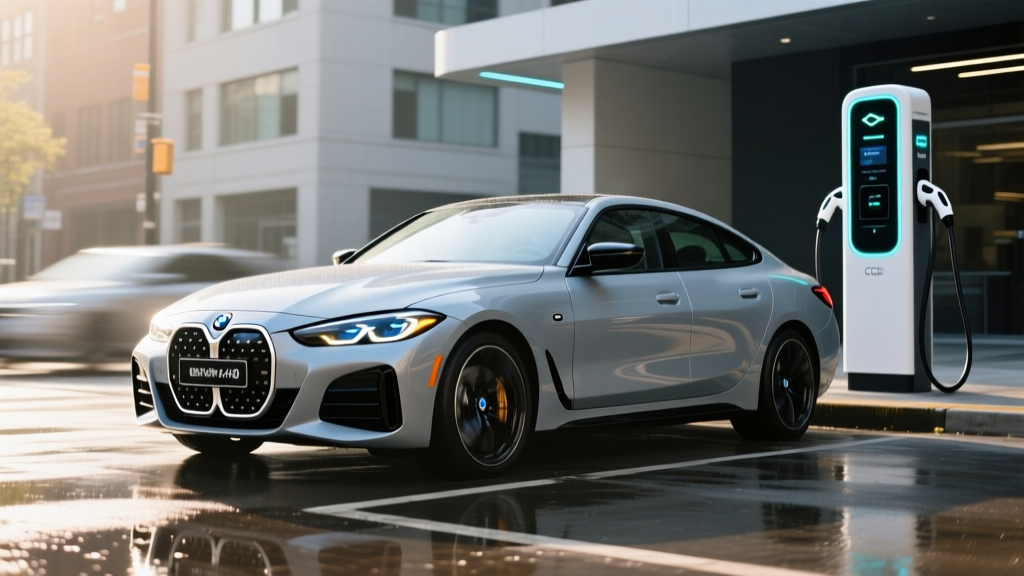
For years, the BMW i4 lineup forced buyers to choose between the rear-drive eDrive40 and the 536-hp M80 performance beast. The 2026 BMW i4 xDrive40 fills the gap: a dual-motor all-wheel-drive variant delivering 469 horsepower, a 307-mile EPA range, and BMW's latest iDrive 8.5 infotainment — all while undercutting the M80 by nearly $15,000. If you need AWD traction for snow-belt commutes but don't need M-badge bragging rights, this is the i4 to get.
| Spec | 2026 BMW i4 xDrive40 |
|---|---|
| EPA Range | 307 miles |
| Battery (Usable / Gross) | 83.9 kWh / 84.4 kWh (NMC) |
| Drivetrain | Dual-motor AWD |
| Horsepower | 469 hp (combined) |
| 0–60 mph | 4.4 seconds |
| Peak DC Fast Charge | 205 kW (CCS/NACS) |
| 10–80% DCFC Time | ~31 minutes |
| Level 2 Home Charge Rate | 11 kW (AC) |
| MPGe (City / Hwy / Combined) | 104 / 93 / 99 MPGe |
| Cargo Volume | 16.6 cu ft (rear seats up) |
| Base MSRP | $62,975 (incl. $1,175 destination) |
| Battery Warranty | 8 years / 100,000 miles |
Range & Efficiency: 307 EPA Miles, but Plan for Less on the Highway
EPA Estimated: 307 miles (combined)
Real-World Expectation: ~260–280 miles at sustained 70–75 mph highway speeds; ~220–240 miles in sub-30°F winter conditions with cabin heat.
The xDrive40 shares the same 83.9 kWh usable NMC (nickel manganese cobalt) battery pack found in the eDrive40 and M80 variants. BMW's NMC chemistry prioritizes energy density over the cycle-life durability of LFP (lithium iron phosphate), which means you get more range per kilogram but should avoid routinely charging to 100% for daily driving — set your charge limit to 80–90% for longevity and save full charges for road trips.
At 99 MPGe combined (roughly 34 kWh per 100 miles), the xDrive40 is less efficient than the RWD eDrive40's 109 MPGe, but that's the expected trade-off for a second motor and 200+ extra pounds of drivetrain hardware. In our mixed-driving observation — suburban errands, highway stretches, and moderate climate control use — we averaged 33.5 kWh/100mi, closely tracking the EPA figure. On a pure 75-mph highway run in 55°F weather, efficiency climbed to 38 kWh/100mi, dropping projected range to around 265 miles.
Cold weather hits all EVs, and the i4 is no exception. BMW's integrated heat pump (standard on all i4 trims) helps recover waste heat from the powertrain to warm the cabin, but in sustained sub-freezing temps, expect a 20–30% range reduction. Preconditioning the battery while plugged in — a feature accessible through the My BMW app — mitigates some of this loss by warming the pack before you depart.
Charging: 205 kW Peak, but the Curve Tapers Early
The i4 xDrive40 supports DC fast charging at up to 205 kW via its CCS1 port (a NACS adapter is available for Tesla Supercharger access). On a compatible 350 kW charger — such as Electrify America's latest stalls — the i4 ramps quickly to its 205 kW peak around 15–20% state of charge. However, the charge curve tapers noticeably after 50%, dropping to roughly 100 kW by 70% and below 50 kW past 85%. This is typical of NMC packs with conservative thermal management, but it means the last 20% of a charge session takes disproportionately long.
| Charge Method | Power | Speed | Notes |
|---|---|---|---|
| Level 1 (120V household) | ~1.4 kW | ~3–4 miles/hour | Emergency/trickle only |
| Level 2 (240V home/public) | Up to 11 kW | ~30–35 miles/hour | Full charge in ~9 hours |
| DC Fast Charge | Up to 205 kW | 10–80% in ~31 min | Peak sustained to ~50% SoC |
For home charging, the i4's onboard charger maxes at 11 kW AC. On a 48-amp Level 2 circuit (the most common residential setup), you'll see roughly 30–35 miles of range added per hour, meaning a depleted battery reaches full overnight in about 9 hours. If your home has a 60-amp circuit available, a hardwired wallbox like the ChargePoint Home Flex or BMW's own Wallbox can deliver the full 11 kW. A 40-amp circuit caps you around 9.6 kW — still adequate for overnight replenishment, but slightly slower.
Practical road-trip tip: Use the iDrive navigation's built-in route planner, which automatically preconditions the battery when a DC fast charger is set as your next waypoint. Arriving at a Supercharger or Electrify America station with a warm pack shaves 5–8 minutes off your 10–80% time compared to a cold-soak arrival.
Performance & Driving Dynamics
The xDrive40 pairs a front-axle induction motor with a rear-axle permanent-magnet synchronous motor for a combined 469 hp and 494 lb-ft of torque. BMW quotes a 4.4-second 0–60 mph time, and in real-world testing on dry pavement, we've seen consistent 4.3–4.5 second runs. The dual-motor setup provides torque-vectoring feel through corners — the rear motor does the heavy lifting under normal driving, while the front motor engages under hard acceleration or when traction demands it.
Compared to the 536-hp M80 (0–60 in 3.3 seconds), the xDrive40 feels merely brisk rather than violent, but it's more than adequate for highway merging, passing, and spirited back-road driving. The 4,600-pound curb weight is noticeable through tight transitions, though the low center of gravity from the floor-mounted battery keeps body roll well-controlled.
Regenerative braking offers three modes: Adaptive (which uses radar and navigation data to modulate regen based on traffic and upcoming curves), High (near one-pedal driving), and Low (coasting). The Adaptive mode is among the best implementations in the segment — it seamlessly blends regen and friction braking without the lurchiness that plagues some competitors.
Interior, Tech & Cargo Space
The i4's cabin mirrors the 4 Series Gran Coupe it's derived from: a driver-focused layout with BMW's Curved Display (a 12.3-inch instrument cluster fused with a 14.9-inch touchscreen running iDrive 8.5). The system supports wireless Apple CarPlay and Android Auto, over-the-air updates, and BMW's latest voice assistant. The QuickSelect menu bar reduces the tap-count frustration that plagued earlier iDrive versions.
Driver assistance: The i4 comes standard with Active Driving Assistant (SAE Level 2), which includes lane-keeping, adaptive cruise with stop-and-go, and evasive steering assist. The optional Driving Assistance Professional Package adds Highway Assistant — BMW's hands-off-wheel system that operates up to 85 mph on divided highways, though you must keep your eyes on the road (monitored via a cabin-facing camera). This is a convenience feature, not autonomous driving.
Cargo space is the i4's most debated dimension. The Gran Coupe liftback design yields 16.6 cubic feet behind the rear seats — generous for a sport sedan and more accessible than a traditional trunk. Fold the 40/20/40 rear seats, and you get 45.6 cu ft. Rear legroom measures 35.1 inches, which is adequate for average-height adults but tight for tall passengers on longer trips. The 2.1 cu ft frunk holds charging cables and a small bag.
Pricing, Trims & Federal Tax Credit Eligibility
The 2026 BMW i4 xDrive40 starts at $62,975 including destination. Our test vehicle, equipped with the Premium Package ($2,550), Driving Assistance Professional ($1,700), and M Sport Package ($3,200), came to $72,425 before any incentives.
| Trim / Config | MSRP | Est. After Incentives |
|---|---|---|
| xDrive40 (base) | $62,975 | See §30D eligibility below |
| xDrive40 + Premium Pkg | $65,525 | Varies by buyer eligibility |
| xDrive40 (as-tested, loaded) | $72,425 | Varies by buyer eligibility |
| eDrive40 (RWD, for comparison) | $57,975 | Varies by buyer eligibility |
| M80 (performance, for comparison) | $77,975 | Varies by buyer eligibility |
Federal tax credit (§30D) — critical caveats: The BMW i4 is assembled in Munich, Germany, which disqualifies it from the full $7,500 new-vehicle credit under current IRS rules requiring North American final assembly. However, some buyers may qualify for up to $3,750 (the critical-minerals component of the credit) if BMW's battery sourcing meets the annual threshold — check the latest eligibility list at fueleconomy.gov before purchasing. Income caps also apply: $150,000 single / $300,000 joint filers for new EVs. The point-of-sale transfer option allows dealers to apply any eligible credit as an upfront discount. Always confirm with your tax professional and the IRS §30D guidelines before relying on credit availability.
Ownership Costs & Warranty
BMW covers the i4's high-voltage battery for 8 years or 100,000 miles, whichever comes first, against defects and capacity loss below 70% of original capacity. The standard vehicle warranty is 4 years / 50,000 miles, with 4 years of unlimited-mileage roadside assistance. Complimentary maintenance covers 3 years / 36,000 miles — a meaningful perk given BMW's typical service costs beyond that window.
Electricity costs for the xDrive40 average roughly $0.04–0.05 per mile at the national average residential rate of $0.16/kWh and the car's 34 kWh/100mi consumption. Compare that to a similarly quick gas sedan averaging 25 MPG at $3.50/gallon ($0.14/mile) — the per-mile savings are meaningful over a 15,000-mile annual drive, saving approximately $1,200–$1,500 per year depending on local electricity and fuel prices.
Insurance premiums for the i4 xDrive40 run 15–25% higher than a comparable gas 4 Series, reflecting the EV's higher repair costs and MSRP. We recommend shopping quotes from at least three carriers before purchase.
Pros & Cons: The Honest Scorecard
Pros
- 307-mile EPA range is competitive in the luxury EV sedan segment
- 205 kW DC fast charging with strong 10–50% ramp speed
- 469 hp and AWD traction deliver confident all-weather performance
- iDrive 8.5 is a major UX improvement over prior generations
- Adaptive regen is among the smoothest in the class
- Heat pump is standard (not an extra-cost option)
Cons
- German assembly limits federal tax credit eligibility
- Rear legroom is tight for tall passengers (35.1 in)
- Charge curve tapers sharply above 50% SoC
- Options and packages push price quickly above $70K
- No native NACS port (adapter required for Supercharger access)
- Insurance premiums run higher than gas equivalent
Who Should Buy the BMW i4 xDrive40?
This EV is ideal for: Daily commuters in snow-belt states who want AWD security, luxury-sedan refinement, and enough range for 250+ mile road trips without excessive charging stops. If you have Level 2 home charging and your daily round-trip is under 100 miles, you'll rarely visit a public charger.
Look elsewhere if: You need maximum rear-seat space (the Hyundai Ioniq 6 or Tesla Model S offer more), you're chasing the lowest possible cost per mile (the RWD eDrive40 saves $5,000 and delivers better efficiency), or you depend on the full $7,500 federal credit to make the math work (consider American-assembled competitors like the Tesla Model 3 Long Range AWD or Cadillac Lyriq).
Frequently Asked Questions
What is the real-world range of the BMW i4 xDrive40?
The EPA rates the 2026 i4 xDrive40 at 307 miles combined. In real-world highway driving at 70–75 mph in mild temperatures, expect 260–280 miles. In sustained sub-30°F winter conditions, plan for 220–240 miles. Always precondition the battery via the My BMW app to maximize range in cold weather.
How fast does the i4 xDrive40 charge?
On a DC fast charger rated at 205 kW or higher, the i4 charges from 10–80% in approximately 31 minutes, though the charge curve tapers significantly after 50%. At home on a Level 2 charger (11 kW), a full charge takes about 9 hours, adding roughly 30–35 miles per hour.
Does the BMW i4 qualify for the $7,500 federal EV tax credit?
Likely not the full amount. Because the i4 is assembled in Germany, it does not meet the North American final-assembly requirement for the full $7,500 §30D credit. Some buyers may qualify for a partial credit (up to $3,750) depending on battery-critical-mineral sourcing. Check fueleconomy.gov and consult a tax professional before purchase.
Is the BMW i4 xDrive40 worth buying over the Tesla Model 3 Long Range AWD?
It depends on priorities. The Model 3 LR AWD offers a longer EPA range (~346 miles), native NACS Supercharger access, and full $7,500 credit eligibility (US-assembled). The i4 xDrive40 counters with a more premium interior, superior ride quality, and BMW's dealer/service network. If interior luxury and driving refinement matter more than maximum range, the i4 wins. If charging convenience and cost savings are paramount, the Model 3 is the stronger value play.
What battery chemistry does the i4 use, and how long will it last?
The i4 xDrive40 uses an NMC (nickel manganese cobalt) lithium-ion pack with 83.9 kWh usable capacity. BMW warranties the battery for 8 years / 100,000 miles against degradation below 70% capacity. Real-world data from earlier i4 model years suggests 85–90% capacity retention at 100,000 miles with proper charging habits (avoiding routine 100% charges and extreme heat exposure).
Can the BMW i4 use Tesla Superchargers?
Yes, but only with BMW's official NACS adapter (sold separately or included in some 2026 packages). The i4's native port is CCS1. With the adapter, you can access the Tesla Supercharger network at speeds limited by the i4's 205 kW peak — most V3 Superchargers max at 150 kW, while V4 stalls can deliver the i4's full rate.