Quick Answer: What Are "Electric Tanks" and Should You Buy One?
"Electric tanks" is buyer shorthand for the heaviest, most capable electric vehicles on the market — full-size pickups and large SUVs like the Ford F-150 Lightning, Rivian R1S, Chevrolet Silverado EV, and GMC Hummer EV. These vehicles weigh 6,000–9,000+ lbs, pack 100–200+ kWh batteries, and deliver 300–400+ miles of EPA range with serious towing and off-road chops.
Bottom line for 2026: If you need truck/SUV utility and can charge at home, an electric tank pays off in fuel and maintenance savings over 5 years. If you lack home charging, tow frequently at max capacity, or live in extreme cold, a hybrid truck (like the F-150 PowerBoost) may be the smarter play. Read on for the exact numbers.
What Defines an Electric Tank? The Specs That Matter
Not every EV qualifies as a tank. We define the segment by four criteria: curb weight over 6,000 lbs, battery capacity of 100 kWh or more, body-on-frame or reinforced unibody construction, and genuine utility (towing, cargo, off-road). Here is how the major players stack up for the 2026 model year:
| Vehicle | EPA Range | Battery (usable kWh) | Chemistry | Peak DC Charge (kW) | 10–80% Time | 0–60 mph | HP | Max Tow (lbs) | Base MSRP |
|---|---|---|---|---|---|---|---|---|---|
| Ford F-150 Lightning (Ext. Range) | 320 mi | 131 kWh | NMC | 150 kW | ~41 min | 3.8s | 580 | 10,000 | $69,995 |
| Rivian R1S (Dual Max) | 410 mi | 149 kWh | NMC | 220 kW | ~27 min | 3.5s | 665 | 7,700 | $84,900 |
| Chevrolet Silverado EV (4WT) | 440 mi | 200 kWh | NMC | 350 kW | ~20 min | 4.5s | 510 | 10,000 | $74,900 |
| GMC Hummer EV Pickup | 329 mi | 212 kWh | NMC | 350 kW | ~22 min | 3.0s | 1,000 | 7,500 | $98,845 |
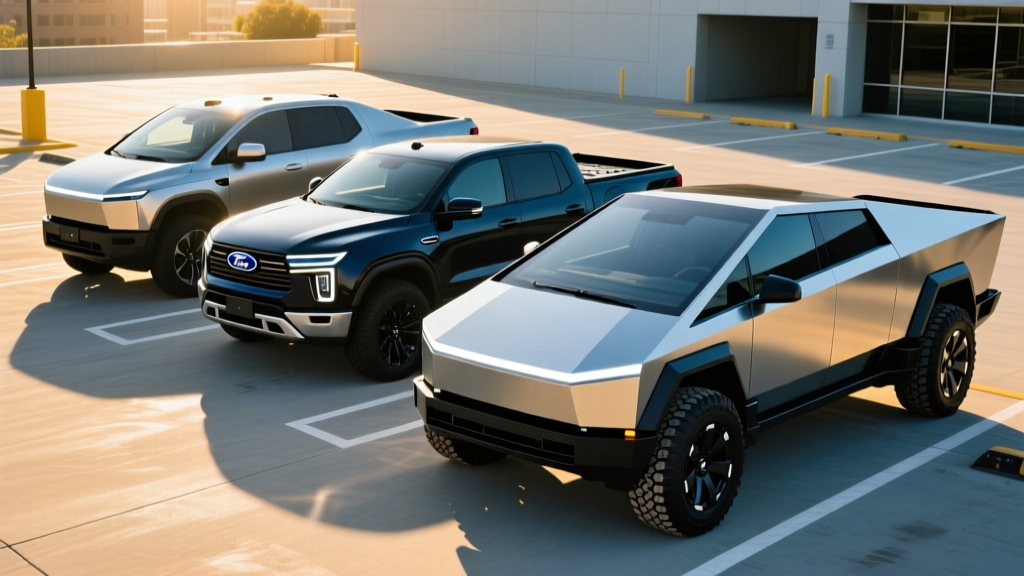
| Tesla Cybertruck (AWD) | 340 mi | 123 kWh | NMC | 250 kW | ~24 min | 4.1s | 600 | 11,000 | $79,990 |
Sources: EPA fueleconomy.gov, manufacturer press sites. Real-world highway range at 70 mph typically runs 15–25% below EPA estimates; cold weather (below 32°F) can reduce range an additional 20–30%.
Electric Tank vs. Gas Truck: The Real Cost Breakdown
The sticker price of an electric tank stings — most start between $70,000 and $100,000 before incentives. But total cost of ownership (TCO) tells a different story, especially if you drive 15,000+ miles per year and charge primarily at home. Below is a 5-year TCO comparison between the Ford F-150 Lightning (Extended Range) and a comparably equipped gas F-150 (3.5L EcoBoost, ~$58,000 MSRP).
| Category | F-150 Lightning (Ext. Range) | F-150 Gas (3.5L EcoBoost) |
|---|---|---|
| Purchase Price (MSRP) | $69,995 | $58,000 |
| §30D Federal Tax Credit | −$7,500 (if eligible) | $0 |
| Effective Purchase | $62,495 | $58,000 |
| Fuel / Electricity (5 yrs) | $5,625 (home L2 @ $0.14/kWh) | $14,250 (19 MPG avg @ $3.60/gal) |
| Maintenance (5 yrs) | $2,200 | $5,800 |
| Insurance (5 yrs) | $11,500 | $8,750 |
| Total 5-Year Cost | $81,820 | $86,800 |
Electricity cost assumes 80% home Level 2 charging at a national average of $0.14/kWh and 20% public DC fast charging at $0.40/kWh. Gas cost based on EPA combined 19 MPG for 4WD EcoBoost. Insurance premiums for EVs run 15–25% higher on average (IIHS). Tax credit eligibility per IRS §30D requires income caps ($150K single / $300K joint), MSRP under $80K for trucks, and battery critical-mineral/sourcing compliance. Confirm eligibility at purchase — rules tighten annually.
The verdict: The Lightning breaks even against the gas F-150 around year 4 and pulls ahead by roughly $5,000 over 5 years. If you can't access the $7,500 credit (income too high, or battery sourcing fails), the payback extends to year 6.
Charging Reality: Home Access Is Make-or-Break
An electric tank's 100–200 kWh battery is a double-edged sword. It gives you range, but refilling it demands serious infrastructure.
Level 2 Home Charging (The Non-Negotiable)
With a 131 kWh battery (F-150 Lightning), a standard 11.5 kW Level 2 home charger adds roughly 25 miles of range per hour. A full 10–100% charge takes about 12 hours. This works perfectly for overnight charging — plug in at 8 PM, wake up to a full battery at 8 AM.
Installation cost reality: Expect $1,200–$2,800 total for a hardwired 48-amp Level 2 charger, including the unit ($500–$750), electrician labor ($500–$1,500), and permits ($50–$250). If your home has a 100-amp electrical panel, you may need a $2,000–$4,000 panel upgrade to 200 amps to support the charger alongside existing loads. Get a quote from a licensed electrician before buying the truck.
DC Fast Charging on the Road
Here's where heavy EVs diverge sharply. A Silverado EV with 350 kW peak charging can go 10–80% in about 20 minutes at a compatible station. The F-150 Lightning, capped at 150 kW, takes roughly 41 minutes for the same session. On a 500-mile road trip, that difference compounds: two stops at 41 minutes each versus two at 20 minutes.
Charge-curve taper warning: Peak kW is not sustained kW. Most electric tanks hit peak charge rate between 10–40% SoC, then taper significantly. The Silverado EV's 350 kW peak may average 200 kW across a full 10–80% session. Plan road-trip stops using tools like A Better Routeplanner, which models taper and elevation.
What If You Can't Charge at Home?
Without home charging, an electric tank becomes expensive and inconvenient. Public DC fast charging at $0.35–$0.50/kWh erases most fuel-cost savings versus gas. You'll also spend 2–4 hours per week at chargers. If you live in an apartment or lack a garage, consider a PHEV truck like the F-150 PowerBoost hybrid (25 MPG combined, no plug needed) or wait for broader public charging buildout in your area.
Common Electric Tank Myths — Fact-Checked
| Myth | Fact |
|---|---|
| "EVs can't tow." | The F-150 Lightning tows 10,000 lbs and the Cybertruck 11,000 lbs. However, towing at max capacity cuts range by 40–55%. A 320-mile Lightning drops to ~150–180 miles when towing 8,000+ lbs at highway speed. |
| "Batteries won't last." | Modern NMC packs are warrantied for 8 years/100,000 miles with a 70% capacity retention floor (fueleconomy.gov). Real-world degradation data from Tesla and Rivian fleets shows ~10–12% loss over 150,000 miles. Replacement costs $15,000–$25,000 if out of warranty. |
| "They're worse in the cold." | Partly true: cold reduces range 20–30% due to battery chemistry and cabin heating. But preconditioning (warming the battery while plugged in) recovers fast-charging speed, and heat pumps (standard on Rivian, available on Ford) cut cabin-heating energy use by ~30%. |
| "Heavy EVs destroy tires." | EV-specific tires with higher load ratings and low rolling resistance are now standard. Expect tire replacement every 30,000–40,000 miles — about 20% sooner than a gas truck. Budget $1,200–$1,800 per set. |
| "The tax credit is guaranteed." | It is not. §30D has MSRP caps ($80K for trucks/vans/SUVs), buyer income limits, and critical-mineral sourcing requirements that change annually. A $98,845 Hummer EV does not qualify. Always check the latest IRS guidance before purchasing. |
Who Should Buy an Electric Tank — and Who Shouldn't
If-Then Decision Framework
- IF you have a garage or driveway with 240V access, drive 12,000–20,000 miles/year, and rarely tow over 5,000 lbs → THEN an electric tank like the F-150 Lightning or Rivian R1S is a strong buy. You'll save $1,500–$2,000/year on fuel and enjoy instant torque, V2L (vehicle-to-load) power for job sites or camping, and near-silent operation.
- IF you tow 7,000+ lbs regularly (boats, horse trailers, construction equipment) → THEN a gas or diesel truck remains more practical. Range loss while towing makes long-haul towing in an EV stressful, and DC fast chargers with pull-through truck lanes are still rare.
- IF you live in an apartment, park on the street, or lack reliable access to Level 2 charging → THEN skip the electric tank for now. A conventional hybrid truck (F-150 PowerBoost, Toyota Tundra i-FORCE MAX) delivers 20–25 MPG combined with zero charging dependency.
- IF you live in a cold climate (Upper Midwest, Northeast, Mountain West) and commute over 60 miles round-trip → THEN buy the largest battery option available (e.g., Silverado EV 200 kWh or Rivian Max Pack) to absorb the 20–30% winter range penalty. Preconditioning and a heat pump are essential.
- IF you want the cheapest possible entry point → THEN look at the Ford F-150 Lightning Pro or base Silverado EV WT, both near $55,000–$70,000 before incentives. Avoid the Hummer EV and Cybertruck Cyberbeast unless the premium is justified by your use case.
First-Time EV Buyer Checklist: 7 Things to Know Before You Sign
- Get a home electrical assessment first. Before falling in love with a 200 kWh truck, confirm your panel can handle a 48-amp Level 2 charger. A $150 electrician visit now prevents a $4,000 surprise later.
- Test the charging network in your area. Download the Electrify America, EVgo, and Tesla (if applicable) apps. Are there reliable DC fast chargers within 15 minutes of your home and along your common road-trip routes? If not, factor in the inconvenience.
- Understand the tax credit before you buy. The §30D point-of-sale transfer lets dealers apply the $7,500 credit directly to your down payment — but only if you meet income limits and the vehicle's battery sourcing qualifies. Check irs.gov and the dealer's VIN-eligibility tool before signing.
- Insurance will cost more. EV insurance premiums run 15–25% higher than equivalent gas vehicles due to battery replacement costs and specialized repair requirements. Get quotes from 3 insurers before committing.
- Plan for tire costs. Heavy EVs wear tires faster. Factor in $300–$400/year extra in tire replacement versus a gas truck.
- Learn preconditioning. This feature warms the battery before fast charging, dramatically improving charge speed in cold weather. Use it every time you navigate to a DC fast charger — it's the single biggest efficiency trick EV owners learn the hard way.
- Don't obsess over 0–60 times. A 3.0-second Hummer EV is fun at a stoplight, but real-world satisfaction comes from range confidence, comfortable daily driving, and charging convenience. Prioritize the battery and charging spec over horsepower.
Frequently Asked Questions
Are electric tanks safe in crashes?
Yes. The low-mounted battery pack gives these vehicles an extremely low center of gravity, reducing rollover risk. The F-150 Lightning and Rivian R1S both earned IIHS Top Safety Pick+ ratings. The battery enclosure is reinforced with high-strength steel and includes automatic disconnect systems in a collision (IIHS).
Can I use an electric tank for off-roading?
Absolutely. The Rivian R1S and GMC Hummer EV offer serious off-road capability with air suspension, torque vectoring, and underbody protection. Electric motors provide instant low-end torque ideal for rock crawling. The trade-off: off-road driving is energy-intensive, so expect range to drop 30–40% on technical trails.
What happens if the battery fails out of warranty?
Full battery replacement for an electric tank costs $15,000–$25,000 depending on the pack size. However, catastrophic failure is rare — most degradation is gradual. Module-level repairs (replacing individual battery modules rather than the full pack) can cost $3,000–$7,000 and are increasingly available through specialized EV service centers.
Do electric tanks qualify for the full $7,500 tax credit?
It depends. The §30D credit requires: buyer AGI under $150K (single) or $300K (joint), vehicle MSRP under $80K for trucks/vans/SUVs, and battery components and critical minerals meeting annual sourcing thresholds. For 2026, the sourcing rules are stricter than prior years, disqualifying some trims. The F-150 Lightning and base Silverado EV typically qualify; the Hummer EV and top-trim Rivian R1S often exceed the MSRP cap. Always verify with the dealer's VIN tool and a tax professional.
How does V2L (vehicle-to-load) work on electric tanks?
V2L lets you power tools, appliances, or even your home from the truck's battery. The F-150 Lightning's Pro Power Onboard offers up to 9.6 kW of output through bed and cabin outlets — enough to run a job-site compressor, a refrigerator during an outage, or a campsite setup. Ford's optional V2H (vehicle-to-home) system can back up an entire house for 3–10 days depending on load.
What's the best electric tank for the money in 2026?
For value, the Ford F-150 Lightning Extended Range at ~$70,000 (effectively ~$62,500 after the tax credit) offers the best balance of range, towing, V2L utility, and charging infrastructure compatibility. For maximum range and tech, the Rivian R1S Dual Max ($84,900) delivers 410 miles EPA and best-in-class ADAS. For commercial/fleet use, the Silverado EV 4WT at $74,900 with 440 miles of range and 350 kW charging is the efficiency leader.