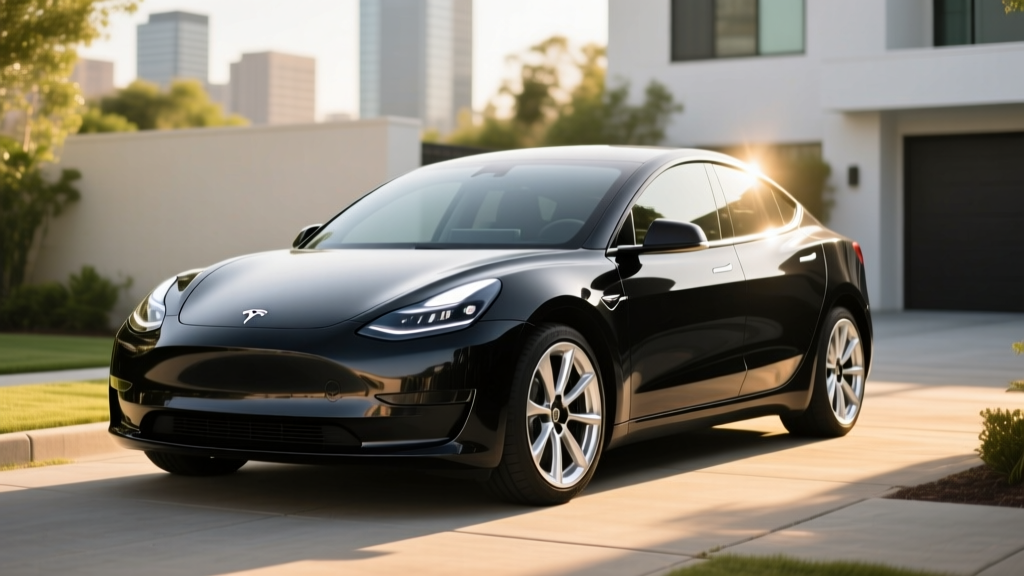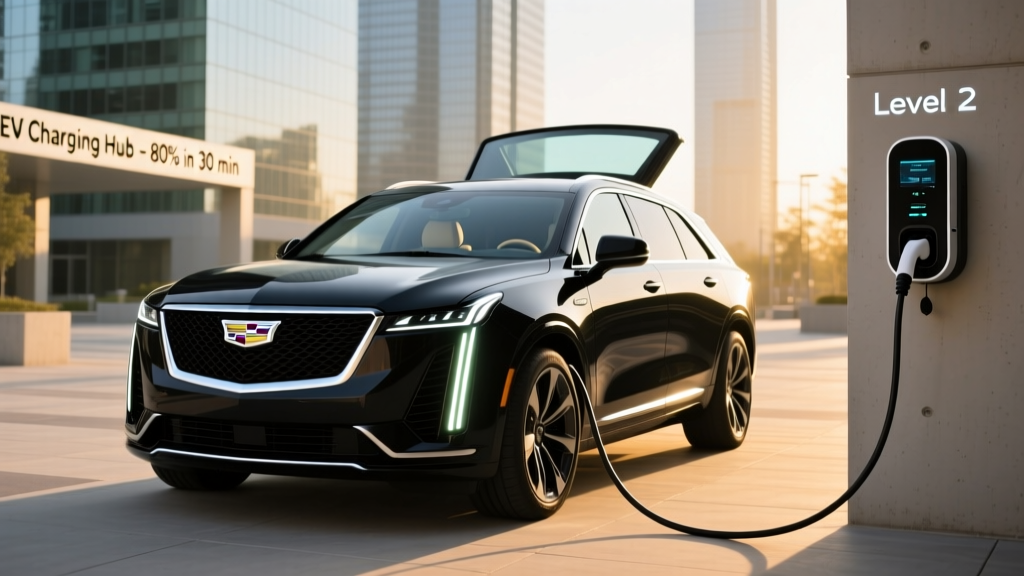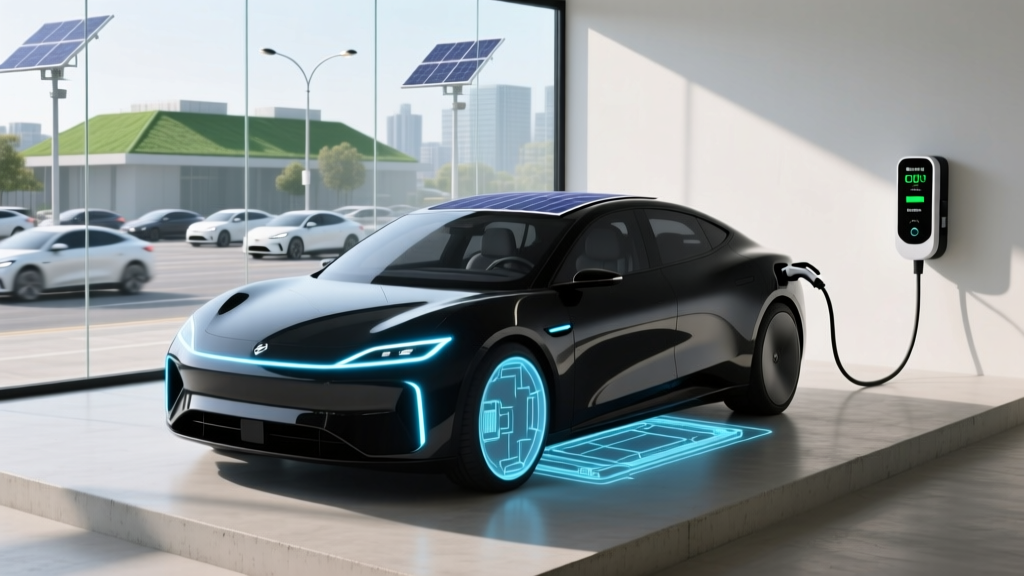
What Exactly Is a BEV (Battery Electric Vehicle)?
A BEV — Battery Electric Vehicle — is a car powered entirely by an onboard battery pack and electric motor, with zero tailpipe emissions and no internal combustion engine. Unlike hybrids (HEVs), plug-in hybrids (PHEVs), or range-extended EVs (EREVs), a BEV has no gasoline backup. You plug it in, charge the battery, and drive on electricity alone.
If you're asking "what is a BEV" in 2026, you're likely weighing your first EV purchase. The landscape has matured significantly: EPA ranges now routinely exceed 300 miles, DC fast-charging can add 200 miles in under 20 minutes on the best platforms, and the federal §30D tax credit can knock up to $7,500 off the purchase price at the point of sale — if the vehicle and your income qualify.
This guide covers what makes BEVs fundamentally different from other electrified vehicles, the real numbers buyers need (range, charging, cost), and which current models best represent what a BEV can do in 2026.
BEV vs. Hybrid vs. PHEV: The Powertrain Breakdown
Understanding where BEVs fit requires a quick taxonomy of electrified vehicles:
| Type | Power Source | Tailpipe Emissions | Needs Plugging In? | Typical Range (Electric) |
|---|---|---|---|---|
| BEV (Battery Electric) | Battery + electric motor only | None | Yes | 230–400+ mi (EPA) |
| PHEV (Plug-in Hybrid) | Battery + gas engine | Yes (when gas engine runs) | Optional (for EV range) | 20–50 mi electric, then gas |
| HEV (Hybrid) | Small battery + gas engine | Yes | No | 1–2 mi electric assist only |
| EREV (Range-Extended EV) | Battery drives wheels; gas generator charges battery | Yes (generator only) | Yes | 100–200 mi electric, then generator |
The core tradeoff is simplicity vs. flexibility. BEVs have far fewer moving parts — no oil changes, no spark plugs, no exhaust systems, no multi-speed transmissions. But they require charging infrastructure access and route planning for longer trips. PHEVs offer a bridge: electric commuting with gas-engine road-trip freedom, at the cost of maintaining two powertrains.
Real-World Range: What BEVs Actually Deliver
The EPA range sticker assumes a specific mix of city and highway driving at moderate temperatures. In practice:
- Highway driving (75+ mph): Expect 15–25% less than the EPA sticker due to aerodynamic drag.
- Cold weather (below 30°F): Range drops 20–35% due to battery chemistry limitations and cabin heating demands. BEVs with heat pumps lose less (~15–20%).
- City / stop-and-go: Often matches or exceeds EPA estimates thanks to regenerative braking recapturing energy.
Let's look at three representative 2026 BEVs and what their range looks like in the real world:
| Model | Battery (kWh) | EPA Range | Real-World Highway | Cold Weather Est. | MPGe |
|---|---|---|---|---|---|
| 2026 Tesla Model Y Long Range | 78.1 kWh (NMC) | 320 mi | ~260–275 mi | ~225–250 mi | 111 MPGe |
| 2026 Hyundai Ioniq 5 Long Range RWD | 77.4 kWh (NMC) | 303 mi | ~245–265 mi | ~215–240 mi | 114 MPGe |
| 2026 Chevrolet Equinox EV LT | 85 kWh (NMC) | 319 mi | ~260–280 mi | ~225–255 mi | 107 MPGe |
A practical rule of thumb: if your daily round-trip commute is under 80 miles, virtually any modern BEV handles it easily, even in winter. The anxiety isn't daily driving — it's the 4% of trips that exceed 250 miles. That's where charging speed becomes critical.
Charging a BEV: Levels, Speeds, and Costs
Charging is the single biggest adjustment for new BEV owners. There are three charging levels, and understanding kW (kilowatts, the rate of power delivery) versus kWh (kilowatt-hours, the energy stored in the battery) is essential. Think of kW as how fast water flows from a hose, and kWh as the size of the bucket.
| Level | Power (kW) | Miles Added/Hour | Best For | Typical Location |
|---|---|---|---|---|
| Level 1 (120V) | 1.0–1.4 kW | 3–5 mi/hr | Overnight trickle; PHEVs | Standard outlet |
| Level 2 (240V) | 7.2–11.5 kW | 25–44 mi/hr | Daily home charging | Home wallbox, workplace |
| DC Fast Charge | 50–350 kW | 150–1,200 mi/hr* | Road trips | Public stations |
*Miles-per-hour at DC fast chargers applies only during peak charge rate (typically 10–40% SoC). Above 80%, charging tapers significantly due to battery protection protocols. A "250 kW peak" charger may average 100–130 kW over a 10–80% session.
The Hyundai Ioniq 5 on an 800V architecture peaks at 240 kW and charges 10–80% in approximately 18 minutes under ideal conditions. But "ideal" means a battery preconditioned to ~75–95°F, starting below 15% SoC, at a charger actually delivering its rated power. In practice, plan for 22–28 minutes on a road trip stop. The Tesla Model Y on V3 Superchargers peaks at 250 kW and typically completes 10–80% in 22–27 minutes.
Home charging cost: At the US average electricity rate of ~$0.17/kWh, fully charging a 78 kWh battery costs roughly $13.30. That equates to about $0.04–$0.05 per mile — compared to $0.12–$0.15/mile for a 30 MPG gas car at $3.50/gallon. Over 15,000 miles/year, that's roughly $1,200–$1,500 in fuel savings annually.
Public DC fast-charging cost: Networks like Electrify America and EVgo charge $0.35–$0.55/kWh depending on location and membership, pushing per-mile costs closer to $0.10–$0.14. Fast charging is a road-trip convenience, not a daily strategy.
How Much Does a BEV Cost? Pricing and Tax Credits
BEV pricing in 2026 spans from the low $30,000s to well over $100,000. The critical factor is whether the vehicle qualifies for the federal §30D clean vehicle credit, which provides up to $7,500 — and since 2024, can be transferred to the dealer as a point-of-sale discount.
- Vehicle MSRP cap: ≤$80,000 for SUVs/pickups/vans; ≤$55,000 for sedans
- Buyer income cap (AGI): ≤$300,000 joint filers; ≤$225,000 head of household; ≤$150,000 single
- Battery sourcing: Must meet critical minerals and battery component requirements (phased thresholds increase annually — check IRS guidance)
- Final assembly: Must occur in North America
- Transfer option: You can transfer the credit to the dealer for an upfront price reduction even if you owe less than $7,500 in federal taxes
Eligibility changes frequently. Always verify the specific vehicle's status on fueleconomy.gov and consult a tax professional.
| 2026 Model | Base MSRP | As-Tested | Est. §30D Credit | Effective Price |
|---|---|---|---|---|
| Tesla Model Y Long Range AWD | $44,990 | $49,490 | $7,500* | ~$37,490* |
| Hyundai Ioniq 5 SEL RWD | $42,600 | $46,200 | $7,500* | ~$35,100* |
| Chevrolet Equinox EV 2LT | $33,600 | $38,400 | $7,500* | ~$26,100* |
| Ford Mustang Mach-E Premium AWD | $44,495 | $50,890 | $3,750–$7,500* | ~$36,995–$43,390* |
*Credit eligibility depends on battery sourcing compliance, buyer income, and MSRP caps. Verify on fueleconomy.gov before purchasing. Some models may qualify for only the $3,750 battery component half or the $3,750 critical minerals half.
Performance, Efficiency, and What It's Like to Drive a BEV
BEVs deliver instant torque from 0 RPM, which makes even modestly powered models feel quick off the line. Here's how representative models perform:
| Model | Drivetrain | Horsepower | 0–60 mph | Efficiency (kWh/100mi) |
|---|---|---|---|---|
| Tesla Model Y LR AWD | Dual-motor AWD | 384 hp | 4.8 sec | 30 kWh |
| Hyundai Ioniq 5 LR RWD | Single-motor RWD | 225 hp | 7.0 sec | 29 kWh |
| Chevy Equinox EV 2LT FWD | Single-motor FWD | 213 hp | 7.8 sec | 31 kWh |
| Ford Mach-E Premium AWD | Dual-motor AWD | 365 hp | 5.1 sec | 32 kWh |
Beyond acceleration numbers, the BEV driving experience is defined by quietness, one-pedal driving (regenerative braking that slows the car when you lift off the accelerator), and a low center of gravity from the under-floor battery pack that reduces body roll. The tradeoff: BEVs are heavy. A Model Y weighs ~4,400 lbs, which increases tire wear and extends braking distances compared to lighter gas vehicles.
Cargo, Passenger Space, and Daily Practicality
BEV platforms — with no engine bay and flat battery floors — often provide more interior volume than similarly sized gas cars. Many BEVs also include a front trunk ("frunk") for additional storage.
| Model | Cargo (rear seats up) | Cargo (rear seats folded) | Rear Legroom | Frunk |
|---|---|---|---|---|
| Tesla Model Y | 30.2 cu ft | 72.1 cu ft | 41.6 in | 4.1 cu ft |
| Hyundai Ioniq 5 | 27.2 cu ft | 59.3 cu ft | 39.4 in | 0.85 cu ft (RWD) |
| Chevy Equinox EV | 26.4 cu ft | 63.7 cu ft | 38.7 in | None |
| Ford Mach-E | 29.7 cu ft | 59.7 cu ft | 38.9 in | 4.7 cu ft |
Battery Chemistry, Degradation, and Warranty Coverage
Two battery chemistries dominate the 2026 BEV market, and the choice matters for longevity, charging habits, and cost:
| Factor | NMC (Nickel Manganese Cobalt) | LFP (Lithium Iron Phosphate) |
|---|---|---|
| Energy Density | Higher — more range per kg | Lower — heavier pack for same range |
| Cycle Life | ~1,000–1,500 full cycles to 80% SoH | ~2,500–4,000+ full cycles to 80% SoH |
| Recommended SoC | 20–80% daily (avoid 100% unless needed) | OK to charge to 100% regularly |
| Cold Performance | Better in cold weather | More range loss in freezing temps |
| Cost | Higher raw material cost | Lower — no cobalt or nickel |
| Found In | Model Y LR, Ioniq 5 LR, Mach-E ER | Tesla Model 3 RWD, base Ioniq 5, some fleet vehicles |
Warranty coverage across the industry is strong. Federal law effectively mandates that BEV batteries carry at least an 8-year/100,000-mile warranty. Most manufacturers guarantee the battery will retain 70% of original capacity during that period. If it drops below that threshold, the manufacturer replaces or repairs modules at no cost.
- Tesla: 8 years / 120,000 miles (Model Y Long Range), 70% retention guarantee
- Hyundai: 10 years / 100,000 miles, 70% retention guarantee
- Chevrolet: 8 years / 100,000 miles, 60% retention guarantee (note: lower threshold)
- Ford: 8 years / 100,000 miles, 70% retention guarantee
Real-world degradation data from fleet aggregators and owner communities shows most modern BEV batteries lose roughly 5–8% capacity in the first two years, then degrade very slowly — approximately 1–2% per year thereafter. A 2022 Tesla Model 3 with 60,000 miles, for example, might show 90–93% State of Health (SoH). Full battery replacement is rare and typically costs $10,000–$18,000 out of warranty — but few owners ever need one.
Standout Tech and Notable Drawbacks
- Lowest per-mile "fuel" cost of any vehicle type
- Minimal maintenance — no oil, filters, spark plugs, or exhaust
- Instant torque, smooth and quiet acceleration
- Home charging means a "full tank" every morning
- Federal + state incentives significantly reduce purchase price
- Over-the-air software updates add features post-purchase
- Longer "refueling" time on road trips (20–30 min vs. 5 min for gas)
- Home charging requires Level 2 install ($500–$2,000+)
- Public charging reliability still inconsistent in some regions
- Cold-weather range loss of 20–35%
- Higher insurance premiums (avg. 15–25% more than gas equivalents)
- Higher upfront MSRP before incentives
- Heavy weight increases tire wear
Driver-assist technology is a major BEV selling point, but clarity is essential. Systems like Tesla Autopilot, Ford BlueCruise, and Hyundai's Highway Driving Assist 2 are SAE Level 2 — meaning the driver must remain fully engaged and hands-on (or eyes-on, depending on the system). They assist with lane centering and adaptive cruise, but they do not make the vehicle self-driving.
Level 0 = no automation. Level 2 = driver assist (you drive, car helps). Level 4 = fully driverless in defined areas (Waymo robotaxis). No consumer vehicle sold in 2026 is Level 4 or 5. Any marketing implying otherwise is misleading.
Infotainment highlights in 2026 BEVs include native route planning with charging stops (Tesla, Hyundai), vehicle-to-load (V2L) power capability (Ioniq 5 can power appliances at up to 3.6 kW), and phone-as-key functionality. Tesla's minimalist interior eliminates nearly all physical buttons — a love-it-or-hate-it design choice that affects climate control and mirror adjustments.
Who Should Buy a BEV — And Who Shouldn't
Choose a BEV if:
- You can install a Level 2 charger at home (garage or driveway with 240V access)
- Your daily commute is under 100 miles round-trip
- You want minimal maintenance and low per-mile operating costs
- You qualify for the §30D tax credit (check income and vehicle eligibility)
- You take road trips fewer than 5–6 times per year and can plan charging stops
Consider a PHEV or hybrid instead if:
- You live in an apartment or lack reliable home/workplace charging access
- You regularly drive 300+ miles in a single day through charging-desert regions
- You frequently tow heavy loads (towing cuts BEV range by 40–55%)
- You live in an extremely cold climate and need guaranteed range regardless of temperature
Frequently Asked Questions
What is the real-world range of a typical BEV in 2026?
Most popular BEVs carry EPA ratings of 280–340 miles. Real-world highway range at 75 mph typically falls 15–25% below that sticker number — so a 320-mile EPA rating translates to roughly 250–275 miles on the interstate. In freezing weather, subtract another 10–15%. For daily commuting under 80 miles, range is rarely a concern.
How fast does a BEV charge at home and on road trips?
At home on a Level 2 (240V, 32–48 amp) charger, expect 25–44 miles of range added per hour — a full overnight charge from 20% to 80% takes 5–8 hours. On road trips, DC fast chargers deliver 10–80% in 18–30 minutes depending on the vehicle's peak charge rate (measured in kW) and battery preconditioning. The Hyundai Ioniq 5 is among the fastest at ~18 minutes; the Chevy Equinox EV takes roughly 28–32 minutes.
How much does a BEV cost after federal tax credits?
With the §30D credit applied at the point of sale, effective prices in 2026 range from roughly $26,000 (Chevy Equinox EV) to $37,500 (Tesla Model Y LR). Without the credit, BEVs typically cost $5,000–$10,000 more than comparable gas vehicles at purchase. However, lower fuel and maintenance costs typically recover that premium within 3–6 years depending on mileage and local electricity rates.
Is a BEV worth buying over a hybrid or gas car?
Financially, a BEV wins for most buyers who have home charging access and qualify for the tax credit — the 5-year total cost of ownership is typically $5,000–$15,000 lower than a comparable gas car. Environmentally, BEVs produce significantly fewer lifecycle emissions even on coal-heavy grids. The main scenarios where a PHEV or hybrid still makes more sense: no charging access, frequent extreme-distance towing, or regular travel through areas with sparse charging infrastructure.
Does the BEV I want qualify for the $7,500 federal tax credit?
It depends on three factors: (1) the vehicle's MSRP must be under the cap ($80,000 for SUVs, $55,000 for sedans), (2) your adjusted gross income must be below $300,000/$225,000/$150,000 depending on filing status, and (3) the vehicle must meet battery component and critical mineral sourcing thresholds, which tighten annually. Always verify on fueleconomy.gov and consult IRS guidance before purchasing. A tax professional can confirm your personal eligibility.
How long do BEV batteries last, and what does replacement cost?
Modern BEV batteries are designed to last the life of the vehicle. Data shows most lose 5–8% capacity in years 1–2, then degrade ~1–2% annually. After 10 years and 150,000 miles, expect roughly 85–92% of original capacity remaining. All manufacturers warrant batteries for at least 8 years/100,000 miles against dropping below 60–70% capacity. Out-of-warranty replacement costs $10,000–$18,000, but full replacements remain uncommon.
What happens if I run out of charge on the road?
Unlike running out of gas, you can't simply walk to a station with a gas can. If a BEV reaches 0% SoC, it requires a flatbed tow to the nearest charger. However, modern BEVs provide extensive low-charge warnings, route planning with charging stops, and reserve buffers below the displayed 0%. With basic trip planning, running out of charge is exceedingly rare.
Sources: fueleconomy.gov (EPA range and efficiency data), IRS §30D guidance, manufacturer specification sheets for 2026 model year vehicles. Tax credit eligibility and vehicle pricing subject to change; verify at time of purchase.