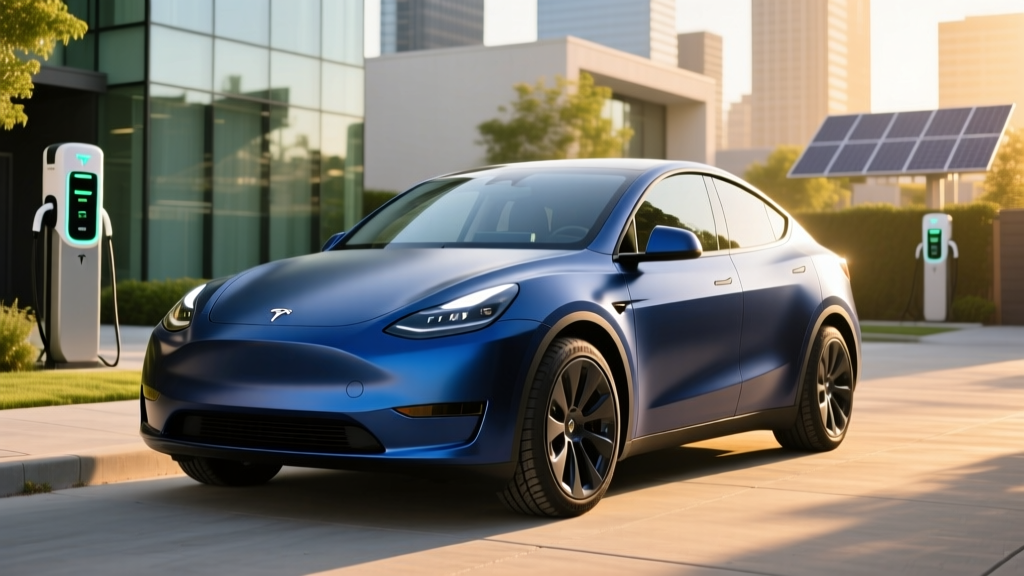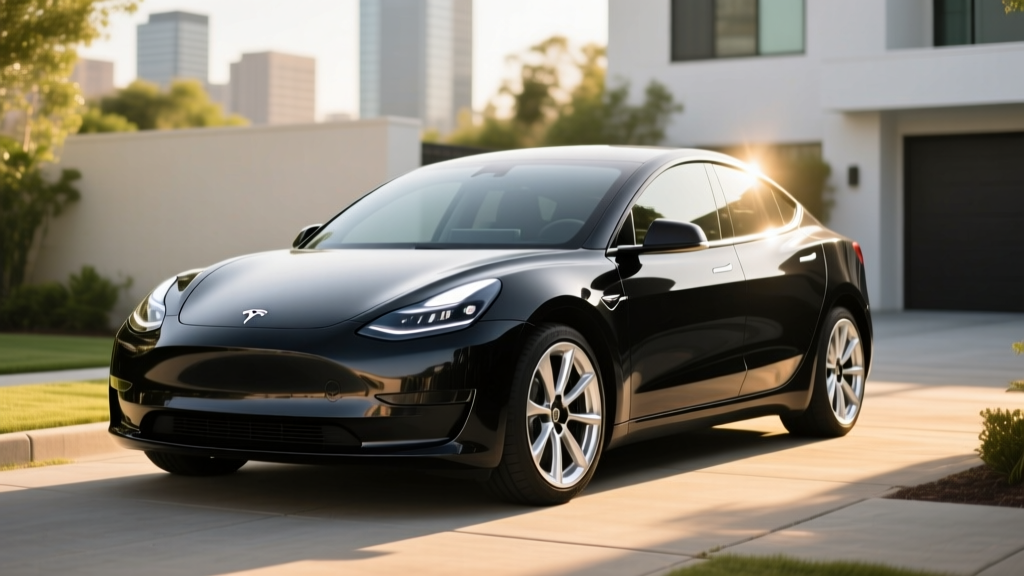
The Tesla Model 3 has long been the default answer for buyers entering the electric-vehicle market, and the refreshed "Highland" generation keeps that momentum going into the 2026 model year. Among the trim ladder, the Tesla Model 3 Premium Rear-Wheel Drive occupies a strategic middle ground: it pairs the efficiency and lower weight of the single-motor RWD layout with the upgraded interior, ventilated seats, and premium audio that Tesla bundles into its "Premium" (sometimes labeled Long Range RWD in prior years) package. For shoppers who prioritize range-per-dollar and daily drivability over outright acceleration, this trim deserves a close look.
Below, we break down every number that matters — EPA range versus real-world expectations, battery chemistry trade-offs, DC fast-charging curves, home charging costs, federal tax credit eligibility under IRS §30D, and how the Model 3 Premium RWD stacks up against the Hyundai Ioniq 6, BMW i4 eDrive35, and Polestar 2 Single Motor.
Quick Verdict: Who the Model 3 Premium RWD Is For
The 2026 Tesla Model 3 Premium Rear-Wheel Drive is best suited for commuters and road-trippers who want maximum range from a single-motor sedan without paying the Long Range AWD premium. If you don't need dual-motor traction for snow-belt winters and you value Tesla's Supercharger network access, this trim delivers the highest EPA range in the Model 3 lineup at a price point that — after the federal tax credit — undercuts most rivals by thousands. It is not the right pick if you regularly carry rear-seat adults on long trips (the sloping roofline cuts headroom) or if you need more than 23 cubic feet of cargo space.
Range, Battery & Real-World Efficiency
| Spec | Value |
|---|---|
| EPA Range | 363 miles |
| Battery Capacity (usable) | ~60 kWh |
| Battery Chemistry | LFP (Lithium Iron Phosphate) |
| EPA Efficiency | 132 MPGe combined / 25 kWh/100 mi |
| Drivetrain | Rear-Wheel Drive (single motor) |
| Horsepower | 271 hp |
| 0–60 mph | 5.8 seconds |
| Top Speed | 125 mph |
| Cargo Volume | 23 cu ft (rear trunk + frunk) |
| Rear Legroom | 35.3 in |
| Battery & Drive Unit Warranty | 8 years / 120,000 miles |
| Base MSRP | $42,490 (before incentives) |
The EPA rates the 2026 Model 3 Premium RWD at 363 miles. In real-world highway driving at 70–75 mph in moderate temperatures (60–75°F), expect approximately 300–320 miles before needing to charge. In cold weather (below 30°F), range can drop to 240–270 miles due to battery resistance and cabin heating demands — though the Model 3's standard heat pump mitigates some of this loss compared to resistive heaters. City driving with frequent regenerative braking can actually exceed the EPA combined figure, occasionally reaching 370+ miles in stop-and-go conditions.
LFP Chemistry: What It Means for Ownership
Tesla equips the RWD Model 3 variants with LFP (lithium iron phosphate) cells, sourced primarily from CATL. Compared to the NMC (nickel manganese cobalt) chemistry in the Long Range AWD and Performance trims, LFP offers several trade-offs:
- Longevity: LFP cells typically tolerate 3,000+ full charge cycles before significant degradation, versus ~1,500–2,000 for NMC. Tesla allows — and recommends — charging LFP batteries to 100% regularly, which simplifies daily use.
- Energy density: LFP is heavier and less energy-dense, which is why the RWD Model 3 carries a smaller ~60 kWh pack yet still achieves 363 miles through superior efficiency.
- Cold-weather performance: LFP cells are more sensitive to cold temperatures. Preconditioning (warming the battery before fast charging or hard acceleration) is critical in winter — the Model 3 does this automatically when you navigate to a Supercharger.
- Cost: LFP packs are cheaper to produce, which helps keep the RWD trim's MSRP lower.
Charging Speed: DC Fast, Level 2 & Home Setup
| Charging Level | Power / Rate | Speed / Time |
|---|---|---|
| DC Fast Charge (peak) | 170 kW (NACS connector) | 10–80% in ~25 minutes |
| DC Fast Charge (sustained avg) | ~110–130 kW (10–80%) | ~180 miles added in 15 min |
| Level 2 (240V / 48A) | 11.5 kW | ~44 miles per hour of charging |
| Level 2 (240V / 32A Mobile Connector) | 7.7 kW | ~30 miles per hour |
| Level 1 (120V household) | ~1.4 kW | ~4–5 miles per hour |
Understanding the Charging Curve
The Model 3 Premium RWD's peak DC charge rate of 170 kW is modest compared to the 250 kW peak on Long Range AWD models (which use NMC cells that accept higher C-rates). However, LFP charging curves are relatively flat through the mid-state-of-charge range. In practice, you'll see 150–170 kW from roughly 10% to 50% SoC, then a gradual taper to ~60 kW by 80%. The 10–80% session takes approximately 25 minutes at a V3 or V4 Supercharger.
For home charging, Tesla's Wall Connector at 48 amps delivers 11.5 kW, which adds about 44 miles of range per hour. An overnight charge (8–10 hours) easily replenishes the full battery. Installation costs for a 240V/60A circuit typically range from $500 to $2,000 depending on panel proximity and local permitting — always get a quote from a licensed electrician before purchasing equipment.
Performance & Driving Dynamics
The single rear-mounted motor produces 271 horsepower and propels the Model 3 Premium RWD from 0–60 mph in 5.8 seconds. That's quick enough for confident highway merging and passing, though noticeably a step behind the Long Range AWD (4.2 seconds) and Performance (2.9 seconds). The RWD layout gives the car a lighter front end, which translates to slightly more communicative steering feel than the dual-motor variants.
Ride quality in the Highland refresh is substantially improved over the pre-2024 Model 3. Tesla added frequency-selective dampers, additional acoustic glass, and revised bushings — the result is a sedan that absorbs sharp impacts without the crashiness that plagued earlier builds. At 75 mph, cabin noise levels are noticeably lower, though still not as hushed as a BMW i4.
Driver Assistance: Autopilot & FSD (Supervised)
Tesla Autopilot and Full Self-Driving (Supervised) are SAE Level 2 driver-assistance systems. They provide steering, acceleration, and braking assistance on highways and some city streets, but the driver must remain fully engaged — hands on or near the wheel, eyes on the road. These are not self-driving systems. Autopilot is standard; FSD (Supervised) is a $8,000 add-on or $99/month subscription as of early 2026.
Standard Autopilot includes Traffic-Aware Cruise Control and Autosteer (lane centering on highways). The optional FSD (Supervised) adds automatic lane changes, traffic light/stop sign recognition, and Navigate on Autopilot. In our experience, FSD performs well on well-marked highways but remains inconsistent in construction zones, unmapped areas, and complex urban intersections. It is an assist, not a replacement for an attentive driver.
Interior, Tech & Cargo
The Premium trim upgrades the Model 3 cabin with ventilated front seats, a premium 17-speaker audio system, ambient lighting, and a rear 8-inch touchscreen for climate and media control. The 15.4-inch center display runs Tesla's proprietary infotainment stack — no Apple CarPlay or Android Auto, which remains a dealbreaker for some buyers. Navigation, streaming (Spotify, Apple Music natively), and over-the-air updates are all built in.
Cargo space totals 23 cubic feet split between the rear trunk (approximately 19.8 cu ft) and a small front trunk (frunk, ~3.1 cu ft). The rear 60/40 split-folding seats expand capacity for longer items. Rear-seat headroom is tight for passengers over 6 feet due to the sloping glass roof — legroom at 35.3 inches is adequate but not generous compared to a Hyundai Ioniq 6 (37.7 in rear legroom).
Pricing, Trims & Federal Tax Credit
| Trim | MSRP | Est. Price After §30D Credit |
|---|---|---|
| Model 3 RWD (base) | $38,990 | ~$31,490* |
| Model 3 Premium RWD | $42,490 | ~$34,990* |
| Model 3 Long Range AWD | $47,490 | ~$39,990* |
| Model 3 Performance | $52,990 | ~$45,490* |
*Estimated prices assume full $7,500 federal tax credit eligibility. Actual credit depends on buyer income, tax liability, and vehicle battery-sourcing compliance. See IRS §30D rules for current requirements.
Federal Tax Credit Eligibility (§30D) — Checklist
- MSRP Cap: ✅ Yes — sedan cap is $55,000; Model 3 Premium RWD is $42,490.
- Buyer Income Cap: Varies — AGI must not exceed $150,000 (single), $225,000 (head of household), or $300,000 (joint). Check your modified AGI.
- Battery Component Manufacturing (North America): ✅ As of 2026, Tesla's Fremont-built Model 3 meets North American assembly requirements.
- Critical Minerals Sourcing: ⚠️ Varies by production batch. LFP cells from CATL (China) have faced increasing sourcing restrictions under §30D. Tesla has been shifting supply chains, but buyers should verify current eligibility via the fueleconomy.gov credit lookup at time of purchase.
- Point-of-Sale Transfer: ✅ Eligible buyers can transfer the credit to Tesla at purchase, reducing the out-of-pocket price immediately rather than waiting for tax filing.
The critical-minerals sourcing requirement is the most volatile variable. Under current IRS rules, a growing percentage of battery minerals must come from the US or free-trade-agreement nations. Because LFP cathode chemistry relies heavily on Chinese-processed lithium and iron phosphate, some Model 3 RWD production batches may qualify for only $3,750 (half credit) or none at all. Always confirm eligibility with your Tesla advisor and a tax professional before finalizing your order.
How It Compares: Model 3 Premium RWD vs. Rivals
| Spec | Tesla Model 3 Premium RWD | Hyundai Ioniq 6 SE Long Range RWD | BMW i4 eDrive35 |
|---|---|---|---|
| EPA Range | 363 mi | 361 mi | 307 mi |
| Battery (usable) | ~60 kWh (LFP) | 77.4 kWh (NMC) | 81.5 kWh (NMC) |
| Peak DC Charge | 170 kW | 235 kW | 205 kW |
| 10–80% DC Time | ~25 min | ~18 min | ~21 min |
| 0–60 mph | 5.8 sec | 6.8 sec | 5.5 sec |
| MSRP (base eligible trim) | $42,490 | $43,600 | $52,200 |
| Supercharger / NACS Native | Yes | Adapter required | Adapter required |
| Apple CarPlay / Android Auto | No | Yes | Yes (wireless) |
Choose the Tesla Model 3 Premium RWD if: You want the longest range at the lowest price point, prioritize native Supercharger access for road trips, and don't mind Tesla's walled-garden infotainment.
Choose the Hyundai Ioniq 6 if: You need faster DC charging (235 kW), prefer CarPlay/Android Auto, want more rear legroom, and don't mind using a NACS adapter at Superchargers.
Choose the BMW i4 eDrive35 if: You value premium build quality, traditional luxury-brand dealership service, and a more conventional sedan driving position — and are willing to pay ~$10,000 more for ~56 fewer miles of range.
Pros & Cons
- 363-mile EPA range — best-in-class for the price
- LFP battery can be charged to 100% daily without degradation concern
- Native NACS / Supercharger access — most reliable public charging network
- Excellent efficiency (25 kWh/100 mi) keeps charging costs low
- Highland refresh: quieter cabin, better ride, ventilated seats
- Over-the-air updates continuously add features
- Strong resale value relative to EV segment average
- 170 kW peak DC charge rate — slower than Ioniq 6 and many rivals
- No Apple CarPlay or Android Auto
- Rear headroom and legroom are tight for tall adults
- Touchscreen-only controls (no physical buttons for climate, mirrors, glovebox)
- LFP battery cold-weather range loss is more pronounced than NMC
- FSD (Supervised) remains a $8,000 upsell for Level 2 assist
- §30D credit eligibility uncertain due to LFP critical-mineral sourcing
Ownership Costs: 5-Year Estimate
| Category | Estimated Cost |
|---|---|
| Purchase Price (after $7,500 credit) | ~$34,990 |
| Home Charging (electricity, 75k mi @ $0.14/kWh avg) | ~$2,625 |
| Insurance (national EV avg) | ~$9,500 |
| Maintenance (tires, cabin filter, wiper fluid — no oil changes) | ~$1,800 |
| Estimated Depreciation (5-yr) | ~$14,000 |
| Total 5-Year Cost | ~$62,915 |
Insurance costs vary significantly by state, driving record, and coverage level. Tesla offers its own insurance product in many states, which uses real-time driving data and can be cheaper for safe drivers. Depreciation estimates based on historical Model 3 retention rates; EV market fluctuations may affect actual resale.
Frequently Asked Questions
What is the real-world range of the Tesla Model 3 Premium RWD?
The EPA rates it at 363 miles combined. In real-world highway driving at 70–75 mph in moderate weather, expect 300–320 miles. In winter (below 30°F), plan for 240–270 miles. City driving with regenerative braking can occasionally exceed the EPA figure.
How fast does the Model 3 Premium RWD charge?
On a DC fast charger (V3/V4 Supercharger), it peaks at 170 kW and charges from 10–80% in approximately 25 minutes. At home on a Level 2 Wall Connector (11.5 kW), it adds about 44 miles of range per hour, fully recharging overnight in 6–7 hours.
Does the Model 3 Premium RWD qualify for the $7,500 federal EV tax credit?
It meets the MSRP cap ($55,000 for sedans) and is assembled in North America. However, the LFP battery's critical-mineral sourcing — primarily Chinese-processed lithium and iron phosphate — may limit eligibility to $3,750 or disqualify certain production batches entirely. Always verify current status on fueleconomy.gov and consult a tax professional. Buyer income caps also apply ($150K single / $300K joint).
Is the Model 3 Premium RWD worth buying over the Long Range AWD?
If you live in a mild climate and don't need all-wheel drive, the Premium RWD saves $5,000 and still delivers 363 miles of range — more than the Long Range AWD's ~341 miles (which carries a heavier, larger NMC pack). The trade-off is slower DC charging (170 vs 250 kW), lower power (271 vs 346 hp), and less cold-weather range resilience. For snow-belt buyers or frequent road-trippers who want the fastest possible Supercharger stops, the Long Range AWD justifies its premium.
How does the LFP battery hold up long-term?
LFP cells are among the most durable lithium-ion chemistry available. Tesla warranties the battery for 8 years / 120,000 miles with a minimum 70% capacity retention. Independent fleet data suggests LFP packs routinely exceed 200,000 miles with less than 15% degradation. Unlike NMC, Tesla recommends charging LFP to 100% at least once per week for accurate state-of-charge calibration — a convenience advantage for daily use.
Can I charge at non-Tesla public chargers?
Yes. The Model 3 uses the NACS (North American Charging Standard) connector natively. As of 2025–2026, Electrify America, EVgo, and other networks have been adding NACS cables. You can also use a CCS-to-NACS adapter for older CCS-equipped stations. The Model 3's navigation system routes through Superchargers by default but can be directed to other networks.
Is Autopilot included, or do I need to pay extra?
Basic Autopilot (Traffic-Aware Cruise Control + Autosteer lane centering) is standard on every Model 3. Enhanced Autopilot ($6,000) adds auto lane change, Navigate on Autopilot, and Summon. Full Self-Driving (Supervised) at $8,000 or $99/month adds traffic light recognition and city-street assist. All are SAE Level 2 — you must supervise the system at all times.
Sources: EPA fueleconomy.gov, Tesla Model 3 official specs, IRS §30D Clean Vehicle Credit.