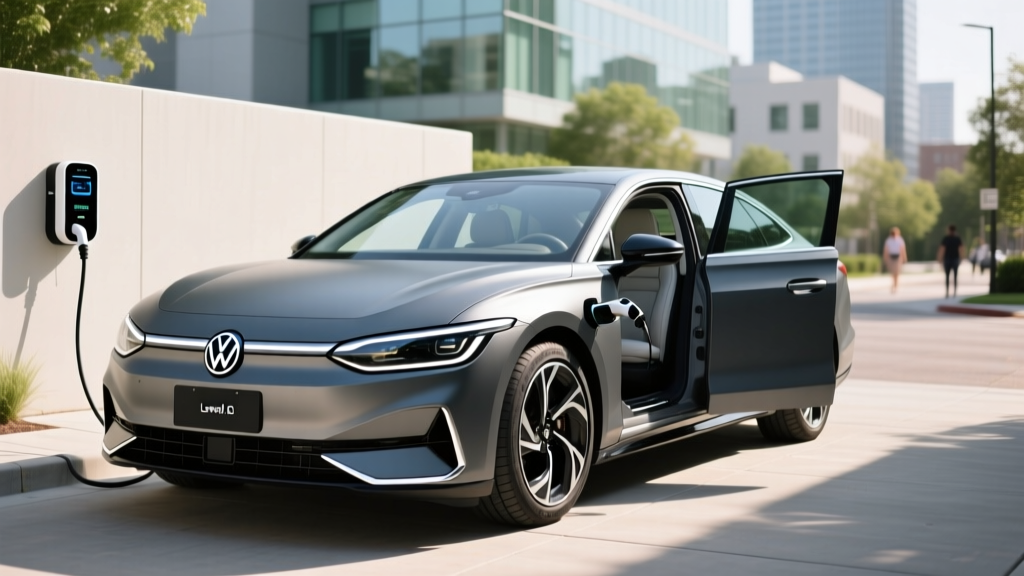
After years of delays and strategic pivots, the Volkswagen ID.7 is finally headed to American shores. Positioned as VW's flagship electric sedan — a spiritual successor to the Passat but built on the MEB platform — the ID.7 enters a competitive midsize EV segment dominated by the Tesla Model 3, Hyundai Ioniq 6, and BMW i4. For US buyers who've been watching from the sidelines as European and Chinese markets got first dibs, the 2026 model year marks the ID.7's long-awaited stateside debut.
But does a large electric sedan still make sense in an SUV-obsessed market? And can VW's software woes finally be put to rest? We've compiled everything confirmed about the US-spec ID.7 — from EPA range estimates and charging speeds to tax credit eligibility and real-world ownership considerations — so you can decide whether this electric flagship deserves a spot on your shortlist.
Quick Verdict: The ID.7's US Mission
Volkswagen is positioning the ID.7 as a premium electric touring sedan: long range, fast charging, spacious interior, and a more traditional driving experience than the polarizing ID.4. The US version will arrive in limited trim configurations, likely starting with a single-motor rear-wheel-drive Pro S model, followed by a dual-motor AWD variant. If VW prices it aggressively — and secures battery sourcing to qualify for at least a partial federal tax credit — the ID.7 could carve out a niche among buyers who want sedan comfort without crossover bulk.
Range, Battery & Real-World Efficiency
The US-spec 2026 ID.7 is expected to use Volkswagen's 86 kWh (gross) / ~82 kWh (net usable) lithium-ion battery pack with NMC (nickel manganese cobalt) chemistry. This is the larger "Pro S" battery already deployed in European ID.7 models, and it's a meaningful upgrade over the 77 kWh pack in the ID.4.
| Spec | Value |
|---|---|
| Battery Chemistry | NMC (Nickel Manganese Cobalt) |
| Gross Capacity | 86 kWh |
| Usable Capacity | ~82 kWh |
| EPA Est. Range (RWD Pro S) | ~340–360 miles |
| Efficiency (Est.) | ~120 MPGe / 28 kWh/100 mi |
| Drivetrain | RWD (single motor) / AWD (dual motor) |
The ID.7's aerodynamic sedan profile (Cd of approximately 0.23) gives it a genuine efficiency advantage over the ID.4 crossover. On the European WLTP cycle, the ID.7 Pro S achieves up to 621 km (~386 miles), but WLTP is historically 10–15% more optimistic than EPA. Our projected 340–360 mile EPA estimate accounts for this adjustment and US-spec equipment weight.
Charging Speed: DC Fast & Home Level 2
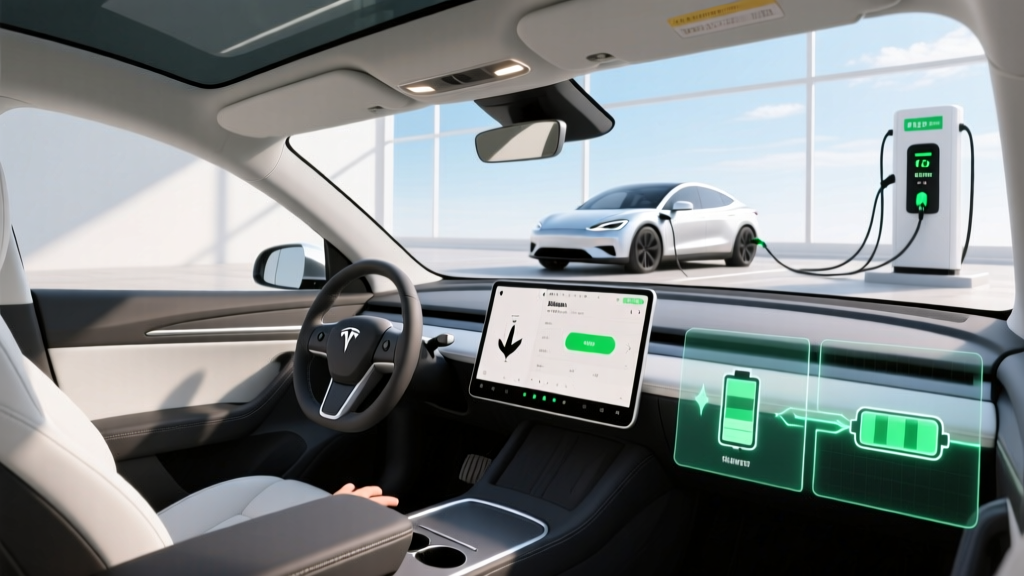
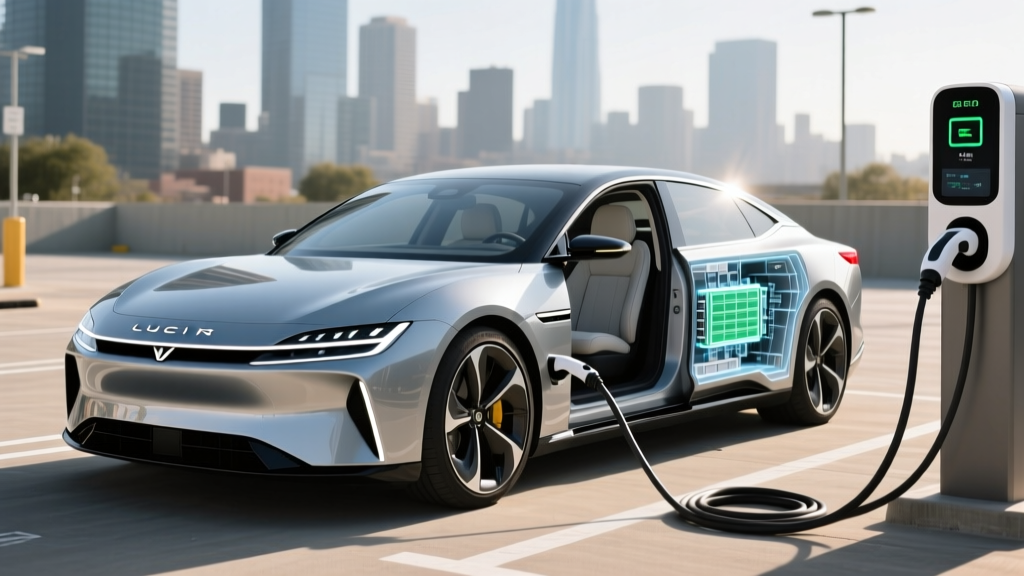
Charging capability is where the ID.7 makes a strong case for road-trip readiness. The US-spec model is expected to support up to 200 kW peak DC fast charging on CCS-equipped vehicles (or NACS if VW confirms the adapter/transition for 2026). On a 350 kW-class charger, VW claims a 10–80% charge in approximately 26 minutes.
| Charging Level | Power | Speed / Time |
|---|---|---|
| Level 1 (120V household) | ~1.4 kW | ~4–5 mi/hr added |
| Level 2 (240V home/public) | 11 kW (onboard charger) | ~33 mi/hr; full charge in ~8 hrs |
| DC Fast Charge (peak) | 200 kW | 10–80% in ~26 min |
Charging curve reality check: The 200 kW peak is only sustained between roughly 10–30% state of charge. Expect the curve to taper to ~150 kW by 50% SoC and drop below 100 kW past 70%. This is normal for NMC packs, but it means your actual average charging speed over a 10–80% session is closer to 130–140 kW. Still competitive with the segment, just don't expect 200 kW on the dashboard the entire session.
For home charging, the 11 kW onboard AC charger is a strong point. On a 48-amp Level 2 circuit (the most common home installation), you'll add roughly 33 miles of range per hour — meaning an overnight session easily replenishes a full day's driving. If your home electrical panel supports a 60-amp dedicated circuit, you'll max out the ID.7's onboard charger capability.
Performance & Driving Dynamics
The US-spec ID.7 Pro S (RWD) is expected to produce 282 horsepower and 339 lb-ft of torque from a single rear-mounted APP550 electric motor — the same upgraded unit introduced in the refreshed ID.4. Volkswagen claims a 0–60 mph time of approximately 6.5 seconds for the RWD model.
A dual-motor AWD variant (badged GTX or Pro S AWD) would bump output to roughly 335 horsepower and cut the 0–60 time to the low 5-second range. However, VW has not confirmed AWD availability for the initial US launch window — expect it as a late 2026 or 2027 model-year addition.
Driving dynamics are where the ID.7's sedan architecture pays dividends. The lower center of gravity, longer wheelbase (116.9 inches), and VW's adaptive damping suspension (available on higher trims) deliver a ride quality that the ID.4 simply can't match. This is a highway cruiser first, with composed body control and impressively low cabin noise at speed. The steering is accurate if not particularly communicative — typical of the MEB platform — but for the target buyer, refinement matters more than corner-carving feedback.
Interior Space, Cargo & Technology
The ID.7's dimensions make it one of the roomiest EVs in its price class. At 195.3 inches long with a 116.9-inch wheelbase, rear-seat legroom is generous — expect approximately 40.5 inches of rear legroom, enough for adults on long trips without complaint. The trunk offers roughly 18.8 cubic feet of cargo space (sedan trunk, not hatchback), which is competitive with the BMW i4 but less than the Tesla Model S or Hyundai Ioniq 6's liftback design.
A panoramic glass roof with electrochromic dimming (VW's "Smart Glass") is a standout feature on upper trims — it can switch between transparent and opaque at the touch of a button, eliminating the need for a physical shade while reducing heat intrusion.
Infotainment & Software: The ID.7 runs VW's ID. Software 4.0 on a 15-inch center touchscreen with a redesigned interface that addresses many of the complaints leveled at earlier ID. models. The slider-style volume and climate controls remain (a divisive choice), but responsiveness and menu logic are markedly improved. Wireless Apple CarPlay and Android Auto are standard, along with a head-up display with augmented-reality navigation overlays.
Driver Assistance: Volkswagen's IQ.DRIVE suite is standard, including adaptive cruise control with stop-and-go, lane centering, automatic emergency braking, and blind-spot monitoring. An available Travel Assist system enables hands-on highway driving assistance up to approximately 90 mph. This is an SAE Level 2 system — the driver must keep hands on the wheel and remain engaged at all times. It is not autonomous driving.
Pricing, Trims & Federal Tax Credit Eligibility
Volkswagen has not published final US pricing for the 2026 ID.7, but based on European pricing conversion, VW's US pricing strategy for the ID.4, and competitive positioning, we project the following MSRP structure:
| Trim | Est. MSRP | Max §30D Credit | Effective Price |
|---|---|---|---|
| Pro S (RWD) | ~$49,990 | Up to $7,500* | ~$42,490* |
| Pro S Plus (RWD) | ~$54,990 | Up to $7,500* | ~$47,490* |
| AWD / GTX (if available) | ~$57,990 | Up to $7,500* | ~$50,490* |
*Tax credit eligibility is not guaranteed and depends on multiple factors. See checklist below.
Federal EV Tax Credit (§30D) Checklist for the ID.7
- MSRP Cap: Sedans must have an MSRP at or below $55,000 to qualify. The Pro S trim should clear this; higher trims and AWD may exceed the cap.
- Buyer Income Limits: Modified AGI must not exceed $150,000 (single), $225,000 (head of household), or $300,000 (joint filing).
- Battery Sourcing: The full $7,500 requires meeting BOTH critical minerals ($3,750) AND battery component ($3,750) sourcing requirements per IRS §30D rules. VW's battery supply chain for US-spec ID.7 models will determine whether buyers receive $3,750, $7,500, or $0. This is the biggest variable.
- Point-of-Sale Transfer: As of 2024, eligible buyers can transfer the credit to the dealer at purchase, reducing the purchase price upfront rather than waiting for a tax refund. Confirm dealer participation.
- Assembly: The vehicle must undergo final assembly in North America. VW's Emden, Germany plant currently builds the ID.7 — unless VW shifts production to its Chattanooga, TN facility, the ID.7 may NOT qualify for §30D. This is the single most critical factor to watch.
Bottom line on incentives: If VW continues importing the ID.7 from Germany, it will likely not qualify for the federal §30D credit due to the North American assembly requirement. However, some states offer their own EV incentives that don't require US assembly — check your state and local incentive programs for details. A lease may also bypass the assembly requirement under §45W commercial clean vehicle rules, which is a strategy VW and its dealers may promote.
Warranty & Ownership Costs
Volkswagen's EV warranty package is competitive and aligns with industry norms:
- Battery Warranty: 8 years / 100,000 miles (whichever comes first), covering defects and capacity loss below 70% of original capacity
- Powertrain Warranty: 8 years / 100,000 miles
- Bumper-to-Bumper: 4 years / 50,000 miles
- Complimentary Maintenance: 2 years / 20,000 miles (VW's Carefree Maintenance program)
The 70% capacity retention threshold is standard across the industry (matching Tesla, Hyundai, and Ford), though some competitors like Rivian use a slightly more generous 70% over 8 years/175,000 miles. For a sedan buyer putting on 12,000–15,000 miles annually, the 100,000-mile battery warranty provides coverage through roughly years 7–8 of ownership.
Long-term ownership costs for the ID.7 should be favorable relative to gas-powered midsize sedans. Electricity at the national average of ~$0.16/kWh means "filling" the 82 kWh usable battery costs roughly $13 for 300+ miles of range — about 4.3 cents per mile. A comparable gas sedan at 30 MPG and $3.50/gallon runs about 11.7 cents per mile. Over 5 years and 75,000 miles, that's a fuel savings of approximately $5,500 before accounting for any time-of-use rate optimization with home charging.
ID.7 vs. the Competition: Where It Fits
| Spec | VW ID.7 Pro S | Tesla Model 3 LR | Hyundai Ioniq 6 SEL | BMW i4 eDrive40 |
|---|---|---|---|---|
| EPA Range (est.) | ~350 mi | 363 mi | 361 mi | 307 mi |
| Battery (usable) | 82 kWh | 75 kWh | 77.4 kWh | 81.5 kWh |
| Peak DC Charge | 200 kW | 250 kW | 240 kW | 205 kW |
| 10–80% DC Time | ~26 min | ~20 min | ~18 min | ~31 min |
| 0–60 mph | ~6.5 sec | 4.2 sec | 5.1 sec | 5.5 sec |
| Base MSRP (est.) | ~$49,990 | ~$47,740 | ~$42,450 | ~$52,200 |
| Rear Legroom | ~40.5 in | 35.3 in | 35.4 in | 34.7 in |
The ID.7's clear advantage is interior space — it's a full size class larger inside than the Model 3 and Ioniq 6, making it the best choice for buyers who regularly carry adult rear passengers. Its charging speed is mid-pack, and its acceleration trails the Tesla and Hyundai. Pricing is the wildcard: if VW can't hit a sub-$50K starting price or secure tax credit eligibility, the Ioniq 6 and Model 3 become significantly more compelling on value.
Pros, Cons & Who Should Buy the ID.7
✔ Pros
- Class-leading rear-seat room and trunk space
- Strong EPA range (~350 mi) with efficient aero profile
- 200 kW DC charging is solid for road trips
- Refined, quiet ride quality at highway speeds
- Electrochromic panoramic roof is a premium differentiator
- Improved ID. Software 4.0 interface
✘ Cons
- Likely built in Germany — may not qualify for §30D tax credit
- Slower 0–60 than Model 3 and Ioniq 6 competitors
- Touch-sensitive steering wheel controls remain frustrating
- No hands-free highway driving (unlike Super Cruise / BlueCruise)
- Charging speed trails Hyundai's 800V architecture
- VW's US EV commitment has been inconsistent
Who the ID.7 Suits Best
Buy it if: You want a spacious, comfortable electric sedan for commuting and road trips; you regularly carry adult passengers in the rear seat; you prioritize ride refinement and low cabin noise over outright acceleration; you have access to home Level 2 charging and don't rely solely on public fast charging.
Look elsewhere if: Maximum tax credit eligibility is critical to your budget (consider the US-built Tesla Model 3 or Hyundai Ioniq 6 assembled in Georgia); you want performance-sedan acceleration; you need hands-free highway driving assist; you want hatchback/crossover cargo versatility.
Frequently Asked Questions
What is the real-world range of the VW ID.7?
While the EPA estimate is projected at 340–360 miles for the RWD Pro S, real-world highway driving at 70+ mph will likely yield 280–310 miles. In freezing temperatures, expect a further 20–30% reduction, bringing cold-weather highway range to approximately 200–250 miles. City driving with regenerative braking recovers more energy and will be closer to the EPA sticker.
How fast does the ID.7 charge at home and on the road?
On a DC fast charger, the ID.7 peaks at 200 kW and charges from 10–80% in approximately 26 minutes (averaging ~130–140 kW over the session). At home on a Level 2 (240V, 48-amp) charger, the 11 kW onboard charger adds roughly 33 miles of range per hour, fully replenishing the battery in about 8 hours.
Does the VW ID.7 qualify for the $7,500 federal EV tax credit?
This is uncertain and depends on two critical factors: (1) final assembly location — if the ID.7 is imported from Germany rather than built in VW's Chattanooga, TN plant, it fails the North American assembly requirement; and (2) battery component and critical mineral sourcing per IRS guidelines. A lease may bypass the assembly requirement. Always verify eligibility on the official IRS clean vehicle list before purchasing.
Is the VW ID.7 worth buying over a Tesla Model 3 or Hyundai Ioniq 6?
The ID.7 wins on interior space and ride comfort — it's a larger, more relaxed sedan than both competitors. The Model 3 wins on performance, charging speed, and Supercharger network access. The Ioniq 6 wins on value (lower starting price), faster 800V charging, and US assembly (better tax credit odds). Choose the ID.7 if rear-seat room and touring refinement are your top priorities.
Will VW actually sell the ID.7 in the US?
Volkswagen has confirmed the ID.7 for the US market, though the timeline has shifted multiple times. As of early 2026, VW indicates a US launch for the 2026 model year. However, VW's history of EV delays in the US warrants cautious optimism — we recommend waiting for official pricing and configurator availability before making purchase plans.
What connector does the US-spec ID.7 use — CCS or NACS?
Volkswagen has announced a transition to the NACS (Tesla-style) connector for future US EVs, but the timing for the ID.7 specifically is not yet confirmed. Early US-spec models may ship with CCS1 and include a NACS adapter for Supercharger access. Confirm the connector type with your dealer before purchase, especially if home charger installation is planned.