Why a VW Electric Lease Deserves a Hard Look in 2026
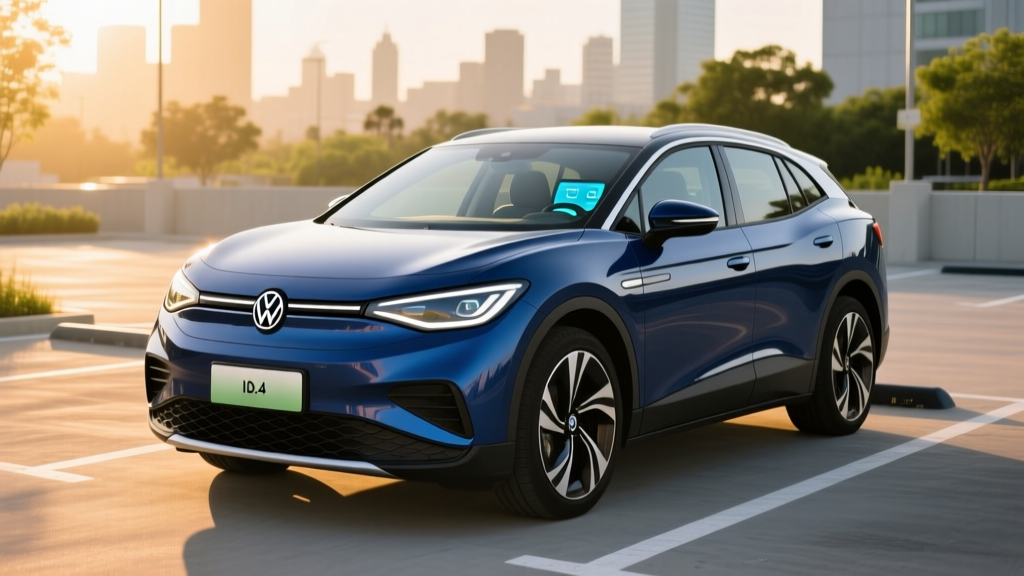
Volkswagen's ID.4 has positioned itself as the sensible electric crossover for American families — a 275-mile EPA range, roomy cabin, and a starting MSRP that undercuts many rivals. But the real question for most shoppers isn't just sticker price; it's what happens to your wallet over the next five years. Whether you're considering a purchase or a VW electric lease, understanding the full cost picture — including federal incentives, charging economics, insurance premiums, and depreciation — is essential before signing anything.
This guide breaks down the 2026 VW ID.4 ownership equation with real numbers, not marketing promises. We'll use the ID.4 Pro (RWD, 82 kWh usable battery) as our baseline, with notes where AWD and ID.4 Pro S trims change the math.
2026 VW ID.4: The Specs That Drive the Cost Equation
Before we get into dollars and cents, here's what you're working with on the current-generation ID.4:
| Spec | ID.4 Pro (RWD) | ID.4 Pro S AWD |
|---|---|---|
| EPA Range | 275 mi | 245 mi |
| Real-World Range (highway, mild weather) | ~240-255 mi | ~215-230 mi |
| Real-World Range (cold weather, 32°F) | ~210-225 mi | ~185-200 mi |
| Battery (usable) | 82 kWh, NMC | 82 kWh, NMC |
| Peak DC Fast Charge | 175 kW | 175 kW |
| 10-80% DC Fast Charge | ~29 min | ~29 min |
| Level 2 Charge Rate | 11 kW (AC) | 11 kW (AC) |
| 0-60 mph | 7.7 sec | 5.4 sec |
| Horsepower | 282 hp | 335 hp |
| Efficiency (combined) | 104 MPGe | 93 MPGe |
| Base MSRP (2026) | $40,790 | $48,790 |
| Battery/Powertrain Warranty | 8 yr / 100,000 mi | 8 yr / 100,000 mi |
5-Year Total Cost of Ownership: The Full Breakdown
Here's where the rubber meets the road. Below is a five-year TCO estimate for the 2026 ID.4 Pro (RWD) assuming 15,000 miles/year (75,000 miles total), home Level 2 charging at the US average electricity rate, and no major out-of-warranty repairs.
| Category | 5-Year Cost (ID.4 Pro RWD) | Notes |
|---|---|---|
| Purchase Price (base MSRP) | $40,790 | Before incentives; higher trims add $4,000-$8,000 |
| Federal Tax Credit (§30D) | -$7,500 (if eligible) | Point-of-sale or tax filing; see eligibility below |
| Effective Purchase Price | $33,290 | Assumes full $7,500 credit applied |
| Home Charging (electricity) | $3,750 - $5,250 | 75,000 mi ÷ 3.0 mi/kWh × $0.15-$0.21/kWh |
| Insurance | $9,000 - $11,500 | ~$1,800-$2,300/yr; higher than gas equivalent |
| Maintenance | $1,500 - $2,200 | Cabin filters, tires, wipers, fluid top-ups |
| Depreciation (est. 5-yr resale) | $16,000 - $20,000 | EVs depreciating faster than some gas counterparts |
| Estimated 5-Year TCO | $53,540 - $62,240 | Varies by state, driving, insurance, electricity rate |
For comparison, a similarly priced gas crossover like the Toyota RAV4 ($32,000 base) would cost roughly $48,000-$58,000 over five years — more in fuel, less in purchase price and depreciation. The gap narrows significantly once you apply the $7,500 federal credit and factor in maintenance savings.
Federal Tax Credit: Do You Actually Qualify?
The IRS §30D Clean Vehicle Credit offers up to $7,500 for qualifying new EVs, but eligibility is anything but automatic. For 2026, the rules have tightened around battery sourcing, income caps, and MSRP limits. Here's the checklist you need to work through:
- MSRP Cap: The ID.4 qualifies as an SUV under IRS classification, so the cap is $80,000. All current ID.4 trims fall well below this threshold.
- Buyer Income Limits: Modified adjusted gross income (MAGI) must not exceed $300,000 (married filing jointly), $225,000 (head of household), or $150,000 (single). The credit phases out entirely above these limits — there is no partial credit.
- Battery Component Manufacturing: A percentage of battery components must be manufactured or assembled in North America. This threshold has increased annually; for 2026, it's 80% for the $3,750 component half of the credit.
- Critical Minerals Sourcing: A percentage of critical minerals must be sourced from the US or a free-trade-agreement country. The 2026 threshold is 80% for the remaining $3,750 mineral half.
- Foreign Entity of Concern (FEOC): If any battery components or critical minerals come from a FEOC (primarily targeting Chinese supply chains), the vehicle may be disqualified entirely, regardless of other criteria.
- Point-of-Sale Transfer: Since 2024, buyers can transfer the credit to the dealer at purchase, reducing the sale price directly rather than waiting for a tax refund. This is especially relevant for a VW electric lease, as the leasing company (the legal owner) claims the credit and typically passes the savings through as a capitalized cost reduction — lowering your monthly payment.
Charging vs. Gas: The Per-Mile Math
The ID.4 Pro RWD averages about 3.0 miles per kWh in real-world mixed driving (the EPA rates it at roughly 3.1 mi/kWh, or 104 MPGe combined). Here's how that translates to actual fuel costs:
| Scenario | Cost per Mile | Annual Cost (15k mi) | 5-Year Cost |
|---|---|---|---|
| Home charging ($0.15/kWh avg) | $0.05 | $750 | $3,750 |
| Home charging ($0.21/kWh, high-cost state) | $0.07 | $1,050 | $5,250 |
| Public DC fast charging ($0.40/kWh avg) | $0.13 | $1,950 | $9,750 |
| Gas equivalent (RAV4, 30 MPG, $3.40/gal) | $0.11 | $1,700 | $8,500 |
The takeaway is clear: home charging is where the savings live. At the US average residential rate of roughly $0.15-$0.17/kWh, the ID.4 costs about half as much per mile as a comparable gas crossover. But if you rely heavily on public DC fast charging — which averages $0.35-$0.48/kWh on networks like Electrify America and EVgo — your fuel costs can actually exceed a gas vehicle. This is a critical consideration if you don't have access to home or workplace Level 2 charging.
For a VW electric lease, factor in whether your home electrical panel can support a 40-amp Level 2 charger (requiring a 50-amp circuit). Installation typically runs $500-$2,000 depending on panel proximity and local permitting, and some utilities offer rebates that offset this cost.
Maintenance Savings: Where EVs Quietly Win
The ID.4 eliminates the most common recurring maintenance costs of gas vehicles. Here's a side-by-side look at what you will — and won't — pay for over five years:
| Maintenance Item | ID.4 (EV) | Gas Crossover Equivalent |
|---|---|---|
| Oil Changes | $0 | $600 - $1,000 (every 7,500-10k mi) |
| Brake Pads | $0 - $300 (rarely needed; regen braking) | $600 - $1,200 (1-2 replacements) |
| Transmission Fluid | $0 | $150 - $300 |
| Engine Air Filter | $0 (no engine) | $100 - $200 |
| Cabin Air Filter | $150 - $300 | $150 - $300 |
| Tire Rotation/Replacement | $1,200 - $1,800 (EVs wear tires faster due to torque + weight) | $800 - $1,400 |
| Coolant / Fluid Top-Ups | $100 - $200 | $200 - $400 |
| 5-Year Total (est.) | $1,500 - $2,200 | $2,600 - $4,800 |
The net maintenance savings of roughly $1,000-$2,600 over five years is meaningful but not transformational. The bigger win is convenience: no oil change appointments, no surprise transmission services. The one area where EVs actually cost more is tires — the ID.4's instant torque and heavier curb weight (~4,700 lbs) accelerate tread wear, so budget for a tire replacement around year 3-4.
Insurance Reality: The Cost Most Buyers Overlook
EV insurance premiums are typically 15-25% higher than equivalent gas vehicles. For the 2026 ID.4, expect annual premiums in the range of $1,800-$2,300 depending on your state, driving record, and coverage level. Several factors drive this:
- Higher repair costs: EV-specific components (battery pack, power electronics, heat pump) are expensive to replace after a collision.
- Specialized labor: Fewer body shops have EV-certified technicians, which drives up labor rates for claims.
- Total-loss thresholds: Battery damage in even minor accidents can push repair costs above the vehicle's actual cash value.
- Vehicle price: The ID.4's MSRP is simply higher than many gas crossovers, which directly affects comprehensive and collision premiums.
Before committing to a VW electric lease, get an insurance quote for the specific trim you're considering. Some insurers (Geico, Progressive, State Farm) offer EV-specific discounts, and bundling with home insurance can shave 5-10% off the premium.
Depreciation and Resale Value: The Honest Picture
EV depreciation has been a moving target. According to data from iSeeCars and Kelley Blue Book, EVs as a segment depreciated roughly 45-55% over three years as of late 2025 — steeper than the gas-vehicle average of ~35-40%. The ID.4 has tracked near the middle of the EV pack, with 5-year retained values estimated at roughly 40-50% of MSRP, or $16,000-$20,000 in resale value after five years and 75,000 miles.
Several factors influence this:
- Battery health perception: Buyers of used EVs worry about degradation, even though VW's 8-year/100,000-mile battery warranty (covering capacity below 70%) is transferable to subsequent owners.
- Tesla price wars: Aggressive new-EV pricing from Tesla and others has compressed used-EV values across the market.
- Technology refresh cycles: Newer models with faster charging and longer range make older EVs feel dated faster than gas vehicles.
This is where a VW electric lease actually mitigates your risk. With a 36-month lease, you hand the vehicle back at term end and don't absorb the depreciation hit directly. The residual value is set at signing, so even if market values drop further, your exposure is limited to the agreed-upon monthly payment. For buyers who plan to keep the ID.4 for 7-10 years, depreciation matters less — the vehicle is driven until it's essentially worthless regardless of market value.
State, Local, and Utility Incentives: Check Your Region
- California (CVRP): Up to $7,000 for income-qualified buyers (stackable with federal credit)
- Colorado: Up to $5,000 state tax credit for new EV purchases
- New York (Drive Clean Rebate): Up to $2,000 point-of-sale rebate
- Utility rebates: Many utilities (PG&E, ConEd, Xcel Energy) offer $250-$1,000 for home Level 2 charger installation or off-peak charging credits
- HOV lane access: States like California, Colorado, and Virginia grant solo HOV lane access to qualifying EVs — a significant daily commute benefit
Lease vs. Buy: The Decision Framework for the ID.4
- You want to access the $7,500 incentive without worrying about income caps or battery-sourcing rules (via the commercial credit lease structure)
- You drive 10,000-15,000 miles/year (within typical lease mileage limits)
- You prefer swapping into a newer EV every 36 months as charging tech and range improve
- You want predictable monthly costs without depreciation risk
- You have reliable home Level 2 charging access
- You qualify for the full $7,500 §30D credit on your own (income and sourcing requirements met)
- You drive fewer than 10,000 or more than 15,000 miles/year (lease penalties apply)
- You plan to keep the vehicle 6+ years, amortizing the higher upfront cost
- You want the flexibility to sell or trade at any time without lease termination fees
- You want to modify the vehicle (window tint, wraps, aftermarket wheels)
Frequently Asked Questions
How much does a VW electric lease actually cost per month in 2026?
VW ID.4 lease payments vary by region, dealer, and current incentives. As of early 2026, expect roughly $350-$500/month for a 36-month lease on an ID.4 Pro with 10,000 miles/year, assuming the $7,500 lease incentive is applied as a cap cost reduction and you put $2,000-$3,000 down. Pro S AWD trims push monthly payments toward $500-$600. Always get quotes from multiple VW dealers — lease money factors and residuals can vary.
Is the VW ID.4 eligible for the full $7,500 federal tax credit in 2026?
For direct purchases, eligibility depends on your income (under $150k single / $300k joint MAGI) and whether the ID.4's battery meets the 2026 critical-mineral and component-sourcing thresholds. VW has been working to localize battery supply chains, but the specific credit amount (full $7,500, partial $3,750, or $0) can change as sourcing rules tighten. For leases, the lessor claims the credit, and the buyer income/sourcing restrictions may not apply under §45W commercial vehicle credit rules. Confirm current eligibility on the IRS Clean Vehicle Credit page before committing.
How much will I save on fuel by driving the ID.4 instead of a gas SUV?
If you charge primarily at home at the US average rate of ~$0.16/kWh, the ID.4 costs about $0.05/mile in electricity versus $0.11/mile for a 30 MPG gas SUV at $3.40/gallon. That's roughly $900/year in fuel savings, or $4,500 over five years. The savings shrink if you rely on public DC fast chargers, which can cost $0.35-$0.48/kWh — making electricity more expensive per mile than gasoline in some scenarios.
Are EVs more expensive to insure than gas vehicles?
Yes, typically 15-25% more. For the ID.4, expect annual premiums of $1,800-$2,300 depending on your state and profile. The higher cost stems from expensive battery components, specialized repair requirements, and the vehicle's higher MSRP. Get a quote before signing — some insurers offer EV-specific discounts that partially close the gap.
How well does the VW ID.4 hold its value?
EVs as a segment have experienced steeper depreciation than gas vehicles, with 5-year retained values around 40-50% for the ID.4. Battery health perception, rapid technology improvements, and new-EV price competition all pressure used values. This depreciation risk is one of the strongest arguments for leasing — you transfer the resale-value uncertainty to the lessor.
What happens if the ID.4 battery degrades significantly?
VW covers the ID.4's high-voltage battery for 8 years or 100,000 miles, warranting that it will retain at least 70% of its original capacity. In practice, most NMC batteries in modern EVs with active thermal management lose about 10-15% capacity over 100,000 miles. If you lease for 36 months and 30,000-45,000 miles, battery degradation will be negligible — typically 2-5% loss — and you'll never approach warranty territory.
Can I install a Level 2 home charger for the ID.4?
Yes, and you should. The ID.4 accepts up to 11 kW on Level 2 AC, which adds roughly 30-35 miles of range per hour of charging — easily refilling a full battery overnight. A 40-amp Level 2 charger on a 50-amp circuit is the standard recommendation. Installation costs $500-$2,000 depending on your electrical panel's capacity and distance from the garage. If your home has a 100-amp main panel, you may need a panel upgrade ($1,500-$3,000) — consult a licensed electrician before committing to a charger purchase. Many utilities offer rebates of $250-$1,000 for Level 2 installations.