The Short Answer: Not for Passenger Cars in 2026
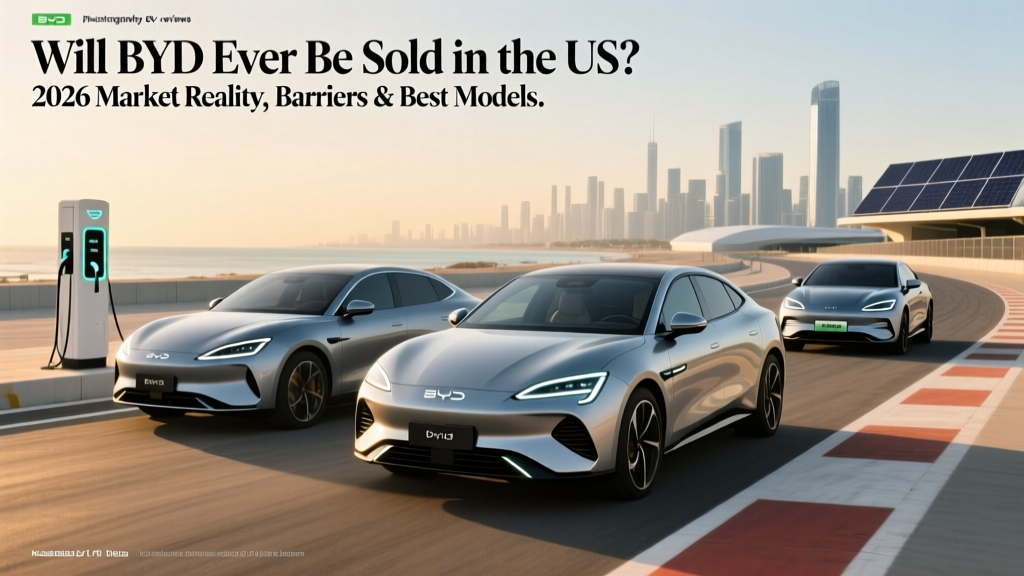
If you've been watching BYD dominate global EV sales and wondering will BYD ever be sold in the US, the honest answer for passenger vehicles is: not anytime soon. As of 2026, the Chinese automaker faces a wall of trade barriers that make US retail sales economically unviable. But the full picture — including BYD's commercial presence, its global lineup, and what it would take for the door to open — is more nuanced than a simple "no."
BYD sold over 3 million new energy vehicles globally in 2024 and has continued that momentum into 2026, rivaling and at times surpassing Tesla in pure battery-electric deliveries. Yet American consumers can't walk into a dealership and buy a BYD Seal, Dolphin, or Atto 3. Here's exactly why, what models are missing out, and what alternatives US buyers should consider right now.
Why BYD Passenger Cars Aren't Sold in the US
Three overlapping barriers keep BYD's passenger EVs off American roads:
1. The 100% Tariff on Chinese-Made EVs
In May 2024, the Biden administration announced a tariff increase on Chinese-made electric vehicles from 25% to 100% under Section 301 trade provisions. This tariff took effect in August 2024 and remains firmly in place in 2026. A 100% duty effectively doubles the landed cost of any BYD vehicle imported from China, wiping out the price advantage that makes BYD competitive in Europe, Southeast Asia, and Latin America.
2. The 27.5% "Chicken Tax" Baseline on Chinese Autos
Even before the EV-specific tariff, Chinese-manufactured passenger vehicles face a baseline 27.5% combined tariff (2.5% standard + 25% Section 301 auto tariff). The 100% EV tariff stacks on top of existing trade remedies, making the effective duty on a Chinese-built BYD EV among the highest of any imported good in US commerce.
3. Battery Sourcing and Tax Credit Exclusion
Under IRS §30D rules, any vehicle with battery components from a "foreign entity of concern" (FEOC) — which includes Chinese battery manufacturers like BYD's own FinDreams Battery division and CATL — is categorically ineligible for the federal EV tax credit. Even if BYD built a US factory, its battery supply chain would likely disqualify it from the up-to-$7,500 credit that helps competitors offset sticker prices. The IRS clean vehicle credit page details the FEOC exclusion rules.
Where BYD IS Present in the US (Commercial Vehicles)
BYD isn't entirely absent from American soil. The company operates a manufacturing facility in Lancaster, California, where it has produced battery-electric transit buses and commercial trucks since 2013. However, even this operation has faced headwinds:
- BYD transit buses: The Lancaster plant has supplied electric buses to transit agencies across the US, though federal "Buy America" requirements and political pressure have constrained contracts.
- BYD Class 8 trucks: The company has tested battery-electric drayage and yard trucks in California ports, competing with Tesla Semi, Volvo VNR Electric, and Freightliner eCascadia.
- No passenger vehicle production: BYD has never announced a US passenger car factory, and given the tariff environment, such an investment is unlikely before 2028 at the earliest.
What US Buyers Are Missing: BYD's Best Global EVs
To understand what American consumers can't access, here's a look at BYD's most compelling global models — specs drawn from international markets using WLTP testing. Note that WLTP range figures tend to run 10-15% higher than EPA estimates, so we've included estimated EPA-equivalent ranges.
| Model | Segment | Battery (kWh) | Chemistry | WLTP Range | Est. EPA Range | Peak DC kW | 0-60 mph | HP | Global Price (USD equiv.) |
|---|---|---|---|---|---|---|---|---|---|
| BYD Dolphin | Subcompact hatch | 60.4 | LFP (Blade) | 265 mi | ~225 mi | 88 kW | 7.0s | 201 | ~$30,000 |
| BYD Atto 3 | Compact SUV | 60.5 | LFP (Blade) | 260 mi | ~220 mi | 88 kW | 7.3s | 201 | ~$35,000 |
| BYD Seal | Midsize sedan | 82.5 | LFP (Blade) | 354 mi | ~300 mi | 150 kW | 5.9s (RWD) | 312 (RWD) | ~$42,000 |
| BYD Seal U | Midsize SUV | 87.0 | LFP (Blade) | 311 mi | ~265 mi | 140 kW | 7.9s | 308 (AWD) | ~$45,000 |
| BYD Han EV | Full-size sedan | 85.4 | LFP (Blade) | 323 mi | ~275 mi | 120 kW | 3.9s (AWD) | 516 (AWD) | ~$55,000 |
Note: All ranges shown are WLTP. Estimated EPA ranges are approximate and based on typical WLTP-to-EPA conversion ratios. Actual EPA-certified figures would be required for US sales. Prices are approximate global equivalents and do not reflect US tariff impact.
BYD's Blade Battery: The Technology US Buyers Can't Access
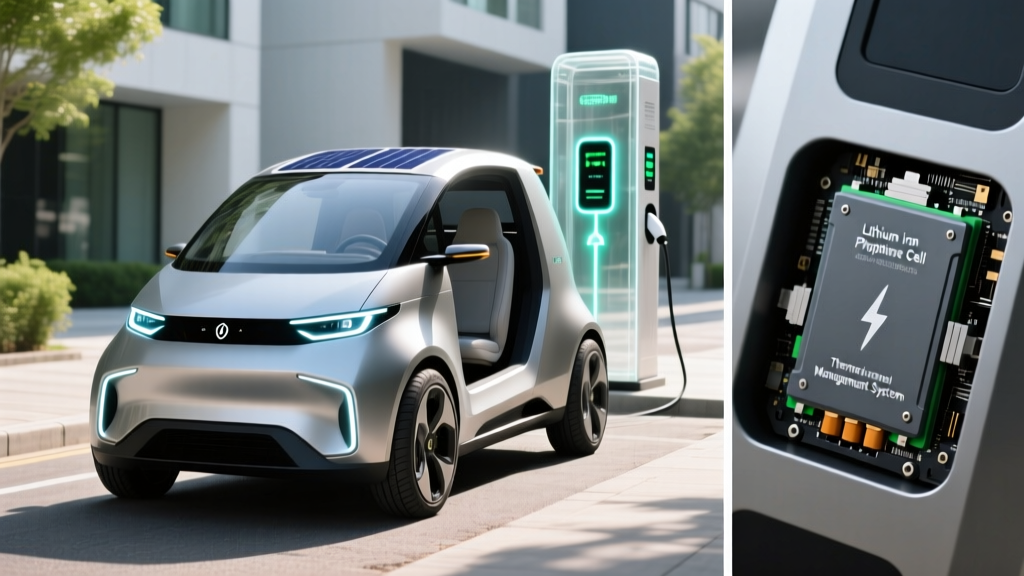
BYD's signature technology is its Blade Battery — a cell-to-pack lithium iron phosphate (LFP) design that the company has heavily marketed for its safety and longevity. Here's what makes it distinct:
LFP Chemistry Advantages
- Thermal stability: LFP cells are significantly more resistant to thermal runaway than NMC (nickel manganese cobalt) chemistries. BYD's nail penetration test — where a steel nail is driven through a fully charged cell — shows no fire or smoke, a claim backed by third-party testing.
- Cycle life: LFP batteries typically sustain 3,000-5,000+ full charge cycles before reaching 80% capacity, compared to 1,000-2,000 cycles for many NMC packs. In practice, this means a BYD Blade pack could outlast the vehicle itself.
- No cobalt: LFP chemistry eliminates cobalt entirely, sidestepping both the ethical mining concerns and the cost volatility associated with NMC supply chains.
The Trade-Offs
- Lower energy density: LFP cells store less energy per kilogram than NMC, which means heavier battery packs for the same range. This is why the BYD Seal's 82.5 kWh pack delivers an estimated ~300 miles EPA, while a Tesla Model 3 Long Range achieves 341 EPA miles from a smaller NMC pack.
- Cold-weather performance: LFP batteries experience more pronounced range loss in freezing temperatures — expect 25-35% reduction in sub-20°F conditions, compared to 15-25% for NMC packs with active thermal management.
- State-of-charge calibration: LFP's flat voltage curve makes it harder for the battery management system to estimate remaining charge precisely. BYD recommends periodic charging to 100% to recalibrate, unlike NMC packs where daily 80% limits are preferred.
Charging Specs: Competitive but Not Class-Leading
BYD's charging performance is adequate but trails the 800V architectures now standard on Hyundai/Kia E-GMP vehicles and the upcoming wave of 350+ kW chargers. Here's what global-spec BYD models deliver:
| Model | Max DC Fast Charge | 10-80% DC Time | Level 2 AC Rate | Level 2 Full Charge | Connector (Global) |
|---|---|---|---|---|---|
| BYD Dolphin | 88 kW | ~29 min | 11 kW | ~6.5 hrs | CCS2 / GB/T |
| BYD Atto 3 | 88 kW | ~29 min | 11 kW | ~6.5 hrs | CCS2 / GB/T |
| BYD Seal | 150 kW | ~26 min | 11 kW | ~8.5 hrs | CCS2 / GB/T |
| BYD Seal U | 140 kW | ~28 min | 11 kW | ~9.0 hrs | CCS2 / GB/T |
| BYD Han EV | 120 kW | ~30 min | 7 kW (some markets 11 kW) | ~12 hrs (7 kW) | CCS2 / GB/T |
For context, the Hyundai Ioniq 6 peaks at 240 kW on a 350 kW charger and hits 10-80% in about 18 minutes. BYD's 400V architecture limits peak charging to the 88-150 kW range — perfectly usable on road trips, but noticeably slower at high-traffic charging corridors where every minute counts.
One important note: BYD vehicles sold outside China use CCS2 connectors (Europe) or GB/T (China). If BYD entered the US market, vehicles would need the NACS (North American Charging Standard) connector to access Tesla Superchargers — now the dominant US fast-charging network. BYD has not committed to NACS adoption for any market.
Could the Tariff Situation Change?
The trade landscape isn't static. Several scenarios could theoretically open the door for BYD passenger vehicles in the US:
Scenario 1: BYD Builds a US or Mexico Factory
Manufacturing vehicles in North America would bypass the import tariff. However, BYD would still face the FEOC battery-sourcing restriction for tax credit eligibility, and building a greenfield auto plant is a $2-5 billion, 3-5 year commitment. BYD has announced factories in Thailand, Brazil, Hungary, Indonesia, and Turkey — but notably not in North America. The company's 2026 investor communications have not mentioned US production plans.
Scenario 2: Trade Policy Shift
A future administration could reduce or eliminate the Section 301 EV tariff. Given the bipartisan support for protecting the US auto industry from Chinese competition, this scenario is unlikely before 2028 at the earliest.
Scenario 3: Joint Venture or Licensing
BYD could license its Blade Battery technology or e-Platform 3.0 architecture to a US or allied-nation automaker. Toyota already uses BYD's platform for the bZ3 sedan sold in China. This kind of behind-the-scenes partnership is the most plausible way BYD technology reaches US consumers — inside a vehicle with a different badge.
What US Buyers Should Purchase Instead
If the BYD Seal or Atto 3 caught your eye, here are the closest US-available alternatives with comparable specs and full tax-credit eligibility:
| BYD Model | US Alternative | EPA Range | Base MSRP | §30D Credit Eligible? |
|---|---|---|---|---|
| BYD Dolphin | Chevrolet Bolt EV (if still available) / Nissan Leaf | 259 mi (Bolt) | ~$28,000 | Check current IRS list |
| BYD Atto 3 | Hyundai Kona Electric / Kia Niro EV | 261 mi (Kona) | ~$33,000 | Partial — verify sourcing |
| BYD Seal | Tesla Model 3 / Hyundai Ioniq 6 | 341 mi (Model 3 LR) | ~$39,000 | Yes (Model 3 RWD/LR) |
| BYD Seal U | Tesla Model Y / Ford Mustang Mach-E | 320 mi (Model Y LR) | ~$44,000 | Yes (Model Y) |
| BYD Han EV | BMW i5 / Mercedes EQE / Tesla Model S | 295 mi (i5 eDrive40) | ~$67,000 | Varies — check IRS |
For buyers specifically drawn to BYD's LFP battery longevity, the standard-range Tesla Model 3 and Model Y use CATL-sourced LFP cells (though Chinese-sourced LFP currently faces FEOC credit restrictions). The base Model 3 RWD delivers 272 EPA miles from an LFP pack at a starting price around $38,990 before incentives — the closest US-market analog to BYD's value proposition.
Pros and Cons: BYD If It Were Available in the US
✓ Pros (Global Market Evidence)
- Blade Battery LFP chemistry offers exceptional cycle life (3,000+ cycles) and thermal safety
- Competitive pricing globally — typically 20-30% below equivalent European/Japanese EVs
- Strong build quality and interior materials, particularly in Seal and Han models
- Standard V2L (vehicle-to-load) on most models — power appliances from your car
- Comprehensive warranty in international markets (typically 8 years/100,000 mi battery)
- Rotating center touchscreen is a distinctive, practical feature
✗ Cons (US Market Reality)
- 100% tariff makes US pricing completely uncompetitive
- DC fast charging peaks at 88-150 kW — slower than Hyundai/Kia/Tesla competitors
- No NACS connector — can't access Tesla Supercharger network without adapter
- FEOC battery sourcing eliminates federal tax credit eligibility
- Zero US dealer network, service infrastructure, or parts supply chain
- ADAS features (BYD DiPilot) are Level 2 only and untested by NHTSA/IIHS
- Cold-weather LFP range loss is more severe than NMC competitors
- Resale value completely unknown in the US market
Who Would a US-Available BYD Suit Best?
Based on the global lineup, BYD's strongest use cases would be:
- Budget-conscious commuters: The Dolphin and Atto 3 target buyers who want an affordable, practical EV for daily driving under 40 miles — if pricing could survive tariffs.
- Families wanting LFP longevity: Buyers who plan to keep their EV 10+ years and want the cycle-life advantage of LFP chemistry would find BYD's Blade Battery compelling.
- Tech-forward sedan buyers: The BYD Seal offers a legitimate Tesla Model 3 alternative with a more conventional interior layout and rotating 15.6-inch display.
BYD's lineup is not ideal for road-trippers who need 350+ mile range and 250+ kW charging, heavy towing (no BYD model offers significant tow ratings), or buyers in cold climates where LFP's winter range penalty is most pronounced.
Frequently Asked Questions
Can I import a BYD from another country?
Practically, no. Importing a vehicle not certified for US safety (FMVSS) and emissions standards requires a registered importer, crash-test compliance modifications, and EPA approval — a process that typically costs $10,000-$30,000+ and takes months. Even then, the 100% tariff applies. It's not a viable path for individual buyers.
Does BYD sell any vehicles in the US at all?
BYD manufactures battery-electric transit buses and has sold commercial trucks in the US through its Lancaster, California facility. These are fleet/commercial vehicles, not consumer passenger cars.
Will BYD come to the US if tariffs are reduced?
It's possible but uncertain. Even without tariffs, BYD would need to establish a dealer network, achieve US safety certifications (NHTSA/IIHS), adopt the NACS charging connector, and address FEOC battery-sourcing issues for tax credit eligibility. This would be a 3-5 year undertaking at minimum.
What's the cheapest EV I can buy in the US that's similar to a BYD?
The closest US-available equivalent to the BYD Dolphin is the Nissan Leaf S (~$28,000, 149-mile range) or, for range closer to BYD's global spec, the Hyundai Kona Electric SE (~$33,000, 261-mile EPA range). Neither matches BYD's global pricing, but both offer US warranty coverage, service infrastructure, and potential tax credit eligibility.
Is BYD's Blade Battery really safer than other EV batteries?
BYD's nail penetration test demonstrates that LFP Blade cells resist thermal runaway far better than conventional NMC pouch or cylindrical cells. Independent testing has largely validated these claims. However, pack-level safety depends on the entire battery system design, not just individual cells. No NHTSA or IIHS crash-test data exists for BYD vehicles, so real-world crash safety for US conditions is unverified.
Does BYD qualify for the federal EV tax credit?
No. Even if BYD vehicles were sold in the US, their Chinese-manufactured battery cells and critical minerals would trigger the FEOC (Foreign Entity of Concern) exclusion under IRS §30D rules, making them ineligible for the up-to-$7,500 federal tax credit regardless of price or buyer income. This is one of the most significant structural barriers to BYD's US competitiveness.