Quick Answer: Is a Cake Electric Dirt Bike Right for You?
Cake's electric dirt bikes (the Kalk and Jante lines) deliver 53–68 miles of real-world trail range from a 2.9–4.0 kWh lithium-ion battery, peak at 11–15 kW motor output, and charge from 0–100% in roughly 2.5–3 hours on a standard 120V household outlet. Prices start around $7,990 and climb past $14,000 for top-trim models. They cost pennies per charge versus $15–25 per ride in gas for an equivalent 250cc four-stroke, with virtually zero drivetrain maintenance. However, they are not eligible for the federal §30D EV tax credit (that credit applies to four-wheeled highway vehicles only). If you ride trails near home, want silent operation, and can charge from any standard outlet, a Cake is compelling. If you need 100+ mile desert loops or remote refueling flexibility, a gas bike still wins.
What Is the Cake Electric Dirt Bike?
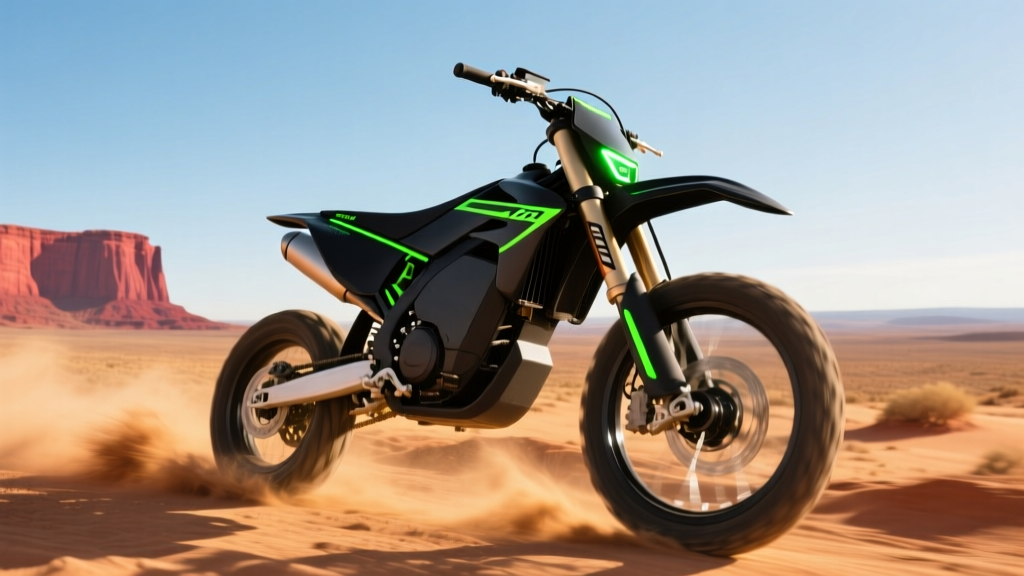
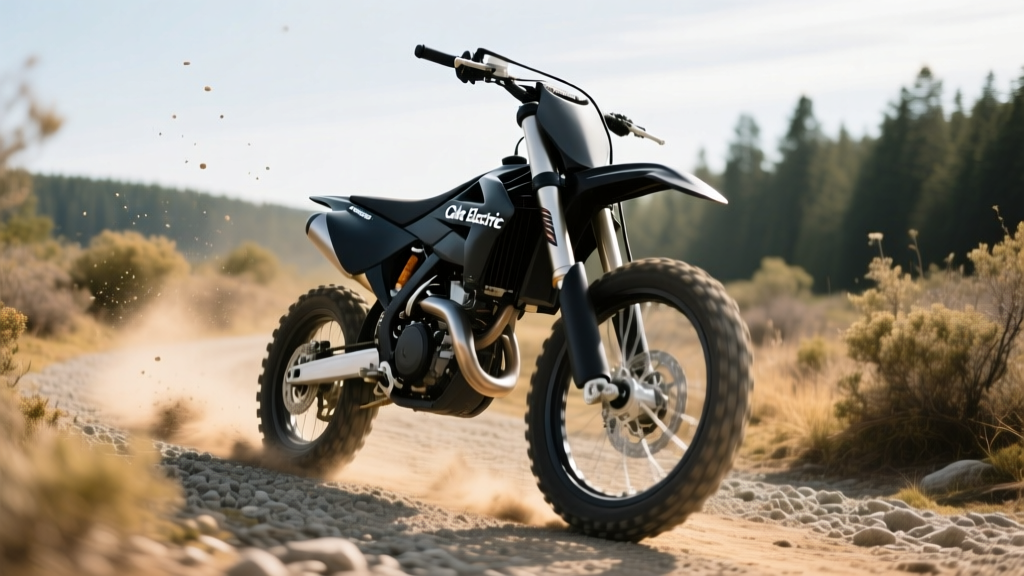
Cake is a Swedish manufacturer that builds lightweight, high-performance electric motorcycles and off-road bikes. Their dirt-oriented lineup centers on two platforms:
- Cake Kalk — a full-size electric enduro/motocross bike aimed at experienced riders, with 11 kW peak motor output, a top speed around 56 mph, and a 2.9 kWh battery.
- Cake Jante — a slightly more accessible platform with modular body configurations, a larger 4.0 kWh battery option, and similar peak power.
Both bikes use a single-speed drivetrain with no clutch, no gears, and regenerative braking that can simulate engine braking feel. The frames are aluminum, and Cake emphasizes minimalist Scandinavian design with repairable, modular construction.
These are off-road-focused machines. They are not DOT street-legal in most US states without aftermarket modifications, and they do not carry an MSRP that qualifies under any federal electric-vehicle incentive program. Think of them as the electric equivalent of a KTM 250 SX-F or Yamaha YZ250F — trail and track toys, not commuter vehicles.
Range, Battery, and Charging: The Numbers
Electric dirt bikes don't carry EPA range stickers the way cars do, but Cake publishes tested range figures based on mixed trail riding. Here is what the current lineup delivers:
| Spec | Cake Kalk (2025/2026) | Cake Jante (2025/2026) |
|---|---|---|
| Battery capacity (usable) | 2.9 kWh | 4.0 kWh |
| Battery chemistry | NMC lithium-ion | NMC lithium-ion |
| Claimed range (mixed trail) | Up to 53 mi | Up to 68 mi |
| Real-world range (aggressive riding) | ~30–40 mi | ~40–50 mi |
| Peak motor output | 11 kW (14.7 hp) | 15 kW (20 hp) |
| Top speed | 56 mph | 62 mph |
| Charge time (120V outlet) | ~2.5 hours | ~3 hours |
| Charge time (240V outlet) | ~1.5 hours | ~1.75 hours |
| Weight | ~154 lbs | ~170 lbs |
| Base MSRP | $7,990 | $9,990 |
Real-World Range Caveats
As with electric cars, published range assumes moderate throttle use and flat terrain. Aggressive motocross-style riding — full-throttle berms, hill climbs, sand — can cut range by 30–40%. Cold weather (below 40°F) further reduces usable capacity by roughly 15–20% due to increased internal battery resistance. If you plan hard enduro loops, budget for 30 miles of real range on the Kalk and plan your rides accordingly.
Charging Is Simple — No Special Equipment Needed
One of the biggest ownership advantages over electric cars: Cake bikes charge from a standard 120V household outlet using the included onboard charger. There is no Level 2 installation, no electrician visit, no panel upgrade. You plug in at home, at a cabin, or from a generator at the trailhead. A 240V outlet (like a dryer plug) cuts charge time roughly in half if you have access.
Cake Electric Dirt Bike vs Gas Dirt Bike: Cost Comparison
The upfront price of a Cake stings compared to a gas 250cc four-stroke. A new Yamaha YZ250F or KTM 250 SX-F runs $8,500–$10,500 — similar to Cake's base pricing. But the ongoing economics tell a very different story.
| Cost Factor | Cake Kalk (Electric) | Gas 250cc Four-Stroke |
|---|---|---|
| Purchase price | $7,990–$14,000 | $8,500–$10,500 |
| "Fuel" cost per ride (2 hrs) | $0.30–$0.60 (electricity) | $15–$25 (premium gas + oil) |
| Annual fuel/energy (50 rides) | $15–$30 | $750–$1,250 |
| Oil changes per year | 0 | 4–6 ($15–$30 each) |
| Air filter service | None | $20–$40 per cleaning/replacement |
| Chain maintenance | Standard (same as gas) | Standard |
| Top-end engine rebuild | Not applicable | $1,500–$3,000 every 100–200 hrs |
| Exhaust/valve service | Not applicable | $500–$1,200 |
| Estimated 5-year total cost (purchase + energy + maintenance) | $8,100–$8,500 | $13,000–$18,000 |
The breakeven point typically arrives within 2–3 years of regular riding. Over five years, the Cake can save $4,000–$9,000 in fuel and maintenance compared to a gas equivalent — enough to offset the higher purchase price of top-trim models.
What About Battery Replacement?
Cake's NMC battery is rated for approximately 1,000 full charge cycles before degrading to 80% of original capacity. At 50 rides per year, that's roughly 20 years of use before significant degradation. A replacement battery, if needed out of warranty, is estimated at $2,000–$3,500 based on current NMC cell pricing for this capacity class. Cake offers a 2-year battery warranty; check with your dealer for current terms.
Real-World Ownership: What First-Time Buyers Should Know
Noise Is a Feature, Not Just a Side Effect
Cake's silent operation opens riding opportunities that gas bikes cannot. You can ride on private property without noise complaints, access trails with noise restrictions, and practice technique in residential areas. This is one of the most-cited reasons riders switch to electric off-road bikes.
Home Charging Access Is Not a Barrier
Unlike electric car ownership — where Level 2 home charging installation can cost $500–$2,000 and require a 240V circuit — a Cake electric dirt bike charges from any standard wall outlet. If you can plug in a phone charger, you can charge a Cake. This eliminates the single biggest infrastructure concern that plagues EV car buyers.
Trail Range Requires Planning
With 30–50 miles of real-world range, Cake bikes are best suited for:
- Loop trails within 15–20 miles of your staging point
- Motocross track sessions (2–3 hours of riding)
- Private property and farm use
- Dual-sport riding near home base
They are not suited for:
- Multi-day adventure rides or desert rallies
- Remote backcountry trails without power access
- Riders who regularly cover 80+ miles per outing
Torque Delivery Changes How You Ride
Electric motors deliver peak torque from zero RPM. On a dirt bike, this means instant, controllable power with no powerband to manage. Many riders find this makes technical terrain easier — rock gardens, log crossings, and tight single-track benefit from precise, clutch-free throttle control. The regenerative braking also reduces brake fade on long descents.
Federal Tax Credits and Incentives: The Reality
Here is where expectations need adjusting. The IRS §30D Clean Vehicle Credit applies to four-wheeled vehicles with a gross vehicle weight rating under 14,000 lbs that are street-legal and meet battery-sourcing requirements. Electric dirt bikes and off-road motorcycles do not qualify.
This means:
- No $7,500 federal tax credit
- No point-of-sale transfer option
- No state EV rebate programs in most jurisdictions (these also target highway vehicles)
Some states and local utility districts offer small rebates for off-road electric equipment or electric motorcycles — check with your state energy office or utility provider. But do not factor any federal incentive into your Cake purchase budget.
Decision Framework: Should You Buy a Cake Electric Dirt Bike?
Choose a Cake Electric Dirt Bike If:
- You ride within 20 miles of a power source — trail loops, MX tracks, or private land near an outlet.
- Noise restrictions matter — you ride near residences, on noise-limited trails, or want to practice without complaints.
- You want minimal maintenance — no oil changes, no air filters, no valve adjustments, no top-end rebuilds.
- You value instant torque — technical terrain riding benefits enormously from clutch-free, zero-RPM power delivery.
- You can charge from any outlet — no special infrastructure needed, just a standard 120V plug.
Stick With a Gas Dirt Bike If:
- You ride 80+ mile desert or adventure loops — range and remote refueling flexibility still favor gas.
- You compete in sanctioned motocross or enduro events — most racing series are gas-only or have limited electric classes.
- You need maximum top-end power — a 450cc four-stroke produces 50+ hp versus Cake's 15–20 kW (20–27 hp equivalent).
- You ride in extreme cold regularly — battery performance drops 15–20% below 40°F.
- Budget is tight and you ride infrequently — the maintenance savings take years to offset the premium if you only ride 10–15 times per year.
Common Misconceptions About Electric Dirt Bikes
| Myth | Fact |
|---|---|
| "Electric dirt bikes have no power" | Cake's 15 kW peak output equals roughly 20 hp with instant torque — comparable to a 125cc two-stroke in trail feel, with more usable low-end grunt than most 250cc four-strokes. |
| "You need a special charger" | Cake bikes charge from any standard 120V household outlet. No Level 2 installation required. |
| "The battery will die in 3 years" | NMC cells are rated for ~1,000 charge cycles to 80% capacity. At 50 rides/year, that's 20 years before significant degradation. |
| "You get the $7,500 EV tax credit" | §30D applies only to four-wheeled highway vehicles. Electric dirt bikes and motorcycles are excluded. |
| "Electric bikes are heavier" | The Cake Kalk weighs ~154 lbs — lighter than most 250cc gas four-strokes (220–240 lbs wet). |
Frequently Asked Questions
How fast does the Cake electric dirt bike go?
The Cake Kalk tops out around 56 mph; the Jante reaches approximately 62 mph. Both are governed electronically. For off-road use, top speed is rarely the limiting factor — torque delivery and suspension travel matter more.
Can I ride a Cake in the rain?
Yes. Cake's electronics and battery are sealed to IP67 standards. Riding in rain, through water crossings, and in mud is fine. Do not submerge the bike above the seat height.
How long does the battery last before replacement?
Cake rates the NMC battery for approximately 1,000 full charge cycles to 80% capacity retention. With typical recreational use (30–50 rides per year), expect 15–20+ years before a replacement becomes necessary. The battery carries a 2-year warranty.
Is a Cake street-legal?
In most US states, no. Cake's dirt bikes are off-road machines without DOT-required equipment (turn signals, mirrors, horn meeting FMVSS standards). Some states allow limited OHV registration for dual-sport use on designated trails. Check your local DMV for off-highway vehicle rules.
Where can I test ride a Cake?
Cake sells primarily direct-to-consumer through their website, with a limited dealer network in the US. Demo events are held periodically in select cities. Check Cake's official site for current demo availability and dealer locations.
How does Cake compare to other electric dirt bikes?
Mainstream competitors include the KTM Freeride E-XC (~$9,500, 2.6 kWh battery, ~30-mile range) and the Sur-Ron Light Bee X (~$4,500, 1.8 kWh, ~20-mile range). Cake sits in the premium tier with better build quality, longer range, and more power than budget options, at a price comparable to the KTM. For a detailed comparison of the off-road electric motorcycle market, see our broader EV guides.
What maintenance does a Cake electric dirt bike require?
Minimal compared to gas: chain lubrication and adjustment, brake pad inspection, suspension service (annual fork/shock rebuild), tire replacement, and firmware updates via the Cake app. There is no engine oil, coolant, air filter, spark plug, clutch, or exhaust system to service.