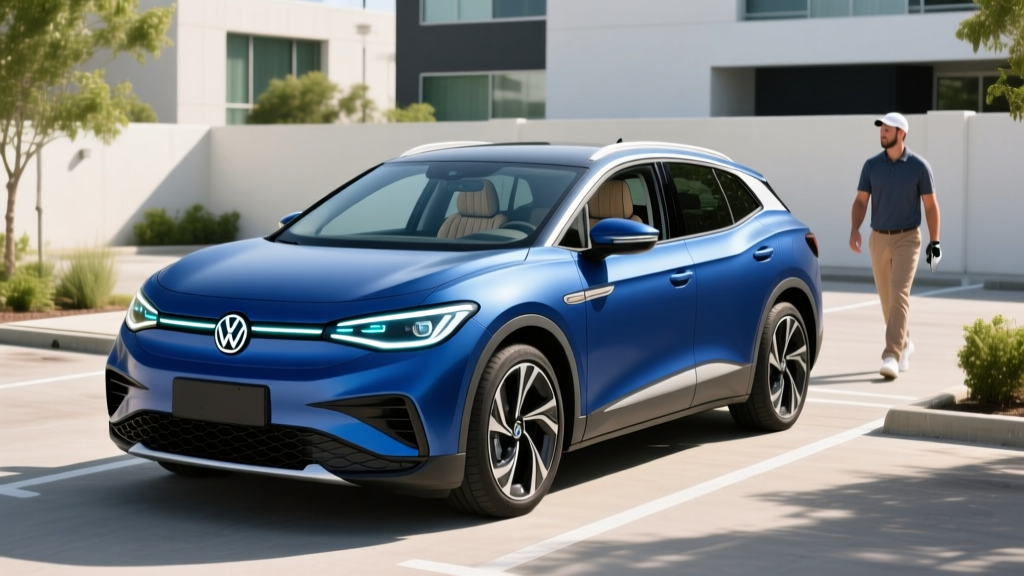
The quick answer: The 2026 Volkswagen ID.4 is VW's practical electric successor to the Golf for US buyers. Starting around $39,735, it delivers an EPA-estimated 291 miles of range (Pro S trim with 82 kWh usable battery), peaks at 175 kW DC fast charging (10–80% in ~30 minutes), and qualifies for the full $7,500 federal tax credit under current §30D rules — bringing the effective base price near $32,235. If you loved the Golf's everyday practicality but want lower running costs, the ID.4 checks most boxes — provided you have reliable home charging access.
Why the VW Electric Car Golf Search Leads to the ID.4
If you've been searching for a "vw electric car golf," you're not alone. Volkswagen discontinued the e-Golf in the United States after the 2019 model year, and the beloved gas-powered Golf was pulled from US showrooms after 2021 (though it continues in Europe). For American VW loyalists wanting an electrified hatchback experience, the ID.4 compact crossover is the closest current equivalent — slightly taller than a Golf, but carrying the same DNA of sensible German engineering, intuitive controls, and everyday usability.
The ID.4 rides on VW's MEB dedicated EV platform, sharing architecture with the Audi Q4 e-tron. For 2026, Volkswagen has refined the infotainment system (addressing earlier complaints about laggy touch sliders), added a larger 12.9-inch center display on upper trims, and improved regenerative braking calibration for smoother one-pedal-style driving.
2026 VW ID.4: Core Specifications at a Glance
| Spec | Pro (Base) | Pro S | AWD Pro S |
|---|---|---|---|
| EPA Range | 291 mi | 291 mi | 263 mi |
| Battery (usable) | 82 kWh (NMC) | 82 kWh (NMC) | 82 kWh (NMC) |
| Horsepower | 282 hp (RWD) | 282 hp (RWD) | 335 hp (AWD) |
| 0–60 mph | 7.7 sec | 7.7 sec | 5.4 sec |
| Peak DC Fast Charge | 175 kW | 175 kW | 175 kW |
| 10–80% DCFC Time | ~30 min | ~30 min | ~30 min |
| Level 2 (AC) Charge Rate | 11 kW | 11 kW | 11 kW |
| Combined MPGe | 104 MPGe | 104 MPGe | 93 MPGe |
| Cargo Volume (rear seats up) | 30.3 cu ft | 30.3 cu ft | 30.3 cu ft |
| Starting MSRP | $39,735 | $43,735 | $47,735 |
| Battery Warranty | 8 yr / 100,000 mi | 8 yr / 100,000 mi | 8 yr / 100,000 mi |
Source: fueleconomy.gov and Volkswagen of America official specifications.
Real-world range reality check: The EPA rates the RWD ID.4 at 291 miles, but expect ~230–255 miles on sustained highway driving at 70+ mph. In cold weather (below 32°F), range can drop 20–30%, putting realistic winter range around 190–220 miles for the RWD models. The AWD variant's 263-mile EPA figure translates to roughly 210–230 miles highway, and closer to 170–190 miles in deep winter. Preconditioning the battery while plugged in helps recover some of this loss.
ID.4 vs Gas Golf: Cost and Efficiency Compared
The last US-spec gas Golf (2021 model year) started around $23,195 and delivered 30 MPG combined. Here's how the ID.4 stacks up on running costs over a typical ownership period:
| Metric | 2026 VW ID.4 Pro | 2021 VW Golf (Gas, 30 MPG) |
|---|---|---|
| Purchase Price (MSRP) | $39,735 | $23,195 |
| Federal Tax Credit (§30D) | Up to $7,500 | $0 |
| Effective Price After Credit | ~$32,235 | $23,195 |
| Fuel/Energy Cost (15,000 mi/yr) | ~$540/yr (home charging at $0.14/kWh) | ~$1,750/yr ($3.50/gal) |
| Annual Maintenance | ~$250/yr | ~$650/yr |
| 5-Year Fuel + Maintenance | ~$3,950 | ~$12,000 |
| Estimated 5-Year Insurance | ~$9,500 | ~$7,200 |
The math: After the tax credit, the ID.4 costs roughly $9,000 more upfront but saves about $8,050 in fuel and maintenance over five years. Insurance runs ~$2,300 higher over that period. Net five-year cost difference narrows to approximately $3,250 more for the ID.4 — a gap that shrinks further if gas prices rise or if your state offers additional rebates. Check your state's specific incentive programs, as amounts vary by jurisdiction.
Charging the ID.4: What You Actually Need to Know
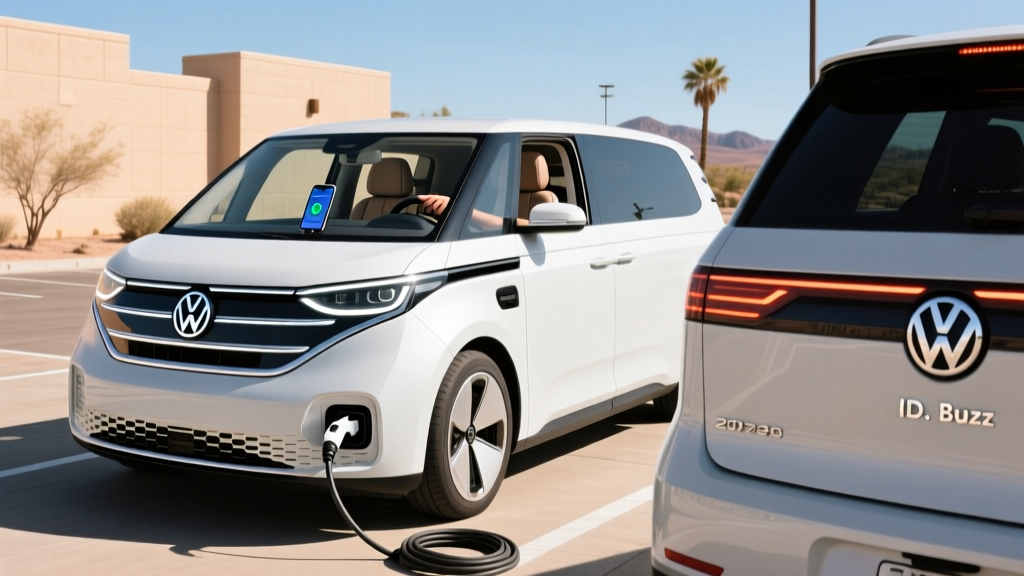
The ID.4 uses the NACS (Tesla-style) connector starting with the 2025 model year, giving it native access to Tesla's Supercharger network — a major practical advantage over older CCS-equipped EVs. Here's what charging looks like in practice:
| Charging Level | Power | Miles Added per Hour | Typical Use Case |
|---|---|---|---|
| Level 1 (120V household) | ~1.4 kW | ~3–4 mi/hr | Emergency/top-up only |
| Level 2 (240V home) | 11 kW (max) | ~30–33 mi/hr | Daily overnight charging |
| DC Fast Charge | Peak 175 kW | ~300+ mi/hr (at peak) | Road trips, rapid top-ups |
Charging curve reality: The ID.4 peaks at 175 kW only briefly between roughly 10–30% State of Charge. From 30–60%, expect sustained rates around 120–140 kW. Above 80%, charging slows dramatically to protect battery health — the last 20% can take as long as the first 60%. For road trips, plan your stops around the 10–80% sweet spot (~30 minutes) rather than waiting for a full charge.
Home charging installation cost: A Level 2 home charger (like the ChargePoint Home Flex or Emporia Level 2) runs $350–$700 for equipment. Professional installation by a licensed electrician typically costs $500–$2,000 depending on your panel's capacity and the run length from panel to garage. If your home has a 200-amp electrical panel with available capacity, expect the lower end. Older homes with 100-amp panels may need a $1,500–$3,000 panel upgrade. Always get a quote from a licensed electrician before committing.
Federal Tax Credit Eligibility: Current §30D Rules
The ID.4 is assembled in Chattanooga, Tennessee, and currently qualifies for the full $7,500 federal tax credit under IRS §30D — but only if you meet all requirements:
- MSRP cap: Vehicle must be under $80,000 (all ID.4 trims qualify)
- Buyer income limits: AGI must not exceed $300,000 (joint), $225,000 (head of household), or $150,000 (single)
- Battery sourcing: Must meet critical minerals and battery component requirements (ID.4 currently compliant)
- Point-of-sale transfer: You can apply the $7,500 as an instant rebate at the dealer rather than waiting for tax filing
- New vehicle only: Used EV credits have separate rules (§25E, up to $4,000)
Important caveat: Tax credit rules around battery sourcing and critical minerals change periodically. Always verify current eligibility on irs.gov before purchasing, and consult a tax professional regarding your specific situation. The credit is non-refundable — you need sufficient tax liability to claim it (unless using point-of-sale transfer).
Common Misconceptions About the ID.4
| Myth | Fact |
|---|---|
| "The ID.4 is just a bigger Golf." | The ID.4 is a compact crossover, about 6 inches taller and 500 lbs heavier than a Golf. It offers more cargo room (30.3 vs 22.4 cu ft) but doesn't match the Golf's low-slung handling feel. |
| "Electric VWs have unreliable batteries." | The e-Golf had strong battery longevity records. The ID.4's 82 kWh NMC pack carries an 8-year/100,000-mile warranty guaranteeing at least 70% capacity retention. Industry data shows most NMC packs lose 8–15% capacity over the first 100,000 miles. |
| "I can't take road trips — charging takes too long." | At 175 kW peak, a 10–80% charge takes ~30 minutes. On a 600-mile trip, plan two 30-minute stops (which you'd likely take anyway for food/rest). Total added time vs. gas: roughly 20–30 minutes. |
| "The ID.4 qualifies for the tax credit for everyone." | You must meet income caps and the vehicle must meet sourcing rules. High-income buyers and those with low tax liability may not benefit fully. |
| "Cold weather destroys the battery permanently." | Cold reduces range temporarily (20–30% loss is typical), but the ID.4's active thermal management system protects long-term battery health. Permanent degradation from cold exposure is negligible. |
Who Should Buy the ID.4 — and Who Shouldn't
Choose the VW ID.4 if:
- You have access to Level 2 home charging (garage or driveway with 240V outlet)
- Your daily commute is under 80 miles round-trip (well within real-world range)
- You value a comfortable, quiet ride over sporty handling
- You want NACS Supercharger access without adapters
- You qualify for the federal tax credit (income under caps)
- You want a practical family EV with strong cargo capacity
Look elsewhere if:
- You live in an apartment with no charging access and rely solely on public chargers
- You regularly drive 300+ miles in a single day in cold climates
- You want hot-hatch driving dynamics (consider the used Golf GTI or wait for the ID.3/ID.GTI concepts)
- You need maximum fast-charging speed (Hyundai Ioniq 5 peaks at 350 kW on 800V architecture)
- You exceed the §30D income caps and the full MSRP stretches your budget
Frequently Asked Questions
Is the VW ID.4 a good replacement for the Golf?
For most US buyers, yes — it's the closest VW offers to the Golf's practical, everyday character in electric form. You gain cargo space, a smoother ride, and dramatically lower fuel costs. You lose the Golf's nimble handling and lower starting price. If driving dynamics are your priority, the ID.4 won't satisfy like a GTI did, but as a daily commuter and family hauler, it's a strong successor.
How long does the ID.4 battery last before replacement?
VW warranties the battery for 8 years or 100,000 miles against dropping below 70% capacity. Based on NMC chemistry degradation data from similar platforms, most owners can expect 80–85% capacity at 100,000 miles and 70–78% at 150,000 miles. Full battery replacement costs $15,000–$22,000 out of warranty, but complete replacements are rare — individual module repairs cost significantly less.
Does the ID.4 have self-driving capability?
No. The ID.4 comes equipped with VW's IQ.DRIVE suite, which includes adaptive cruise control and lane centering. This is an SAE Level 2 driver-assistance system — meaning you must keep your hands on the wheel and eyes on the road at all times. It is not autonomous or self-driving.
What's the real cost to charge the ID.4 at home?
At the US average residential electricity rate of ~$0.14/kWh, fully charging the 82 kWh battery from empty costs about $11.50. Since most owners charge from 20–80% overnight, expect $7–$8 per charge session. Over 15,000 miles of annual driving at 3.3 mi/kWh efficiency, annual home charging costs approximately $540 — compared to $1,750 for a 30 MPG gas car at $3.50/gallon.
Can I charge the ID.4 at Tesla Superchargers?
Yes. Starting with the 2025 model year, the ID.4 comes equipped with a native NACS charge port, providing direct access to Tesla's Supercharger network (now open to non-Tesla EVs with NACS ports) without any adapter. This significantly expands your DC fast-charging options, especially on road trips through areas where Electrify America or other networks have sparse coverage.