Quick Verdict: The R1S Dune in a Nutshell
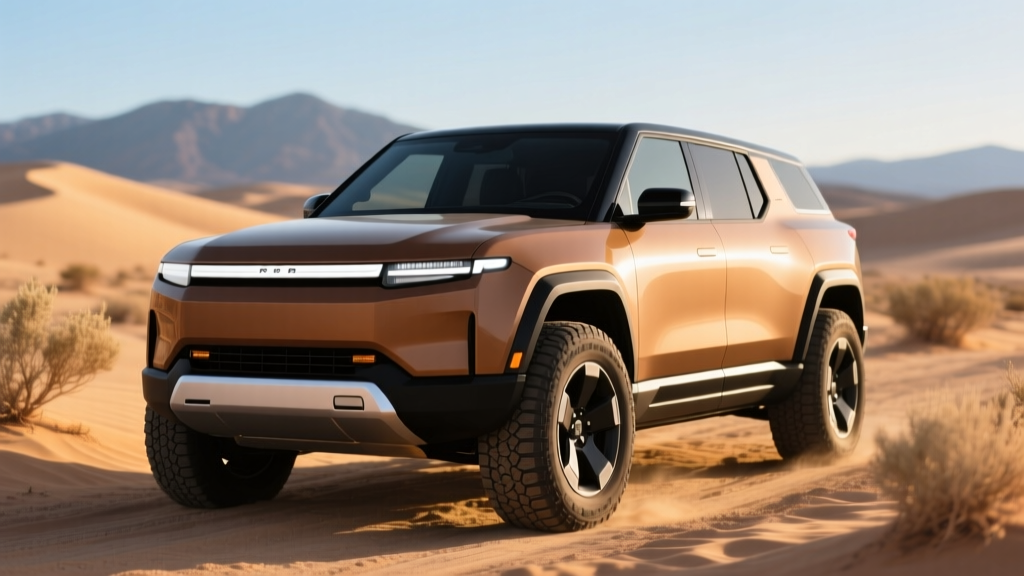
The 2026 Rivian R1S Dune is the brand's repositioned mid-tier trim for its three-row electric SUV, sitting between the Standard and the premium Ascend model. It replaces what was previously the Adventure trim and targets buyers who want serious off-road capability, 330 miles of EPA-estimated range, and genuine family-hauling practicality without stepping into six-figure territory. With the Gen 2 dual-motor powertrain, a 102-kWh NMC battery pack, and a refreshed interior, the R1S Dune makes a strong case as the most versatile large electric SUV on the market. But at a starting MSRP of $79,900, federal tax credit eligibility is complicated, and real-world highway range falls noticeably short of the sticker.
| Spec | Value |
|---|---|
| EPA Range (Max Pack) | 330 miles |
| Battery Capacity | 102 kWh usable, NMC (nickel manganese cobalt) |
| Drivetrain | Dual-motor AWD |
| Horsepower | 533 hp |
| Torque | 610 lb-ft |
| 0–60 mph | 4.5 seconds |
| Max DC Fast Charge | 200 kW (peak) |
| 10–80% DC Charge Time | ~30 minutes |
| Level 2 Home Charge Rate | 11.5 kW (~25 mi/hr) |
| MPGe (Combined) | 73 MPGe |
| Efficiency | 46 kWh/100 mi |
| Towing Capacity | 7,700 lbs |
| Cargo (behind 3rd row) | 20.2 cu ft |
| Cargo (3rd row folded) | 57.6 cu ft |
| Cargo (max, all rows folded) | 104.7 cu ft |
| Base MSRP (Dune, Max Pack) | $79,900 |
| Battery/Powertrain Warranty | 8 years / 120,000 miles |
Range & Efficiency: EPA vs. the Real World
The R1S Dune with the Max Pack (102 kWh usable) carries an EPA-estimated range of 330 miles. That's a competitive figure for a 6,900-pound three-row SUV. Efficiency is rated at 73 MPGe combined (46 kWh per 100 miles) according to fueleconomy.gov, which is respectable given the vehicle's frontal area and weight, though it trails the more aerodynamic Tesla Model X (102 MPGe combined).
Real-World Range Expectations
EPA Sticker: 330 miles
Mixed driving (55/45 city/highway): Expect 280–310 miles in moderate temperatures.
Sustained highway (75 mph): Plan for 240–265 miles. The R1S's boxy shape and 6,900-lb curb weight hurt efficiency at speed.
Cold weather (below 32°F): Range drops 20–30%, meaning 230–260 miles is realistic on a winter road trip. The R1S uses a heat pump for cabin heating, which helps mitigate the loss compared to resistive heaters, but battery chemistry still suffers in deep cold.
Towing: With a trailer near the 7,700-lb max, expect range to roughly halve — around 150–170 miles between charges.
The NMC chemistry in the Max Pack delivers high energy density, which is why Rivian can pack 102 kWh into a reasonable footprint. However, NMC cells are more sensitive to sustained high state-of-charge and extreme heat than LFP alternatives. For daily commuting, Rivian recommends charging to 85–90% and only charging to 100% before long trips. If you want LFP durability and can accept less range, the Standard Pack (92 kWh, LFP) on lower trims may be a better fit — though the Dune trim is exclusively offered with the Max Pack NMC battery for 2026.
Charging Speed: DC Fast Charging & Home Level 2
Charging is where large-battery EVs live or die. The R1S Dune's 102-kWh pack needs serious throughput to keep road-trip stops reasonable.
| Charging Level | Power | Speed | Notes |
|---|---|---|---|
| Level 1 (120V) | ~1.4 kW | ~3 mi/hr | Emergency/trickle only; full charge in ~72 hours |
| Level 2 (240V, 48A) | 11.5 kW | ~25 mi/hr | Full charge overnight in ~9 hours |
| DC Fast Charge (peak) | 200 kW | 10–80% in ~30 min | Peak rate only below 40% SoC; tapers significantly above 80% |
| DC Fast Charge (sustained avg) | ~130 kW | ~145 mi in 30 min | Average rate across the 10–80% curve |
The 200-kW peak DC fast-charge rate is adequate but not class-leading. The Hyundai Ioniq 9 peaks at 240 kW, and the Tesla Model X can hit 250 kW on V3 Superchargers. The R1S's charge curve is front-loaded: you'll see close to 200 kW between 10–35% state of charge, then the rate steps down progressively. Above 80%, charging slows dramatically to protect the NMC cells — expect 80–100% to take nearly as long as 10–80%. For road trips, plan stops around the 10–80% window to minimize time plugged in.
At home, the onboard 11.5-kW charger is a strong point. On a 48-amp Level 2 circuit (like the Rivian Wall Connector or a ChargePoint Home Flex), you'll add roughly 25 miles of range per hour, meaning a depleted Max Pack refills in about 9 hours. Rivian ships the R1S with NACS (North American Charging Standard) as the native port for 2026, granting direct access to Tesla's Supercharger network — a significant practical advantage over CCS-equipped competitors that still require adapters.
Installation of a home Level 2 charger typically runs $500–$1,500 for equipment plus $800–$2,500 for electrician labor and permitting, depending on whether your electrical panel needs a 200-amp upgrade. Factor in $1,500–$4,000 total for a proper home charging setup.
Performance, Drivetrain & Ride Quality
The 2026 R1S Dune uses Rivian's Gen 2 dual-motor all-wheel-drive system, producing 533 horsepower and 610 lb-ft of torque. That's enough for a 4.5-second 0–60 mph run — genuinely quick for a vehicle that can seat seven and tow 7,700 pounds.
Ride quality benefits from Rivian's adaptive air suspension, which provides 6.5 inches of vertical travel. In Standard ride height, the R1S is comfortable and composed on pavement. In Sport mode, body roll tightens noticeably. Off-road mode raises the suspension to a maximum 14.9 inches of ground clearance, which, combined with the Dune trim's all-terrain tires and underbody protection, makes this one of the most capable off-road electric SUVs available.
The dual-motor system provides torque vectoring side-to-side on the rear axle, improving traction in low-grip scenarios. Regenerative braking offers multiple levels, including a true one-pedal driving mode that can bring the R1S to a complete stop without touching the friction brakes. A quad-motor option is available on higher trims (Ascend) but not the Dune.
Interior, Cargo & Technology
The R1S interior received a meaningful refresh for the 2026 model year. Material quality is improved, with vegan leather standard and a redesigned center console that adds usable storage. The 15.6-inch center touchscreen runs Rivian's proprietary infotainment system, which is responsive and well-organized, though it still lacks native Apple CarPlay and Android Auto — a persistent frustration for some buyers. Wireless phone mirroring is available as a workaround.
Passenger space:
- First row headroom: 41.1 inches | legroom: 41.3 inches
- Second row headroom: 39.8 inches | legroom: 38.2 inches
- Third row headroom: 37.5 inches | legroom: 30.4 inches
The third row is usable for children and shorter adults on trips under an hour, but it's tighter than the Kia EV9's third row (32.0 inches of legroom). Behind the third row, you get 20.2 cubic feet of cargo — enough for a few grocery bags or a compact stroller. Fold the third row and cargo space expands to 57.6 cu ft; fold everything and you get 104.7 cu ft. The front trunk (frunk) adds 11.1 cu ft of lockable, weather-sealed storage — ideal for charging cables or muddy gear.
Driver assistance: The R1S comes with Rivian's Driver+ system, a Level 2 (per SAE classification) driver-assistance suite. It includes adaptive cruise control, lane-centering steering, and automatic lane changes on divided highways. The driver must keep hands on the wheel and eyes on the road at all times — this is not a self-driving system. Rivian has been gradually expanding hands-free highway capability via over-the-air updates, but as of early 2026, it requires driver supervision and does not match the geographic coverage of GM's Super Cruise or Ford's BlueCruise. For detailed SAE automation level definitions, see the SAE J3016 standard.
Pricing, Trims & Federal Tax Credit Eligibility
The 2026 R1S lineup is structured around three trims: Standard (starting around $69,900), Dune ($79,900 with the Max Pack), and Ascend ($89,900+). The Dune is positioned as the sweet spot for buyers who want maximum range and genuine off-road equipment without the Ascend's luxury surcharge.
| Trim | Base MSRP | As-Tested (typical) | §30D Credit Eligible? |
|---|---|---|---|
| Standard (92 kWh LFP) | $69,900 | $72,000–$74,500 | Potentially — see rules below |
| Dune (102 kWh NMC, Max Pack) | $79,900 | $82,000–$87,000 | Potentially — see rules below |
| Ascend (102+ kWh) | $89,900 | $95,000–$105,000 | Eligible (under $80K SUV cap) |
Federal §30D tax credit eligibility for the R1S is nuanced and depends on several factors that change periodically. Here's what applies as of the 2026 tax year, per IRS.gov:
- MSRP cap: SUVs must have a base MSRP at or below $80,000 to qualify. The R1S Dune at $79,900 squeaks under this cap, but adding certain options or packages could push the MSRP above the threshold — verify the exact build sticker.
- Buyer income limits: Modified adjusted gross income must not exceed $300,000 (married filing jointly), $225,000 (head of household), or $150,000 (single filers).
- Battery sourcing requirements: To receive the full $7,500 credit, the vehicle must meet critical minerals and battery component sourcing thresholds that phase up annually. Rivian has worked to qualify its supply chain, but the exact credit amount ($3,750 partial or $7,500 full) depends on the specific battery pack's compliance in the year of delivery. Check the DOE's qualifying vehicle list before purchasing.
- Point-of-sale transfer: As of 2024, buyers can transfer the credit to the dealer at purchase, reducing the purchase price directly rather than waiting for a tax refund. This effectively lowers the Dune's out-of-pocket cost to roughly $72,400–$76,150 if the full $7,500 applies.
The R1S Dune's eligibility is precarious — it sits right at the $80,000 MSRP cliff. A single factory option that pushes the sticker above $80,000 disqualifies it entirely. Always confirm the final MSRP on your build sheet and cross-reference with the IRS qualifying list before committing.
Warranty & Ownership Costs
Rivian covers the R1S battery and drive unit with an 8-year/120,000-mile warranty, which includes a capacity retention guarantee — the battery must maintain at least 70% of its original capacity during the warranty period. The bumper-to-bumper limited warranty runs 5 years / 60,000 miles, which is competitive but not class-leading (Hyundai offers 10 years / 100,000 miles on the powertrain).
Insurance costs for the R1S are higher than average for the segment. Expect annual premiums in the $2,800–$3,600 range depending on your state, driving record, and coverage levels. The R1S's high repair costs (aluminum body, proprietary components, limited aftermarket parts) contribute to elevated insurance rates. Get quotes before purchasing.
Maintenance is minimal compared to ICE SUVs — no oil changes, no transmission fluid, no spark plugs. Expect to spend on cabin air filters, wiper fluid, brake fluid checks, and tire rotations. Budget $300–$500 annually for routine service. Tires are the biggest consumable cost; the R1S's weight and torque chew through tires faster than a comparable gas SUV, with replacement running $1,200–$1,800 for a set of all-terrains every 30,000–40,000 miles.
R1S Dune vs. Key Competitors
The R1S Dune competes in a small but growing segment of large electric SUVs. Here's how it stacks up:
| Spec | Rivian R1S Dune | Tesla Model X LR | Kia EV9 GT-Line AWD |
|---|---|---|---|
| EPA Range | 330 mi | 335 mi | 270 mi |
| Battery (kWh) | 102 (NMC) | 100 (NMC) | 99.8 (NMC) |
| 0–60 mph | 4.5 sec | 3.8 sec | 5.0 sec |
| Max DC Charge | 200 kW | 250 kW | 236 kW |
| Third Row | Yes (30.4" legroom) | Yes (tight) | Yes (32.0" legroom) |
| Towing | 7,700 lbs | 5,000 lbs | 4,500 lbs |
| Off-Road Capability | Excellent | Limited | Moderate |
| Base MSRP | $79,900 | $79,990 | $73,900 |
| NACS Native | Yes | Yes | No (CCS; adapter avail.) |
Choose the R1S Dune if: You need serious towing capacity, genuine off-road capability, and a NACS-native charging experience. It's the most outdoors-oriented EV SUV available and uniquely capable for camping, boating, and trail use.
Choose the Model X if: You prioritize acceleration (3.8 sec 0–60), maximum Supercharger network convenience, and falcon-wing doors don't bother you. The Model X charges faster but has less ground clearance and towing capacity.
Choose the Kia EV9 if: Budget is a priority and you don't need 300+ miles of range. The EV9 offers the most third-row legroom in the segment, a 10-year/100,000-mile powertrain warranty, and starts $6,000 lower than the Dune — though it sacrifices 60 miles of range and 3,200 lbs of towing capacity.
Pros, Cons & Who Should Buy the R1S Dune
Pros
- 330-mile EPA range is competitive for the class
- 7,700-lb towing capacity leads the segment
- Genuine off-road capability with air suspension and 14.9" ground clearance
- NACS native port — no adapter needed for Tesla Superchargers
- Spacious frunk (11.1 cu ft) adds practical cargo flexibility
- Over-the-air updates continue to add features post-purchase
- Strong build quality with improved 2026 interior materials
Cons
- $79,900 MSRP sits right at the §30D tax credit cliff — options can disqualify it
- 200-kW peak DC charging lags behind Tesla (250 kW) and Kia (236 kW)
- No native Apple CarPlay or Android Auto
- Third row is tight for adults on longer trips
- High insurance premiums ($2,800–$3,600/year typical)
- Real-world highway range drops to ~250 miles; towing cuts range roughly in half
- NMC battery requires more careful charge management than LFP
Who the R1S Dune is for: Active families who tow a boat, camper, or horse trailer on weekends; outdoor enthusiasts who need ground clearance and all-terrain capability; road-trippers who want Supercharger access without adapters; and buyers who value a distinctive, non-Tesla design. It's a strong daily commuter if you have home Level 2 charging and a sub-60-mile round trip.
Who should look elsewhere: Budget-conscious buyers (the EV9 saves $6,000+); urban-only drivers who don't need off-road or towing capability; families that regularly use the third row for adults (the EV9 or a minivan is better); and anyone whose build options push the MSRP above $80,000, killing the tax credit.
Frequently Asked Questions
What is the real-world range of the 2026 Rivian R1S Dune?
The EPA rates the R1S Dune Max Pack at 330 miles. In real-world mixed driving at moderate temperatures, expect 280–310 miles. Sustained highway driving at 75 mph drops that to 240–265 miles, and cold weather (below 32°F) can reduce range to 230–260 miles. Towing near max capacity cuts range roughly in half to around 150–170 miles.
How fast does the R1S Dune charge at home and on the road?
On a 48-amp Level 2 home charger (11.5 kW), the R1S adds about 25 miles of range per hour, with a full charge taking roughly 9 hours. On DC fast chargers, it peaks at 200 kW and charges from 10–80% in approximately 30 minutes. The charge rate tapers significantly above 80% SoC to protect the NMC battery.
Does the 2026 R1S Dune qualify for the $7,500 federal EV tax credit?
It's possible but not guaranteed. The Dune's $79,900 base MSRP is under the $80,000 SUV cap, but adding options that push the MSRP above $80,000 will disqualify it. You must also meet income limits ($300K joint / $150K single) and the vehicle must meet critical mineral and battery component sourcing requirements per IRS §30D rules. Always verify on the IRS qualifying vehicle list and with a tax professional before purchasing.
How much does the R1S Dune cost after tax credits?
If the full $7,500 §30D credit applies and you transfer it at point of sale, the effective price drops from $79,900 to approximately $72,400. With typical options and destination charges, expect an as-tested, credit-adjusted price in the $74,500–$80,000 range. State and local incentives may reduce the cost further — check your state's energy office for details.
Is the R1S Dune worth buying vs. the Tesla Model X or Kia EV9?
It depends on your priorities. If you need best-in-class towing (7,700 lbs), off-road capability, and a NACS-native charging experience, the R1S Dune is the strongest option. If you want faster charging and quicker acceleration, the Model X edges it out. If budget and third-row space matter most, the Kia EV9 offers compelling value at a lower price. The R1S Dune occupies a unique niche as the most adventure-capable electric SUV, and it excels in that role.
What battery does the R1S Dune use, and how long will it last?
The R1S Dune uses a 102-kWh usable NMC (nickel manganese cobalt) lithium-ion battery. NMC offers high energy density but requires more careful charge management than LFP — Rivian recommends daily charging to 85–90% and avoiding prolonged storage at 100%. The battery is warranted for 8 years / 120,000 miles with a minimum 70% capacity retention guarantee. Industry data suggests NMC packs typically retain 85–90% capacity after 100,000 miles with proper care.
Can the R1S Dune use Tesla Superchargers?
Yes. The 2026 R1S comes with a native NACS (North American Charging Standard) charge port, meaning it can plug directly into Tesla Superchargers without an adapter. This provides access to over 25,000 Supercharger stalls across North America — the most reliable and widespread DC fast-charging network available.