The Short Answer: Which Volvo Electric SUV Fits You?
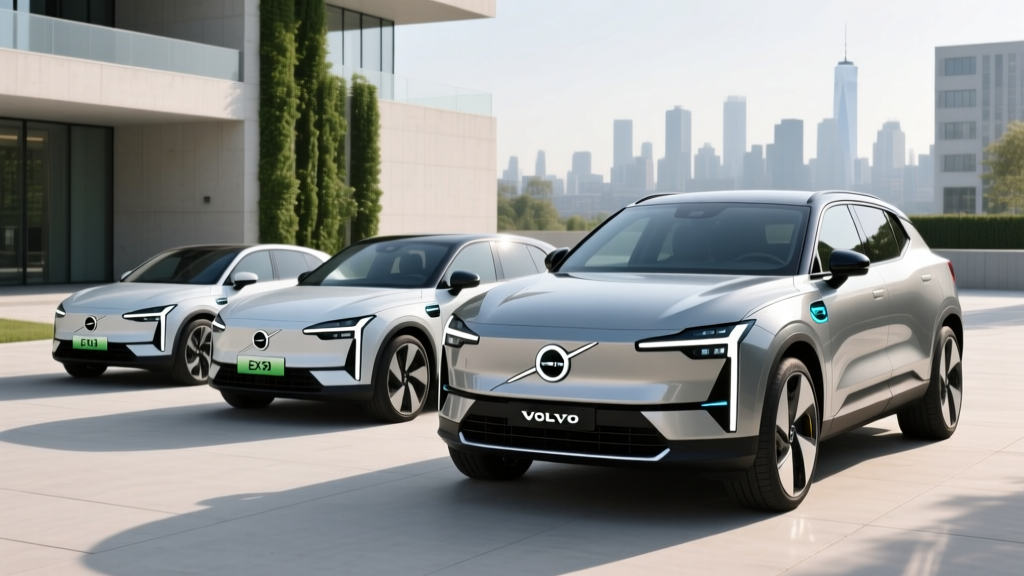
If you're searching for a Volvo SUV electric model in 2026, Volvo offers three battery-electric options: the compact EX30 (starting ~$36,445, EPA est. 265 mi), the midsize EX40 (starting ~$54,095, EPA est. 300 mi), and the three-row flagship EX90 (starting ~$78,295, EPA est. 310 mi). All three qualify for varying degrees of federal and state incentives depending on your income, sourcing, and point-of-sale eligibility under IRS §30D rules. The EX30 is best for urban commuters who can charge at home; the EX40 suits couples and small families needing cargo versatility; the EX90 targets large families wanting a luxury three-row EV. If you lack reliable home or workplace Level 2 charging, a Volvo plug-in hybrid (Recharge T8 models) may be a more practical bridge.
2026 Volvo Electric SUV Lineup at a Glance
Volvo has fully committed to electrification, and by the 2026 model year its SUV lineup spans three dedicated battery-electric vehicles (BEVs). Here's how they stack up on the specs that matter most to buyers:
| Spec | EX30 (Single Motor Extended) | EX40 (Twin Motor) | EX90 (Twin Motor Performance) |
|---|---|---|---|
| Base MSRP | ~$36,445 | ~$54,095 | ~$78,295 |
| EPA Range (est.) | 265 mi | 300 mi | 310 mi |
| Battery (usable) | 69 kWh (NMC) | 82 kWh (NMC) | 111 kWh (NMC) |
| Horsepower | 272 hp | 402 hp | 510 hp |
| 0–60 mph | ~5.1 sec | ~4.5 sec | ~4.2 sec |
| Peak DC Fast Charge | 153 kW | 200 kW | 250 kW |
| 10–80% DCFC Time | ~26 min | ~28 min | ~20 min |
| Level 2 (AC) Charge Rate | 11 kW | 11 kW | 11 kW |
| MPGe (combined, est.) | 104 MPGe | 93 MPGe | 85 MPGe |
| Cargo Volume (rear seats up) | 11.2 cu ft | 17.3 cu ft | 12.7 cu ft (behind 3rd row) |
| Drivetrain | RWD | AWD | AWD |
| Battery Warranty | 8 yr / 100,000 mi | 8 yr / 100,000 mi | 8 yr / 100,000 mi |
Sources: fueleconomy.gov, Volvo Cars USA press room. Figures are EPA estimates or manufacturer-preliminary; real-world results vary.
Real-World Range Reality Check
EPA numbers are measured under controlled conditions. In our experience and aggregated owner data:
- Highway driving (70–80 mph): Expect 10–15% less than EPA. The EX40 Twin Motor's 300-mile sticker translates to roughly 255–270 miles at sustained interstate speeds.
- Cold weather (below 32°F): NMC batteries lose 20–30% range in freezing temperatures without preconditioning. The EX30 could drop to ~185–200 miles in a Midwest winter.
- Preconditioning matters: Use the Volvo Cars app to warm the battery while plugged in before departure — this recovers much of the cold-weather loss and improves DC fast-charge speeds.
Volvo Electric SUV vs. Gas XC Models: Cost Comparison
The most common question from Volvo shoppers: does going electric actually save money? Let's compare the electric EX40 against its closest gas counterpart, the XC60 B5 mild-hybrid, over a 5-year / 75,000-mile ownership period.
| Cost Category | EX40 Twin Motor (EV) | XC60 B5 AWD (Gas) |
|---|---|---|
| Base MSRP | $54,095 | $48,350 |
| Federal Tax Credit (§30D, est.) | Up to $7,500* | $0 |
| Effective Purchase Price | ~$46,595 | $48,350 |
| Fuel/Energy (75k mi) | $3,200 (home L2 at $0.14/kWh) | $8,900 (gas at $3.50/gal, 26 MPG) |
| Maintenance (5 yr) | ~$1,200 | ~$3,800 |
| Insurance (5 yr avg.) | ~$11,500 | ~$9,200 |
| Estimated Depreciation | ~$18,000 | ~$16,500 |
| 5-Year Total Cost | ~$80,495 | ~$86,750 |
*Federal §30D credit eligibility depends on buyer income caps ($150k single / $300k joint), MSRP caps ($80k for SUVs), battery sourcing requirements, and point-of-sale transfer rules. Verify current-year eligibility at irs.gov and consult a tax professional.
The EX40's higher sticker is largely offset by the tax credit, and the energy and maintenance savings widen the gap each year. However, EV insurance premiums run 15–25% higher on average — a real cost that buyers often overlook. Depreciation remains a wildcard as the used-EV market continues to stabilize.
Charging at Home, on the Road, and the Access Question
Charging access is the single biggest ownership variable. Here's what each scenario looks like for a Volvo electric SUV owner:
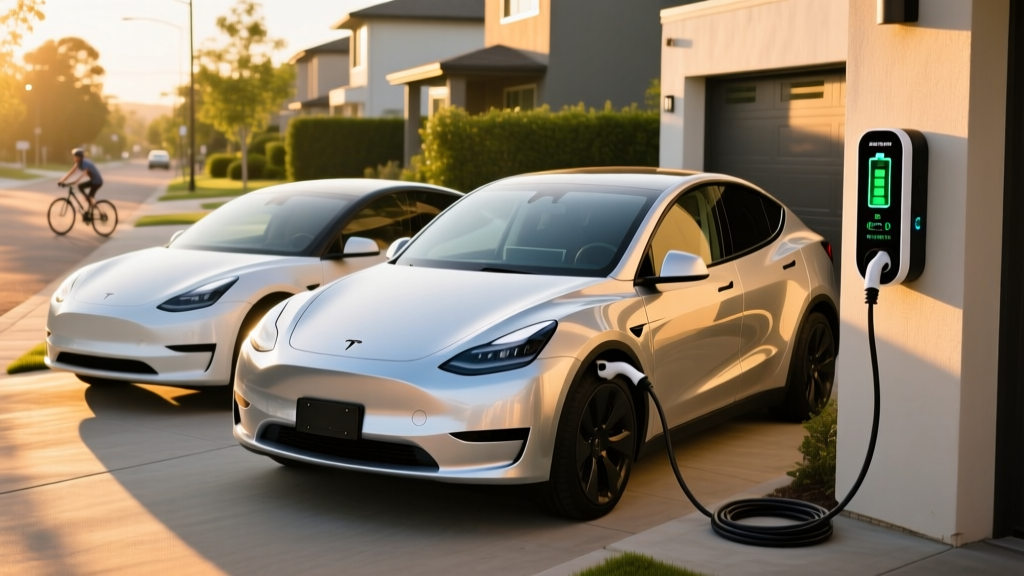
Home Level 2 Charging (Recommended)
All three Volvo EVs accept up to 11 kW on Level 2 AC. That means:
- EX30 (69 kWh): 0–100% in ~7 hours
- EX40 (82 kWh): 0–100% in ~8 hours
- EX90 (111 kWh): 0–100% in ~10.5 hours
A typical home Level 2 installation (240V, 48-amp circuit, hardwired Wallbox or ChargePoint unit) runs $800–$2,500 depending on panel proximity and local permit fees. If your home has a 200-amp panel with spare capacity, you're likely in the lower range. Older homes with 100-amp service may need a $2,000–$4,000 panel upgrade — get a licensed electrician's assessment before committing.
Public DC Fast Charging
Volvo's electric SUVs use the NACS (Tesla-style) connector as of the 2025+ model years, granting access to the Tesla Supercharger network via native port (no adapter needed on 2026 models). For road trips:
- The EX90 peaks at 250 kW — expect a 10–80% charge in roughly 20 minutes at a V3/V4 Supercharger or Electrify America 350 kW station.
- The EX40 peaks at 200 kW — about 28 minutes for the same 10–80% window.
- The EX30 peaks at 153 kW — roughly 26 minutes, though its smaller battery means fewer total miles added.
Charging Curve Reality
Peak kW is not sustained kW. All three models taper significantly above 80% State of Charge (SoC). Charging from 80–100% on DC can take as long as 10–80%. For road trips, plan to charge to 80% and go — it's dramatically faster. Only charge to 100% at home on Level 2 before a long drive.
What If You Can't Charge at Home?
Apartment dwellers and street-parkers face a real challenge. Relying exclusively on public DC fast charging costs roughly 2–3× more per mile than home Level 2 (typically $0.35–$0.55/kWh at public stations vs. $0.12–$0.18/kWh residential). It also adds time and wear from frequent 100% SoC sessions. If home charging isn't an option, seriously consider a Volvo PHEV (Recharge T8) instead — you get 30–35 miles of electric-only commuting plus a gas engine for flexibility.
Federal Tax Credits and Incentive Eligibility
The federal §30D clean vehicle credit offers up to $7,500 for qualifying new EVs, but eligibility is a multi-factor puzzle. Here's the checklist for 2026:
- MSRP cap: SUVs must be under $80,000. The EX30 and EX40 clear this easily; the EX90 base trim qualifies, but loaded Ultra/Performance trims may exceed the cap.
- Buyer income cap: AGI must not exceed $150,000 (single), $225,000 (head of household), or $300,000 (joint).
- Battery sourcing: A percentage of critical minerals and battery components must be sourced from the U.S. or FTA partners. These thresholds increase annually — check the latest at fueleconomy.gov.
- Point-of-sale transfer: As of 2024+, you can transfer the credit to the dealer for an immediate price reduction at purchase, rather than waiting to claim it on your tax return.
- Final assembly: Vehicle must undergo final assembly in North America. Volvo's EX90 is assembled in Ridgeville, South Carolina; EX30 and EX40 assembly locations vary by model year — verify your specific VIN.
Many states layer additional rebates on top (California's CVRP, Colorado's state credit, etc.). These vary by jurisdiction and funding availability — check your state energy office for current programs.
Common Misconceptions About Volvo's Electric SUVs
| Myth | Fact |
|---|---|
| "The battery will need replacing in 5 years and cost $20,000." | Volvo warranties the battery for 8 years/100,000 miles at ≥70% capacity retention. Industry data shows NMC packs typically retain 85–90% after 100k miles. Full replacements are rare and covered if within warranty thresholds. |
| "Electric Volvos are slow and boring to drive." | The EX40 Twin Motor hits 60 mph in ~4.5 seconds with 402 hp and instant torque. The EX90 Performance does it in ~4.2 seconds with 510 hp — quicker than most gas V8 SUVs. |
| "I'll be stranded without enough range." | With 265–310 miles EPA and the Supercharger network (NACS native on 2026 models), road-trip charging stops add 15–25 minutes every 2–3 hours — comparable to gas stops for food and rest. |
| "EVs are worse for the environment because of battery mining." | Lifecycle analyses from the ICCT and Argonne National Lab show BEVs produce 50–70% fewer lifetime emissions than comparable gas vehicles in the U.S. grid mix, even accounting for battery manufacturing. The grid gets cleaner every year; a gas car never does. |
| "I need a special charger for my Volvo." | 2026 Volvo EVs use the NACS connector natively. At home, any J1772/NACS-compatible Level 2 unit works. For older CCS-equipped models (pre-2025), a NACS adapter is available from Volvo. |
Decision Framework: Which Volvo Electric SUV Should You Buy?
Choose the EX30 if:
- You're a solo driver or couple in an urban or suburban environment
- Your daily commute is under 80 miles round-trip
- You want the lowest entry price (~$36k before credits) and best MPGe (104)
- Cargo needs are modest (groceries, gym bags — not furniture)
- You have access to home Level 2 charging
Choose the EX40 if:
- You need a practical daily driver for a small family with AWD capability
- You want 300 miles of EPA range for occasional 200+ mile road trips
- Cargo space matters (17.3 cu ft behind rear seats, ~57 cu ft folded)
- You value strong acceleration (402 hp) without stepping to flagship pricing
- You qualify for the full $7,500 federal credit, bringing effective price under $47k
Choose the EX90 if:
- You need three rows and 6–7 passenger seating
- You want flagship luxury with Volvo's latest Pilot Assist and LiDAR-equipped ADAS suite
- Your budget supports $78k+ (and your trim stays under the $80k MSRP cap for the tax credit)
- You take regular family road trips and want 310 miles of range with 250 kW DC charging
- You value the 111 kWh battery's buffer for cold-weather range retention
Choose a Volvo PHEV (Recharge T8) instead if:
- You lack reliable home or workplace Level 2 charging
- You regularly drive 400+ miles in areas with sparse charging infrastructure
- You want electric commuting (30–35 mi EV-only) without any range compromise
- Your budget is under $55k and you want the XC60 or XC90 platform
What First-Time EV Buyers Should Know Before Signing
Transitioning from a gas Volvo to an electric one involves a few practical shifts:
- Install your Level 2 charger before delivery day. Schedule the electrician 4–6 weeks ahead. A 48-amp hardwired unit on a 60-amp circuit is ideal for Volvo's 11 kW onboard charger.
- Set charging limits. For daily driving, set the charge limit to 80–90% in the Volvo Cars app. Reserve 100% for road trips. This extends long-term battery health.
- Use preconditioning. Schedule departure times in the app so the battery and cabin are warmed/cooled while plugged in — this preserves range and improves comfort.
- Download charging apps. Beyond the Volvo app, install PlugShare, A Better Routeplanner (ABRP), and the Tesla app (for Supercharger access and payment).
- Budget for insurance. Get quotes before purchasing. EV insurance is typically 15–25% higher than gas equivalents due to repair costs and battery replacement risk. Shop multiple carriers.
- Learn one-pedal driving. Volvo's regen braking modes let you drive mostly without touching the brake pedal. It takes a few days to adjust but reduces brake wear dramatically — expect brake pads to last 100,000+ miles.
Frequently Asked Questions
Are Volvo electric SUVs reliable?
Volvo's EV powertrains are simpler than gas equivalents (fewer moving parts, no transmission). Early EX40 (formerly XC40 Recharge) models have shown solid reliability in owner surveys. The EX30 and EX90 are newer platforms — long-term data is still accumulating. Volvo's 8-year/100,000-mile battery and powertrain warranty provides substantial coverage. Check NHTSA.gov for any active recalls or TSBs on specific model years.
How much does it cost to charge a Volvo electric SUV at home?
At the U.S. average residential rate of ~$0.14/kWh: the EX30 (69 kWh) costs about $9.66 for a full charge; the EX40 (82 kWh) about $11.48; the EX90 (111 kWh) about $15.54. That translates to roughly $0.04–$0.05 per mile — compared to $0.13–$0.16 per mile for a gas XC60 at 26 MPG and $3.50/gallon.
Does the Volvo EX90 have self-driving capability?
No. The EX90 features Volvo's most advanced ADAS suite with LiDAR, cameras, and radar — but it remains an SAE Level 2 driver-assistance system. You must remain engaged, keep your hands available, and monitor the road at all times. It is not autonomous or "self-driving." True driverless operation (SAE Level 4) currently exists only in geo-fenced robotaxi services like Waymo, not in consumer vehicles.
What happens to a Volvo EV battery after 10 years?
Industry degradation data from sources like Recurrent Auto shows that modern NMC batteries with active thermal management (which all Volvo EVs have) typically retain 85–92% of original capacity after 100,000 miles. If capacity drops below 70% within the 8-year/100,000-mile warranty window, Volvo will repair or replace the battery at no cost. Out-of-warranty replacement costs are estimated at $12,000–$20,000 depending on the model, though prices continue to decline as battery manufacturing scales.
Can I tow with a Volvo electric SUV?
The EX40 is rated to tow up to 3,500 lbs, and the EX90 up to 5,000 lbs when properly equipped. However, towing reduces range by 30–50% depending on trailer weight and aerodynamics. If you tow frequently, plan charging stops accordingly and expect real-world range to drop substantially below EPA estimates.
Is the Volvo EX30 too small for a family?
The EX30 is a subcompact SUV with 11.2 cu ft of cargo space behind the rear seats — enough for groceries and strollers, but tight for road-trip luggage for four. It works well as a commuter vehicle or second car. If you regularly carry more than two passengers with cargo, the EX40 or EX90 is a better fit.