The Short Answer on the Volkswagen Golf Electric Car
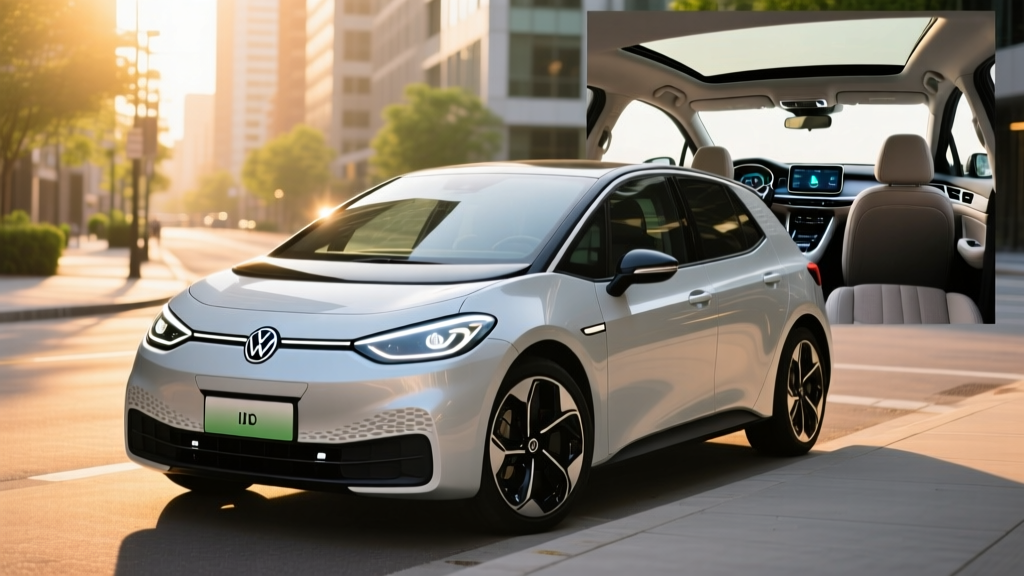
If you're searching for a Volkswagen Golf electric car, the closest equivalent VW sells today is the ID.3—a compact electric hatchback built on VW's MEB platform. However, as of 2026, Volkswagen has not officially brought the ID.3 to the United States market. American buyers looking for a VW electric hatchback experience should consider the ID.4 crossover (EPA range up to 291 miles, starting around $38,995) or explore the used market for the discontinued e-Golf (83-mile EPA range, produced through 2019). A next-generation electric Golf is reportedly in development for Europe, but no U.S. launch has been confirmed. Below, we break down what exists, what's coming, and what the real numbers look like for VW's electric lineup.
Why There's No New Electric Golf in the U.S. (Yet)
The original e-Golf was Volkswagen's first mass-market EV, offering 125 miles of EPA range in its final 2019 model year (with an 83-mile version for earlier years). It was a compliance car—adequate for city commuting but limited for broader use. When VW pivoted to its dedicated MEB electric platform, the company chose to launch the ID.4 SUV in North America rather than the ID.3 hatchback, citing stronger American demand for crossovers.
In Europe, the ID.3 fills the exact role a Golf electric car would: a practical, affordable hatchback with 200+ miles of WLTP range. The 2024-2026 ID.3 Pro S variant offers a 77 kWh usable battery (NMC chemistry), up to 263 miles of WLTP range, and DC fast charging up to 170 kW. But WLTP figures run 10-15% higher than EPA estimates, and without U.S. homologation, none of these specs translate to an American showroom.
Volkswagen CEO Thomas Schäfer confirmed in 2024 that an electric Golf nameplate is planned, likely arriving around 2028-2029, potentially riding on the next-generation SSP platform. Until then, U.S. buyers wanting a VW EV must look elsewhere in the lineup.
The e-Golf on the Used Market: What to Expect in 2026
For buyers specifically wanting a Volkswagen Golf electric car, the used e-Golf remains an option. Here's what the final U.S.-spec models deliver:
| Spec | 2019 e-Golf (Final U.S. Year) | 2026 Gas Golf GTI (Baseline) |
|---|---|---|
| EPA Range / Fuel Economy | 125 miles / 113 MPGe combined | ~28 MPG combined |
| Battery / Engine | 35.8 kWh total (31.5 kWh usable), NMC | 2.0L turbo I-4 |
| Power | 134 hp, 214 lb-ft torque | 241 hp, 273 lb-ft |
| 0-60 mph | ~8.5 seconds | ~5.6 seconds |
| DC Fast Charge (10-80%) | ~45 min at 50 kW (CCS) | N/A |
| Level 2 Charge Rate | 7.2 kW (~4.5 hours full) | N/A |
| Cargo Volume | 22.8 cu ft | 19.9 cu ft |
| Typical Used Price (2026) | $14,000–$19,000 | $32,000–$37,000 (new) |
Real-World Range Reality
EPA sticker: 125 miles
Real-world expectation: 95–110 miles in mixed driving; as low as 75–85 miles in sustained highway use or cold weather (below 32°F). The e-Golf's small battery and lack of a heat pump mean winter range loss can hit 30-35%.
The e-Golf works as a second car or a dedicated city commuter with reliable home charging. It does not work for road trips, cold-climate drivers without garage parking, or anyone who can't charge at home or work. Battery degradation on 2017-2019 models is generally modest—expect 8-15% capacity loss after 5-7 years, depending on charging habits and climate.
Cost Breakdown: Used e-Golf vs. New ID.4 vs. Gas Compact
If you're weighing a Volkswagen Golf electric car against alternatives, the numbers matter more than the badge. Here's a 5-year ownership comparison assuming 12,000 miles/year, home charging at $0.14/kWh (national average), and gas at $3.40/gallon.
| Cost Factor | Used 2019 e-Golf | New 2026 ID.4 Pro | New 2026 Gas Compact (e.g., Civic) |
|---|---|---|---|
| Purchase Price | ~$16,500 | ~$39,995 | ~$28,000 |
| Federal Tax Credit (§30D) | $4,000 (used EV credit, if eligible) | Up to $7,500 (if sourcing/income requirements met) | $0 |
| Annual Fuel/Energy (5 yr) | $588/yr ($2,940 total) | $560/yr ($2,800 total) | $1,457/yr ($7,285 total) |
| Maintenance (5 yr est.) | ~$1,200 | ~$1,000 | ~$2,800 |
| Insurance (5 yr est.) | ~$5,500 | ~$7,800 | ~$6,200 |
| 5-Year Total Cost | ~$22,140 | ~$44,095 | ~$44,285 |
Key takeaway: A used e-Golf is by far the cheapest option over five years, but you're accepting a 125-mile range ceiling and a vehicle that's already 7 years old. The ID.4 and a gas compact land in a similar 5-year cost range, with the ID.4 pulling ahead in years 6+ as fuel savings compound. The §30D tax credit for the ID.4 depends on battery component and critical-mineral sourcing rules that shift annually—always verify current-year eligibility on IRS.gov before purchasing.
Charging Realities: What First-Time VW EV Buyers Must Know
Whether you're considering a used e-Golf or a new ID.4, understanding charging is non-negotiable before you buy.
Home Charging Is the Baseline
Both the e-Golf and ID.4 charge on a standard 120V outlet (Level 1), but at roughly 3–4 miles of range per hour, this is only viable if you drive under 30 miles daily and can plug in for 10+ hours overnight. A Level 2 home charger (240V, 32–48 amps) is the practical minimum for daily EV ownership:
- e-Golf: 7.2 kW max onboard charger — a 32-amp Level 2 unit fills the battery in ~4.5 hours
- ID.4: 11 kW onboard charger — a 48-amp Level 2 unit fills the 77 kWh battery in ~7.5 hours
- Installation cost: $500–$2,000 depending on panel capacity, conduit run length, and local permit fees. Homes with older 100-amp electrical panels may need a $2,000–$4,000 panel upgrade.
DC Fast Charging and the Curve Taper
On road trips, DC fast charging is your only practical option. The e-Golf's 50 kW CCS peak means a 10-80% charge takes roughly 45 minutes—slow by 2026 standards. The ID.4 peaks at 175 kW (2024+ models), achieving 10-80% in approximately 28 minutes under ideal conditions.
But "peak" is misleading. Both vehicles follow a charge curve: the e-Golf sustains near-peak speed only from 10-50% SoC, then tapers sharply. The ID.4 holds above 150 kW through roughly 35% SoC before stepping down. In real-world testing at Electrify America or Tesla Supercharger stations (via NACS adapter on newer VWs), expect 10-80% times 5-10 minutes longer than manufacturer claims, especially in extreme heat or cold when the battery thermal management system diverts energy.
Common Misconceptions About the Volkswagen Golf Electric Car
| Myth | Fact |
|---|---|
| "You can buy a new electric Golf in the U.S." | VW discontinued the e-Golf after 2019. The ID.3 hatchback is Europe-only. No new electric Golf is available stateside as of 2026. |
| "The e-Golf qualifies for the full $7,500 federal tax credit." | The new-vehicle §30D credit ended for the e-Golf years ago. Used e-Golfs may qualify for the up-to-$4,000 used EV credit, subject to income caps ($75K single / $150K joint), dealer registration, and the vehicle being at least 2 model years old. |
| "125 miles of range is enough for anyone." | It covers most commutes, but a single unplanned detour, a cold snap, or a highway stretch at 75+ mph can drop real range below 80 miles. Range planning becomes mandatory, not optional. |
| "EV batteries need replacing every few years." | The e-Golf's NMC battery typically retains 85-92% capacity after 5-7 years. VW's original warranty covered 8 years/100,000 miles for battery capacity above 70%. Most batteries outlast the car's economic life. |
| "Public charging is always available." | Charging deserts persist in rural areas, and urban chargers can be occupied or broken. Apps like PlugShare and ChargePoint show real-time availability, but always have a backup plan. Assume 10-15% of public chargers may be non-functional at any given time. |
Decision Framework: Is a VW Electric Hatchback Right for You?
Choose a Used e-Golf If:
- You have reliable Level 2 home charging (garage or driveway with a 240V outlet)
- Your daily round-trip commute is under 60 miles
- You live in a moderate climate (rarely below 25°F for extended periods)
- This is a second vehicle, not your only car
- You want the lowest possible total cost of ownership and can accept an older vehicle
Choose the ID.4 (or Wait for a Future Electric Golf) If:
- You need 250+ miles of real-world range for road trips and daily flexibility
- You live in a cold climate and need a heat pump for efficient winter driving
- You want a new-vehicle warranty and current safety tech (automatic emergency braking, lane-keeping, adaptive cruise)
- You need more than 23 cu ft of cargo space
- You plan to keep the vehicle 8+ years
Look at a Non-VW Electric Hatchback If:
- You want a new EV hatch now: the Chevrolet Equinox EV (315-mile EPA range, ~$33,000) or Hyundai Kona Electric (261-mile EPA range, ~$32,975) offer hatchback-like practicality with modern range
- You need DC fast charging above 150 kW for frequent road trips
- You want NACS native compatibility for Tesla Supercharger access without an adapter
What a First-Time EV Buyer Should Know Before Committing
Buying any electric car—whether it's a used e-Golf or a brand-new ID.4—requires a different decision process than buying gas. Here's your pre-purchase checklist:
- Confirm your charging situation first. Can you install a Level 2 charger at home? Get an electrician quote before you shop. If you rent or live in a condo without charging access, an EV may not be practical yet.
- Calculate your real daily mileage. Track it for two weeks. If 95% of your days fall under 50 miles, even the e-Golf's 125-mile range covers you. If you regularly drive 100+ miles, you need the ID.4 or a longer-range alternative.
- Factor in cold-weather loss. If you live north of the 37th parallel, subtract 25-35% from any EPA range figure for winter months. A 125-mile e-Golf becomes a ~85-mile car in January in Minnesota.
- Verify tax credit eligibility independently. Don't rely on dealer claims. Check IRS.gov §30D guidance for current income caps, MSRP limits, and battery-sourcing requirements. For used EVs, the credit is 30% of the sale price up to $4,000, with income caps of $75,000 (single) or $150,000 (joint).
- Get an insurance quote before buying. EV insurance premiums run 15-25% higher than comparable gas cars due to repair costs and battery replacement values. This can add $150-$400/year depending on your state and driving record.
Frequently Asked Questions
Will Volkswagen sell an electric Golf in the U.S.?
Not as of 2026. VW has confirmed an electric Golf for Europe (expected ~2028-2029 on the SSP platform), but no U.S. market commitment has been announced. VW's American EV strategy currently centers on the ID.4 and the upcoming ID.7 sedan and ID. Buzz van.
Is the used e-Golf a good buy in 2026?
It can be—if you understand its limitations. At $14,000–$19,000 with 125 miles of EPA range, it's one of the cheapest ways into EV ownership. It excels as a city commuter with home charging. It fails as a sole vehicle for road trips, cold-climate drivers, or anyone without reliable charging access. Get a pre-purchase battery health check (State of Health / SoH reading) from a VW dealer or qualified EV shop before buying.
How much does it cost to charge an e-Golf at home?
The e-Golf's usable battery is ~31.5 kWh. At the U.S. residential average of $0.14/kWh, a full charge costs about $4.41 and delivers roughly 110-120 real-world miles. That's approximately $0.04 per mile—compared to $0.12-$0.14 per mile for a 28-MPG gas car at $3.40/gallon.
What's the difference between kW and kWh?
This is the most common EV confusion. kW (kilowatts) measures power—the rate at which energy flows, like water pressure in a hose. It determines charging speed. kWh (kilowatt-hours) measures energy capacity—how much the battery holds, like the size of a fuel tank. The e-Golf charges at up to 50 kW (power) and stores 31.5 kWh (energy). Confusing these leads to wrong expectations about charge times and range.
Can I use Tesla Superchargers with a VW?
Newer VW models (2025+) are being equipped with NACS charge ports, granting direct access to Tesla's Supercharger network. For the e-Golf and older ID.4 models with CCS ports, a CCS-to-NACS adapter (approximately $200-$250) enables Supercharger use, though charging speeds may be limited by the vehicle's onboard charge rate.