Quick Answer: Is a Volkswagen Electric Car Right for You?
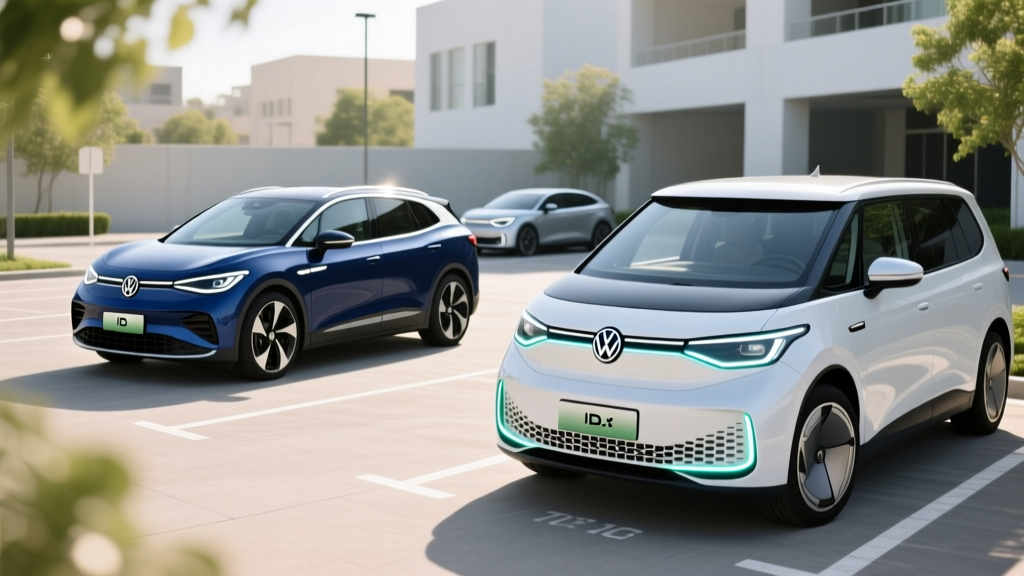
Volkswagen's 2026 electric car lineup spans three distinct vehicles: the ID.4 compact SUV (EPA range up to 291 miles, starting ~$44,990), the ID.7 sedan (EPA range up to 342 miles, starting ~$52,000), and the ID.Buzz three-row minivan (EPA range up to 234 miles, starting ~$61,490). All three use NMC lithium-ion batteries, support DC fast charging at up to 175–200 kW, and now feature the NACS charge port for native Tesla Supercharger access. If you need a practical daily driver with solid range and mainstream pricing, the ID.4 is the volume pick. If you want maximum highway range and a premium sedan, the ID.7 delivers. If you need three rows and family hauling, the ID.Buzz has no direct EV rival — but expect the lowest range of the group.
The 2026 Volkswagen Electric Car Lineup at a Glance
Volkswagen has steadily expanded its U.S. EV portfolio after a rough ID.4 launch in 2021. For 2026, the lineup covers three body styles on the MEB platform, each targeting a different buyer. Here's how the specs stack up across the current models:
| Spec | 2026 ID.4 (Pro S AWD) | 2026 ID.7 Pro S | 2026 ID.Buzz Pro S AWD |
|---|---|---|---|
| Body Style | Compact SUV (2-row) | Midsize Sedan | Minivan (3-row) |
| Drivetrain | Dual-motor AWD | Rear-motor RWD | Dual-motor AWD |
| Battery (usable) | 84 kWh NMC | 84 kWh NMC | 91 kWh NMC |
| EPA Range | 263 mi | 342 mi | 234 mi |
| Combined MPGe | 102 MPGe | 118 MPGe | 81 MPGe |
| Peak DC Fast Charge | 175 kW | 200 kW | 175 kW |
| 10–80% DCFC Time | ~28 min | ~26 min | ~30 min |
| Level 2 Rate | 11 kW | 11 kW | 11 kW |
| Horsepower | 295 hp | 282 hp | 330 hp |
| 0–60 mph | 5.7 sec | 6.5 sec | 5.7 sec |
| Charge Port | NACS | NACS | NACS |
| Base MSRP | $44,990 | $52,000 | $61,490 |
| Battery Warranty | 8 yr / 100,000 mi | 8 yr / 100,000 mi | 8 yr / 100,000 mi |
Real-World Range: What to Actually Expect
EPA estimates assume mixed driving at moderate temperatures. In our experience and consistent with third-party testing, here's what to budget for real-world range:
- ID.4 Pro S AWD: EPA 263 mi → expect ~220–235 mi on a highway road trip at 70+ mph; ~180–200 mi in sub-30°F winter conditions.
- ID.7 Pro S: EPA 342 mi → expect ~290–310 mi highway; ~245–270 mi in deep cold. The sedan's superior aerodynamics (drag coefficient ~0.23) make a meaningful difference at speed.
- ID.Buzz Pro S AWD: EPA 234 mi → expect ~190–210 mi highway; ~155–175 mi in cold weather. The boxy shape and 5,000+ lb curb weight work against efficiency.
If your daily commute is under 60 miles round-trip, all three models handle daily driving comfortably with home Level 2 charging. The ID.7 is the strongest choice for frequent road-trippers.
Charging Speeds and Infrastructure: What VW Owners Need to Know
One of the most significant changes for Volkswagen's 2026 electric car lineup is the switch to the NACS (North American Charging Standard) connector. This means all three models can plug directly into Tesla Superchargers — which remain the most reliable and widespread DC fast-charging network in the U.S. — without an adapter.
| Charging Level | Power | Miles Added per Hour | Use Case |
|---|---|---|---|
| Level 1 (120V) | ~1.4 kW | ~4–5 mi/hr | Emergency / overnight trickle |
| Level 2 (240V home) | 11 kW | ~33–38 mi/hr | Daily home charging |
| DC Fast Charge | 175–200 kW peak | ~200+ mi in 30 min (peak) | Road trips |
Charging-curve reality check: Like most EVs, VW's MEB-platform vehicles don't sustain peak charge rates. The ID.7 at 200 kW peaks early in the session (roughly 10–30% SoC) then tapers progressively. From 80–100%, charging slows dramatically to protect the NMC battery — expect the last 20% to take as long as the first 50%. For road trips, plan your stops around 10–80% sessions rather than attempting full charges.
Home charging setup: All three VWs accept up to 11 kW on Level 2, which requires a 48-amp hardwired charger on a 60-amp circuit. A full home installation typically runs $800–$2,000 depending on panel proximity and whether your electrical panel needs an upgrade from 100A to 200A service. At 11 kW, you'll fully replenish an ID.4's 84 kWh battery in roughly 8 hours — ideal for overnight charging.
Volkswagen Electric Car vs. Gas and Hybrid: The Cost Comparison
The sticker price of a Volkswagen electric car is higher than a comparable gas vehicle, but operating costs tell a different story. Here's a side-by-side comparison of the ID.4 AWD against the similarly sized Volkswagen Tiguan (gas) and a Toyota RAV4 Hybrid:
| Cost Factor (5 yr / 75,000 mi) | 2026 ID.4 Pro S AWD | 2026 Tiguan SE R-Line (Gas) | 2026 RAV4 Hybrid XLE |
|---|---|---|---|
| Base MSRP | $44,990 | $36,500 | $35,500 |
| Est. Federal Tax Credit (§30D) | Up to $7,500* | $0 | $0 |
| Effective Purchase Price | ~$37,490* | $36,500 | $35,500 |
| Fuel / Energy (75k mi) | ~$3,200 (home L2) | ~$9,400 (25 mpg, $3.15/gal) | ~$5,600 (40 mpg, $3.15/gal) |
| Maintenance (5 yr) | ~$1,200 | ~$3,500 | ~$2,800 |
| Insurance (5 yr avg) | ~$9,500 | ~$7,800 | ~$7,200 |
| Est. 5-Year Total Cost | ~$51,390 | ~$57,200 | ~$51,100 |
*§30D federal tax credit eligibility depends on buyer income caps ($150K single / $300K joint), vehicle MSRP caps ($80K SUVs/vans, $55K sedans), and battery critical-mineral sourcing requirements that continue to tighten. The ID.4 is assembled in Chattanooga, TN, which has historically supported credit eligibility, but verify current-year rules at IRS.gov before purchasing. The credit can now be transferred to the dealer at point of sale, reducing your out-of-pocket cost immediately.
Key takeaway: The ID.4 reaches near cost-parity with a gas Tiguan over five years when the tax credit applies, primarily through fuel and maintenance savings. The RAV4 Hybrid remains competitive on total cost with a lower purchase price and no charging dependency. If you lack home charging access or drive in extreme cold regularly, the hybrid retains a practical edge.
Ownership Realities: What First-Time VW EV Buyers Should Know
Buying a Volkswagen electric car involves adjustments that gas-car buyers don't face. Here are the practical ownership considerations that matter most:
Home Charging Is Non-Negotiable for Most Owners
Public-only charging is possible but expensive and inconvenient. DC fast charging costs roughly $0.35–$0.50/kWh on networks like Electrify America, versus $0.12–$0.18/kWh at home on a utility rate plan. Over 75,000 miles, that difference can total $2,000–$3,000. If you rent an apartment without charging access or street-park, a PHEV or hybrid may be a more practical choice.
Cold Weather Hits Range — Plan for It
All three VW EVs use liquid-cooled NMC batteries with heat pumps (standard on 2026 models), which helps. But in sustained sub-freezing temperatures, expect 20–35% range reduction depending on cabin heating use and driving speed. The ID.Buzz, with its large frontal area and heavy weight, is the most affected. If you live in the northern tier and regularly drive 150+ miles in winter, the ID.7's larger range buffer provides the most margin.
Software and Infotainment: Improved, but Know the History
Volkswagen's MEB-platform vehicles launched with widely criticized software — slow, buggy, and frustrating. The 2026 models run VW's updated 4.0 infotainment system, which is substantially faster and more stable. However, the capacitive touch sliders for volume and climate remain a point of owner complaint versus physical controls. Test-drive the interface before committing.
Maintenance Is Genuinely Lower
No oil changes, no spark plugs, no transmission fluid, and regenerative braking extends pad life to 80,000+ miles in typical driving. Expect to replace cabin air filters, wiper blades, tires (EVs wear tires faster due to instant torque and heavy weight — budget for replacement at ~30,000–40,000 miles), and brake fluid checks. VW's scheduled maintenance intervals are simpler and cheaper than any gas vehicle in the lineup.
| Myth | Fact |
|---|---|
| "The battery will need replacing in 5 years" | VW warranties the battery for 8 years/100,000 miles at 70% capacity retention. Real-world MEB degradation data shows ~5–8% loss over 100K miles — most owners will never need a replacement. |
| "EVs are worse in the cold" | Range drops 20–35%, yes. But EVs start reliably in any temperature (no cold-cranking amps to worry about), and preconditioning while plugged in preserves range. A heated garage eliminates most cold-weather penalty. |
| "Charging takes too long for road trips" | A 10–80% DCFC session takes 26–30 minutes in the VW lineup. Most road-trippers stop for food and restrooms every 2–3 hours anyway. Plan stops around Superchargers or Electrify America stations and the downtime is minimal. |
| "EVs are worse for the environment" | Manufacturing an EV battery creates more upfront emissions, but over a 150,000-mile lifetime, an EV on the average U.S. grid produces 50–65% fewer lifecycle emissions than a comparable gas car, per EPA analysis. As the grid decarbonizes, that gap widens. |
| "I can't take road trips" | With NACS access to 20,000+ Tesla Superchargers plus Electrify America's network, route planning is viable across most of the U.S. The ID.7's 342-mile EPA range means 200+ miles between stops on the highway. |
Federal Tax Credit and Incentive Guide for VW EVs
The §30D Clean Vehicle Credit can reduce your effective purchase price by up to $7,500, but eligibility is not automatic. Here's the current checklist:
- Income caps: Modified AGI must not exceed $150,000 (single), $225,000 (head of household), or $300,000 (joint filers).
- MSRP caps: Vans (ID.Buzz) and SUVs (ID.4) must have an MSRP at or below $80,000. Sedans (ID.7) must be at or below $55,000. The ID.7 Pro S at ~$52,000 base clears this, but higher trims or options could push it over — check the window sticker.
- North American assembly: The ID.4 is built in Chattanooga, TN. The ID.7 and ID.Buzz are built in Emden and Hanover, Germany, respectively. However, vehicles assembled outside North America may still qualify if leased (commercial credit under §45W is structured differently) — consult a tax professional.
- Battery sourcing requirements: Critical mineral and battery component percentages must meet escalating thresholds each year. VW has been working to qualify its supply chain, but eligibility can change mid-year. Always verify on fueleconomy.gov before signing.
- Point-of-sale transfer: You can elect to transfer the credit to the dealer at purchase, reducing your drive-off cost by up to $7,500 immediately rather than waiting for tax filing.
State and local incentives vary widely. California's CVRP, Colorado's state credit, and various utility rebates for home charger installation can stack on top of the federal credit. Check your state's energy office and local utility for current programs.
Decision Framework: Which Volkswagen Electric Car Fits You?
Choose the ID.4 If:
- You want a compact SUV in the $40K–$50K range with mainstream practicality
- Your daily commute is under 80 miles and you have home Level 2 charging
- You want the highest likelihood of full §30D credit eligibility (U.S.-built, SUV MSRP cap)
- You prioritize cargo versatility (30.3 cu ft behind rear seats, 64.2 cu ft folded)
Choose the ID.7 If:
- You drive highway-heavy commutes or take frequent road trips and need maximum range
- You prefer a sedan with a quieter, more refined ride and superior aerodynamics
- You want the best efficiency in the lineup (118 MPGe combined)
- You're willing to pay a premium for a longer wheelbase and more rear legroom
Choose the ID.Buzz If:
- You need three rows of seating and minivan cargo space for a growing family
- You want the only EV minivan on the U.S. market with no direct competitor
- Your daily driving is under 100 miles and you accept the range trade-off for passenger capacity
- You value the retro design and are willing to pay $61K+ for it
Skip the VW EV Lineup and Consider a Hybrid If:
- You lack access to home or workplace charging
- You regularly drive in extreme cold (below 10°F) with long distances between charging stations
- You frequently tow (none of VW's EVs are rated for significant towing vs. a hybrid SUV)
- Your budget is under $35K and you can't wait for used-EV market depreciation
Frequently Asked Questions
Is the Volkswagen ID.4 a reliable electric car?
VW's MEB platform has improved significantly since the 2021–2022 launch years, which saw software-related recalls and build-quality issues. The 2026 ID.4 benefits from multiple OTA updates and hardware revisions. Owner surveys from Consumer Reports and J.D. Power now place it in the average-to-above-average range for EV reliability. The battery and drive unit carry an 8-year/100,000-mile warranty.
Can I charge a Volkswagen electric car at a Tesla Supercharger?
Yes. Starting with 2025 model-year vehicles, VW's U.S. EVs ship with the NACS charge port, enabling native access to Tesla's Supercharger network without an adapter. This is a significant advantage over CCS-port vehicles that require a bulky adapter for Supercharger use.
How long does it take to charge the VW ID.4 at home?
On a Level 2 home charger at 11 kW (48 amps), a full 0–100% charge of the ID.4's 84 kWh battery takes approximately 8 hours. Most owners plug in at night and wake up to a full battery. On a standard 120V outlet (Level 1), expect roughly 4–5 miles of range per hour of charging — sufficient only for low-mileage days or emergency trickle charging.
Does the Volkswagen ID.Buzz qualify for the $7,500 tax credit?
It depends on current-year battery sourcing rules. The ID.Buzz is assembled in Hanover, Germany, which complicates eligibility for the purchase credit (§30D requires North American final assembly for purchased vehicles). However, leasing the ID.Buzz may allow the dealer to apply the commercial clean vehicle credit (§45W) and pass savings to you as a reduced lease cost. Always verify current eligibility on IRS.gov and consult a tax professional.
What's the real-world highway range of the ID.7?
EPA rates the ID.7 Pro S at 342 miles. In real-world highway driving at 70–75 mph in moderate temperatures, expect approximately 290–310 miles before needing to charge. In cold weather (below 30°F), that drops to roughly 245–270 miles. Preconditioning the battery while plugged in and using seat heaters instead of cabin heat can recover some of that range.
Are Volkswagen EVs expensive to insure?
EV insurance premiums are typically 15–25% higher than comparable gas vehicles due to higher repair costs (battery pack, specialized body shop requirements) and higher replacement values. Expect annual premiums of $1,800–$2,200 for the ID.4 depending on your state, driving record, and coverage level. Shop quotes from GEICO, Progressive, and EV-specialty insurers like Lemonade or Root before purchasing.
What happens if the battery degrades?
VW's battery warranty guarantees at least 70% capacity retention for 8 years or 100,000 miles. Real-world data from European MEB vehicles (which have higher mileage samples) shows typical degradation of 5–8% over 100,000 miles. A full battery replacement outside warranty would cost an estimated $12,000–$18,000, but this scenario is rare and most owners will sell the vehicle before reaching that point.