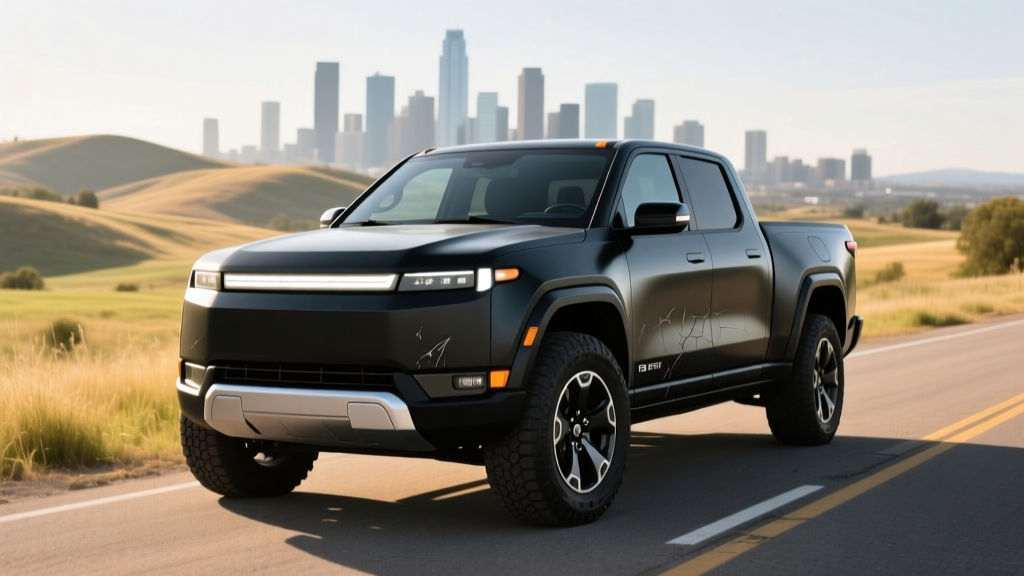
If you've been eyeing the Rivian R1T but hesitating at the six-figure price tag, 2026 lease offers are making America's most capable electric pickup more accessible than ever. Leasing an R1T can lower your monthly commitment, sidestep long-term depreciation risk on a rapidly evolving EV platform, and — crucially — let you capture the $7,500 federal EV tax credit as a point-of-sale price reduction even if you wouldn't qualify based on your income alone. This guide walks through the numbers, the real-world ownership experience, and whether a 2026 Rivian R1T lease is the smartest path into the driver's seat.
2026 Rivian R1T: Quick Verdict
The 2026 R1T carries over Rivian's Gen 2 architecture introduced for the 2025 model year, with dual-motor, performance dual-motor, and tri-motor configurations across Standard, Large, and Max battery packs. It remains the only electric pickup that genuinely blends sports-car acceleration, serious off-road hardware, and a practical 4.5-foot bed with the clever Gear Tunnel. Range stretches up to an EPA-estimated 420 miles on the Max pack, though real-world highway and cold-weather driving will cut that meaningfully. Lease offers in 2026 are particularly compelling because they route the federal tax credit through the lessor (Rivian itself or a partner bank), which can then pass the savings to you as a capitalized-cost reduction — a workaround for buyers who exceed §30D income caps.
Spec Sheet at a Glance: 2026 Rivian R1T
| Spec | Dual-Motor (Large) | Performance Dual-Motor | Tri-Motor (Max) |
|---|---|---|---|
| EPA Range | 352 miles | 340 miles | 420 miles |
| Battery (usable, est.) | 109 kWh (NMC) | 109 kWh (NMC) | 149 kWh (NMC) |
| Horsepower | 533 hp | 665 hp | 850 hp |
| 0-60 mph | 4.5 sec | 3.5 sec | 2.9 sec |
| Drivetrain | Dual-Motor AWD | Dual-Motor AWD | Tri-Motor AWD |
| Max DC Fast Charge | 200 kW | 200 kW | 220 kW |
| 10-80% DCFC Time | ~28 min | ~28 min | ~35 min |
| Level 2 Home Charge | 11.5 kW (~25 mi/hr) | 11.5 kW (~25 mi/hr) | 11.5 kW (~25 mi/hr) |
| MPGe (combined) | 73 MPGe | 70 MPGe | 67 MPGe |
| Towing Capacity | 11,000 lbs | 11,000 lbs | 11,000 lbs |
| Base MSRP | $71,700 | $79,900 | $99,900 |
Source: fueleconomy.gov and Rivian specifications. MSRP excludes $1,800 destination fee.
Real-World Range: What to Actually Expect
EPA Sticker vs. Reality: The R1T's EPA estimates are achievable in mild weather with mixed city/highway driving and moderate speeds. Expect the following reductions in practice:
- Highway cruising at 75 mph: Plan on 75-80% of EPA range (~265 miles for the Large pack, ~320 for the Max pack).
- Cold weather (below 30°F): Add another 15-25% range loss, especially on short trips where the battery can't stay preconditioned. The Max pack at 0°F on a highway run may deliver closer to 250-280 miles.
- Towing: Expect 40-50% range reduction when pulling a 7,000+ lb trailer. The 11,000-lb max tow rating is real, but a heavy trailer turns a 352-mile truck into a 175-mile truck.
Rivian equips the R1T with a standard heat pump, which helps cabin efficiency in cold weather compared to resistive heating, but battery chemistry still suffers in sub-freezing temps. For buyers in northern climates, the Max pack is the pragmatic choice — not because you'll use all 420 miles, but because the degradation buffer gives you usable range even on bad days.
Charging Speed and Infrastructure
The Gen 2 R1T moved from a 400V to an 800V electrical architecture, unlocking faster DC fast-charging speeds. Here's how the numbers translate to real stops:
| Charging Level | Power | Miles Added per Hour | Notes |
|---|---|---|---|
| Level 1 (120V) | 1.4 kW | ~3 mi/hr | Emergency/top-up only |
| Level 2 (240V, 48A) | 11.5 kW | ~25 mi/hr | Full overnight charge in 10-14 hours |
| DC Fast Charge | Up to 200-220 kW | ~550 mi/hr (peak) | 10-80% in 28-35 min; tapers sharply above 80% |
Charge curve reality: The R1T peaks at 200-220 kW only between roughly 10-40% state of charge. By 60%, you're closer to 120 kW, and above 80%, speeds drop below 50 kW to protect the NMC cells. On a road trip, plan your stops around the 10-80% window and you'll average closer to 150 kW sustained — still fast enough for a 20-minute stop to add 150+ miles.
The R1T ships with a NACS (Tesla-style) charge port as of the Gen 2 generation, giving it native access to Tesla Superchargers alongside Rivian's own Adventure Network and third-party CCS stations via adapter. This is a significant infrastructure advantage for road-trippers.
Lease Offers vs. Buying: The 2026 Math
Rivian structures its lease offers through partner financial institutions, and in 2026 the typical 36-month lease on a Dual-Motor R1T Adventure (Large pack) lands in the $850-$1,050/month range depending on down payment, residual value, and regional incentives. Here's why leasing has become the popular entry point:
| Scenario | Monthly Cost (est.) | Federal Credit Access | Depreciation Risk |
|---|---|---|---|
| Buy: Dual-Motor Large ($71,700) | $1,050-$1,200/mo (loan) | $7,500 point-of-sale IF income ≤ $150K single / $300K joint AND battery sourcing rules met | Owner bears full depreciation |
| Lease: Dual-Motor Large (36 mo) | $850-$1,050/mo | $7,500 credit applied as cap-cost reduction by lessor — income caps may not apply | Lessor bears residual risk |
| Buy: Tri-Motor Max ($99,900) | $1,450-$1,650/mo (loan) | Same §30D rules; MSRP cap for trucks is $80,000 — Tri-Motor does NOT qualify | Owner bears full depreciation |
Key §30D tax credit rules for 2026 (per IRS guidance):
- MSRP cap: $80,000 for trucks, vans, and SUVs. The R1T Dual-Motor Adventure (Large) at $71,700 qualifies; the Tri-Motor Max at $99,900 does not.
- Income cap: Modified AGI ≤ $150,000 (single), $225,000 (head of household), $300,000 (joint). Buyers above these thresholds cannot claim the credit on a purchase.
- Battery sourcing: Critical minerals and battery components must meet escalating domestic-content thresholds. Rivian has progressively shifted supply chains, but confirm current-year eligibility on the IRS qualified vehicles list before signing.
- Lease loophole (commercial credit): Under §45W, the lessor can claim the commercial clean vehicle credit and pass savings to the lessee. This bypasses the income and MSRP caps — a key reason high-income buyers lease.
Performance, Tech, and Daily Livability
The R1T's party trick is its breadth. The Tri-Motor model hits 60 mph in 2.9 seconds — supercar territory in a 7,000-pound truck. Even the base Dual-Motor's 4.5-second run outpaces most V8 pickups off the line. Four independent air suspension corners give it 14.9 inches of ground clearance in Off-Road mode and drop it 2 inches for highway efficiency.
Standout tech:
- 15.6-inch center touchscreen running Rivian's in-house OS with over-the-air updates
- Driver+ (Level 2 ADAS) with hands-on highway assist and automatic lane changes — not self-driving; driver must remain engaged
- Camp Kitchen integration (optional slide-out kitchen for the Gear Tunnel)
- V2H (vehicle-to-home) capability for backup power via the Power Pack accessory
- Powered frunk with 11 cubic feet of lockable, drainable storage
Notable drawbacks:
- The 4.5-foot bed is shorter than most full-size trucks (F-150 Lightning offers a 5.5-foot box)
- Rear-seat legroom is 36.6 inches — adequate, not generous for tall adults on long trips
- Service center network is still expanding; rural owners may face 100+ mile tows for warranty work
- Insurance premiums run 20-35% higher than comparable gas trucks per industry data
Cargo, Passenger Space, and Practical Dimensions
| Dimension | Measurement |
|---|---|
| Bed Length | 54.3 inches (4.5 ft) |
| Bed Width (between wheel wells) | 50.2 inches |
| Gear Tunnel Volume | 11.7 cu ft |
| Frunk Volume | 11.0 cu ft |
| Front Headroom | 41.1 inches |
| Rear Legroom | 36.6 inches |
| Max Payload | 1,760 lbs |
| Max Towing | 11,000 lbs |
Battery Warranty and Long-Term Ownership
Rivian covers the R1T's battery and drive units with an 8-year / 175,000-mile warranty, guaranteeing at least 70% capacity retention over that period. This is competitive with the industry standard and notably higher mileage than most automakers' 100,000-mile thresholds. The NMC chemistry in the Large and Max packs offers high energy density but is more sensitive to sustained high-state-of-charge storage than LFP — Rivian recommends daily charging to 80-90% for routine use and 100% only before road trips.
The basic vehicle warranty is 5 years / 60,000 miles, which is on the shorter side for a premium vehicle. Rivian's roadside assistance runs 5 years / unlimited miles.
Who Should Lease the 2026 Rivian R1T?
Choose the R1T lease if:
- You want a daily-drivable electric truck with genuine off-road chops and don't need a 6.5-foot bed
- Your income exceeds §30D caps but you still want to capture the $7,500 credit via the lease structure
- You want to upgrade in 3 years as solid-state batteries and next-gen platforms arrive
- You value the Adventure Network and Tesla Supercharger access for road trips
Look elsewhere if:
- You need a full-size bed for commercial work (consider the F-150 Lightning or Silverado EV)
- You tow heavy loads regularly — range loss while towing is severe on any EV truck
- You live far from a Rivian service center and can't tolerate potential downtime logistics
- Budget is paramount — the Ford F-150 Lightning starts ~$20,000 lower
2026 Rivian R1T Lease FAQ
What is the real-world range of the Rivian R1T?
The EPA rates the R1T between 270 and 420 miles depending on configuration. In real-world highway driving at 70-75 mph, expect 75-80% of the sticker figure. Cold weather (below 30°F) can cut range an additional 15-25%. The Large pack Dual-Motor delivers roughly 265 highway miles in fair weather; the Max pack Tri-Motor delivers roughly 320.
How fast does the R1T charge at home and on the road?
On a home Level 2 charger (240V, 48A), the R1T charges at 11.5 kW, adding about 25 miles of range per hour — enough to fully replenish overnight. On DC fast chargers, it peaks at 200-220 kW and charges 10-80% in 28-35 minutes, though speeds taper significantly above 80% SoC.
How much does a 2026 Rivian R1T cost after tax credits?
The Dual-Motor Large starts at $71,700 MSRP. If you qualify for the full $7,500 §30D credit (income and sourcing requirements met), your effective purchase price drops to ~$64,200. Through a lease, the $7,500 commercial credit can be applied as a cap-cost reduction, lowering monthly payments even for buyers above income caps. The Tri-Motor Max at $99,900 exceeds the $80,000 truck MSRP cap and does not qualify for the purchase credit.
Is the Rivian R1T worth leasing vs. the F-150 Lightning or Silverado EV?
The R1T wins on performance, off-road capability, and premium feel. The F-150 Lightning wins on bed size, payload, and starting price. The Silverado EV offers a longer bed and Ultium platform pricing. If you prioritize driving dynamics, build quality, and adventure features, the R1T justifies its premium. If you need a work truck, the Lightning is more practical.
What are the biggest pros and cons of the R1T?
Pros: 2.9-4.5 second 0-60 times, 420-mile max range, NACS native Supercharger access, Gear Tunnel and frunk versatility, air suspension, 11,000-lb towing, 8yr/175K battery warranty.
Cons: Short 4.5-ft bed, premium pricing, limited service centers, high insurance costs, rear seat is snug for tall passengers, towing severely reduces range.
Does the Rivian R1T qualify for the federal EV tax credit?
The Dual-Motor configurations priced under $80,000 MSRP can qualify for the $7,500 §30D credit, subject to buyer income caps ($150K single / $300K joint) and battery critical-mineral sourcing requirements. The Tri-Motor Max exceeds the MSRP cap and does not qualify for purchase credits. However, all R1T configurations may benefit from the $7,500 credit when leased, as the lessor claims the commercial clean vehicle credit under §45W and can pass savings through. Always verify current eligibility on IRS.gov before committing.