Quick Verdict: The Palmetto State EV Landscape in 2026
South Carolina is not the most incentive-rich state for electric vehicles, but that doesn't mean electrifying your garage here is a financial dead end. The economics of EV ownership in SC hinge on three pillars: federal tax credits under IRS §30D, utility rebates from providers like Duke Energy and Santee Cooper, and the ongoing savings from cheaper electricity versus gasoline. While South Carolina lacks a state-level purchase rebate or income-tax credit for EVs — a gap compared to states like Colorado or California — the total cost of ownership over five years can still favor an EV, particularly if you can charge at home on a residential rate plan.
This guide walks through every dollar: purchase price after credits, fuel savings, maintenance realities, insurance premiums, and the depreciation curve that has reshaped EV resale values in 2025 and 2026. We'll use a concrete example — the 2026 Hyundai Ioniq 5 SEL AWD — to anchor the math.
Federal Tax Credit: IRS §30D Rules for 2026
The federal Clean Vehicle Credit remains the single largest incentive available to South Carolina EV buyers. Under IRS §30D, qualifying buyers can receive up to $7,500 — and as of 2024, this can be transferred to the dealer at the point of sale, effectively reducing your drive-off price rather than waiting for tax season. However, eligibility is not universal. The rules have tightened considerably since the Inflation Reduction Act reshaped the program.
§30D Eligibility Checklist (2026 Rules)
- Battery components: A percentage of battery components must be manufactured or assembled in North America (threshold increases yearly; consult IRS for the current-year percentage).
- Critical minerals: A percentage of critical minerals must be sourced from the US or a free-trade-agreement partner (threshold also increases yearly).
- MSRP caps: Vans, SUVs, and pickups must have an MSRP at or below $80,000. Sedans and other passenger cars: $55,000 cap.
- Buyer income limits (modified AGI): $300,000 for joint filers, $225,000 for heads of household, $150,000 for single filers.
- Vehicle assembly: Final assembly must occur in North America.
- FEOC restriction: Vehicles with battery components from a "foreign entity of concern" (primarily targeting certain Chinese and Russian supply chains) are disqualified — this has narrowed the eligible vehicle list significantly for 2025-2026.
- Point-of-sale transfer: You can elect to transfer the credit to the dealer at purchase, reducing your out-of-pocket cost immediately. The dealer must be IRS-registered.
What this means practically: A 2026 Hyundai Ioniq 5 SEL AWD (MSRP ~$49,950, assembled in Ellabell, Georgia) may qualify for the full $7,500 if its battery sourcing meets current-year thresholds — bringing the effective price to roughly $42,450 before destination or dealer fees. But a vehicle like the Tesla Model Y Long Range (assembled in Texas, MSRP ~$46,630) has fluctuated in and out of eligibility depending on the latest FEOC and critical-mineral determinations. Always verify current eligibility on the fueleconomy.gov tax center before signing paperwork.
South Carolina EV Incentives: State, Local & Utility Programs
Unlike some states, South Carolina does not offer a state-level purchase rebate, tax credit, or sales-tax exemption for new EVs. The state's $600 annual EV registration fee (higher than the gas-car equivalent) is designed to offset lost gas-tax revenue, and it does eat into your savings calculation.
Regional Incentive Reality for SC Buyers
State and local incentives vary significantly by jurisdiction and change frequently. In South Carolina, your best bet for additional savings comes from your electric utility. We recommend checking the Alternative Fuels Data Center (AFDC) and contacting your utility directly for current programs. Below are examples of what has been available — confirm current terms before relying on them.
Utility Rebate & Rate Programs (Examples)
- Duke Energy Carolinas / Duke Energy Progress: Historically offered rebates on Level 2 home charger installations and time-of-use (TOU) rate plans that lower per-kWh costs for overnight charging. Rebate amounts and availability vary by year.
- Santee Cooper: Has offered residential EV charger rebates and off-peak charging rate discounts. Check their current EV program page.
- Palmetto Electric Cooperative: Some co-ops offer modest charger rebates or special EV rates — availability is member-specific.
Additionally, certain municipalities or employers in SC may offer workplace charging subsidies or local incentive programs. These are hyper-local and worth investigating if you live in the Charleston, Columbia, or Greenville metro areas.
Charging vs. Gas: The Per-Mile Cost Math
This is where EV ownership in South Carolina starts to make financial sense. South Carolina's average residential electricity rate hovers around $0.13-$0.14 per kWh (as of late 2025/early 2026 EIA data), which is near the national average. Gasoline in SC typically runs $0.10-$0.30 below the national average, currently around $2.90-$3.20 per gallon for regular.
Cost Per Mile: EV vs. Gas (SC 2026 Estimates)
| Metric | 2026 Ioniq 5 AWD (EV) | 2026 Toyota RAV4 AWD (Gas Baseline) |
|---|---|---|
| Efficiency | 3.6 mi/kWh (114 MPGe combined) | 28 MPG combined |
| Energy cost | $0.135/kWh (home avg) | $3.05/gallon (SC avg) |
| Cost per mile (home/fuel) | $0.038 | $0.109 |
| Annual cost (12,000 mi) | $456 | $1,308 |
| 5-year energy cost | $2,280 | $6,540 |
Note: EV cost assumes 85% home charging at residential rates and 15% public DC fast charging at ~$0.40/kWh (blended rate ~$0.135 effective). Public-only charging would raise EV costs to roughly $0.08-$0.11/mile, narrowing the gap significantly.
The takeaway: Home charging is essential to the savings equation. Over five years and 60,000 miles, you save approximately $4,260 in fuel with the Ioniq 5 versus the RAV4 — assuming you charge mostly at home. If you rely entirely on public DC fast charging, that savings shrinks to roughly $1,500-$2,000.
Maintenance Savings: Fewer Parts, Fewer Visits
EVs eliminate the largest recurring maintenance items on a gas car: oil changes, spark plugs, timing belts, transmission fluid, and exhaust system repairs. Regenerative braking also dramatically reduces brake pad and rotor wear — many EV owners report original brake pads lasting 80,000+ miles.
Estimated 5-Year Maintenance Costs (60,000 miles)
| Item | EV (Ioniq 5) | Gas (RAV4) |
|---|---|---|
| Oil changes (6-8 over 5 yrs) | $0 | $400-$560 |
| Brake pads/rotors | $0-$200 (regen extends life) | $600-$900 |
| Transmission fluid | $0 (single-speed) | $150-$250 |
| Air filters, cabin filters | $100-$150 | $150-$200 |
| Tire rotation/replacement | $800-$1,200 (heavier wear) | $600-$1,000 |
| Coolant, wipers, misc. | $200-$300 | $300-$400 |
| Total estimated | $1,100-$1,850 | $2,200-$3,310 |
Net maintenance savings: ~$1,000-$1,500 over 5 years. One caveat — EV tires tend to wear faster due to higher vehicle weight and instant torque. Budget for potentially one extra set of tires over five years. The Hyundai Ioniq 5, for example, weighs roughly 4,600 lbs versus the RAV4's ~3,600 lbs.
Insurance Costs: The Premium Reality
EV insurance premiums in South Carolina typically run 15-30% higher than comparable gas vehicles. The reasons are structural, not arbitrary:
- Higher repair costs: Battery packs, power electronics, and specialized crash-structure components are expensive to replace. A minor rear-end collision that would cost $2,500 to fix on a gas car might total the battery on an EV.
- Specialized labor: Fewer body shops are certified for high-voltage EV repair, and those that are charge more.
- Higher vehicle values: EVs still carry a price premium at many trim levels, driving up collision/comprehensive premiums.
Estimated Annual Insurance (SC, Clean Record, 2026)
| Vehicle | Annual Premium (est.) |
|---|---|
| 2026 Hyundai Ioniq 5 SEL AWD | $1,800-$2,400 |
| 2026 Toyota RAV4 XLE AWD | $1,400-$1,900 |
| 5-year insurance difference | +$2,000 to +$2,500 (EV) |
Always get a real quote before purchasing. Insurers like GEICO, Progressive, and State Farm have begun offering EV-specific discounts, and bundling with homeowner's insurance can narrow the gap. South Carolina's overall insurance market is moderate-cost compared to states like Florida or Michigan.
Depreciation & Resale Value: What's Changed
EV depreciation has been one of the most volatile ownership variables in 2024-2026. A combination of aggressive Tesla price cuts, a flood of off-lease Model 3s, and rapid improvements in new EV range and charging speed pushed used EV values down hard in 2023-2024. By 2026, the market has partially stabilized, but EVs still generally depreciate faster than high-demand gas and hybrid vehicles over a 5-year window.
Estimated 5-Year Depreciation (60,000 miles, Good Condition)
| Vehicle | MSRP (approx.) | Est. 5-Yr Resale | Depreciation $ | Depreciation % |
|---|---|---|---|---|
| 2026 Ioniq 5 SEL AWD | $49,950 | $22,000-$26,000 | ~$24,000-$28,000 | ~48-56% |
| 2026 RAV4 XLE AWD | $34,500 | $21,000-$24,000 | ~$10,500-$13,500 | ~30-39% |
Key factors working against EV resale:
- Battery health anxiety among used buyers (even though most 2026-era packs are warranted 8yr/100,000mi and degrade only 8-12% over 5 years).
- Rapid tech obsolescence — a 2021 EV with 230 miles of range and 50 kW charging looks dated next to a 2026 model with 330 miles and 200+ kW charging.
- Federal tax credit availability on new EVs suppresses used demand (why buy used for $30K when a new one is $42K after credit?).
However, the Ioniq 5 — with its 800V architecture, NACS charging port (standard for 2026), and strong IIHS Top Safety Pick+ rating — holds value better than many competitors. Models from brands with weaker charging infrastructure access or discontinued nameplates fare worse.
Total 5-Year Cost of Ownership: The Full Picture
Here's where all the numbers converge. We compare the 2026 Hyundai Ioniq 5 SEL AWD against the 2026 Toyota RAV4 XLE AWD as a gas baseline, both purchased new in South Carolina, driven 12,000 miles/year for 5 years.
5-Year Total Cost of Ownership Comparison
| Cost Category | Ioniq 5 SEL AWD (EV) | RAV4 XLE AWD (Gas) |
|---|---|---|
| MSRP | $49,950 | $34,500 |
| Federal tax credit (§30D) | -$7,500 (if eligible) | $0 |
| Effective purchase price | $42,450 | $34,500 |
| SC registration (5 yrs, EV fee) | $3,000 ($600/yr) | $1,500 ($300/yr est.) |
| Energy/fuel (5 yrs, 60K mi) | $2,280 | $6,540 |
| Maintenance (5 yrs) | $1,500 | $2,800 |
| Insurance (5 yrs) | $10,500 | $8,250 |
| Depreciation (est.) | $26,000 | $12,000 |
| Total 5-Year Cost | ~$85,730 | ~$65,590 |
Depreciation is calculated as purchase price minus estimated resale. Insurance and registration are South Carolina-specific estimates. EV assumes full §30D credit eligibility and 85% home charging.
The verdict: Even with $7,500 in federal tax credit savings, the Ioniq 5 costs approximately $20,000 more over five years than the RAV4 in this comparison. The fuel and maintenance savings (~$5,560 combined) do not fully offset the higher purchase price, steeper depreciation, higher insurance, and SC's $600 annual EV fee.
However, this equation shifts dramatically if:
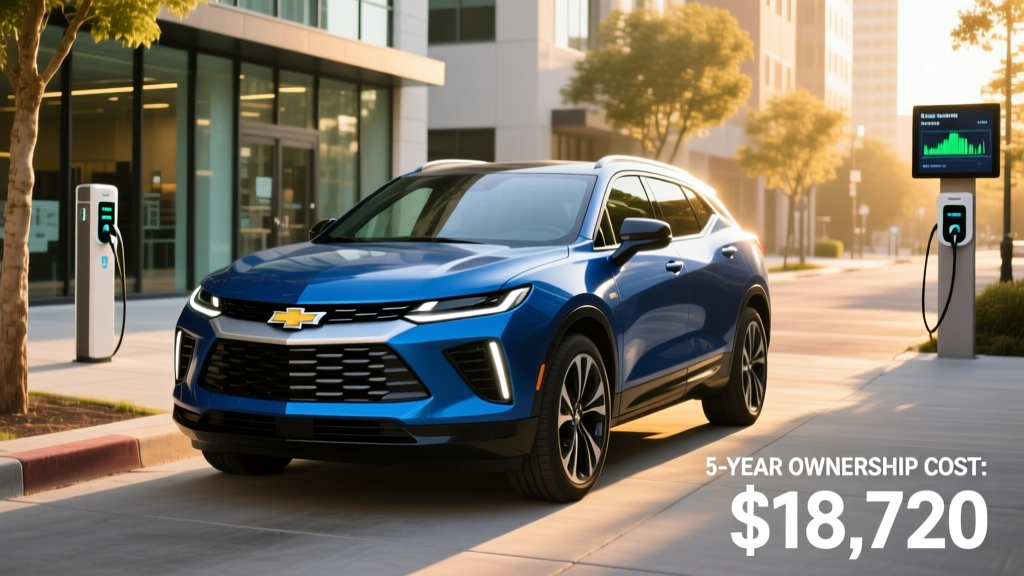
- You choose a less expensive EV (e.g., a 2026 Chevy Equinox EV LT at ~$33,000 MSRP, potentially ~$25,500 after credit).
- You keep the EV for 8-10 years (depreciation flattens, fuel savings compound).
- You have access to free or subsidized workplace/solar charging.
- You value the driving experience, instant torque, quietness, and home-charging convenience beyond pure economics.
Home Charging in South Carolina: Setup Costs
To capture the full fuel savings, you need Level 2 home charging. A typical 48-amp Level 2 charger (like the ChargePoint Home Flex or Emporia V2) costs $400-$700 for the unit. Professional installation in South Carolina typically runs $500-$2,000 depending on whether your electrical panel needs an upgrade (a 200-amp panel is generally sufficient; older 100-amp panels in some SC homes may require a $1,500-$3,000 upgrade).
Level 2 Home Charger Install Estimate (SC)
| Item | Cost Range |
|---|---|
| Level 2 charger unit (48A, NACS/J1772) | $400-$700 |
| Electrician labor (standard install) | $500-$1,500 |
| Permit (varies by county) | $50-$150 |
| Panel upgrade (if needed) | $1,500-$3,000 |
| Total (no panel upgrade) | $950-$2,350 |
| Total (with panel upgrade) | $2,450-$5,350 |
Check with Duke Energy, Santee Cooper, or your local co-op for current charger rebates that can offset $200-$500 of this cost. Also explore whether your utility offers a time-of-use rate plan — charging overnight at off-peak rates can drop your effective cost to $0.09-$0.11/kWh, further widening the fuel savings gap.
Frequently Asked Questions
How much does it really cost to own an EV over 5 years in South Carolina?
For a mid-range EV like the 2026 Hyundai Ioniq 5 SEL AWD, expect approximately $85,000-$86,000 in total 5-year cost (including depreciation, fuel, insurance, maintenance, and registration) when purchased with the full $7,500 federal tax credit. A comparable gas SUV like the RAV4 runs roughly $65,000-$66,000. The gap narrows significantly with cheaper EVs, longer ownership horizons, or lower insurance quotes.
Do I qualify for the federal §30D tax credit?
You likely qualify if your modified adjusted gross income is under $150,000 (single), $225,000 (head of household), or $300,000 (joint), and the vehicle you choose meets MSRP caps ($55K for cars, $80K for SUVs/trucks/vans), North American assembly, battery-component, and critical-mineral sourcing requirements. The eligible vehicle list has narrowed in 2025-2026 due to FEOC supply-chain rules. Always verify on fueleconomy.gov and consult a tax professional for your specific situation.
Does South Carolina offer any state EV incentives?
As of 2026, South Carolina does not offer a state purchase rebate, tax credit, or sales-tax exemption for EVs. The state charges a $600 annual EV registration fee. Your best additional savings come from utility rebates (Duke Energy, Santee Cooper, co-ops) for home charger installation and off-peak electricity rates. Check the AFDC state incentives page for updates.
How much do I save on fuel and maintenance with an EV in SC?
Assuming 12,000 miles/year and mostly home charging at SC's ~$0.135/kWh average, you'll save roughly $850/year on fuel compared to a 28-MPG gas SUV. Over five years, that's approximately $4,260 in fuel savings. Maintenance savings add another $1,000-$1,500 (no oil changes, reduced brake wear). Combined, expect $5,000-$5,800 in operational savings over 5 years — meaningful but not enough alone to offset a large purchase-price gap.
Are EVs more expensive to insure in South Carolina?
Yes, typically 15-30% more expensive than comparable gas vehicles. For the Ioniq 5 versus the RAV4, expect roughly $400-$500 more per year, or $2,000-$2,500 over five years. Higher repair costs, specialized labor, and elevated vehicle values drive the premium. Always get a personalized quote before purchasing — discounts for bundling, safe driving, and EV-specific programs can narrow the gap.
How well do EVs hold their value?
EVs have depreciated faster than gas and hybrid vehicles in 2024-2026, with 5-year depreciation of 48-56% common for mainstream models versus 30-39% for popular gas SUVs. Rapid technology improvements, aggressive new-vehicle pricing, and used-buyer battery anxiety are the main drivers. If you plan to keep your EV 8-10 years, depreciation becomes less relevant as the curve flattens and fuel savings continue to compound.