Quick Answer: Can You Buy a Volkswagen Beetle Electric in 2026?
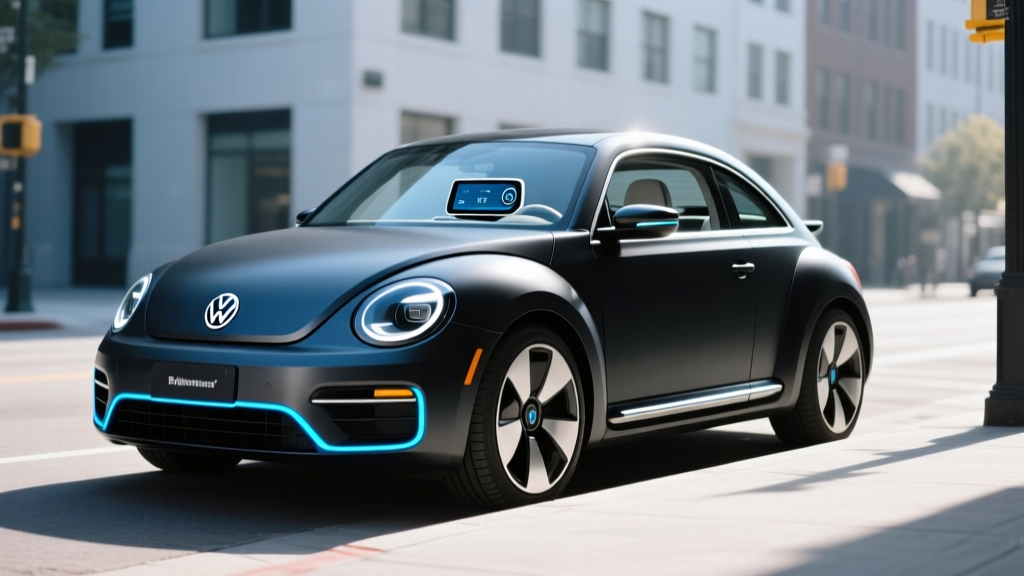
No. As of 2026, Volkswagen has not announced, confirmed, or placed into production an electric Beetle. The last gas-powered Beetle rolled off the line in 2019, and while VW executives have periodically floated a retro-styled EV concept based on the MEB or SSP platform, no production timeline, pricing, or EPA range figures exist. If you want a retro-flavored Volkswagen EV today, the closest real option is the ID. Buzz (EPA-estimated 234 miles of range, 91 kWh battery, starting around $59,995). Buyers specifically hunting a "Volkswagen Beetle electric" should either wait indefinitely, consider the ID. Buzz, or explore third-party EV conversion shops that retrofit classic Beetles with electric powertrains (typically $35,000–$75,000 all-in, with 80–150 miles of range).
Why the Volkswagen Beetle Electric Doesn't Exist Yet
Volkswagen discontinued the Beetle in July 2019, ending a 21-year run for the New Beetle/Beetle A5 lineage and a 65-year global run for the original air-cooled platform. Since then, VW's EV strategy has been ruthlessly focused on volume sellers under the ID. family: the ID.4 crossover, ID.7 sedan, and ID. Buzz microbus. A niche retro coupe simply hasn't made the capital-allocation cut.
In 2021, VW's then-CEO Ralf Brandstätter acknowledged internal design studies for an electric Beetle on the MEB platform, but confirmed no production plans. By 2024–2025, VW's product roadmaps shifted toward the next-generation SSP (Scalable Systems Platform), with priority given to high-volume models competing directly against Tesla, Hyundai, and Chinese OEMs. A low-volume halo car like an electric Beetle remains possible for the late 2020s but is entirely speculative.
What this means for buyers: Any website, forum post, or AI-generated summary claiming specific EPA range, MSRP, or battery specs for a "2026 VW Beetle EV" is fabricating data. No such vehicle exists to test, certify, or price.
The Closest Thing: VW ID. Buzz as a Retro EV Alternative
If your interest in a Volkswagen Beetle electric is driven by nostalgia and retro styling rather than the specific coupe body style, the ID. Buzz is the only Volkswagen EV that channels heritage design. Here's how it actually performs as a 2026 purchase:
| Attribute | Figure |
|---|---|
| EPA-estimated range | 234 miles (rear-wheel drive); 231 miles (AWD 4Motion) |
| Battery (usable) | 91 kWh, NMC chemistry |
| Peak DC fast charge rate | 175 kW (10–80% in ~26 minutes) |
| Level 2 AC charge rate | 11 kW (~9.5 hours 0–100%) |
| Horsepower | 282 hp (RWD); 335 hp (AWD) |
| 0–60 mph | 7.9 sec (RWD); 6.1 sec (AWD) |
| Starting MSRP | $59,995 (Pro S RWD) |
| Federal §30D tax credit | Currently ineligible — assembled in Hanover, Germany (fails North American final-assembly requirement) |
| Battery & powertrain warranty | 8 years / 100,000 miles (≥70% capacity retention) |
Real-world range reality: The ID. Buzz's 234-mile EPA figure drops to roughly 190–210 miles at sustained 75 mph highway speeds, and further to 160–180 miles in sub-30°F winter conditions. Its boxy, upright shape generates significant aerodynamic drag (Cd ~0.29) compared to sleeker EVs, punishing highway efficiency. Plan charging stops accordingly on road trips.
EV vs Gas: What a Retro VW Actually Costs to Own
Let's compare the ID. Buzz against the spiritual gas-car alternative: a used 2019 Beetle Final Edition (2.0T, 174 hp, EPA 26 city / 33 highway / 29 combined MPG) or a new 2026 VW Taos (the closest current VW crossover in price). We'll use 15,000 miles/year over 5 years, $3.50/gallon gas, and $0.14/kWh home charging.
| Cost Category | ID. Buzz (RWD, home charging) | 2019 Beetle 2.0T (used, ~$22k purchase) | 2026 Taos SE (~$31k MSRP) |
|---|---|---|---|
| Purchase price (before incentives) | $59,995 | $22,000 | $31,000 |
| Federal tax credit | $0 (foreign assembly) | $0 | $0 (ICE vehicle) |
| Fuel / electricity (5 yr) | $2,940 (3.0 kWh/mi × 75k mi × $0.14) | $9,020 (75k mi ÷ 29 MPG × $3.50) | $9,500 (est. 28 MPG combined) |
| Maintenance (5 yr) | ~$1,800 (tire rotation, cabin filter, wiper fluid) | ~$4,200 (oil changes, brakes, spark plugs, fluid flushes) | ~$3,800 |
| Insurance (avg, 5 yr) | ~$11,500 | ~$7,200 | ~$8,400 |
| Estimated 5-yr depreciation | ~$24,000 | ~$8,000 | ~$14,000 |
| 5-Year Total | ~$100,235 | ~$50,420 | ~$66,700 |
The math is blunt: Even with ~$6,000 in fuel savings over five years, the ID. Buzz's premium MSRP, higher insurance (EVs typically cost 15–25% more to insure per IIHS data), and steeper depreciation make it significantly more expensive than a used Beetle or new Taos. You're paying a nostalgia-and-novelty tax. That's not a judgment — it's the cost of a low-volume, design-forward EV.
Classic Beetle EV Conversions: The Niche Path
For buyers dead-set on a Volkswagen Beetle electric silhouette, a handful of U.S. conversion shops (EV West, Zelectric Motors, Icon) will retrofit a 1960s–1970s Beetle with a Tesla-derived or NetGain electric drivetrain. Expect:
- Total cost: $35,000–$75,000 depending on donor-car condition, battery size, and interior restoration
- Range: 80–150 miles (typically 20–40 kWh LFP or NMC pack, limited by the Beetle's weight distribution and small battery bay)
- Charging: Level 2 AC only (6.6–7.2 kW); DC fast charging is rarely available on conversions due to cost and packaging
- Performance: 0–60 in 8–12 seconds, 100–150 hp — adequate for city driving, marginal for freeway merging
- Safety: Original 1960s crash structure, no airbags, no ADAS — a serious consideration for daily use
- Tax credits: None. Conversions do not qualify for the §30D new-EV credit or the §25E used-EV credit.
This is a passion project, not an economical commuter strategy. Treat it as such.
EV Ownership Realities Every First-Time Buyer Should Face
Whether you're waiting for a hypothetical electric Beetle, buying an ID. Buzz, or pivoting to another EV entirely, these constraints will define your ownership experience:
Home Charging Is Non-Negotiable for Most Owners
Over 80% of EV charging happens at home. If you lack access to a garage, driveway, or dedicated parking spot with a 240V circuit, public-charging-only ownership is expensive (DC fast charging averages $0.35–$0.50/kWh vs. $0.14 at home) and time-consuming. A Level 2 home charger installation typically costs $800–$2,500 (equipment + licensed electrician + permit), and older homes may require a $2,000–$5,000 electrical panel upgrade to support a 40-amp circuit. Budget for this before signing a purchase agreement.
Cold Climate Cuts Range 20–35%
Lithium-ion batteries lose efficiency below 40°F, and cabin heating in winter draws heavily from the pack. The ID. Buzz's 234-mile EPA range realistically becomes 160–180 miles in a Minneapolis or Boston January. Heat pumps (standard on most 2025+ VW EVs) mitigate this but don't eliminate it. If you live in a cold-climate region, subtract 25% from any EPA sticker number when planning road trips.
Charging Deserts Still Exist
While the Tesla Supercharger network (now open to NACS-equipped non-Teslas) and Electrify America have expanded significantly, rural corridors in the Mountain West, Great Plains, and parts of the Deep South still have sparse DC fast-charger coverage. Use fueleconomy.gov and PlugShare to map your most common routes before committing to an EV with sub-250-mile range.
Decision Framework: What Should You Actually Buy?
If your priority is...
"I want a retro VW EV and don't care about cost." → Buy the ID. Buzz AWD Pro S ($64,995). Accept 231-mile real-world highway range of ~190 miles and no federal tax credit. Enjoy the design.
"I want the cheapest possible retro VW experience." → Buy a used 2018–2019 Beetle 2.0T ($18,000–$25,000). It's gas-powered, reliable, and parts are abundant. No EV complexity.
"I want a retro-styled EV from any brand." → Look at the Fiat 500e (149-mile range, $36,095, eligible for §30D if sourcing rules met), the Mini Cooper SE (114-mile range, aging platform), or wait for the next-generation Mini EV on the dedicated Spotlight platform.
"I absolutely must have an electric Beetle." → Commission a conversion from a reputable shop (budget $50,000+). Understand it will be a weekend car with 100-mile range, no fast charging, and 1960s crash safety.
"I want a practical 250+ mile EV under $45,000." → The Beetle conversation is not for you. Look at the Hyundai Ioniq 5 (303 mi, $42,600), Chevy Equinox EV (319 mi, $33,600), or Tesla Model 3 RWD (272 mi, $38,990) — all with better range, charging, and value than any hypothetical electric Beetle would likely offer.
Common Misconceptions About a Volkswagen Beetle Electric
| Myth | Fact |
|---|---|
| "VW is releasing an electric Beetle in 2026." | False. No production has been announced. VW's 2026 EV lineup focuses on ID.4 refreshes, ID.7, ID. Buzz, and SSP-based next-gen models. |
| "An electric Beetle would be cheap because the original was cheap." | The original Beetle was cheap due to 1960s labor costs, minimal safety equipment, and massive production scale. A 2020s EV with airbags, ADAS, thermal management, and crash structure would start above $35,000 minimum. |
| "EV conversions of classic Beetles are plug-and-play." | They require custom fabrication, battery-pack engineering, high-voltage safety systems, and state-specific registration as a "specially constructed vehicle." Plan for 3–6 months of shop time. |
| "I can import a Chinese-market electric Beetle." | No such vehicle exists in China either. Chinese OEMs have built Beetle-inspired cars (e.g., ORA Good Cat), but none are homologated for U.S. sale and none carry VW branding. |
Frequently Asked Questions
Will Volkswagen ever make an electric Beetle?
Possibly, but not before 2028 at the earliest. VW has confirmed that retro styling is "part of the brand's DNA" and that the MEB and SSP platforms can accommodate various body styles. However, low-volume halo cars require business-case justification that VW has not yet made public. Monitor VW's annual "Accelerate" strategy updates for any announcement.
Does the ID. Buzz qualify for the $7,500 federal EV tax credit?
No. Under current IRS §30D rules, the vehicle must undergo final assembly in North America. The ID. Buzz is built in Hanover, Germany. Some state-level incentives (e.g., California's CVRP, Colorado's innovative motor vehicle credit) may still apply — check your state's energy office for current amounts, as these change frequently.
How much would a Volkswagen Beetle electric cost if VW made one?
Based on VW's pricing of the ID.4 ($39,735 base) and ID. Buzz ($59,995 base), a production electric Beetle coupe would likely slot between $42,000–$52,000 depending on battery size and trim. This is speculative — no official figures exist.
Are classic Beetle EV conversions safe for daily driving?
Structurally, no. A 1967–1974 Beetle has no crumple zones, no airbags, no ABS, and no electronic stability control. It will perform poorly in any NHTSA-style crash test. Conversions are best suited for fair-weather weekend driving in low-speed urban environments, not freeway commuting.
What's the best retro-styled EV I can buy right now?
The ID. Buzz is the strongest option if you want VW heritage. Beyond VW, the Fiat 500e, Mini Cooper SE, and (at a much higher price point) the Singer/Porsche reimagined 911 EV conversions offer retro aesthetics. None match the Beetle's specific silhouette — that car simply doesn't exist as a production EV in 2026.