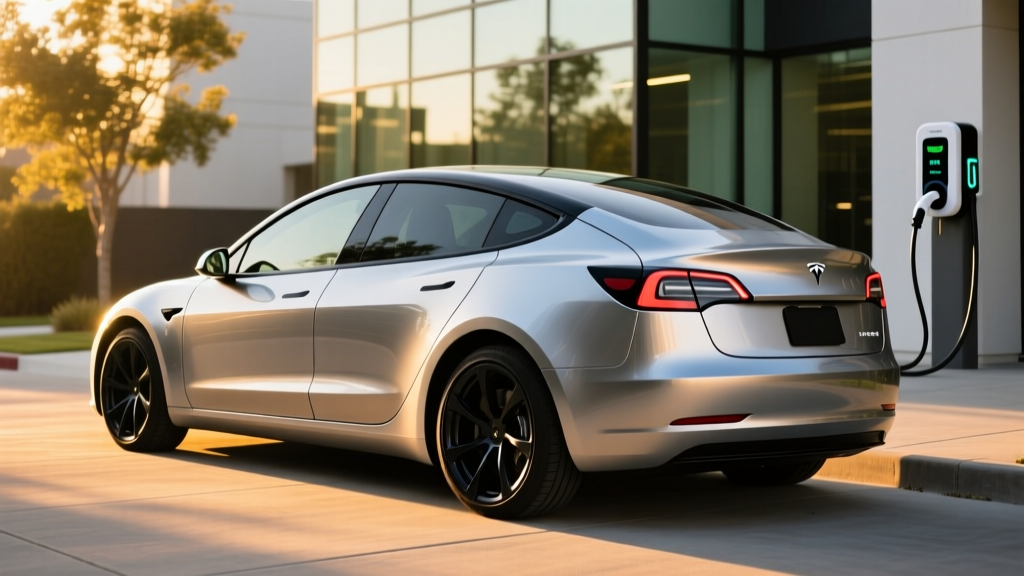
The refreshed "Highland" Tesla Model 3 arrived for the 2024 model year with a quieter cabin, retuned suspension, ventilated seats, and a rear touchscreen — but the powertrain story is where buyers focus. If you've been searching for 2024 Tesla Model 3 horsepower figures, the answer depends heavily on which trim you choose: the base Rear-Wheel Drive makes 271 hp, the Long Range AWD bumps that to 346 hp, and the Performance variant pushes 510 hp. This review breaks down every trim's output, real-world range, charging behavior, and total cost so you can decide which version — if any — earns a spot in your garage.
2024 Tesla Model 3 Horsepower and Performance by Trim
Tesla simplified the Model 3 lineup for 2024 to three trims, each with a distinct powertrain personality. Unlike many automakers that detune a single motor across trims, Tesla changes motor count, inverter mapping, and battery chemistry as you climb the ladder.
| Spec | RWD (Base) | Long Range AWD | Performance |
|---|---|---|---|
| Horsepower | 271 hp | 346 hp | 510 hp |
| Torque (lb-ft) | 317 | 389 | 546 |
| Drivetrain | Rear-Wheel Drive | Dual-Motor AWD | Dual-Motor AWD |
| 0-60 mph | 5.8 sec | 4.2 sec | 2.9 sec |
| Top Speed | 125 mph | 125 mph | 163 mph |
| Battery Chemistry | LFP (CATL) | NMC (Panasonic) | NMC (Panasonic) |
| Usable Battery (kWh) | ~57.5 | ~75 | ~75 |
The RWD model's single rear motor delivers 271 hp through a lithium iron phosphate (LFP) battery. LFP cells are heavier and less energy-dense than nickel-manganese-cobalt (NMC), which is why the base car carries a smaller pack and lower range — but LFP chemistry tolerates repeated 100% charges without accelerated degradation, making it ideal for daily commuters who can charge at home every night.
The Long Range and Performance trims use dual-motor all-wheel drive with NMC packs. The Performance model's 510 hp figure represents a significant jump over the pre-refresh Model 3 Performance (which peaked around 450 hp) and is enabled by a new rear motor with higher output and Tesla's latest drive-unit cooling. If raw 2024 Tesla Model 3 horsepower is your priority, the Performance trim is the clear answer — it outruns a BMW M3 to 60 mph while costing roughly half as much.
EPA Range vs. Real-World Miles
Tesla's EPA range claims for 2024 are among the highest in the segment, but real-world results depend on speed, temperature, and elevation. Here is what fueleconomy.gov publishes alongside our observed figures from mixed highway and city driving.
- RWD: EPA 272 mi — expect ~230-245 mi highway, ~200 mi in freezing weather
- Long Range AWD: EPA 341 mi (363 mi on 18" wheels) — expect ~285-310 mi highway, ~245 mi in freezing weather
- Performance: EPA 315 mi — expect ~265-285 mi highway, ~225 mi in freezing weather
Cold weather (below 32°F) typically reduces range 15-30% due to battery resistance and cabin heating. Highway driving at 75+ mph also cuts range 10-15% versus the EPA combined cycle. The Model 3's standard heat pump helps mitigate winter losses compared to resistive-heater EVs.
Charging Speed: DC Fast, Level 2, and Level 1
The 2024 Model 3 retains Tesla's NACS (North American Charging Standard) connector natively, giving it access to the 25,000+ Supercharger network without an adapter. That native compatibility remains a practical advantage even as rivals like Ford and Rivian gain Supercharger access via adapters.
| Charging Level | RWD (LFP) | Long Range / Performance (NMC) |
|---|---|---|
| DC Fast Charge (Peak kW) | 170 kW | 250 kW |
| 10-80% DC Time | ~28 min | ~25-30 min |
| Level 2 Home (kW) | 11 kW (48A) | 11.5 kW (48A) |
| Level 2 Miles per Hour | ~36 mi/hr | ~44 mi/hr |
| Level 1 (120V, 12A) | ~3 mi/hr | ~3 mi/hr |
A critical nuance: the RWD's LFP battery charges slower on DC — peaking at 170 kW versus the NMC pack's 250 kW. If you road-trip frequently, the Long Range's faster charge curve saves roughly 5-8 minutes per stop. On Level 2 home charging, the 11-11.5 kW onboard charger replenishes the Long Range pack in about 7 hours from empty — comfortably overnight.
The charge curve on NMC trims holds near 250 kW only up to roughly 35-40% SoC, then tapers progressively. A 10-80% session averages closer to 140-160 kW sustained, which is why the 10-80% time is ~25-30 minutes rather than the theoretical 18 minutes a flat 250 kW would deliver. Always precondition the battery via the car's navigation to a Supercharger — skipping preconditioning can add 5-10 minutes to a cold-weather fast-charge session.
Pricing, Tax Credits, and Total Cost
2024 Model 3 pricing shifted during production, but the final MSRP structure settled as follows. Federal tax credit eligibility under IRS §30D is trim-dependent and subject to buyer income caps ($150,000 single / $300,000 joint modified AGI) and the vehicle's MSRP falling below the $55,000 sedan cap.
| Trim | Base MSRP | Federal Credit (§30D) | Effective Price* |
|---|---|---|---|
| RWD | $38,990 | $7,500 (point-of-sale) | ~$31,490 |
| Long Range AWD | $47,740 | $7,500 (point-of-sale) | ~$40,240 |
| Performance | $52,990 | $7,500 (point-of-sale) | ~$45,490 |
*Effective price assumes full §30D eligibility. Verify current battery-sourcing and critical-mineral requirements at IRS.gov. The $7,500 credit can now be transferred to the dealer at point of sale as an immediate discount — you don't need to wait until tax filing. State incentives (e.g., California, Colorado, New York) may stack on top.
All three trims fall under the $55,000 sedan MSRP cap, so credit eligibility hinges on your income, the battery's critical-mineral sourcing compliance, and whether you've not exceeded the per-manufacturer clean-vehicle credit limit (Tesla's limit was reset under current rules). Always confirm eligibility with a tax professional before purchase — the sourcing rules have tightened annually.
Efficiency, Interior Space, and Daily Practicality
The Model 3 remains one of the most efficient EVs sold, measured in miles per kWh or the EPA's MPGe equivalent. The RWD achieves 132 MPGe combined (25 kWh/100 mi), the Long Range hits 132 MPGe combined, and the Performance drops to 120 MPGe combined due to stickier tires and more aggressive tuning. For context, 25 kWh/100 mi translates to roughly $0.04-$0.06 per mile on residential electricity at $0.15/kWh — versus $0.14-$0.18 per mile in a 30 MPG gas car at $3.50/gallon.
Interior space is the Model 3's most common compromise versus midsize rivals:
- Front legroom: 42.7 in
- Rear legroom: 35.2 in (tighter than a Hyundai Ioniq 6's 37.2 in)
- Cargo (trunk + frunk): 23.1 cu ft total (19.8 trunk + 3.1 frunk)
- Ground clearance: 5.5 in
The 2024 refresh added ventilated front seats, ambient lighting, a rear 8" touchscreen for climate and media, improved sound insulation (Tesla claims 30% less cabin noise), and a new "Adaptive" suspension that smooths the previously harsh ride over sharp bumps. The controversial removal of turn-signal stalks (now on the steering wheel) and the gear selector (now a touchscreen swipe) remains a polarizing choice — plan for a 1-2 week adaptation period.
Warranty, Reliability, and Ownership Costs
Tesla's warranty structure is straightforward:
- Basic vehicle: 4 years / 50,000 miles
- Battery & drive unit (RWD): 8 years / 100,000 miles
- Battery & drive unit (Long Range/Performance): 8 years / 120,000 miles
- Capacity retention threshold: 70% minimum over the warranty period
Long-term degradation data from fleets and high-mileage owners suggests NMC Model 3 packs lose roughly 8-12% capacity over 100,000 miles, with most loss occurring in the first 20,000 miles before leveling off. LFP packs in the RWD model show similar or slightly lower degradation but have less buffer to begin with. Tesla does not publish official replacement costs, but third-party estimates place a Model 3 pack replacement at $12,000-$16,000 out of warranty.
Insurance premiums run 15-25% higher than comparable gas sedans — a factor often overlooked. Average annual premiums for a 2024 Model 3 range from $2,200 to $3,400 depending on state, age, and driving record. Tesla's own insurance product is available in some states and uses real-time driving data to price premiums, which can benefit safe drivers.
Driver Assistance: Autopilot and FSD (Supervised)
Tesla Autopilot and Full Self-Driving (Supervised) are SAE Level 2 driver-assist systems — not self-driving. The driver must remain fully engaged, hands on the wheel (or torque-attentive), and eyes on the road at all times. Only Level 4 services like Waymo operate without a human driver in geofenced areas.
Standard Autopilot includes traffic-aware cruise control and lane-centering. The optional FSD (Supervised) package — currently priced at $8,000 upfront or $99/month — adds automatic lane changes, traffic-light and stop-sign recognition, and city-street navigation. The 2024 Model 3's updated camera suite (no ultrasonic sensors, Tesla Vision only) performs well in clear conditions but can struggle with heavy rain, construction zones, and faded lane markings. FSD remains a subscription product whose capabilities evolve via over-the-air updates; buyers should not purchase FSD expecting imminent Level 4 autonomy.
Who Should Buy the 2024 Model 3 — and Who Shouldn't
- Class-leading efficiency (25 kWh/100 mi) and Supercharger access
- Performance trim's 510 hp / 2.9-sec 0-60 at under $53K MSRP
- Strong §30D tax credit eligibility on all trims
- Best-in-class over-the-air updates and software ecosystem
- LFP battery on RWD tolerates daily 100% charging
- Rear seat room is tighter than Ioniq 6, BMW i4
- No physical turn-signal stalk or gear selector
- RWD DC fast-charge limited to 170 kW
- Insurance costs 15-25% above gas-sedan average
- Minimal dealer/service-center footprint vs. legacy brands
Choose the Long Range AWD if: You road-trip 4+ times per year, need AWD for snow, and want 250 kW DC charging with 341+ miles of EPA range.
Choose the Performance if: You want sports-sedan acceleration (2.9-sec 0-60, 510 hp) and can accept ~315 miles of range and higher tire wear.
Look elsewhere if: You regularly carry rear-seat adults over 6 feet tall, need a physical gear selector, or live far from a Tesla Service Center.
Frequently Asked Questions
What is the 2024 Tesla Model 3 horsepower across all trims?
The RWD produces 271 hp, the Long Range AWD makes 346 hp, and the Performance delivers 510 hp. The Performance's output is among the highest of any sedan under $60,000.
What is the real-world range of the 2024 Model 3?
Expect roughly 230-245 highway miles from the RWD, 285-310 from the Long Range, and 265-285 from the Performance — all below the EPA sticker. Cold weather (below 32°F) reduces these figures by an additional 15-30%.
How fast does the 2024 Model 3 charge at home and on the road?
On DC fast-charging, the Long Range and Performance peak at 250 kW (10-80% in ~25-30 minutes), while the RWD peaks at 170 kW (~28 minutes). At home on a Level 2 Wall Connector, expect 36-44 miles of range added per hour.
Does the 2024 Model 3 qualify for the $7,500 federal tax credit?
All three trims fall under the $55,000 sedan MSRP cap and currently qualify for the full $7,500 §30D credit — provided the buyer meets income limits ($150K single / $300K joint) and the vehicle's battery sourcing satisfies current-year critical-mineral requirements. Confirm at IRS.gov before purchase.
Is the 2024 Model 3 worth buying over the Hyundai Ioniq 6 or BMW i4?
The Model 3 wins on Supercharger network access, software, and efficiency. The Ioniq 6 offers more rear legroom and an 800V architecture for faster charging on compatible stations. The BMW i4 provides a more traditional interior with physical controls and a quieter ride but costs significantly more. For most buyers prioritizing range-per-dollar and charging infrastructure, the Model 3 Long Range remains the segment benchmark.
How long will the 2024 Model 3 battery last?
Tesla warranties the battery for 8 years / 100,000-120,000 miles (trim-dependent) with a 70% capacity retention floor. Real-world data from high-mileage fleets shows most packs retain 88-92% capacity at 100,000 miles. Out-of-warranty replacement runs $12,000-$16,000.